
Add ₹999 more to unlock FREE SHIPPING!
Your sacred cart is currently empty.
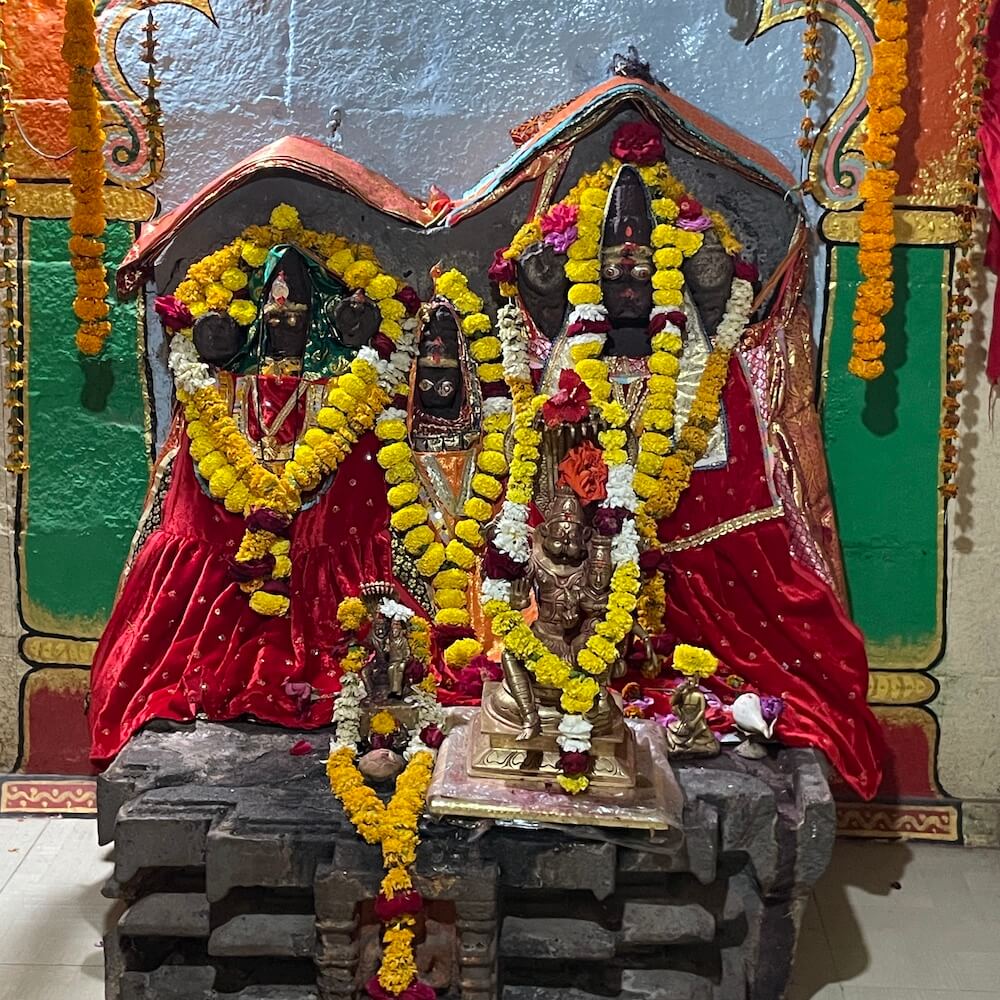
Shop Photo FramesIt is believed that where Narasimha, Lakshmi, and the devotee Prahlada are consecrated together, a confluence of devotion, power, and compassion is formed. Throughout Maharashtra, there are only three temples where these three deities are consecrated in one place. These include the Jwala Narasimha of Kole in Satara district, Sangwade in Kolhapur district, and this site at Umard (Deshmukh) in Buldhana district. The approximately 800-year-old Narasimha temple at Umard is a place of faith for countless devotees in the district. A unique feature here is the gentle and serene form of Narasimha that one gets to behold.
In Indian culture and the Vishnu Purana, the ‘Narasimha Avatar’ is considered one of the most unique and influential among the ten incarnations of Lord Vishnu. Generally, when the name of Narasimha is mentioned, one’s mind conjures up his fierce form—Lord Narasimha appearing from a pillar to slay Hiranyakashipu, tearing open his abdomen with his claws, with eyes reddened by rage—a form that sends shivers down one’s spine. However, it is believed that when one gets the darshan of this fierce form alongside the primordial energy Mahalakshmi and the supreme devotee Prahlada in one place, that iconography and religious sentiment create a confluence of devotion, power, and compassion.
According to religious texts, even after the slaying of Hiranyakashipu, Narasimha’s anger did not subside. The entire universe was trembling with his roar. At such a time, the gods prayed to Mother Lakshmi. When Mother Lakshmi appeared before Narasimha, his anger dissolved at her compassionate touch. This calm form is known as ‘Lakshmi-Narasimha’. To this is added the presence of the devotee Prahlada. When Prahlada, for whose unwavering faith the Lord took this incarnation, is seated at the feet or on the lap, the form is known as ‘Prahlad-Varada’. The presence of Narasimha, Lakshmi, and Prahlada in one place signifies the collective worship of the three principles: protection of the devotee (Prahlada), destruction of the wicked (Narasimha), and the sustenance and peace of the universe (Lakshmi). Religiously, there is special significance in worshipping this form. It is believed that in homes or places where Narasimha, Lakshmi, and Prahlada are worshipped together, fear is destroyed and one attains fearlessness.
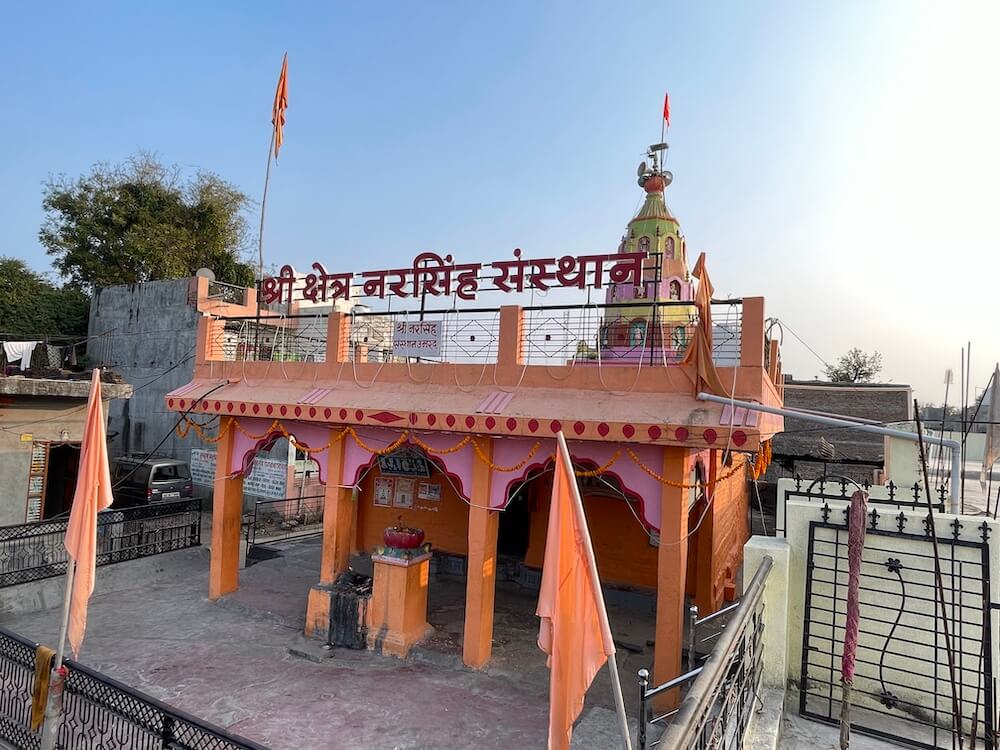
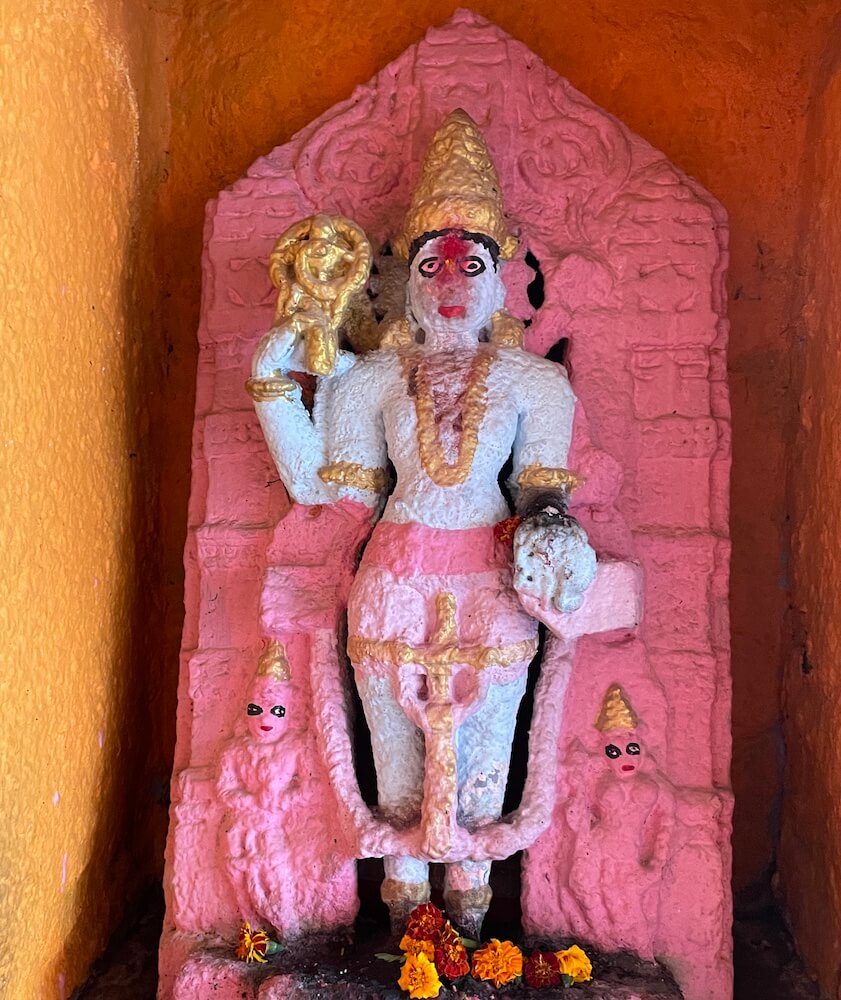
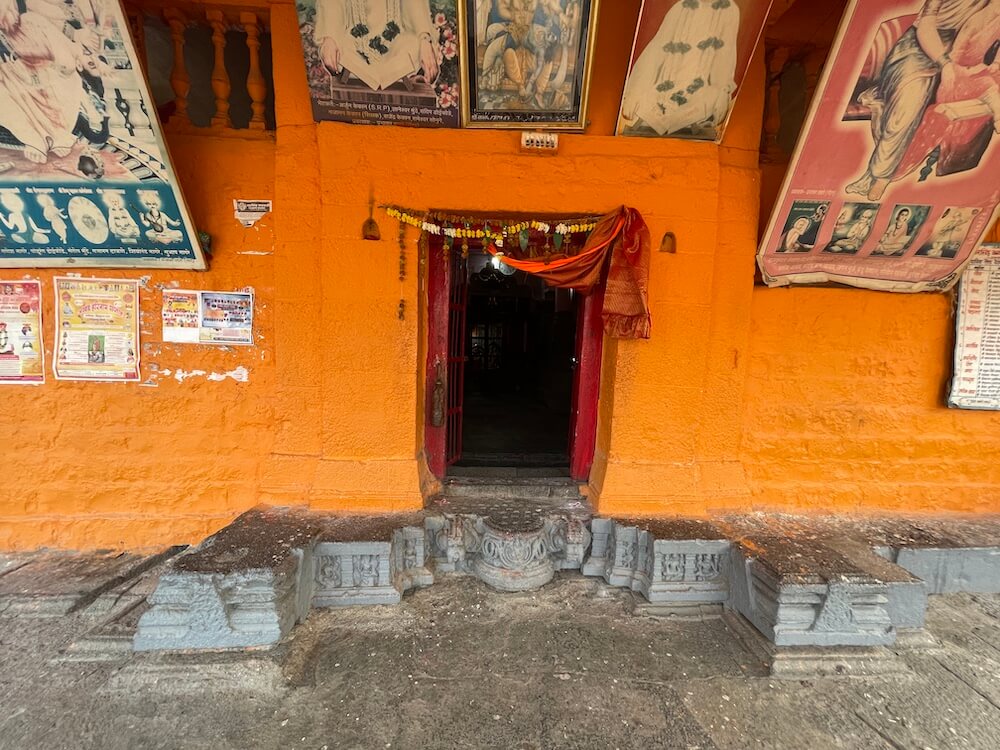
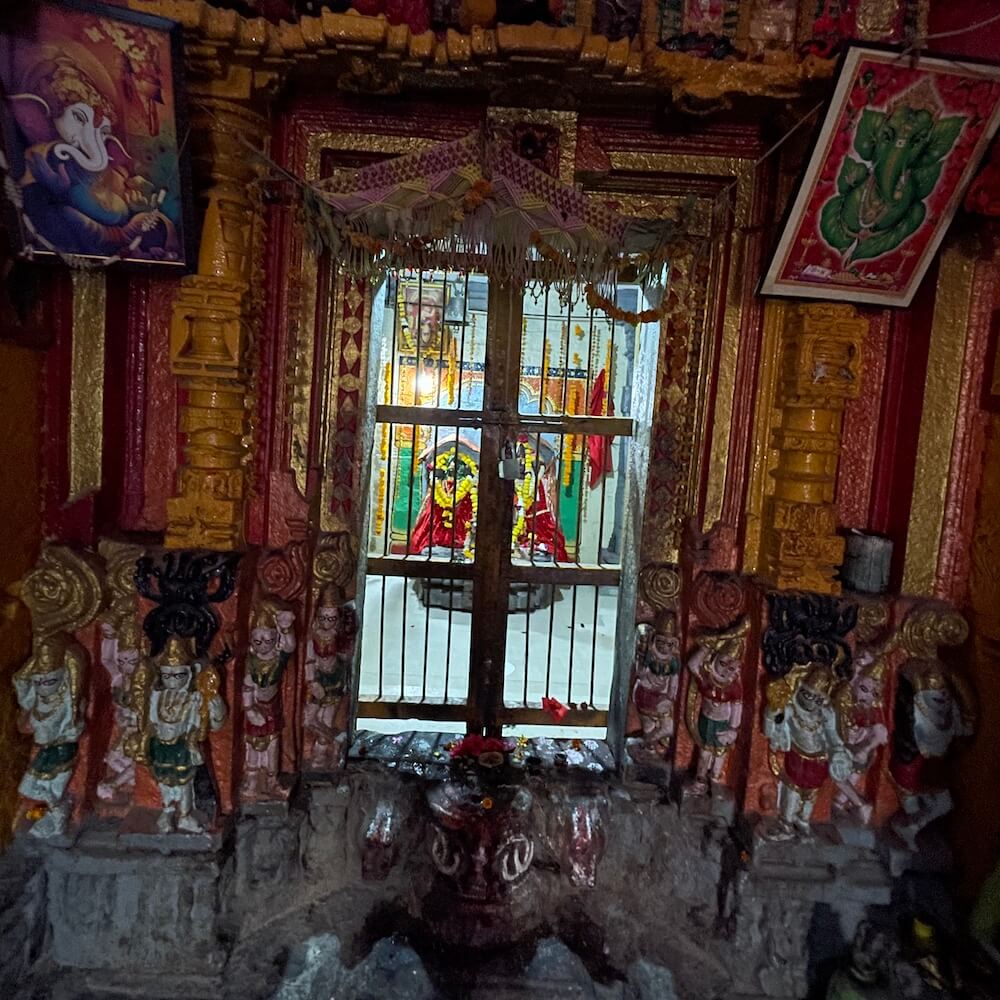
Situated in the heart of Umard village, this temple is built on a high plinth. The temple structure consists of an open mandapa, a sabhamandapa (assembly hall), an antarala (vestibule), and a garbhagriha (sanctum sanctorum). In the area in front of the semi-open mandapa, there is a Tulsi Vrindavan, and on a nearby platform, there are idols of a Shiva Linga and Nandi. On the threshold of the entrance to the sabhamandapa, a Kirtimukha and other sculptures are carved. Through this entrance, one enters the enclosed sabhamandapa. In the center of the sabhamandapa, between four stone pillars, there is a Rangashila (ceremonial stone) on the floor. There are niches on the front wall of the antarala. On the doorframes of the entrance to the garbhagriha located in the antarala, sculptures of Ganga, Yamuna, and gatekeepers are carved. There is also beautiful craftsmanship on the pillars of this entrance. Inside the garbhagriha, the idol of Narasimha is placed on a stone Vajrapitha. Hiranyakashipu is seen on the lap of this idol, while the idols of Prahlada and Lakshmi are nearby. In front of these idols, there is a small brass idol of Narasimha. Above the garbhagriha, there is a three-tiered shikhara. The niches on this painted shikhara contain idols of various deities. Outside the temple, a sculpture of the Matsya Avatar can also be seen.
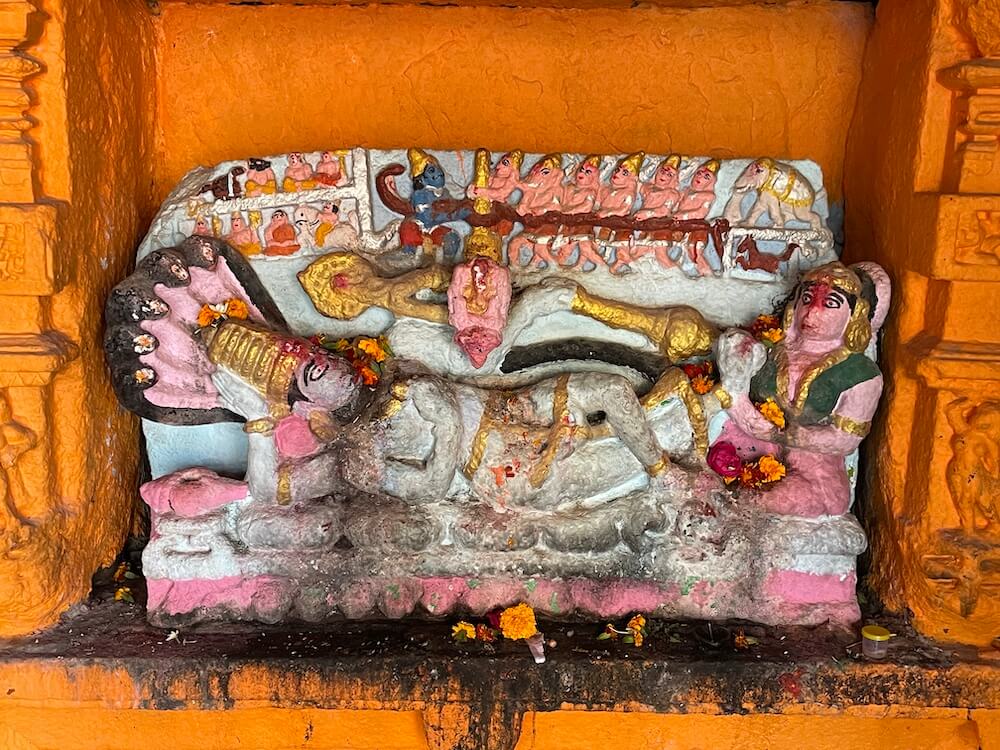
Adjacent to the temple is a cloister-like structure. In the temple premises, on the front side, there is an old stepwell (barav). There are stone steps on all four sides to descend into this stepwell. In the past, water from this stepwell was used to bathe the idols in the garbhagriha. On the edge of this stepwell, there are three niches. In the central niche, there is a unique sculpture of Sheshashayi Vishnu. A sculpture of Lakshmi is carved near the feet of Vishnu. The scene of the churning of the ocean (Samudra Manthan) is carved above the Sheshashayi Vishnu sculpture. In another niche, there is a four-armed idol of Goddess Saraswati, holding a Veena and a manuscript in her hands. The third niche contains an idol of Ganesha.
In this temple, Kakad Aarti is performed every day at 4:30 AM, and Haripath is recited in the evening. During this time, an offering of Shira-Puri is made to the idol of Narasimha. Narasimha Jayanti is the main festival here, and a seven-day Navratri festival is celebrated on that occasion. During this festival, religious programs such as Bhajans and Kirtans are organized. On the final day, a Mahabhandara (community feast) is organized through public contributions.
This sacred temple stands as a testament to deep spiritual devotion, ancient architectural grandeur, and rich local cultural traditions.
The sanctum sanctorum houses the divine idol consecrated according to ancient Vedic traditions, surrounded by serene courtyards and traditional temple architecture.
Navratri, Maha Shivratri, Annual Temple Jatra & Deepotsav
Compare and book flights, secure top-rated local hotels near the temple, hire reliable guides, and rent cars instantly.
Extend your pilgrimage by visiting other highly sacred temples located nearby.


Add ₹999 more to unlock FREE SHIPPING!
Your sacred cart is currently empty.
Shop Photo FramesFill in your delivery details below to place your order.
Add comment