
Add ₹999 more to unlock FREE SHIPPING!
Your sacred cart is currently empty.
Shop Photo FramesHelas, nestled in Mantha Taluka of Jalna District, is a historical village that preserves the heritage of ancient culture. The ancient Mahadev Temple here is considered a great place of devotion for devotees from the entire surrounding region (Panchkroshi). According to historical records, in ancient times, this village was known as Helavantinagari. This village is also referred to as ‘Palthi Nagari’ (the inverted city) in some places, as many ancient idols were found in an inverted position during excavations carried out here in earlier times. Significantly, Hemadripant, who is considered the progenitor of the Hemadpanti architectural style, resided in this village for some time, and it is said that an idol of his is also present in the vicinity of the ancient Mahadev Temple.
To the south of Helas village, there are two ancient idols, three feet tall and in a seated posture. Local people respectfully refer to them as ‘Mama-Bhache’ (maternal uncle-nephew). However, according to the estimates of some historians and experts, there is a strong possibility that one of these idols is that of Hemadripant. Hemadripant was the Prime Minister of the Yadava Empire of Devagiri in the thirteenth century. He served as the chief administrator, or ‘Karanadhip,’ during the reigns of King Mahadev and King Ramchandra Yadav of Devagiri. Hemadripant is regarded as the progenitor of Hemadpanti architecture and the Modi script.
It was he who introduced the Modi script into official use and secured royal patronage for it at that time. The significant impact of his historical work is prominently visible in Helas village. This village, where numerous ancient ruins are found, is blessed with a mythological, rich cultural, and historical heritage. Besides the Hemadpanti style temples here, many idols in a dilapidated state are still found scattered in the vicinity. Furthermore, numerous inscriptions carved in Modi script and ancient stone pillars can be seen in the Pandavghat area by the river.
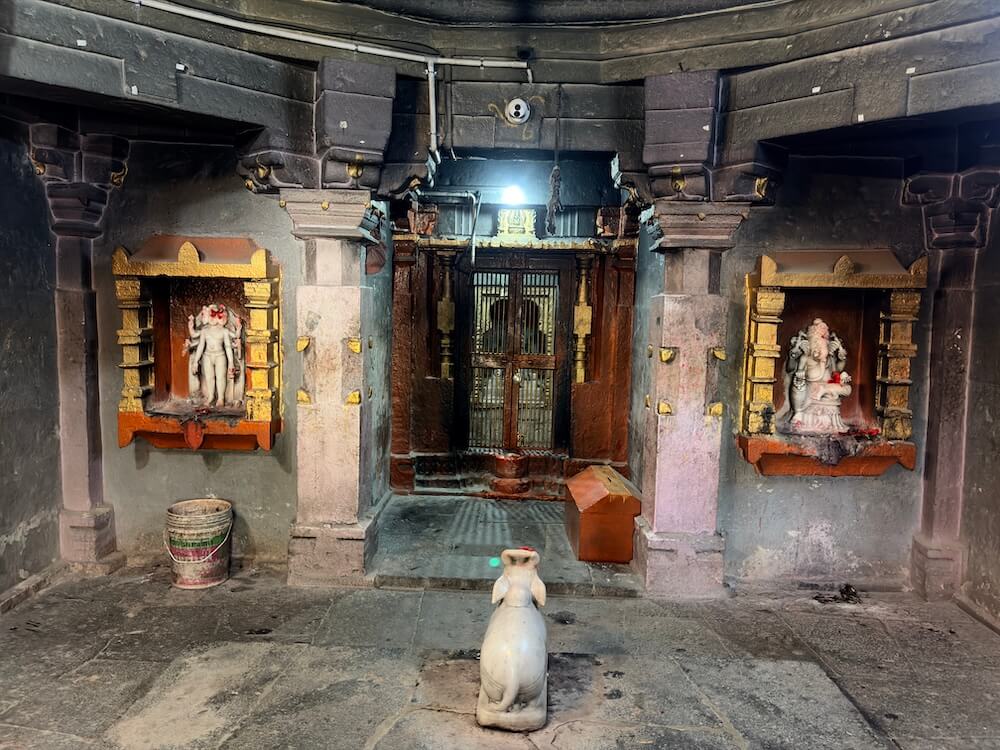
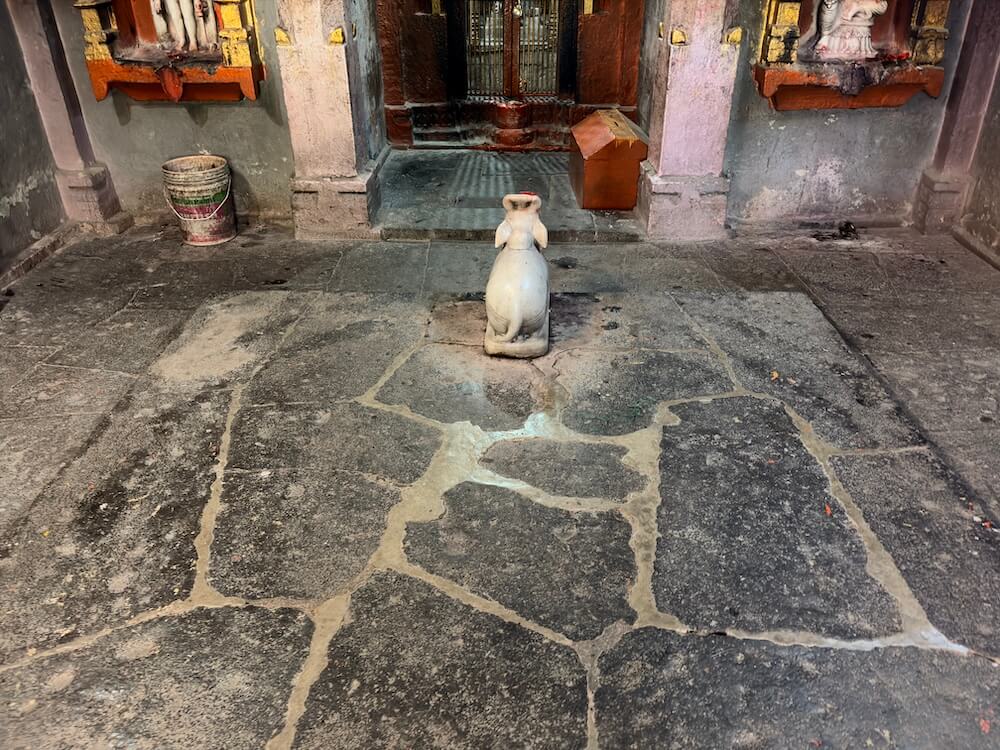
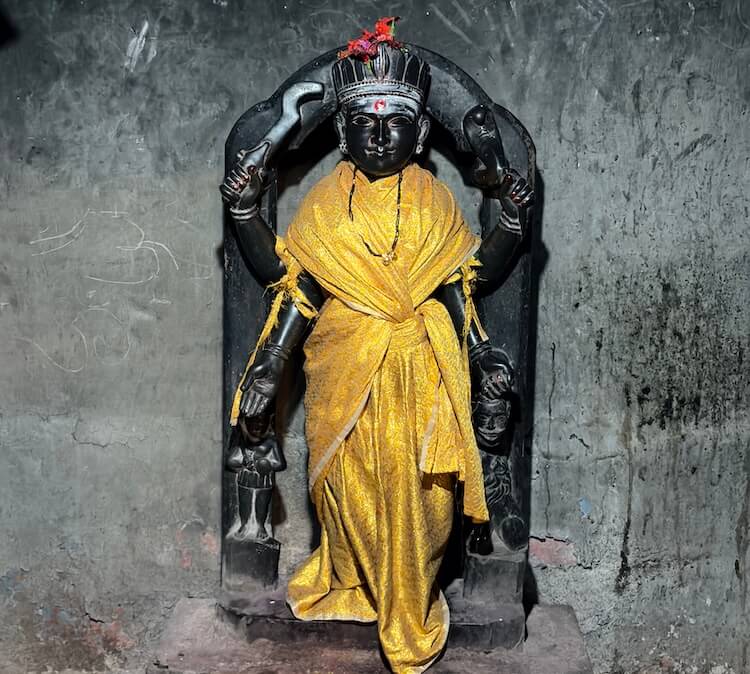
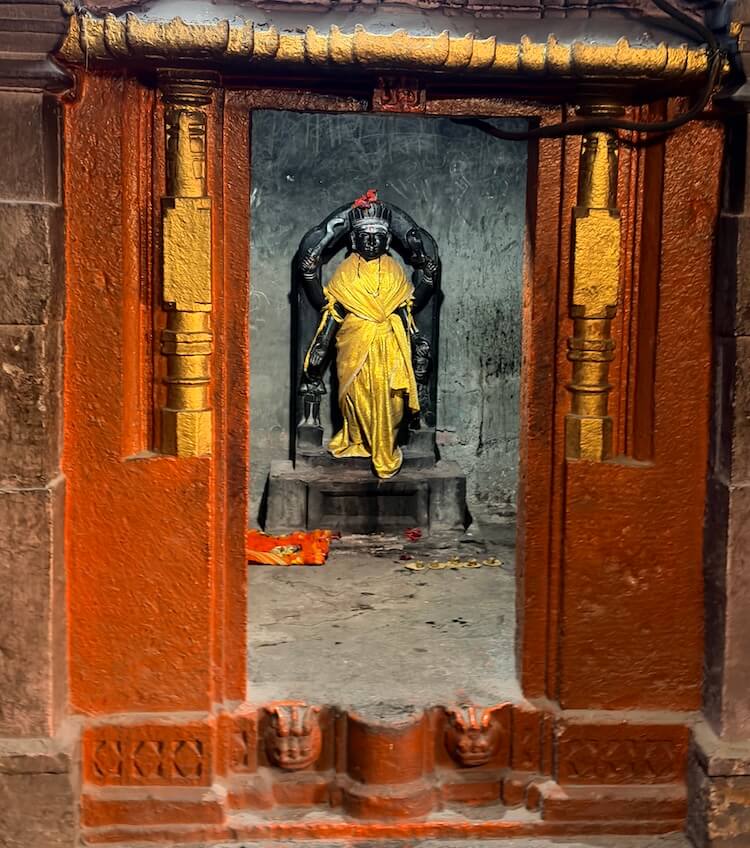
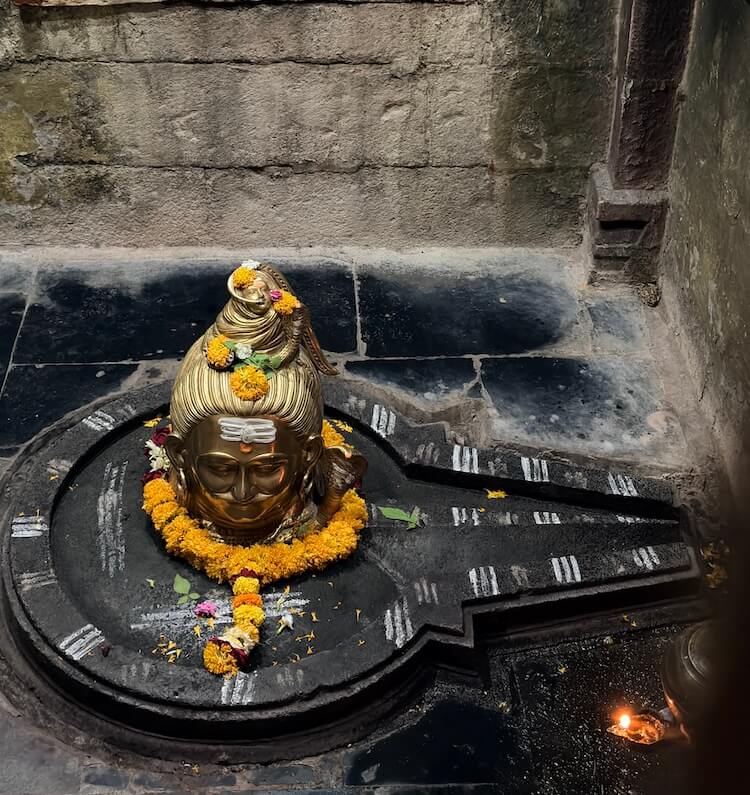
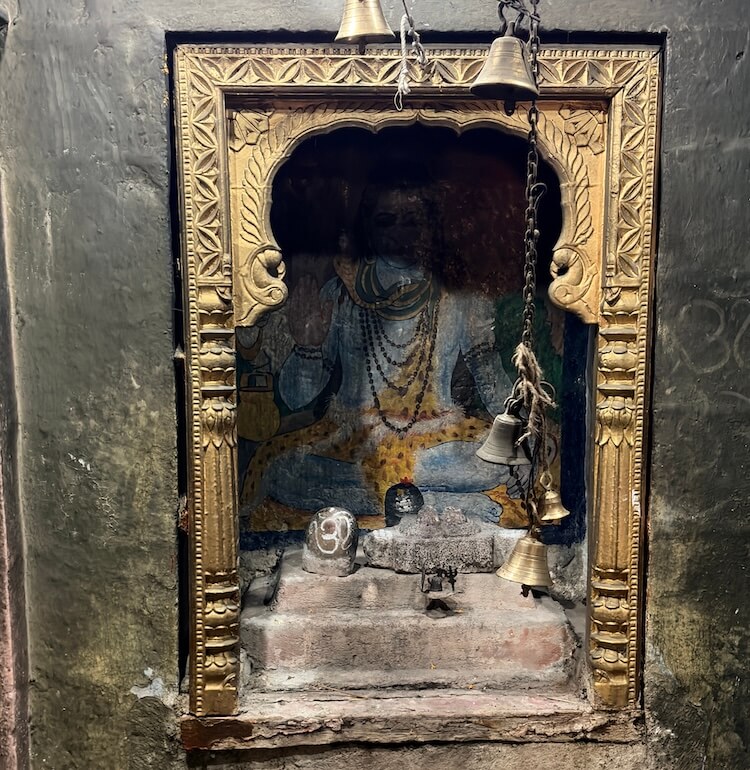
This ancient Mahadev Temple in Helas features a large and spacious courtyard. The entire temple showcases a beautiful blend of old stone architecture and new, modern construction. Upon entering from the temple courtyard, one steps into a newly constructed semi-open mandap in front of the temple. Moving further from this mandap, the original old Sabhamandap (assembly hall) of the temple begins. An idol of Ganesha is carved on the Lalatabimba (lintel) of the Sabhamandap’s entrance. The temple has an ancient stone threshold and an exquisite Dwarashakha (doorframe). The old Sabhamandap also features a large, tapering roof in the traditional style. This Sabhamandap is supported by stone pillars. Niches (Devakoshtake) have been created in the walls. In the niche on the left, an idol of Lord Datta is enshrined, while in the niche on the right, an idol of Shri Ganapati is seated. Within the Sabhamandap, there is a Nandi idol made of white marble. The threshold of the main Garbhagriha (sanctum sanctorum) is somewhat elevated. Here too, there is a three-tiered Dwarashakha and a Ganesha idol on the Lalatabimba. An ancient Shivalinga is consecrated in the Garbhagriha, and a brass mask is placed upon it for daily worship. Alongside the Shivalinga, in a separate small shrine nearby, there is an idol of Parvati made of black stone. The four-armed Goddess holds a weapon in one of her hands. Such a placement of Shiva and Parvati within a Mahadev temple is rarely seen. Along the Pradakshina Marg (circumambulatory path) of the temple, one can observe sturdy construction made by stacking ancient shilas, or large stones, upon one another. The overall construction of the temple is an excellent example of ancient stone architecture. The main Garbhagriha of Mahadev is slightly below ground level.
Adjacent to this Mahadev Temple is a historical Barav, or stone stepwell. This stepwell is thirty feet wide, square in shape, and has a total depth of approximately fifty-five feet. This ancient stepwell, built entirely of stone, is completely filled with water during the monsoon season due to water accumulation. Inside this stepwell, exquisitely carved idols of Nandi and Ganapati are installed. Due to some deterioration over time, the villagers took the initiative to repair this historical stepwell.
Every year, a grand fair (Jatra) is held at this temple in Helas on Mahashivratri. Additionally, during the month of Shravan, a large number of devotees gather for Darshan. Hundreds of devotees, not only from Helas village but also from the entire surrounding region (Panchkroshi), including areas like Mantha, Ranmala, Limbewadgaon, Karnaval, Borkini, and Tokwadi, come to this temple with great devotion for Darshan. During these fairs and festivals, ritualistic Abhisheka, community feasts (Bhandara) of Mahaprasad, and various programs of Bhajans and Kirtans are enthusiastically held in the temple during the night. Along with these festivals, the annual Ganeshotsav celebrated in this village is also a major religious festival for devotees from the Panchkroshi.
This sacred temple stands as a testament to deep spiritual devotion, ancient architectural grandeur, and rich local cultural traditions.
The sanctum sanctorum houses the divine idol consecrated according to ancient Vedic traditions, surrounded by serene courtyards and traditional temple architecture.
Navratri, Maha Shivratri, Annual Temple Jatra & Deepotsav
Compare and book flights, secure top-rated local hotels near the temple, hire reliable guides, and rent cars instantly.
Extend your pilgrimage by visiting other highly sacred temples located nearby.


Add ₹999 more to unlock FREE SHIPPING!
Your sacred cart is currently empty.
Shop Photo FramesFill in your delivery details below to place your order.
Add comment