
Add ₹999 more to unlock FREE SHIPPING!
Your sacred cart is currently empty.
Shop Photo FramesThe ancient Samadhi temple of Raja Bhartriharinath, one of the Navnath saints of the Nath Sampradaya, is located at Harangul in the Gangakhed taluka of Parbhani district. Raja Bhartriharinath, the stepbrother of King Vikramaditya of Ujjain, received initiation into the Nath Sampradaya from Guru Gorakshanath. This site at Harangul is renowned as the Vastra-Samadhi (garment shrine) of Raja Bhartriharinath, preserved in the form of sacred ash (Bhasma). This temple is a place of deep faith for many devotees across Marathwada and Vidarbha. A fair is held here every year on Nag Panchami. It is the firm belief of the devotees that during this fair, an anthill forms over the Samadhi site. On this day, the serpent king (Nagraj) is believed to emerge from the anthill in serpentine form to drink milk kept in a vessel within the sanctum sanctorum.
This temple and village possess a rich historical and sectarian heritage. The Nath Sampradaya is considered one of the most significant Shaiva traditions of medieval Indian history. The term ‘Nath’ refers to the Lord who protects, and the tradition of these Lords is defined as the ‘Nath Sampradaya’. This sect is believed to have emerged roughly between the tenth and twelfth centuries. There are many differing opinions among historians regarding the origin, root location, naming, and founders of this sect. Some believe the tradition originated from Adinath Parameshwar Shiva. Another view suggests that the sect emerged from the earlier Pashupata, Kapalika, Kalamukha, Yogini Kaula Marga, and the tradition of the eighty-four Siddhas. To study the philosophy of this sect, texts such as ‘Kaulajnana-nirnaya’, ‘Matsyendra-samhita’, ‘Siddha-siddhanta-paddhati’, ‘Goraksha-shataka’, ‘Amaraugha-shasana’, ‘Maharthamanjari’, and ‘Goraksha-samhita’ are considered highly significant. The primary goal of the followers of this path is to attain the state of Siddha or Avadhuta through the path of Yoga. When followers of this Guru-Shishya lineage meet, they respectfully greet each other with the word “Aadesh”.
In the Nath Sampradaya, special importance is given to the Navnaths: Matsyendranath, Gahininath, Jalandharnath, Kanifnath, Charpatinath, Nagnath, Revanath, Bhartriharinath, and Gopichandranath. In the sectarian Marathi text ‘Navnath Bhaktisar’, these Navnaths are considered incarnations of the Nav-Narayanas. According to this religious tradition, Matsyendranath is considered the incarnation of Kavi-Narayana, Gorakshanath of Hari-Narayana, Jalandharnath of Antariksha-Narayana, Kanifnath of Prabuddha-Narayana, Charpatinath of Pippalayana, Nagnath of Avirhotra, Bhartrihari of Drumila-Narayana, Revanath of Chamasa-Narayana, and Gahininath of Karabhajana-Narayana. Many legends are prevalent regarding the birth of Raja Bhartriharinath, one of these Navnaths. According to one story, he is said to be the son of the Sun God. Another legend states that he was the stepbrother of the famous King Vikramaditya of Ujjain. He was known as an extremely learned and wise king. Raja Bhartriharinath had two wives. He became infatuated with a princess named Pingala and made her his third wife. However, after being betrayed by Queen Pingala, he embraced the life of a Sannyasi and handed over his entire kingdom to Vikramaditya. Subsequently, Gorakshanath initiated him into the Navnath Sampradaya. After his initiation, he performed severe penance in many places. Beyond Yoga and Tantra, he was also a scholar of music and literature. He is considered the author of many religious and philosophical texts. It is said that Bhartriharinath, the composer of the famous Shatakatrayi—‘Shringarashataka’, ‘Nitishataka’, and ‘Vairagyashataka’—also wrote a Sanskrit treatise on grammar titled ‘Vakyapadiya’. However, there are differing opinions among scholars regarding this. Many believe that the grammarian Bhartrihari who wrote ‘Vakyapadiya’ and the poet Bhartrihari who wrote the Shatakatrayi were two different authors who shared the same name. While wandering after leaving his kingdom, he arrived in the Harangul region. In ancient times, this area was covered in forests. It was here that his Vastra-Samadhi was established.
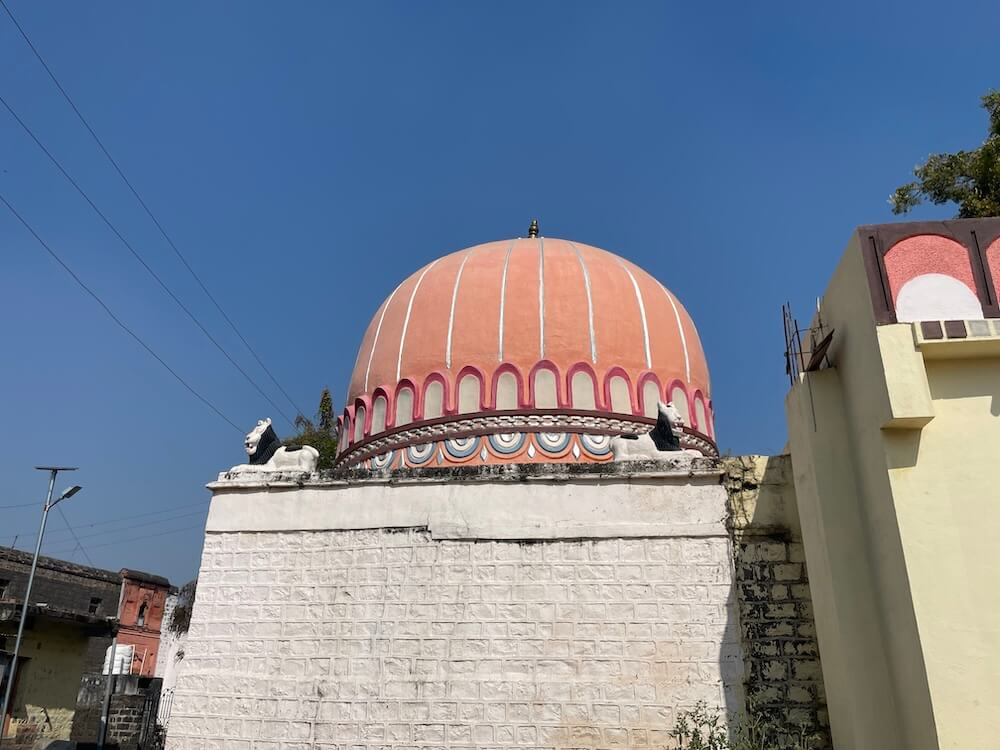
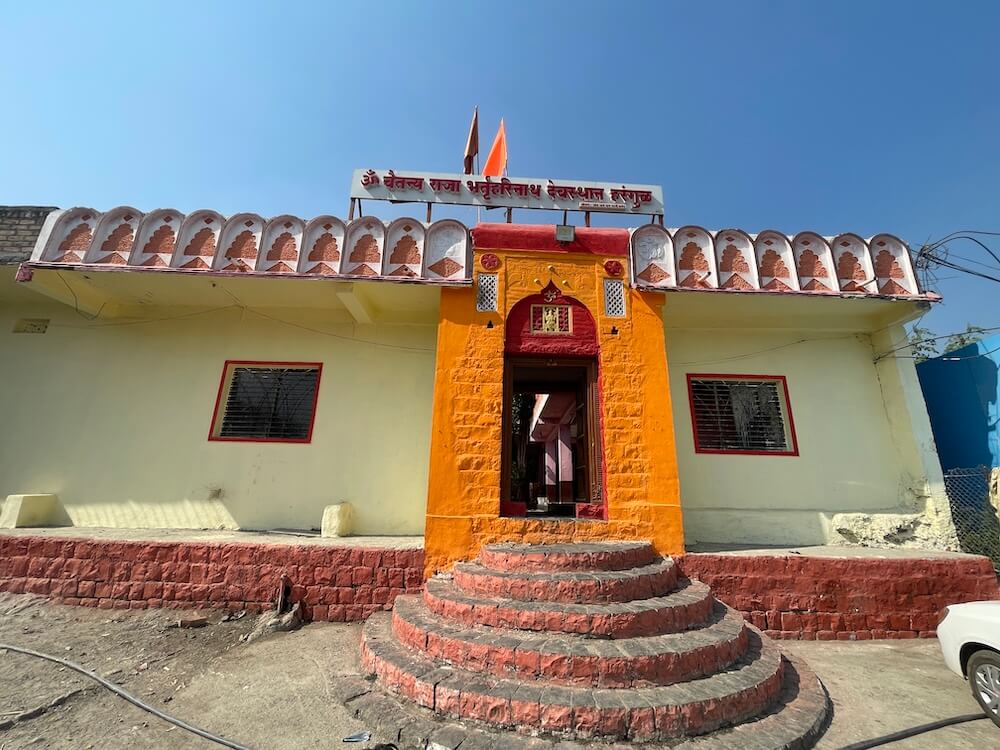
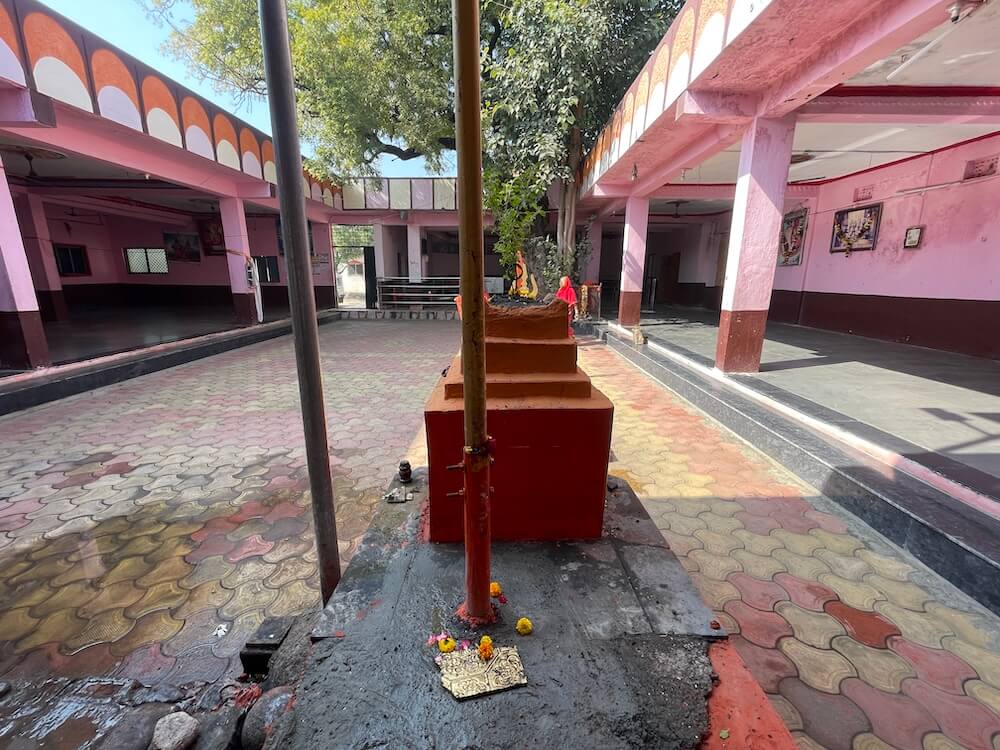
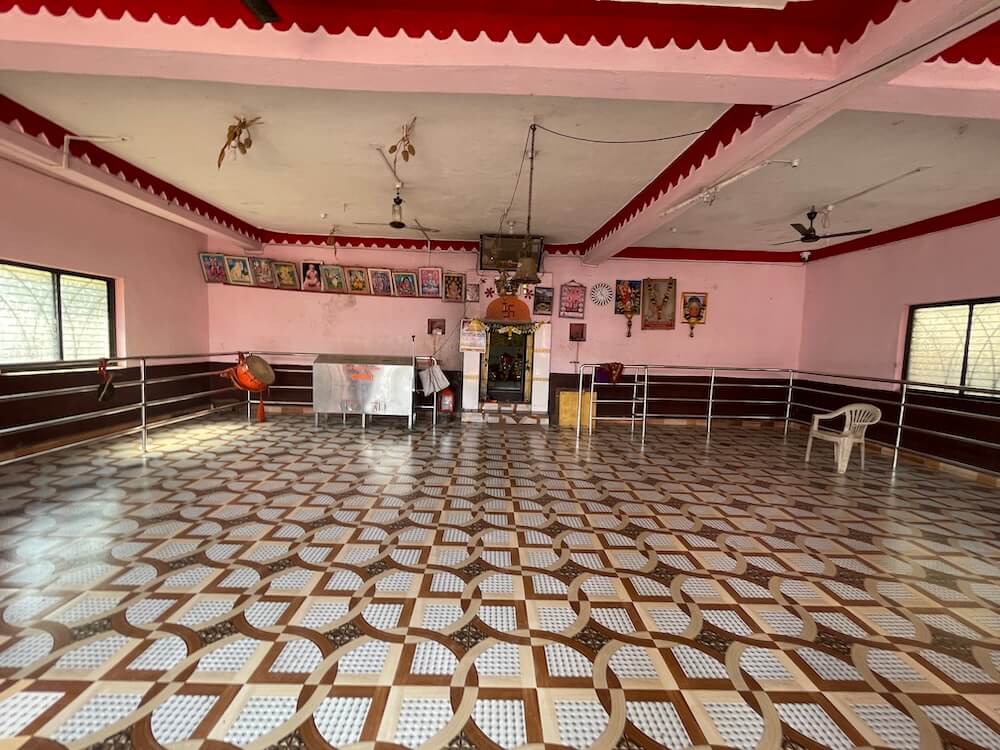
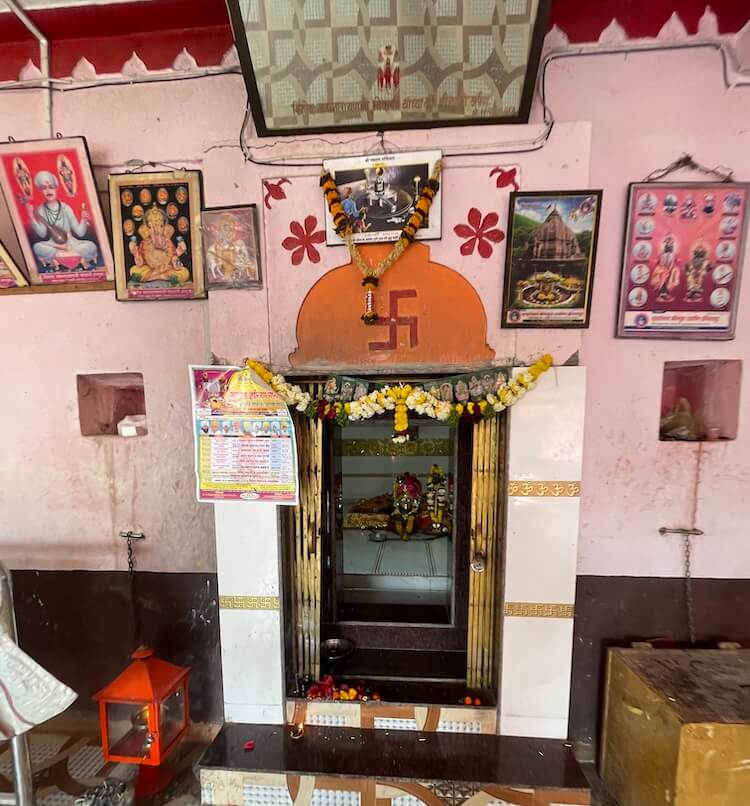
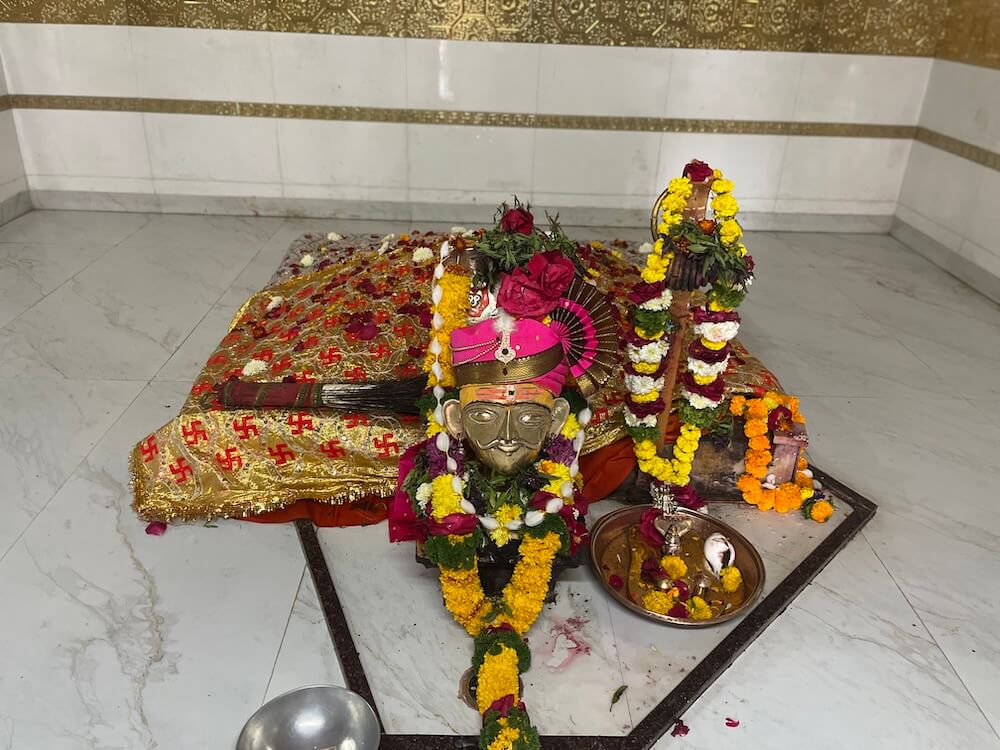
The Samadhi temple is located a short distance from the archway at the entrance of Harangul village. Upon entering through the main gate of the temple, one finds a small courtyard. The courtyard is constructed with pavilion-like structures on three sides. Moving forward from the courtyard, one first encounters a small shrine resembling a niche. A few steps in front of it, a Shiva Linga is installed on a high platform. Directly in front of this Shiva Linga is a sacrificial fire pit (Yajna-kunda). Local devotees firmly believe that if the ash from this pit is sprinkled in one’s fields or home, snakes will not enter. In the temple premises, idols of Vitthal and Rukmai are also installed. On the walls of the temple’s assembly hall (Sabha Mandapa), images of Raja Bhartriharinath and various deities are displayed. In the stone-built sanctum sanctorum, the Vastra-Samadhi of Raja Bhartriharinath is preserved in the form of sacred ash. A mask of the saint is kept in front of it, over which a serpent holds its hood. There is a dome-shaped spire over the sanctum. It is said that the leaves of a neem tree located within the temple premises taste sweet. A stone stepwell (Barav) is also built here, known as ‘Kallol-Tirth’. In the pavilion on the right side of the temple premises, facilities are provided for the stay of devotees arriving from afar. Devotees can also cook their own meals here. The Sansthan provides all necessary arrangements for water and utensils. A short distance from this main temple is the original Samadhi site of Raja Bhartriharinath. It is said that the priest here could not go to the original site daily for worship, so Raja Bhartriharinath himself came to the current temple location.
Many devotees visit this temple daily for Darshan. Aarti is performed in the temple every morning at 6 and every evening at 7. A special Aarti is held every Thursday at 12 noon, followed by the distribution of food (Annadan) to the devotees. There is an old tradition of smearing the Samadhi site with cow dung every Friday. Nag Panchami in the month of Shravan is the largest annual fair held at this temple. Many devotees from various parts of Vidarbha and Marathwada come here for Darshan during this festival. During the festival, an unbroken Harinam Saptah is organized here, and the entire temple is decorated attractively.
A unique legend is associated with this festival. On the evening of Shravan Shuddha Chaturthi, a vessel containing milk is placed inside the sanctum sanctorum, and the doors are closed. On this day, an anthill spontaneously forms over the Samadhi within the sanctum. It is the firm belief of the devotees that between midnight at 12 and 4 in the morning on Nag Panchami, King Bhartruharinath emerges in the form of a serpent from the anthill on the Samadhi. They believe he drinks the milk from the vessel, circles the sanctum, and returns into the anthill. The next morning, on Nag Panchami, a palanquin procession carrying the mask of King Bhartruharinath departs from the main temple located at some distance. This palanquin is first taken to the original Samadhi site. Thereafter, it is taken on a circumambulation through the entire village. Once the village circumambulation is complete, the palanquin returns to the main temple, and the doors of the sanctum are opened. At that time, it is found that the milk in the vessel has been completely consumed. Various religious programs are organized here on the day of Nag Panchami. Devotees can have Darshan here every day from early morning until late at night.
This sacred temple stands as a testament to deep spiritual devotion, ancient architectural grandeur, and rich local cultural traditions.
The sanctum sanctorum houses the divine idol consecrated according to ancient Vedic traditions, surrounded by serene courtyards and traditional temple architecture.
Navratri, Maha Shivratri, Annual Temple Jatra & Deepotsav
Compare and book flights, secure top-rated local hotels near the temple, hire reliable guides, and rent cars instantly.
Extend your pilgrimage by visiting other highly sacred temples located nearby.


Add ₹999 more to unlock FREE SHIPPING!
Your sacred cart is currently empty.
Shop Photo FramesFill in your delivery details below to place your order.
Add comment