
Add ₹999 more to unlock FREE SHIPPING!
Your sacred cart is currently empty.
Shop Photo FramesStanding for at least three hundred and seventy-five years in the middle of the riverbed is the Maruti temple at Bahe in Walwa taluka. This temple, one of the eleven Maruti shrines established by Samarth Ramdas Swami, is situated on a small island. There is also a Rama temple here. Lord Rama had consecrated a Shiva Linga at this sacred site, which is why it is also known as Ramling Tirtha. Another such island in the Sangli district is located in Yelur. There is also a Ramling Mahadeva temple here; however, this island is not in the Krishna riverbed but has been formed within a vast reservoir.
According to mythological legends, Lord Shriram was an avatar of Lord Vishnu. Even so, in this avatar, He used to worship Mahadeva. At Rameshwar, Shriram had consecrated a Shivalinga. There are stories that during His period of exile, wherever He stayed along with Sita and Lakshmana, He consecrated a Shivalinga and worshipped it. One such temple is in the village of Yelur in the Walwa region. It is said that Sage Valmiki himself resided in this area along with his disciples. Like the Ramling temple in Bahe village of this same region, the Shivalinga here was also consecrated by Shriram. That is why this Mahadeva also came to be named Ramling Mahadeva. It is also famous as the ‘Shiva Temple on the Island’.
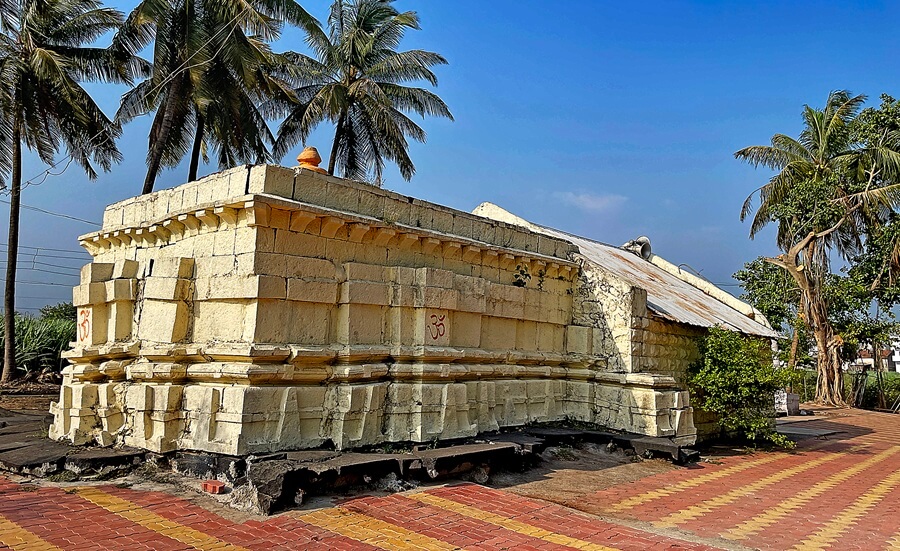
The exact period of this temple’s construction and the historical facts behind it remain unknown. However, the architectural style of this temple is Hemadpanti, also known as the dry-masonry style. In the dry-masonry style, construction is done by stacking stone upon stone without the use of materials like lime or cement. This temple is built in this very manner. This method was [patronized by]Ramdevrai Yadav. It later came to be known by the name of Shrikaranadhipa (Prime Minister) Hemadpant, also known as Hemadri Pandit. Hemadpant was a contemporary of Saint Dnyaneshwar. Based on this, scholars estimate that this temple in Yelur must date back to the period after the thirteenth century.
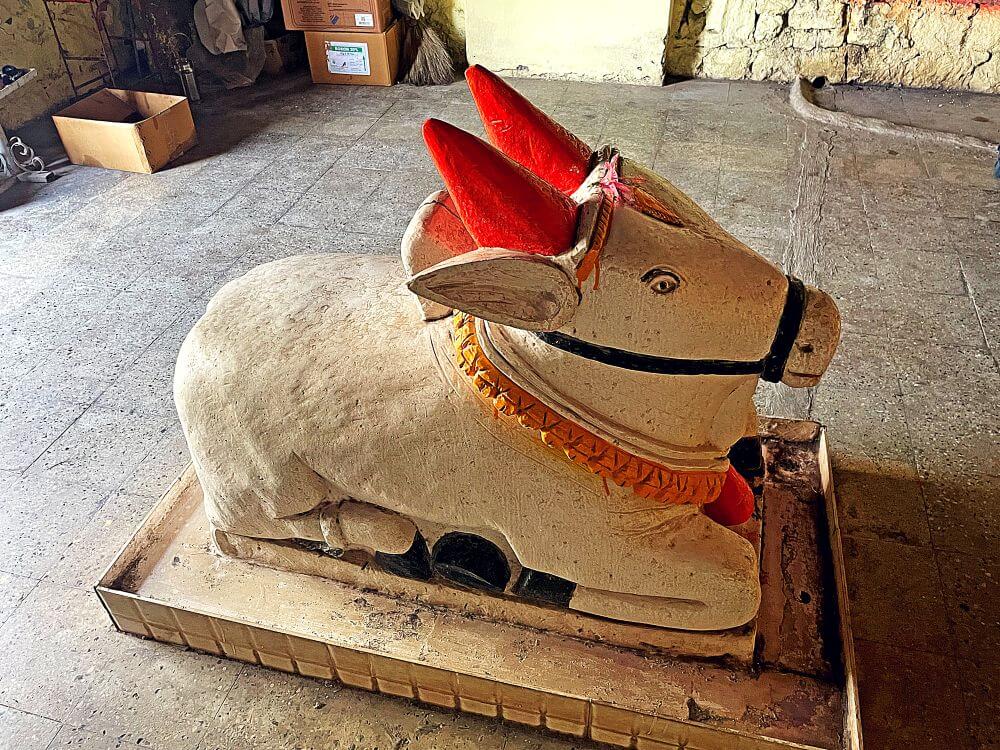
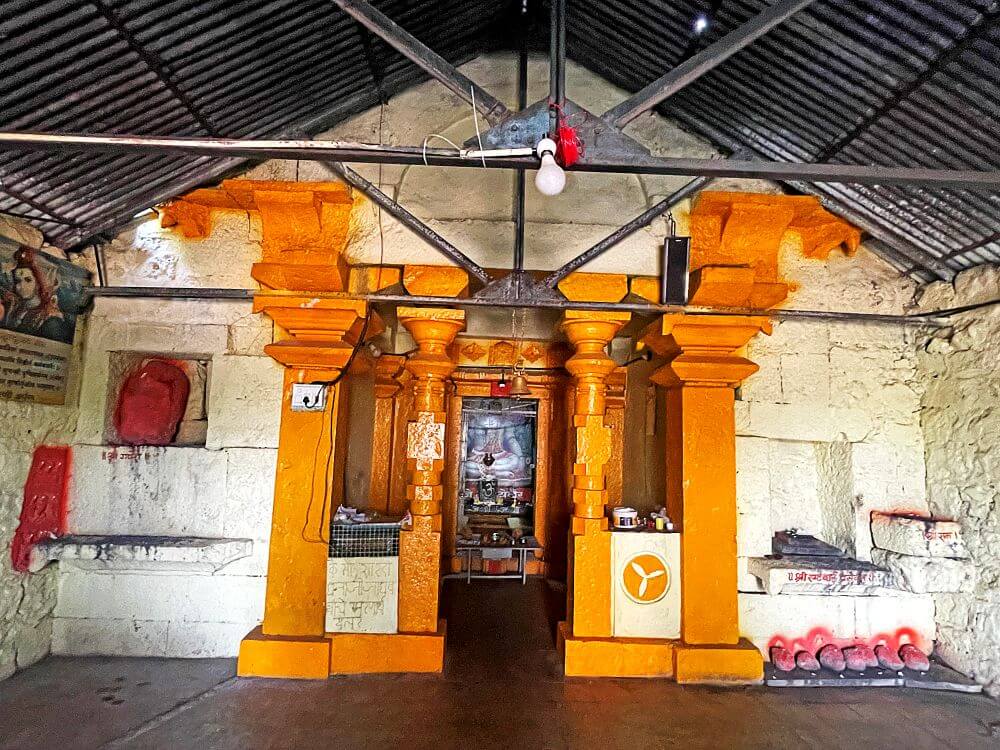
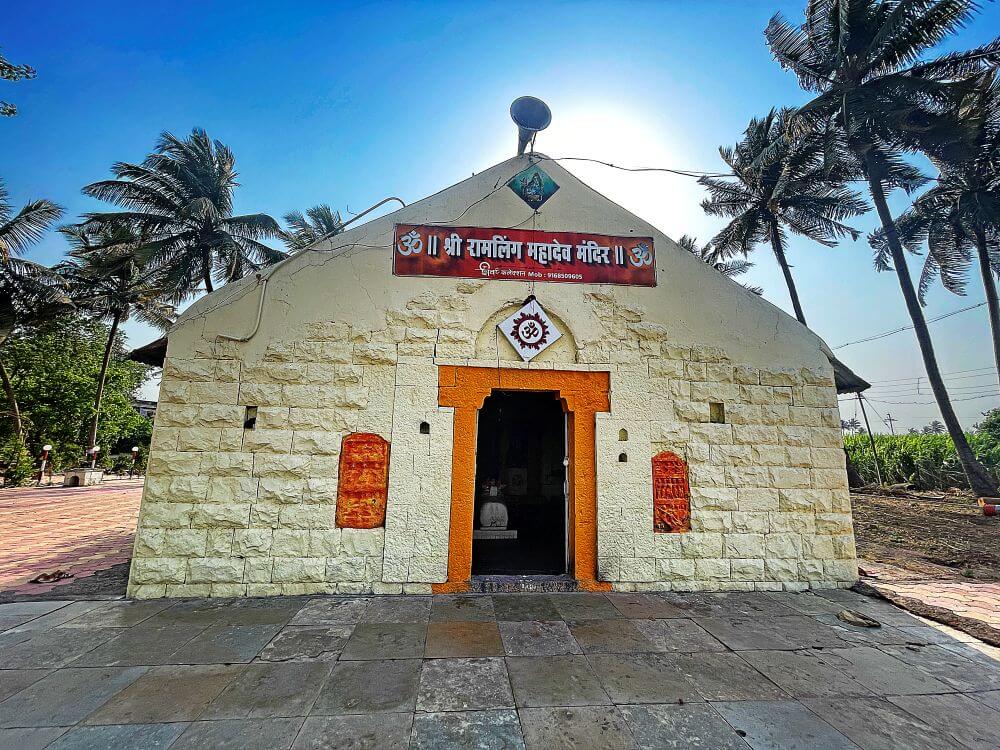
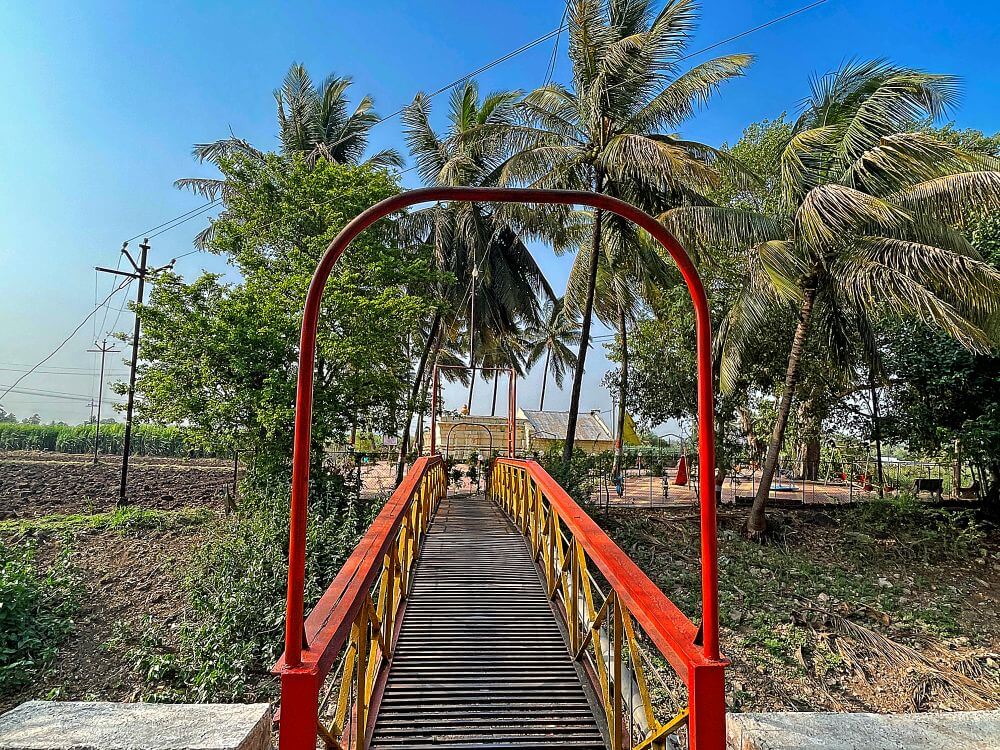
This island in Yellur is large in size, so much so that it even contains the farmlands of the local villagers. Nestled within the expansive courtyard of one such orchard lies the temple of Ramling Mahadev. In the past, especially during the monsoon season, reaching this temple premises was a formidable task. However, a pedestrian iron bridge has recently been constructed there, making access to the temple area much easier. The temple courtyard is paved throughout with paver blocks. In front of the temple, on a stone platform, stands an ancient four-tiered stone lamp pillar (Deepmal). In front of it is a stone-carved idol of Nandi. The structure of this temple consists of a Sabha Mandap (assembly hall), Antaral (vestibule), and Garbhagriha (sanctum sanctorum). The Sabha Mandap has a sloping metal sheet roof on both sides. This Mandap is original It appears to have been constructed after the building of the main temple. The entrance to the assembly hall is made of stone and features a simple design. Above it, in the upper section, is an image of the Omkara. On both sides of the entrance, ancient hero stones are embedded in the walls. Upon entering, one immediately sees a colorful idol of Nandi. In the wall on the right side of the assembly hall, a relief panel of the Ashta Matrikas (the eight mother goddesses) is installed at the lower level. It is generally believed that the number of Matrikas is seven; therefore, in many places, one finds a Saptamatrika panel. However, according to the second volume of the Devikosha, Lord Shiva created a group of 190 Matrikas. In the temple at Yelur, there is a panel featuring eight of these Matrikas: Brahmani, Vaishnavi, Aindri, Chamunda, Maheshwari, Kaumari, Varahi, and Yogeshwari. The idols of the Matrikas here are in a seated posture. The Suprabhedagama Tantra scripture suggests that an idol of Lord Ganesha should be carved into such a Matrika panel for their protection. In accordance with this, an idol of Ganesha is indeed carved into the left corner of the Ashta Matrika panel here.
The inner sanctum of the temple features intricately carved stone pillars. From their exquisite carvings Their antiquity is evident. The pillars on the outer side are square at the base. At their summits are square capitals, and above them are bracket capitals. The inner pillars are square at the base, while they are octagonal and square in the middle section. On the front wall of the Antarala, to the left, is a vermilion-anointed stone idol of Lord Ganesha. On the right side is the shrine of Satvai. Here, Satvai is worshipped in the form of Padukas. There are also seven stones at this place. It is said that they are symbols of the Saptamatrikas.
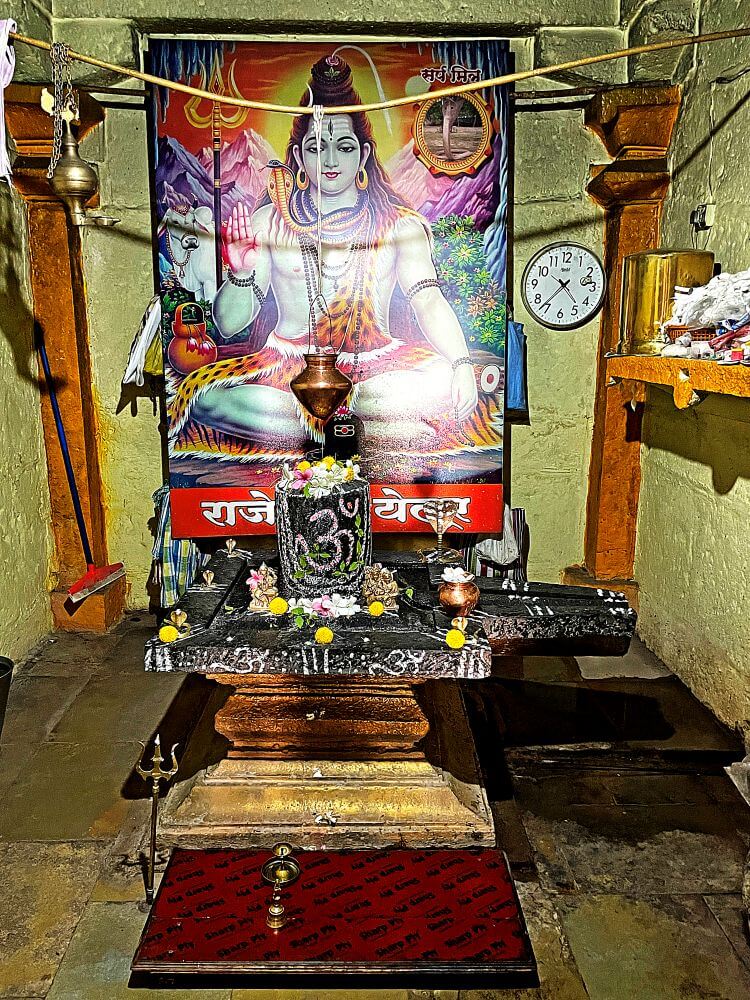
The entrance to the sanctum sanctorum is also carved in stone. At the threshold of this single-jamb entrance lies a semicircular moonstone. An image of Lord Ganesha is placed at the lintel of the door frame. The upper section also features intricate carvings. In the center of the sanctum sanctorum stands the Ramling Mahadev Shiva Linga. This Linga is distinct and unique compared to the Shiva Lingas in other temples. It is situated above the ground level. It consists of three parts: the Brahma-bhaga, the Vishnu-bhaga, and the Rudra-bhaga. The lower square section of the Linga is called the Brahma-bhaga. The section above it The Vishnu-bhaga is the middle section, and the uppermost cylindrical, rounded part is known as the Rudra-bhaga. Often, the Brahma-bhaga and Vishnu-bhaga are buried underground. In the Shivling at the Ramling Temple, all three parts are situated above the ground level. The base of the lingam, the Shalunka, is square, and the Rudra-bhaga of the lingam above it is a tall cylinder. An Abhishek-patra (consecration vessel) is suspended over this lingam. On the back wall of the sanctum sanctorum, a large image of Shankar in a serene expression is installed.
The outer walls of the sanctum sanctorum are constructed by placing rectangular stone slabs one above the other. The lower layer of these walls is relatively low in height. Above it are two rows of moldings. The central section consists of large, flat stone slabs. The topmost part features decorative wave-like carvings. Above that is a parapet-like section of the roof. The temple has a low, small spire topped with a two-tiered amalaka. This temple is similar to the Bhumija style temples seen in many places across Maharashtra. Its outer and inner walls, as well as its pillars, are unadorned.
Every Monday, and especially on the Mondays of the holy month of Shravan, there is a large influx of devotees at this temple. The festival of Mahashivratri is celebrated here with great enthusiasm. Likewise, as there is a shrine of Satwai Devi in the temple, many mothers come here with their newborn infants for darshan. Based on the temple’s renown and the number of devotees visiting, the Government of Maharashtra has honored this temple by granting it the ‘C’ grade status of a pilgrimage site.
This sacred temple stands as a testament to deep spiritual devotion, ancient architectural grandeur, and rich local cultural traditions.
The sanctum sanctorum houses the divine idol consecrated according to ancient Vedic traditions, surrounded by serene courtyards and traditional temple architecture.
Navratri, Maha Shivratri, Annual Temple Jatra & Deepotsav
Compare and book flights, secure top-rated local hotels near the temple, hire reliable guides, and rent cars instantly.
Extend your pilgrimage by visiting other highly sacred temples located nearby.


Add ₹999 more to unlock FREE SHIPPING!
Your sacred cart is currently empty.
Shop Photo FramesFill in your delivery details below to place your order.
Add comment