
Add ₹999 more to unlock FREE SHIPPING!
Your sacred cart is currently empty.
Shop Photo FramesMany saints and fakirs who proclaimed the spiritual unity of the Bhakti tradition among Hindus and the Sufi path among Muslims have graced Maharashtra. Among these Varkari saints, the names of Muslim saints such as Sheikh Muhammad, Sheikh Farid, Sheikh Sultan, Sheikh Sayyad, Chand Bodhale, Angadshah Fakir, and Latif can be mentioned. Just like these saints, Sambhuappa from the math in Islampur made a successful effort to foster religious harmony. Buwa Phan, a Muslim Auliya, was his guru. The samadhi shrines of this guru and disciple are located in the math here.
Near here, in the village of Malgaon, is the ancient Dargah of Buwa or Baba Fun. According to information in the ‘Sangli Gazetteer’, there are many miraculous tales of Buwa Fun. Devotees believe that if one makes a vow to Buwa Fun, they are blessed with the birth of a son. Therefore, on the first [date/day] following Kartik Purnima Thousands of Hindu and Muslim devotees gather here for the Urs held on Tuesdays. After the fulfillment of their vows, people offer cradles made of gold, silver, or wood. Sambhuappa was a disciple of Buva Phan. The legend about him states that he was on his way to Kolhapur after having the darshan of Matsyendranath at Machhindragad. While he was passing along the road near Islampur, a person named Khelji Patil saw him and noticed that the load on his head was floating in the air.
Witnessing this miracle, Khelji Patil recognized that he was a Siddha Purusha (an enlightened soul) and, having accepted discipleship under him, insisted that he stay here. It is said that this event took place about three hundred and fifty years ago. At that time, Khelji Patil donated about one hundred acres of land and established a Matha here. Following this, the fame of Sambhuappa gradually began to spread. People started coming to him in large numbers. Sambhuappa would impart the message of equality to them.
Many stories of the miracles of Sambhuappa are narrated here. According to one story, some people from the village expressed their desire to Sambhuappa to undertake the Pandharpur Wari. At that moment, he granted them the experience of divine trance right where they were seated, enabling them to complete the Pandharpur pilgrimage. Some individuals from the Muslim community were displeased when the Muslim Auliya Buwa Phan initiated Sambhuappa as his disciple. Once, they came to the Math to confront Sambhuappa. At that time, Sambhuappa wrote out the Quran for them to see. Realizing then that Sambhuappa was a Siddha, those people surrendered before him. Once, some mischievous people brought cooked meat for Sambhuappa to eat. However, as soon as the vessel containing the meat was opened, hibiscus flowers emerged from it. According to another legend, some When anti-social elements threw stones at Sambhuappa, those stones turned into mangoes.
The entrance to this monastery, which features strong fortifications, shows the influence of both Hindu and Islamic architectural styles. On both sides of the entrance are platforms with ornate square pillars. Lion sculptures are carved at the base of the pillars, with decorative bands above and below them. The door frames of the entrance are adorned with painted floral patterns. The entrance has intricately carved wooden shutters, and there are guard rooms on both sides inside. The roof of the entrance features a parapet wall, with minaret-style pillars at all four corners topped by dome-shaped spires.
Upon entering through the main gate, there are gardens with various trees in the courtyard. Moving further ahead, there is a saltwater well enclosed within four walls. The legend associated with this is that once, the devotees of Sambhuappa prayed to him to save their sinking ship. At that time, Sambhuappa was sitting with his disciples. He suddenly became unconscious. When he regained consciousness after some time, his robe was soaked with saltwater. Saying that he had gone in his subtle body to help a devotee and saved his sinking ship, Sambhuappa wrung out his tunic. As the salty water from it fell into the well, the water of this well became saline.
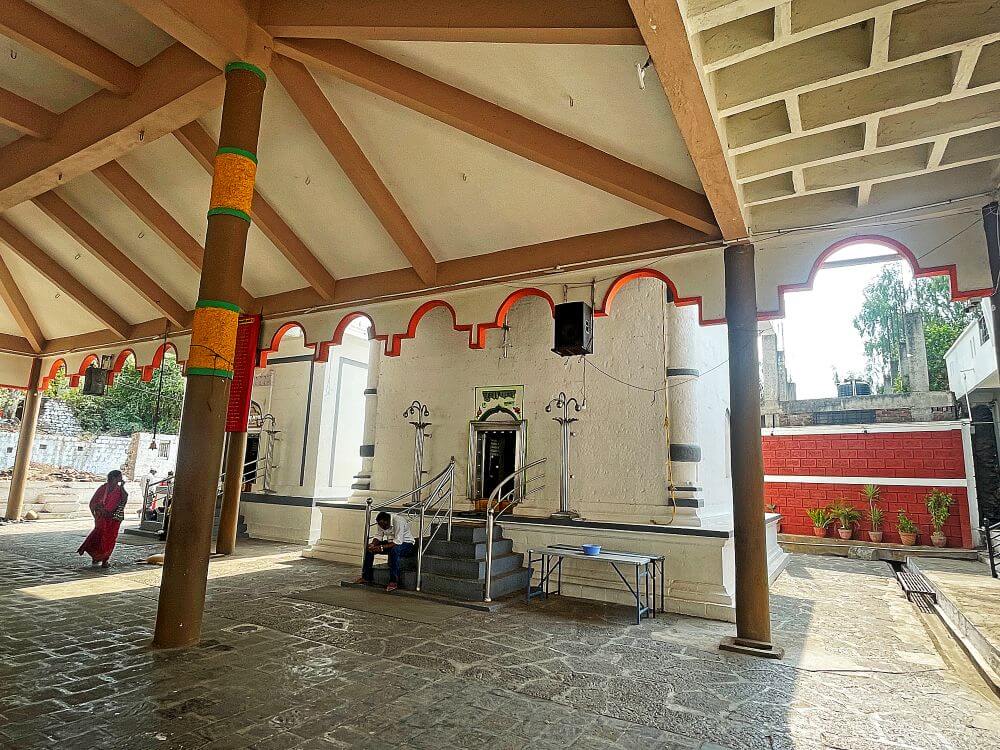
To the right of the entrance is the Annachhatra and Prasadalaya hall. Further ahead is the second fortification wall of the Math, which contains an entrance gate. Upon entering through this gate, one finds a neem tree on the left, surrounded by a raised stone platform. It is said that when this Math was being built, there was no money left to pay the laborers. At that time, Sambhuappa gave them twigs (small branches) from the neem tree. The twigs held by the laborers who had worked with sincerity turned into gold, while the others turned into silver. Directly in front of this entrance is an open Sabha Mandap. The Sabha Mandap consists of four rows of five circular pillars each. The outer pillars are connected to one another by arched gateways. During festivals, various religious programs are organized in this Sabha Mandap. Beyond the Sabha Mandap On the right side is the Samadhi temple of Buva Phan, and on the left side is the Samadhi temple of Sambhuappa. Both temples are situated on a platform approximately three feet high. In front of the entrance, there are five square steps. On both sides of the steps, there are stainless steel railings for crowd management and platforms further ahead.
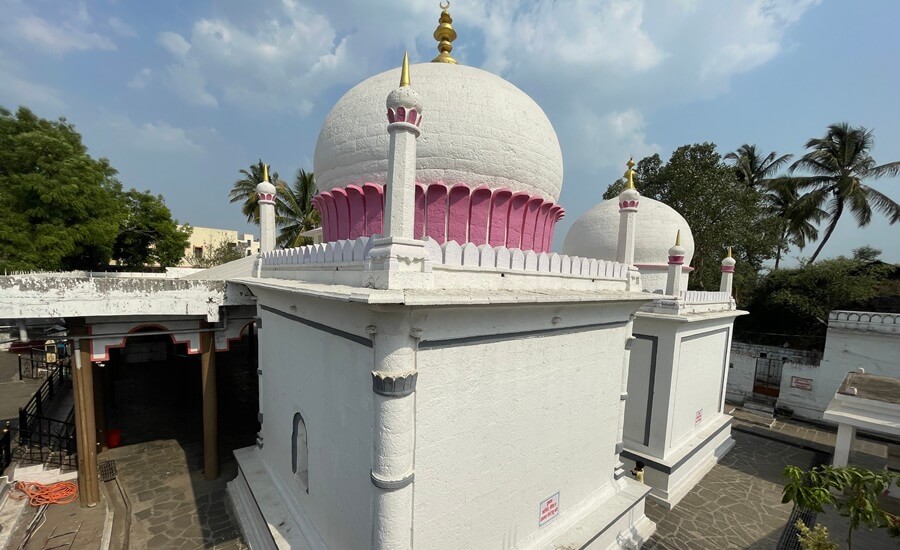
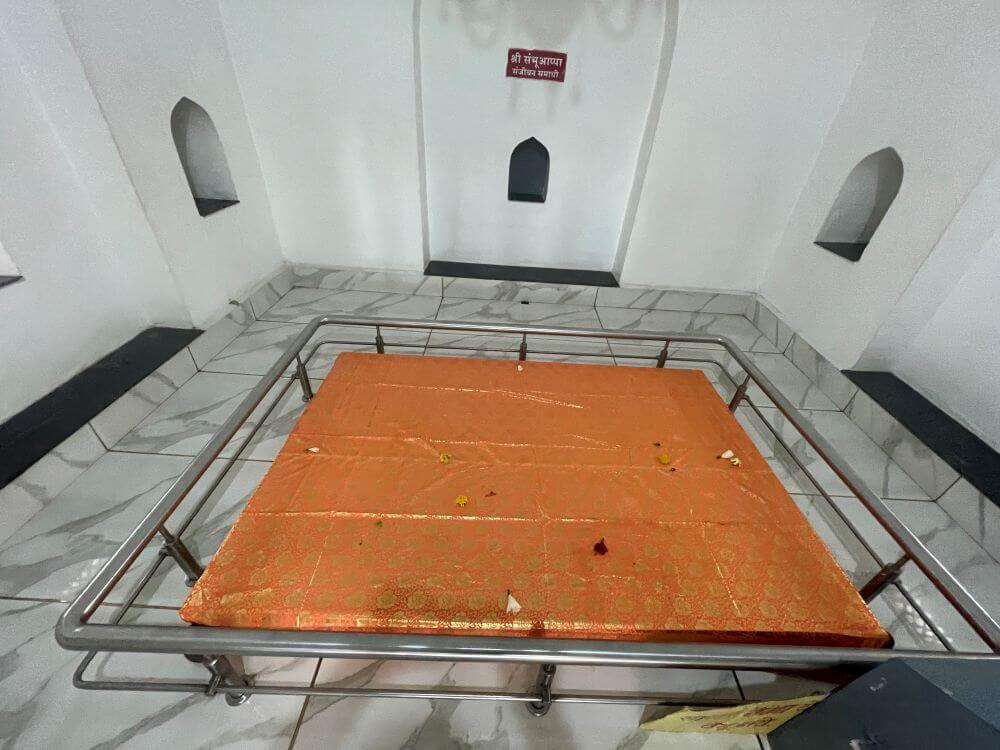
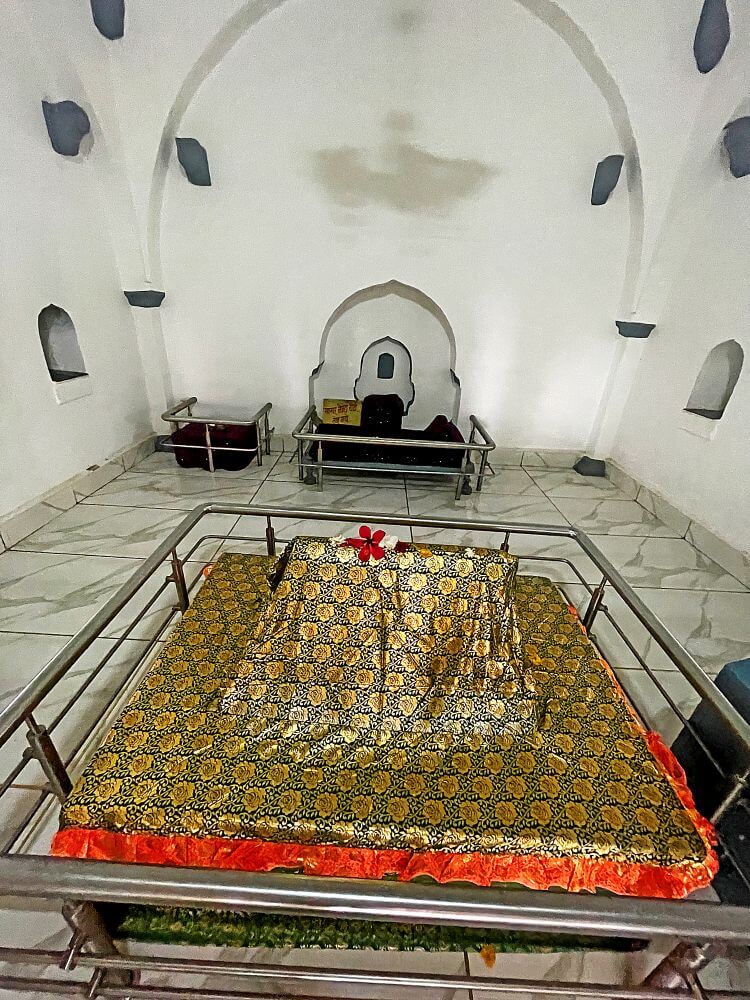
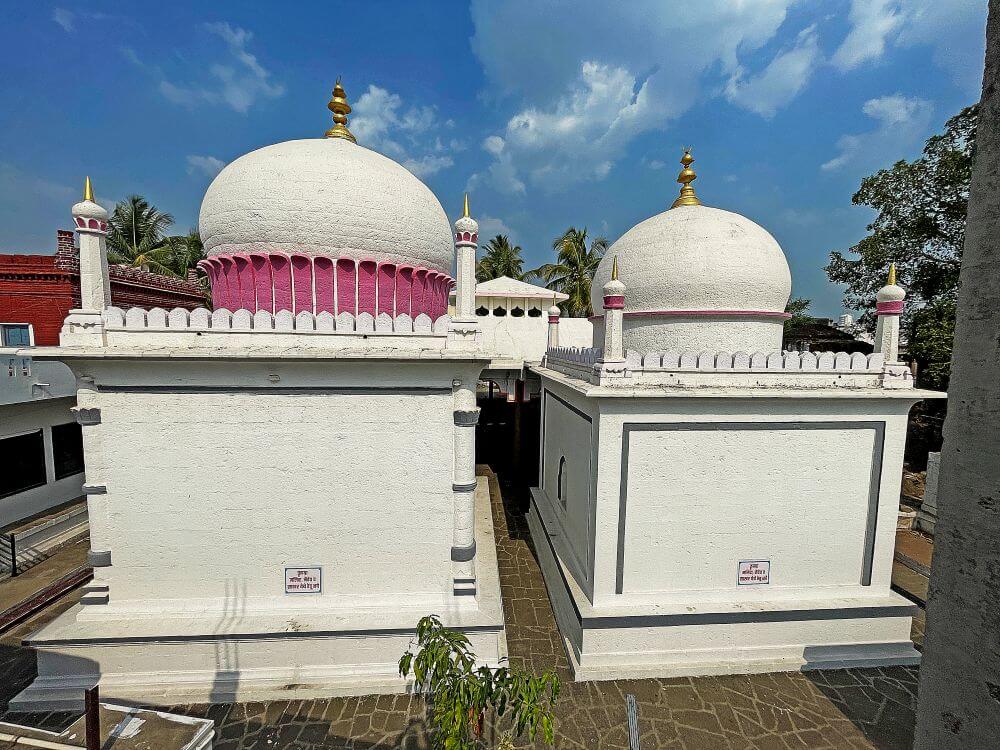
The door frames of Buva Phan’s Samadhi temple feature vertical ridge carvings, and the lintel is adorned with lotus flower motifs. In the center of the temple floor lies the Turbat of Buva Phan. The Turbat is covered with a green cloth and is surrounded by a stainless steel railing. The door frames of the adjacent Samadhi temple of Sambhuappa also feature vertical ridge carvings and lotus flower motifs on the lintel. In the center of the temple floor is the Samadhi of Sambhuappa. It is covered with a saffron cloth and surrounded by a stainless steel safety railing. Both Samadhi temples have a central dome on the roof, topped with a pinnacle featuring a crescent and star. On the roofs of both temples, there are minaret pillars at all four corners, topped with domes and pinnacles.
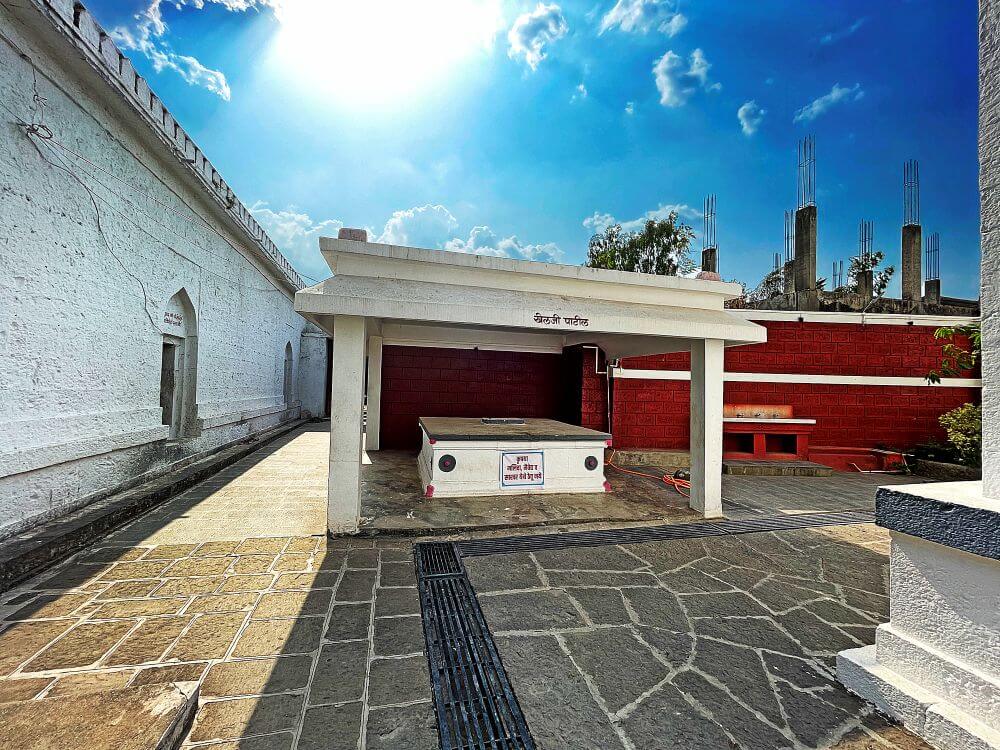
In the courtyard of these temples, there are pilgrim rest houses known as Chambhar Sopa and Sonar Sopa. Arrangements are made for the accommodation of devotees from the respective communities in these facilities. Pilgrims are also accommodated in the many small chambers located nearby. Further ahead is the Nagarkhana. The drums here are played during all festivals. It is said that Sambhuappa used to sit for meditation in the Bhandarmal chamber located at this very spot. In the courtyard, there are the samadhis of the late heads of the monastery and Khelji Patil, who donated land for the monastery.
Many festivals are celebrated in this temple throughout the year. On Ashadh Purnima, which is Guru Purnima, the Dindis of all communities in the village gather at the Math to celebrate Gopalakala. Kartik Purnima is the birth anniversary of Sambhuappa, and Paush Vadya Navami is the day Sambhuappa attained Sanjeevan Samadhi. An Urus is held here on both these days. The Urus begins on Kartik Shuddha Dashami by erecting a Kashidi Mandap adorned with five lanterns and distributing jaggery and sugar. The honor of erecting the four main pillars of the Mandap is given to different castes in the community, which ensures that the entire society prepares for the Urus in unity. The tradition of observing fasts in the Mandap continues to this day. Apart from this, Tulsi Vivah is also celebrated here with great enthusiasm. At that time, there is a tradition of tying a flag connecting the domes of the Samadhi temples of Sambhuappa and Buva Fan.
The Gandharatri festival (Urus) is celebrated in the temple on four days: Kartik Shuddha Chaturdashi, Paush Vadya Navami (the day Sambhuappa attained Samadhi), Anant Chaturdashi (the day Sambhuappa arrived in Islampur), and Magh Vadya Ekadashi. After every Gandharatri, a ritual called Pakhalani is performed, which involves washing the Samadhi site and the Math. Dignitaries from all castes and religions are present during this time. There is a tradition of offering a grand feast to the dignitaries, villagers, and devotees at the Math one day before Mahashivratri.
This sacred temple stands as a testament to deep spiritual devotion, ancient architectural grandeur, and rich local cultural traditions.
The sanctum sanctorum houses the divine idol consecrated according to ancient Vedic traditions, surrounded by serene courtyards and traditional temple architecture.
Navratri, Maha Shivratri, Annual Temple Jatra & Deepotsav
Compare and book flights, secure top-rated local hotels near the temple, hire reliable guides, and rent cars instantly.
Extend your pilgrimage by visiting other highly sacred temples located nearby.
Add ₹999 more to unlock FREE SHIPPING!
Your sacred cart is currently empty.
Shop Photo FramesFill in your delivery details below to place your order.
Add comment