
Add ₹999 more to unlock FREE SHIPPING!
Your sacred cart is currently empty.
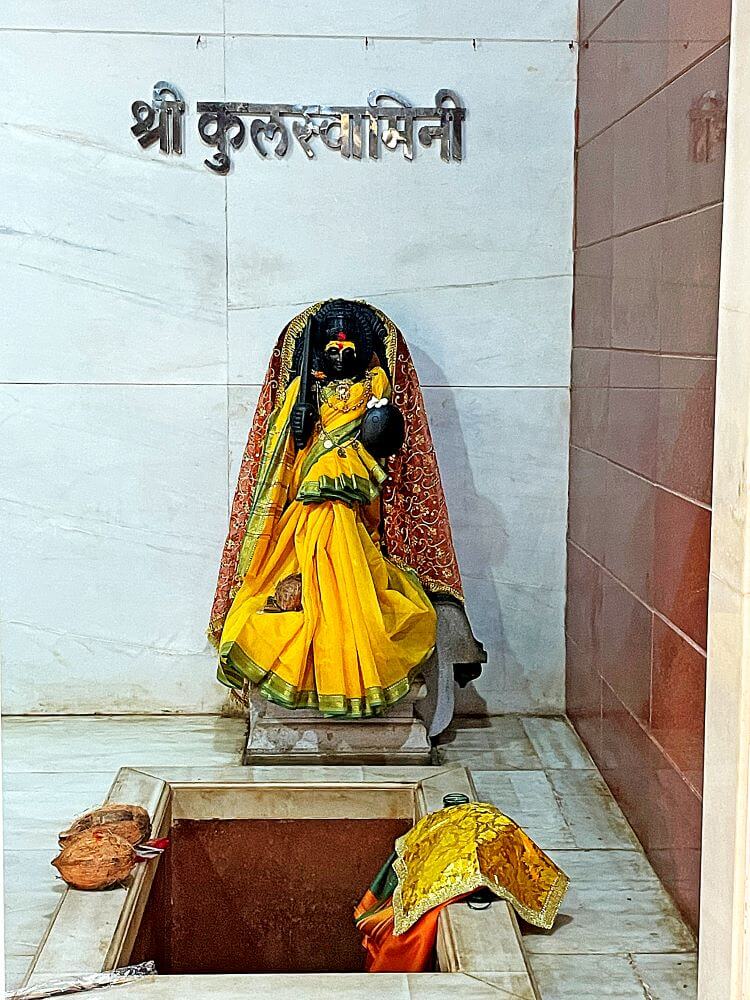
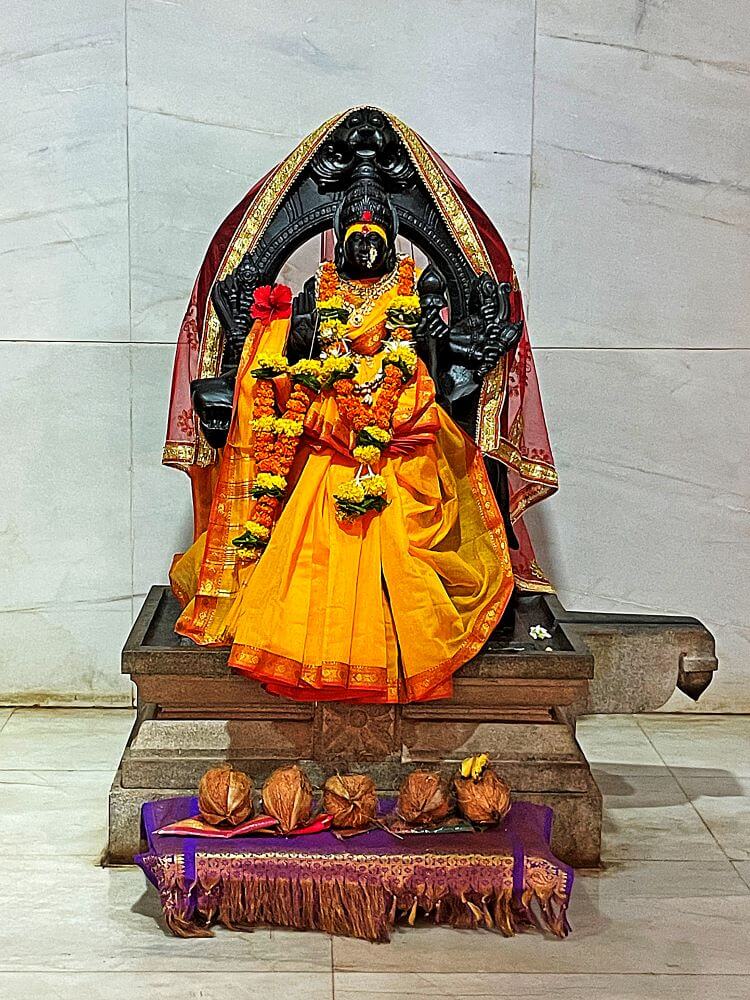
Shop Photo FramesThe temple of Kulswamini Devi Bhavani and Gramdevata Devi Waghjai in the village of Terav, nestled in the naturally abundant region of Chiplun Taluka, is renowned. The deities here are known to be ‘Jagrut’ (awakened) and to grant the wishes of devotees. This modern, two-storied temple is spacious, and its entire construction features the use of marble. The profound faith of devotees in this temple and the large number of pilgrims who come for Darshan have led the State Government to honour it with ‘C’ grade pilgrimage site status.
Regarding the temple’s establishment, it is said that a significant portion of Chiplun Taluka is hilly. In ancient times, due to dense forests, tigers roamed freely. As most of the local populace were farmers, they built the Waghjai temple to protect themselves and their cattle from these animals. The local belief is that Waghjai is the deity who protects from tigers. This sacred site of the Devi dates back three hundred and fifty years. Due to its ‘Jagrut’ nature and the fame of Bhavani-Waghjai, hundreds of devotees come daily for the Devi’s Darshan from various parts of the district and the state. The history of Mata Bhavani here is connected to the Bhavani of Tuljapur. It is believed that Tuljapur’s Mata Bhavani resides here in an ‘ansh-rupa’ (partial manifestation).
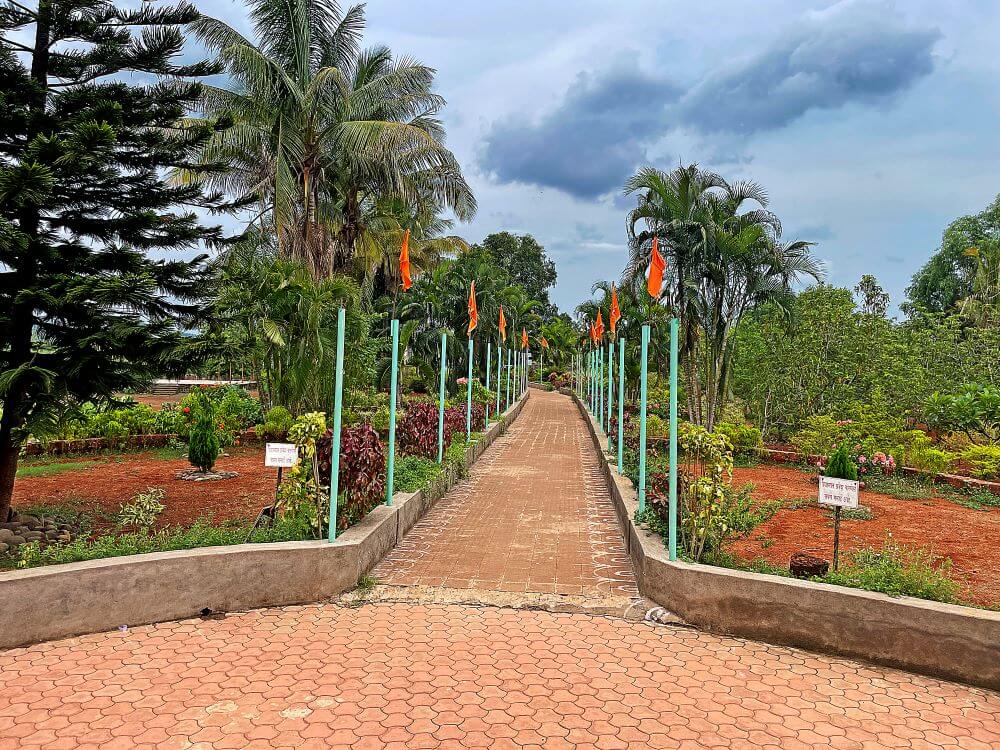
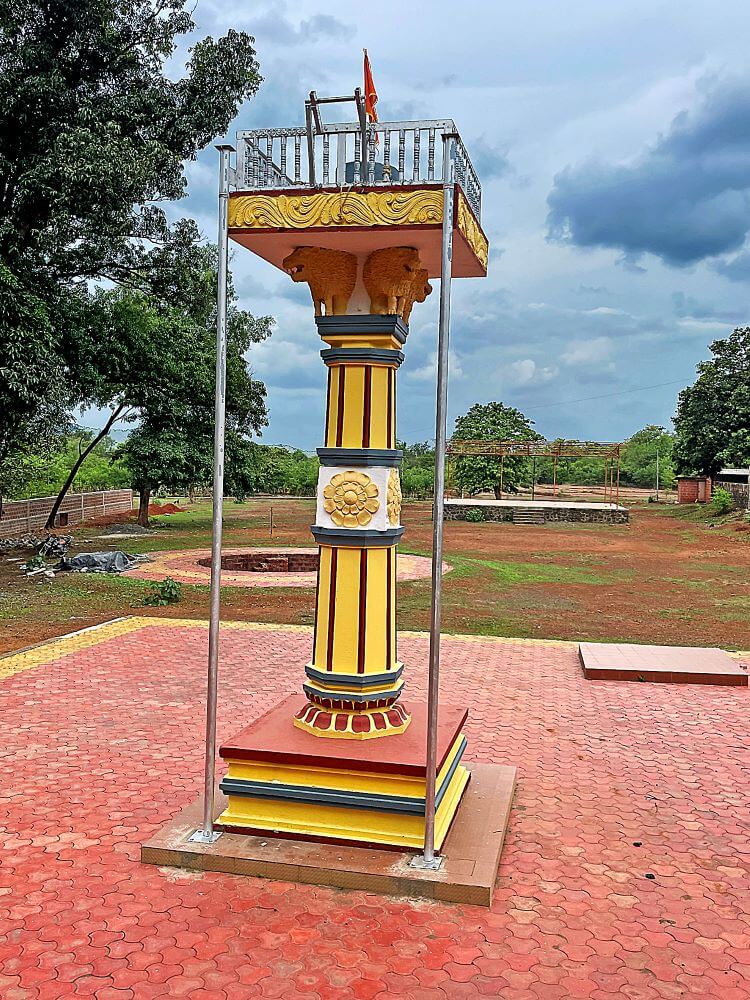
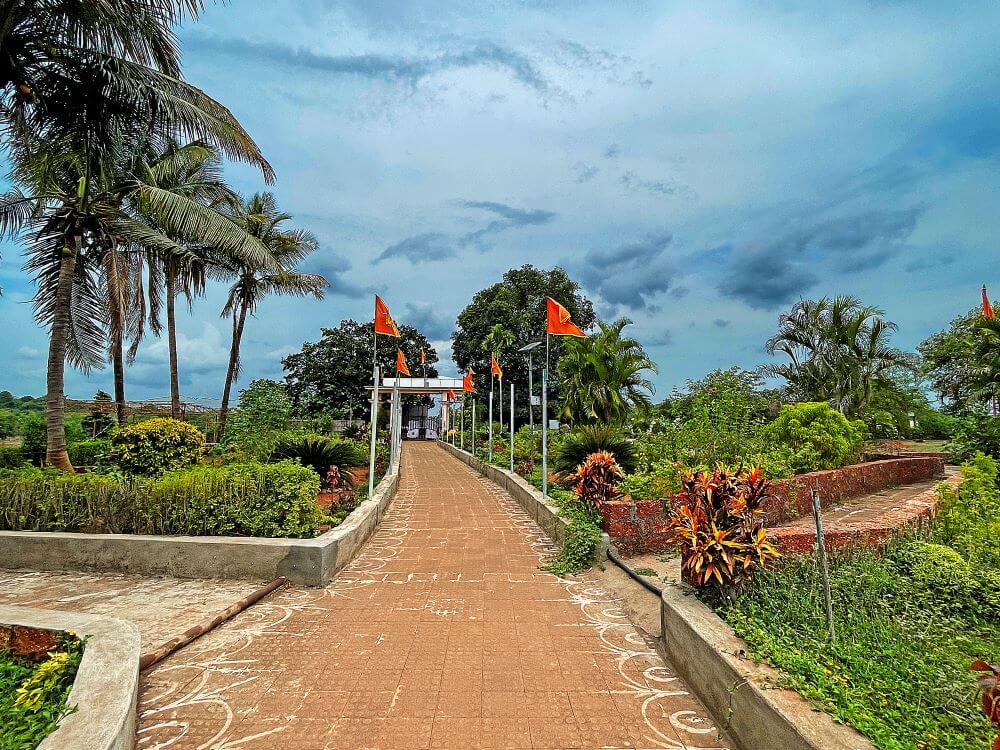
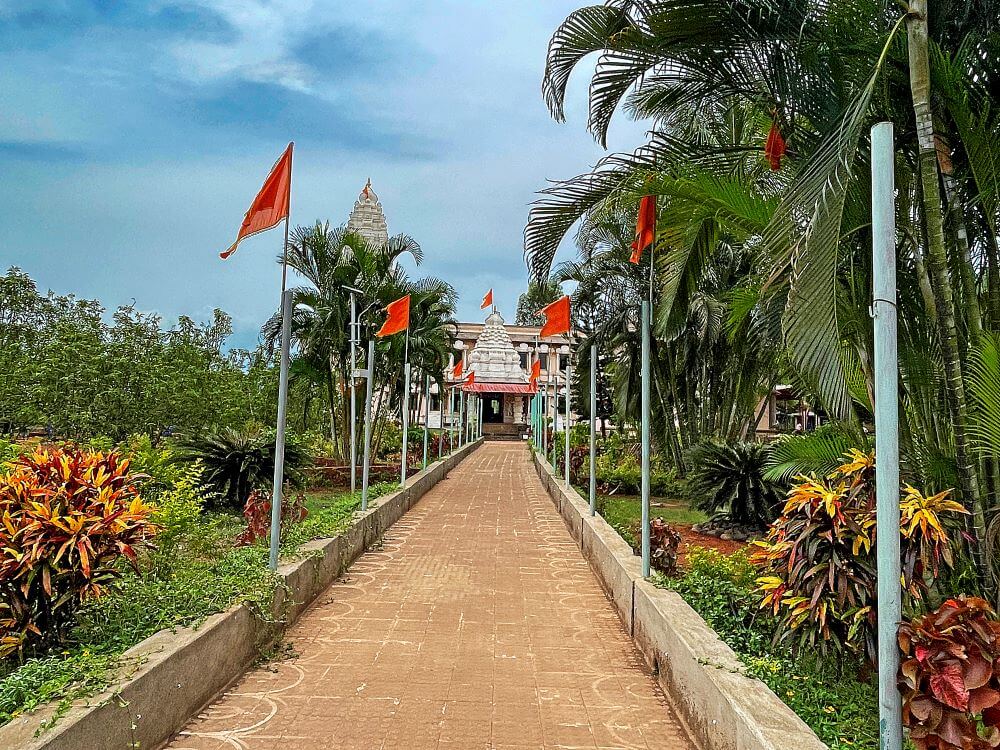
The Kulswamini Bhavani Waghjai Devi Mandir in Terav village, a short distance from Chiplun, is considered an excellent example of Konkan architecture. One enters the temple courtyard through a large gateway. A beautiful garden has been developed in the expansive courtyard, featuring seven semi-circular flowerbeds. This garden is meticulously maintained with various flowering and ornamental plants. From the entrance to the temple, there is a paved pathway through this garden. As one proceeds along this path, the temple, built with pristine white marble, comes into view. Designed in the South Indian style, the temple comprises a Sabha Mandap (assembly hall) and two Garbhagrihas (sanctum sanctorums). The spacious Sabha Mandap here can accommodate two thousand devotees at a time.
The temple has two forty-foot-high entrances. The pillars at the entrances are adorned with intricate carvings and numerous sculptures. On the main lintel of the Sabha Mandap’s entrance, there are sculptures of Dwarpals (gatekeepers) on both sides. To the right and left of the Sabha Mandap are two Garbhagrihas. The right Garbhagriha houses the main idol of Mata Bhavani, along with idols of Shri Bhairi and Shri Mahalakshmi. The idol of Devi Bhavani is nine feet tall. The Devi holds various weapons depicting the slaying of Mahishasura. This idol is made of black sapphire stone and was crafted in Udupi.
The left Garbhagriha houses the main idol of Mata Waghjai, along with idols of Shri Kedar and Shri Kalika Mata. Devi Waghjai is seated on a tiger and is ‘Ashtabhujadharini’ (eight-armed). She is also known as Vyaghreshwari or Vyaghrambari. Additionally, a small Garbhagriha in the Sabha Mandap contains a Shivlinga with Nandi in front of it. This temple has idols of all nine forms of Parvati, known as Navadurga, enshrined within it. These include Shailputri, Brahmacharini, Chandraghanta, Kushmanda, Skandamata, Katyayani, Kalaratri, Mahagauri, and Siddhidatri. All these idols are situated on one side of the Sabha Mandap.
The temple walls feature sculptures, including a woman playing the Veena, a Mridangam player, dancing Apsaras, and a meditating Devi. The windows (Gavakshas) of the Sabha Mandap are carved with peacocks, pigeons, swans, and the Dashavatars. The Garbhagrihas of the temple have South Indian style Shikharas (spires). Every year, Navratrotsav is celebrated on a grand scale in this temple. The programs include Mahabhishek, Ghatasthapana, Navadurga Pujan, Kumkumarchan, Pushparchan, Chandipath, Mahamangal Aarti, Bhandara, Bhajan, Kirtan, Garba, and Dandiya. Deepotsav is celebrated here on Tripurari Pournima. During this time, thousands of lamps are lit in and around the temple, illuminating the premises.
On Chaitra Pournima, a grand two-day fair known as ‘Chaitavali’ is held here. During this time, the palanquins of the Gramdevis from the nearby villages of Kamthe and Chincharvari arrive at Terav in a musical procession to meet their elder sister, Shri Bhavani Devi. At this moment, the palanquin of Devi Bhavani and the two arriving palanquins meet each other. Thousands of devotees gather in the temple premises to witness this meeting ceremony. Once all three palanquins are enshrined in the temple, devotees throng for Darshan and to offer ‘Oti’ (offerings). The next morning, after the worship and honour of both palanquins, they return to their respective villages. At that time, Terav’s palanquin is carried to the temple’s northern entrance to bid farewell. This event marks the conclusion of the fair.
This sacred temple stands as a testament to deep spiritual devotion, ancient architectural grandeur, and rich local cultural traditions.
The sanctum sanctorum houses the divine idol consecrated according to ancient Vedic traditions, surrounded by serene courtyards and traditional temple architecture.
Navratri, Maha Shivratri, Annual Temple Jatra & Deepotsav
Compare and book flights, secure top-rated local hotels near the temple, hire reliable guides, and rent cars instantly.
Extend your pilgrimage by visiting other highly sacred temples located nearby.


Add ₹999 more to unlock FREE SHIPPING!
Your sacred cart is currently empty.
Shop Photo FramesFill in your delivery details below to place your order.
Add comment