
Add ₹999 more to unlock FREE SHIPPING!
Your sacred cart is currently empty.
Shop Photo FramesAmong the many names of guardian deities, Rokadeshwar or Rokdoba is a somewhat less common name. This guardian deity is seen more frequently in rural areas. Rokdoba is worshipped as the deity who blocks or prevents ailments, diseases, and calamities from entering the village. However, in some places, Rokdoba is also known as ‘Rokda’, meaning the one who bestows wealth. There are many ancient and famous temples of Rokadeshwar in Vidarbha and Marathwada. One such famous temple is located in the village of Pangra in Vasmat Taluka. The unique feature here is the wooden idol, which is replaced every twelve years, and the grand fair held during that time.
Although there is no definitive information about how ancient this temple is, the villagers believe it to be four hundred to five hundred years old. In recent times, the temple has been renovated. This temple has been constructed using modern cement concrete methods. The legend associated with this temple is that in ancient times, when a woman from the village went to the riverbank to wash clothes, a small idol of Rokadeshwar floating in the river water came into her bucket. As soon as the woman touched the idol, the deity gave a divine vision saying, “I am from Phuldabha village. Install me in your village and keep making a new idol from a wood apple tree every twelve years.”
The temple is located along a paver-block paved road in the village. The temple has a sturdy boundary wall about fifteen feet high. Since the massive entrance gate in the boundary wall is higher than the road level, there are five steps leading up to the entrance. In the courtyard, adjacent to the boundary wall, there is a hall and a marriage hall for cultural programs.
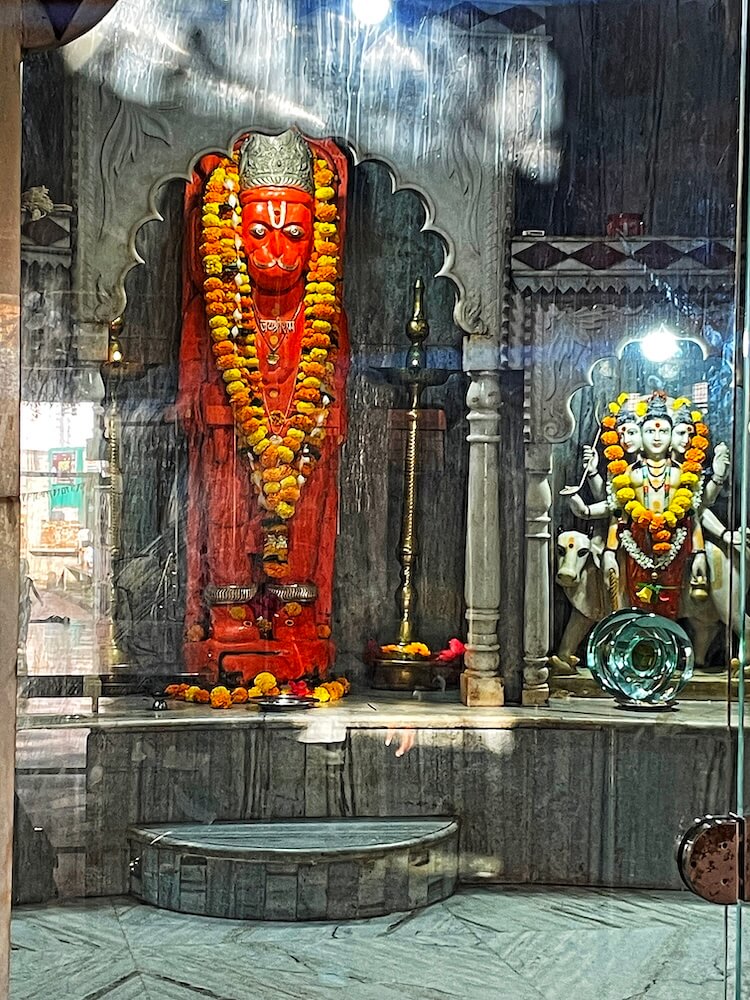
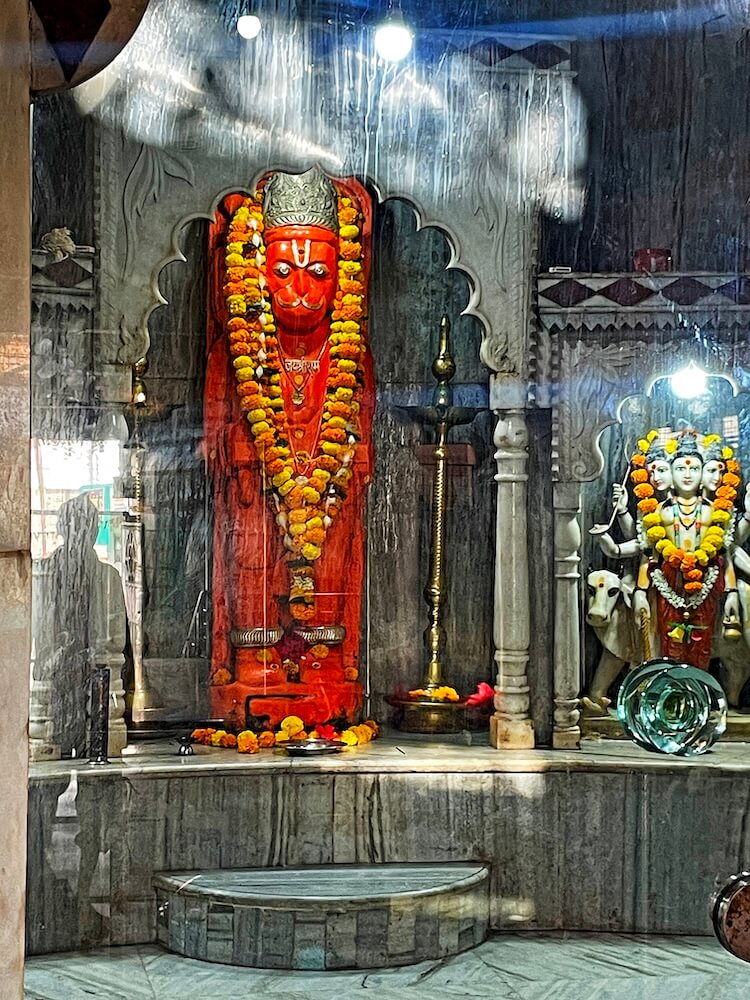
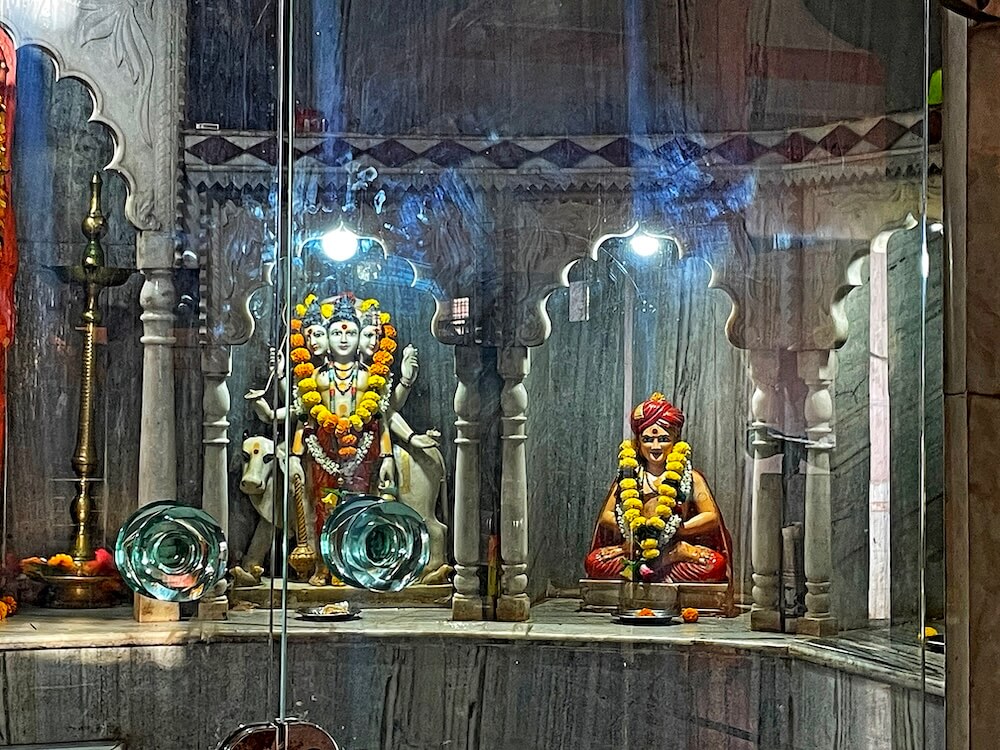
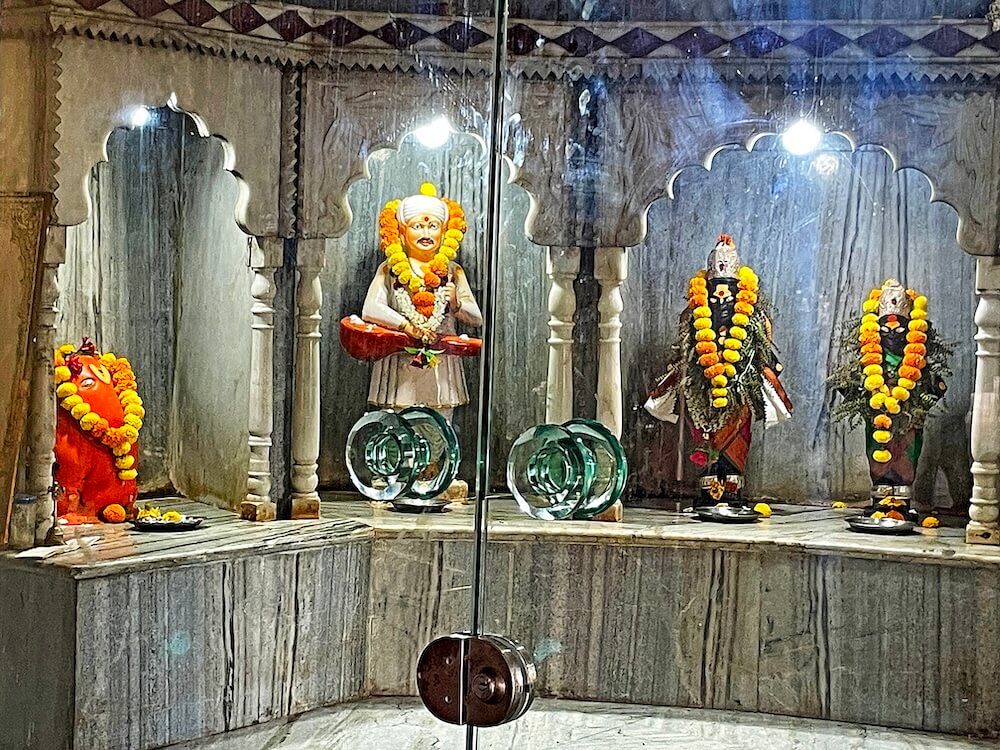
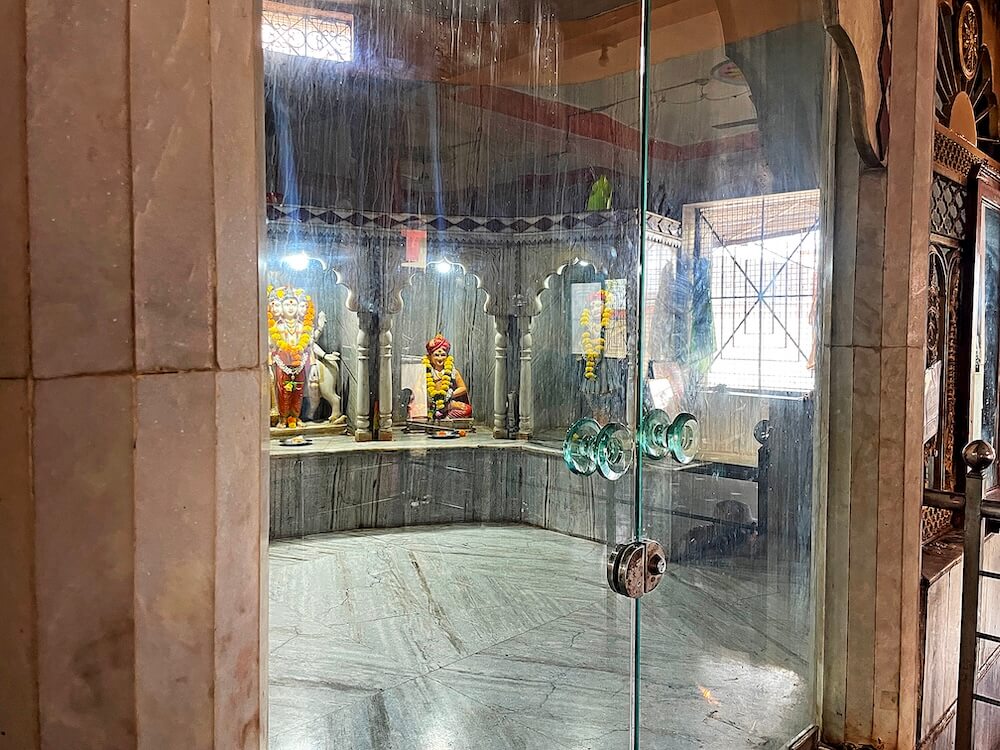
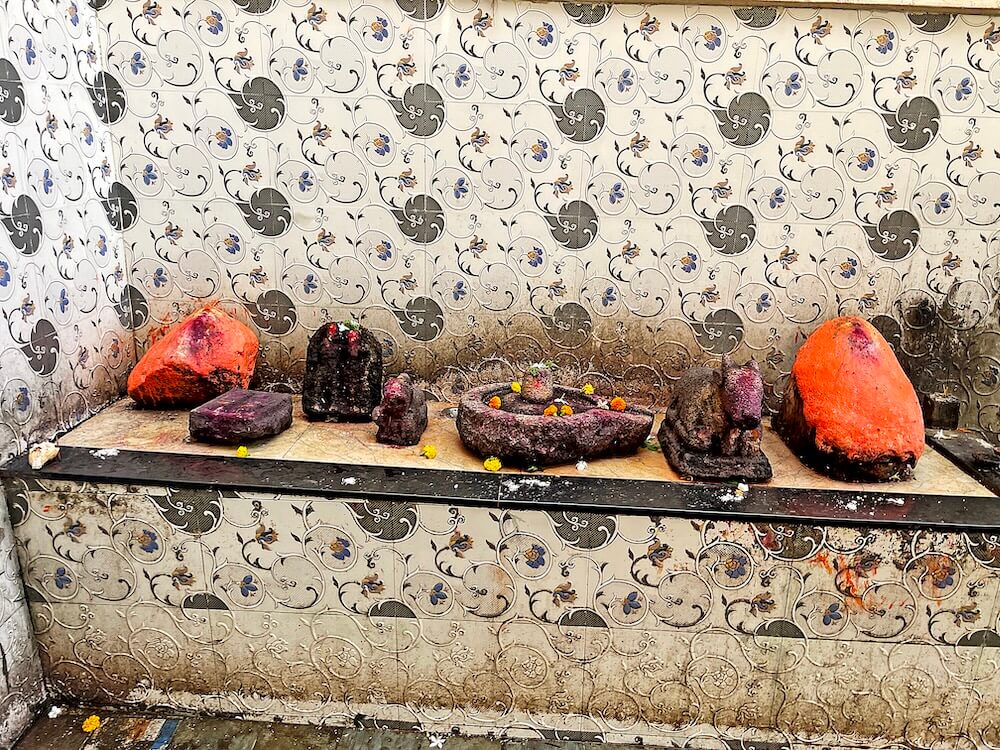
The temple structure consists of a Sabha Mandap (assembly hall), Antaral (vestibule), and Garbhagriha (sanctum sanctorum). Since the entrance to the Sabha Mandap is higher than the courtyard, there are five steps leading to the entrance. The Sabha Mandap has two additional doors on the left and right sides. This enclosed hall has ventilators for light and air. There are two rows of four circular pillars each in the Sabha Mandap. The two pillars towards the Antaral have lotus flower carvings at the base and the top. There is a chakra (wheel) design on the ceiling of the Sabha Mandap. Ahead is the Antaral, which is about three feet higher than the Sabha Mandap. There are three steps leading to the wall-less Antaral. There are four pillars in the Antaral. The pillars have lotus flower carvings at the base and the top. In the Antaral, in front of the entrance to the Garbhagriha, there is a tortoise sculpture on the floor. The entrance to the Garbhagriha has two semi-circular steps. Inside the Garbhagriha, there are five consecutive niches on a pedestal. In front of the middle, taller niche, there is a semi-circular step. In the central niche, there is a three-and-a-half-foot-tall wooden idol of Rokadeshwar, smeared with vermilion. The deity holds a mace in one hand, while the other hand is held downwards. There is a silver crown on the deity’s head. There are two niches each on the left and right sides of Rokadeshwar’s niche. These contain idols of Saint Dnyaneshwar, Vitthal Rukmini, Saint Tukaram, and Shri Dattatreya. There is a circumambulation path (Pradakshina Marg) around the exterior of the Garbhagriha. In the Pradakshina Marg, there are stone idols of a Shiva Linga, Nandi, and other local deities on a pedestal. On the roof of the Garbhagriha, there is a four-tiered circular Shikhara (spire) about fifteen feet high. The Shikhara has niches containing idols of various deities. At the top of the Shikhara, there are two Amalakas placed one above the other. Above this Amalaka is the Kalash and the temple flag.
The fair of Rokdoba is held once every twelve years. During the fair, the old idol of the deity is immersed, and a new idol is installed. Preparations for the fair begin four to five months in advance. To make the new idol, a wood apple tree with a trunk about four feet thick, suitable for carving, is identified in the surrounding area. About a month in advance, the tree is cut, brought to the field near the temple, and a carpenter is summoned. The carpenter carves the idol from the tree trunk. The new idol is consecrated, and the old idol is immersed. At this time, a twelve-day fair is held. During this period, a Hari-naam Saptah (week-long chanting of God’s name) is organized. For twelve consecutive days, religious programs such as Bhajans, Kirtans, Jagran (night vigil), Pravachans (discourses), processions, and Ringan are organized at the temple. A Maha-Prasad (community feast) is organized in the temple for twelve days. At this time, thousands of devotees from across the district come for the deity’s Darshan and to fulfill their vows. Special festivals are organized in the temple on Maha Shivratri, Sharadiya Navratri, and all Ekadashis. Every Thursday, Saturday, full moon, and new moon day, there is a large crowd of devotees visiting the temple.
This sacred temple stands as a testament to deep spiritual devotion, ancient architectural grandeur, and rich local cultural traditions.
The sanctum sanctorum houses the divine idol consecrated according to ancient Vedic traditions, surrounded by serene courtyards and traditional temple architecture.
Navratri, Maha Shivratri, Annual Temple Jatra & Deepotsav
Compare and book flights, secure top-rated local hotels near the temple, hire reliable guides, and rent cars instantly.
Extend your pilgrimage by visiting other highly sacred temples located nearby.


Add ₹999 more to unlock FREE SHIPPING!
Your sacred cart is currently empty.
Shop Photo FramesFill in your delivery details below to place your order.
Add comment