
Add ₹999 more to unlock FREE SHIPPING!
Your sacred cart is currently empty.
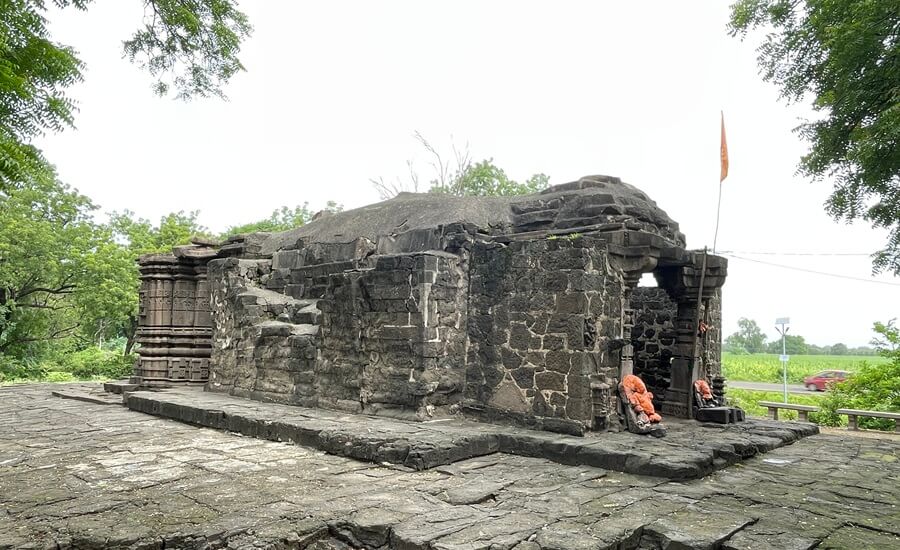
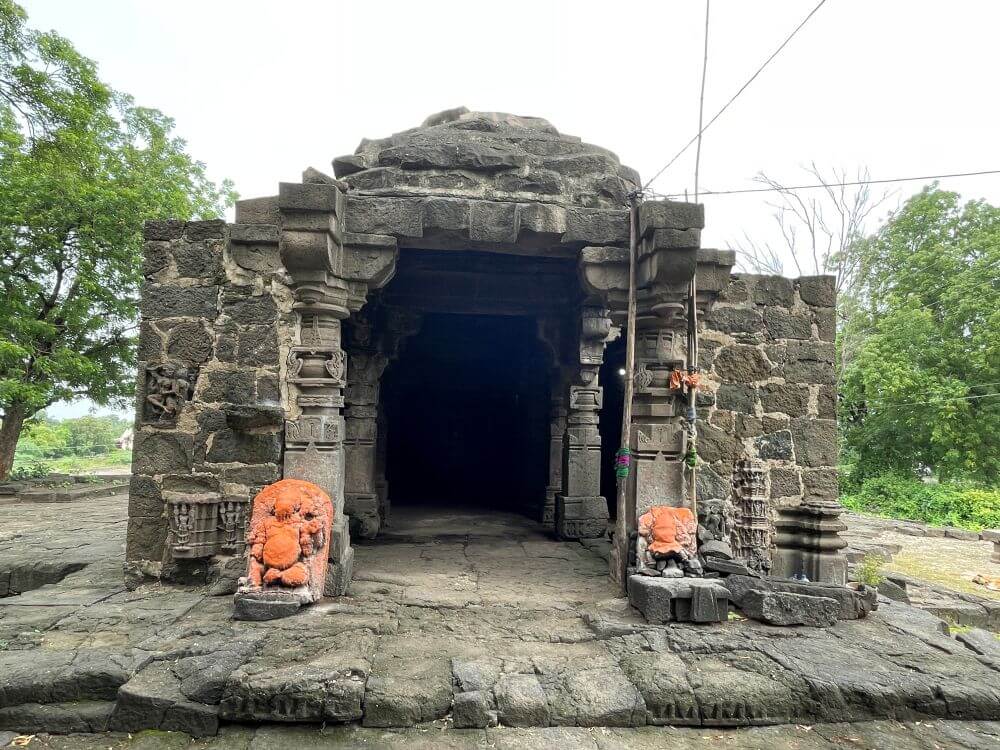
Shop Photo FramesThe ancient and famous temple of Mudhai Devi is situated on the banks of the Titur River in Waghali, on the Chalisgaon-Bhadgaon National Highway. According to the Archaeological Survey of India, this temple, built in the Bhumija style and a treasure trove of sculptural beauty, dates back to the twelfth century. Scholars believe that this was once a Sun temple. A beautiful sculpture of the Sun God is carved into the niche on the outer wall of the temple’s sanctum sanctorum. This is evidenced by the sculpture and the inscriptions found here. This temple was declared a national protected monument in the year 1914.
According to the history of Khandesh, the Yadava dynasty established power here after the fall of the Rashtrakutas in the eleventh and twelfth centuries. Some feudatory kings of the Yadavas ruled here. Based on inscriptions found at Patan near Chalisgaon, this region was ruled by King Indra of the Nikumbha dynasty or his son Govan (III) during this period. This temple was built in Waghali during their reign between the years 1150 and 1200. The temple is situated on an artificial earthen mound. One enters the temple courtyard through an entrance gate adjacent to the Chalisgaon-Bhadgaon National Highway. The temple premises contain many idols and sculptures found during excavations. Climbing about ten steps from here, one enters another level courtyard of the temple. This courtyard features ancient trees and seating arrangements for devotees.
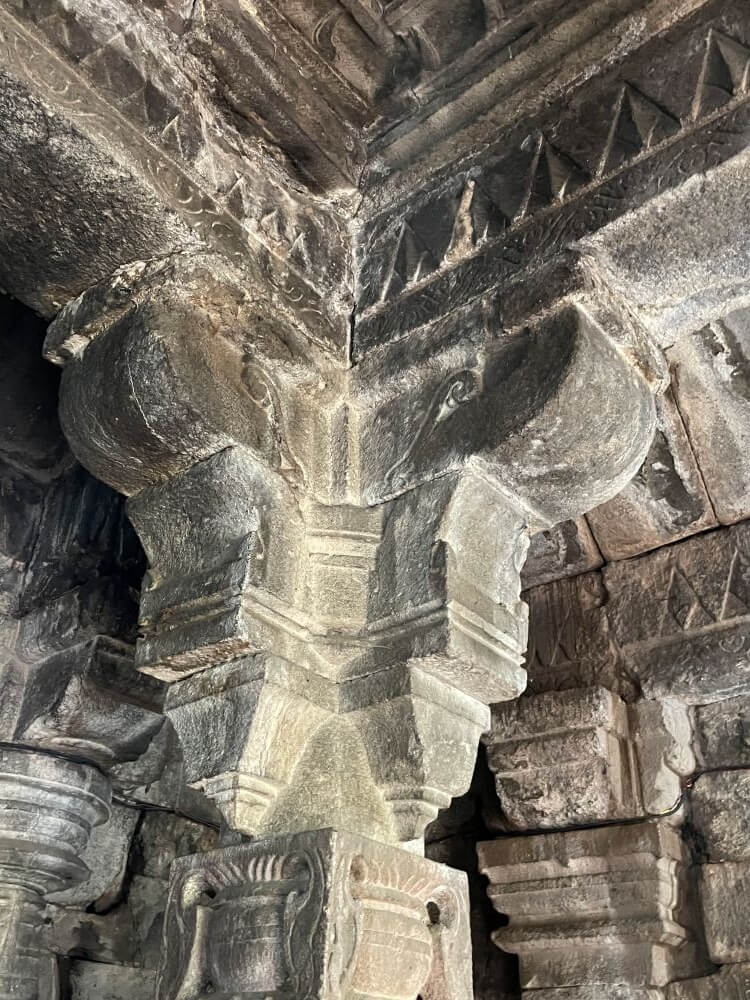
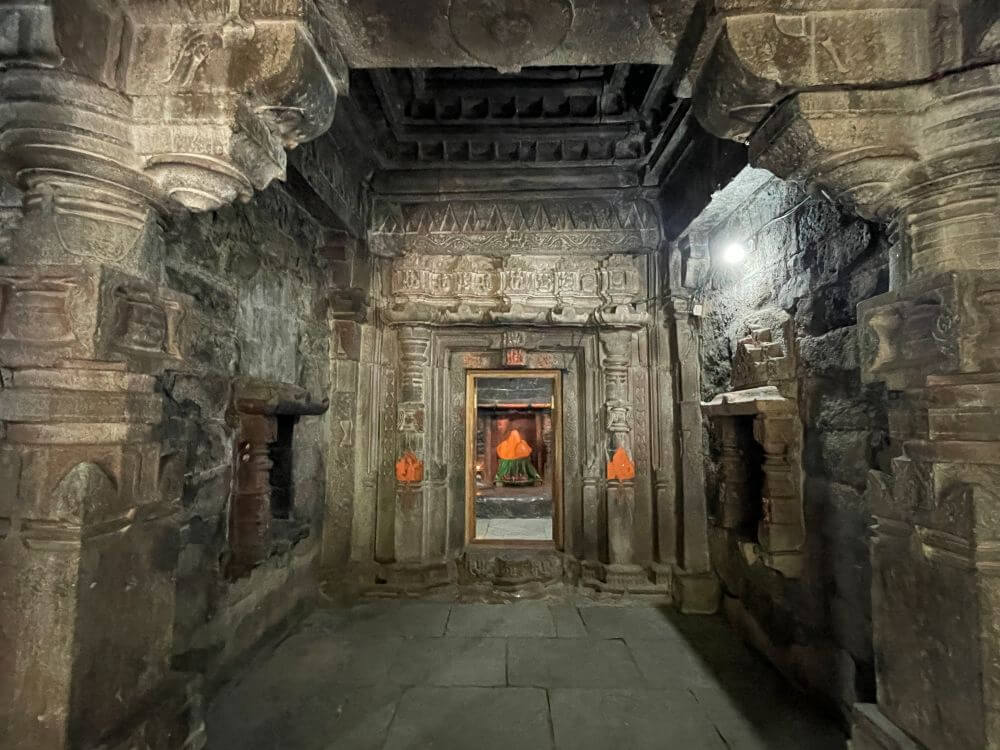
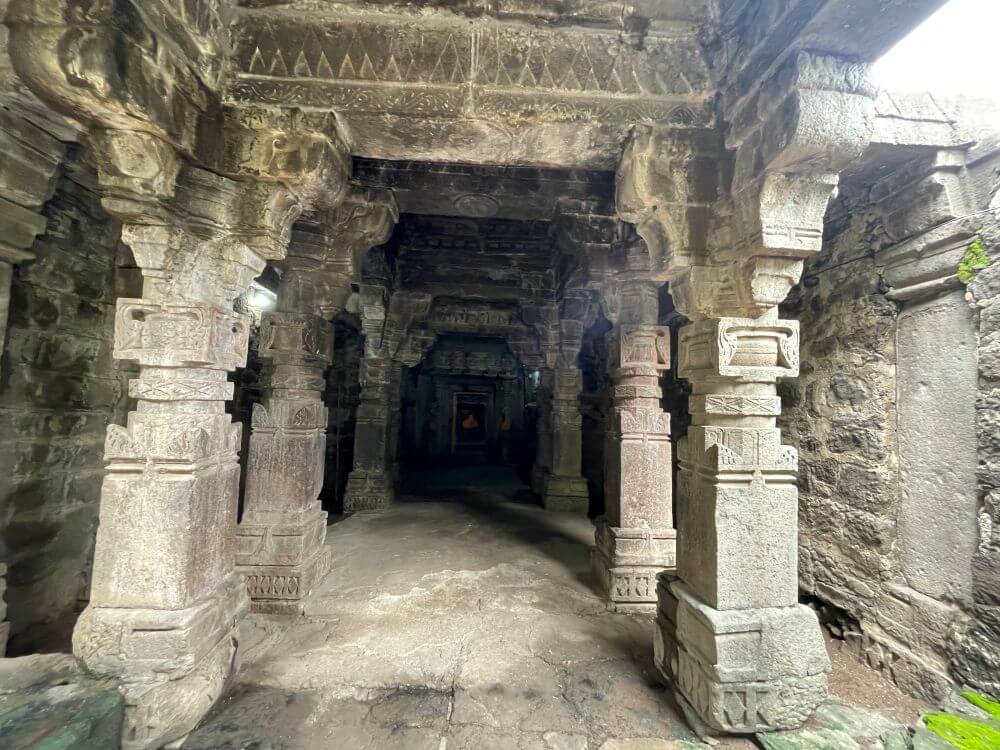
There is a Havan Kund (sacrificial fire pit) in front of the Mudhai Devi temple. It is said that there is an underground tunnel from this Havan Kund, which used to lead to the Shri Krishna temple in Waghali village. However, this passage is currently closed. The east-facing Mudhai temple has a star-shaped foundation. The temple structure consists of a Mukhamandapa (entrance porch), Sabhamandapa (main hall), Antarala (vestibule), and Garbhagriha (sanctum sanctorum). Near the two pillars in front of the Ardhamandapa, there is an idol of Ganesha and another stone idol smeared with vermilion. Near the entrance, there are pillars carved with images of the Sun God. The four pillars in the Mukhamandapa feature distinctive carvings. At the top of these pillars is a unique design of stone pots. While carving these stone pots, stone patterns were crafted on all four sides, with the structure of the pot inside. Such rare craftsmanship can also be seen on the pillars of the assembly hall in the world-famous Kailasa caves at Ellora. From this Mukhamandapa, one enters the Sabhamandapa of the temple. Like the Mukhamandapa, the Sabhamandapa and the Antarala also have ornate stone pillars. The weight of the temple is supported by a total of 24 such pillars. The ceilings of the Sabhamandapa and the Antarala are beautifully carved. The Sabhamandapa and Antarala here are enclosed.
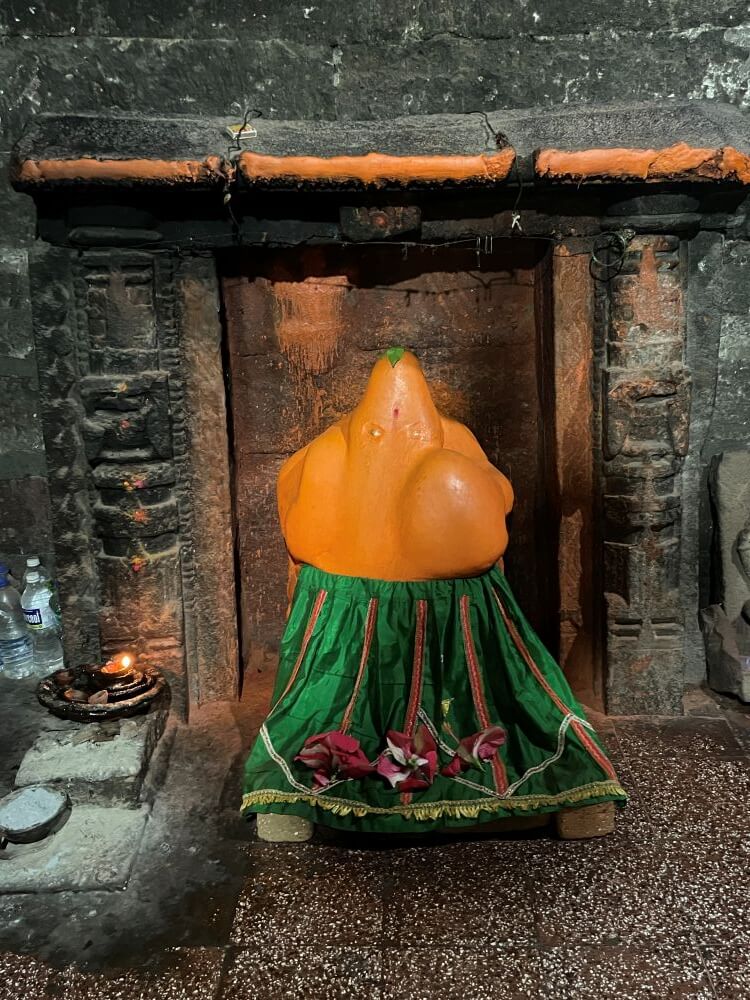
The entrance to the sanctum sanctorum has ornate pillar branches. Additionally, the door frame is made of five branches. These door branches feature beautiful carvings. There is an image of Ganesha on the lintel, and an image of the Sun God on the door frame above it. The upper section depicts the Navagrahas (nine planets). In the sanctum sanctorum, there is an idol of Mudhai Devi in the form of a Tandala (aniconic stone) on a stone pedestal. Apart from this, there is an ancient idol of Uma-Maheshwara, which depicts Parvati sitting on the left lap of Shiva. On the western (rear) wall of the temple is the Sun God, on the northern wall is Chamunda Devi, and in the niche on the southern wall is a standing idol of Ganapati. Chamunda Devi is seen holding a Khatvanga in one hand and a serpent in the upper hand. The idol of the Sun God here is distinctive, with Usha and Pratyusha by his side. The front part of seven horses is carved at the bottom. As the temple spire was destroyed, a cement-concrete slab has been placed over it.
Temple architecture and iconography experts believe that this was originally a Sun temple, and over time, the Tandala idol of Mudhai Devi was installed here, based on the Sun image on the door frame of the sanctum, the depiction of the Navagrahas, and more than ten Sun images near the entrance pillars of the Mukhamandapa. It is rare to see such a large number of Sun images carved in a single temple. In Khandesh, a vow related to Sun worship called ‘Aditya Ranubai’ has been observed since ancient times, which supports this hypothesis. This vow, performed by women, is observed on the Sundays of the month of Shravan. After bathing, a picture of the Sun is drawn with red sandalwood on a betel leaf, and a hexagon is drawn in a circle beside it. These drawings and a six-stranded thread with six knots are worshipped together.
Navratri is a major festival here. Thousands of devotees come here for the Goddess’s darshan during these nine days. During this time, the temple and its surroundings are decorated. The idol of the Goddess is adorned with various clothes and ornaments every day. During these days, Aarti is performed here every morning and evening. Devotees from many surrounding villages are present at this time.
This sacred temple stands as a testament to deep spiritual devotion, ancient architectural grandeur, and rich local cultural traditions.
The sanctum sanctorum houses the divine idol consecrated according to ancient Vedic traditions, surrounded by serene courtyards and traditional temple architecture.
Navratri, Maha Shivratri, Annual Temple Jatra & Deepotsav
Compare and book flights, secure top-rated local hotels near the temple, hire reliable guides, and rent cars instantly.
Extend your pilgrimage by visiting other highly sacred temples located nearby.


Add ₹999 more to unlock FREE SHIPPING!
Your sacred cart is currently empty.
Shop Photo FramesFill in your delivery details below to place your order.
Add comment