
Add ₹999 more to unlock FREE SHIPPING!
Your sacred cart is currently empty.
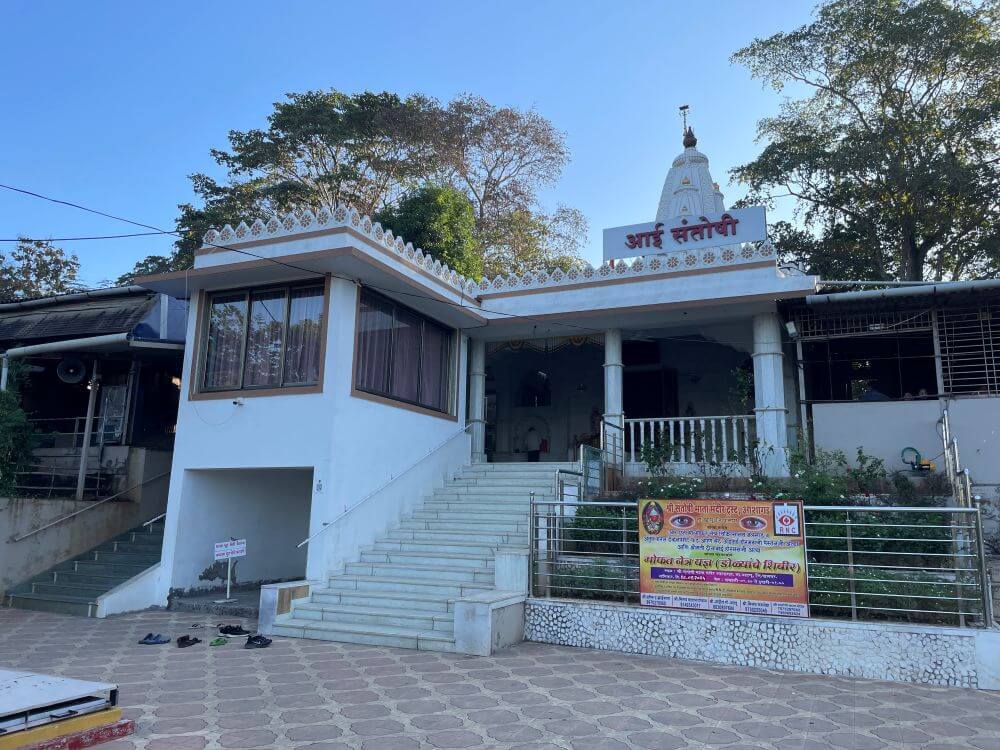
Shop Photo FramesAlong with the Mahalakshmi Temple in the tribal-dominated Dahanu Taluka of Palghar district, the Santoshi Mata Temple at Ashagad near Dahanu is also very famous. Nestled in a picturesque environment, this holy site houses both a new and an old temple of the Goddess. Behind the new temple, in the crevices of the rocks within a cave, lies the Swayambhu (self-manifested) idol. According to mythological accounts, Santoshi Mata is a form of Mahalakshmi and the daughter of Lord Ganpati. Devotees believe that worshipping Santoshi Mata destroys sorrow and poverty, resolves all kinds of distress and crises, and bestows prosperity.
The legend associated with this temple is that Jethya Bala Karmoda, who lived in this village, was a farmer. One day in the year 1960, while he was performing worship under a Peepal tree in the village, the Goddess appeared to him in a vision. Thereafter, the Goddess appeared in his dreams for seven consecutive days. On the seventh day, the Goddess in his dream told him, “I am on the Kokatri hill in Ashagad village; install my idol.” Following this, he installed the idol of the Goddess at this place on the day of Ashtami during the Sharadiya Navratri festival. The fame of this awakened and wish-fulfilling Goddess gradually spread across the surrounding region, and many devotees began to arrive here for her darshan. The film ‘Jai Santoshi Maa’, released in 1975, starring Kanan Kaushal and directed by Vijay Sharma, gained immense popularity across the country. Following this, there was a significant increase in the number of devotees visiting this temple.
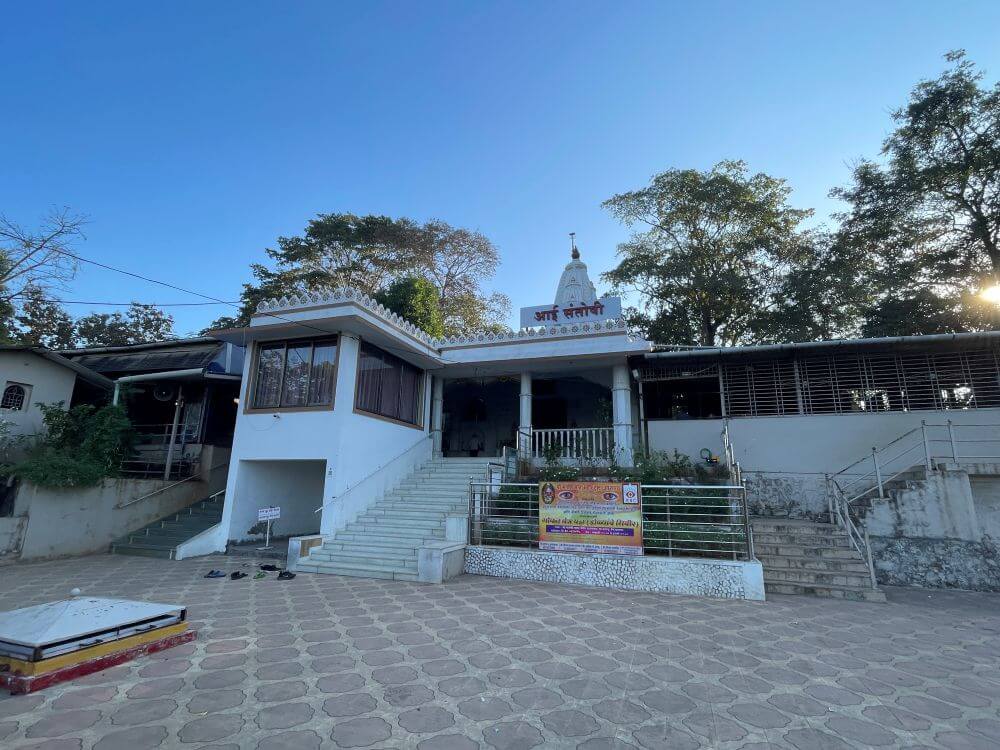
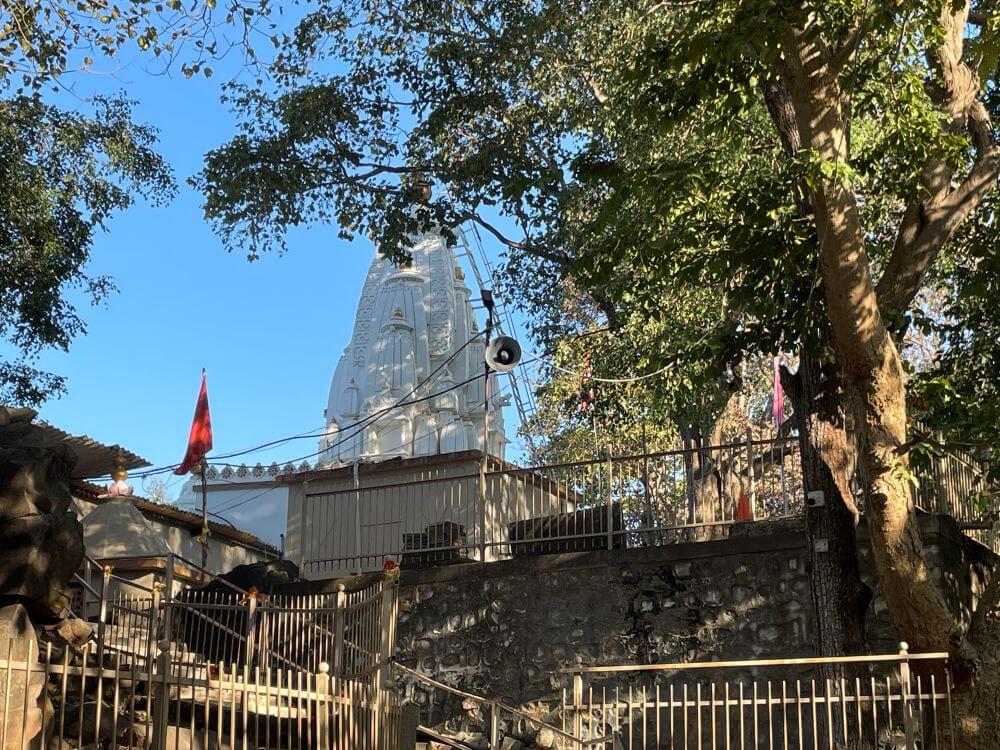
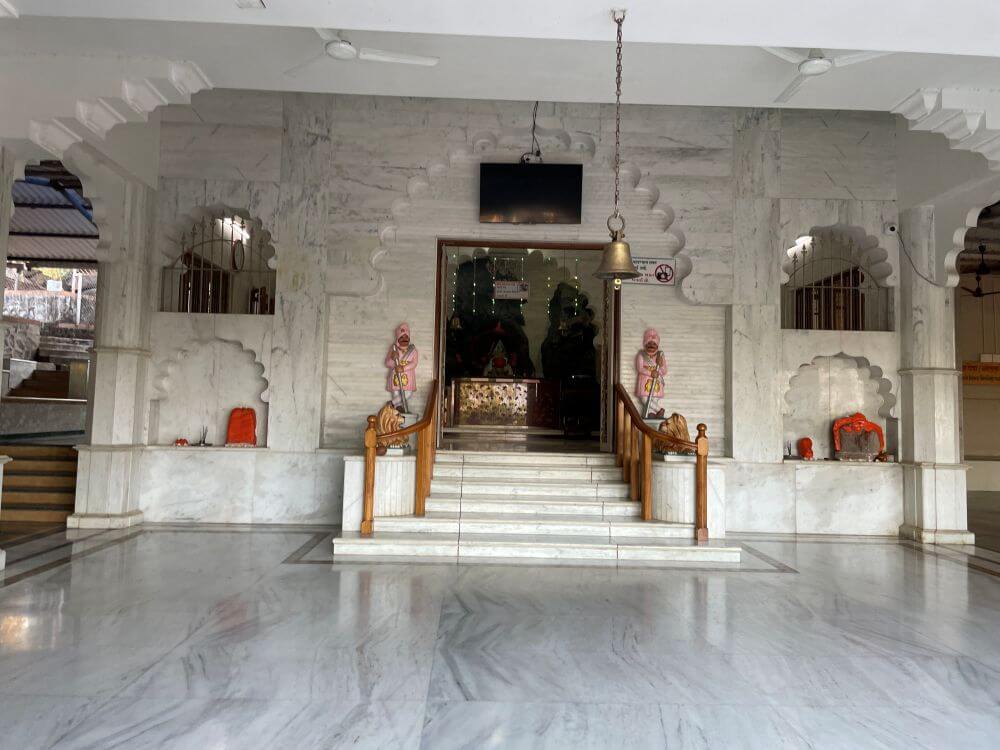
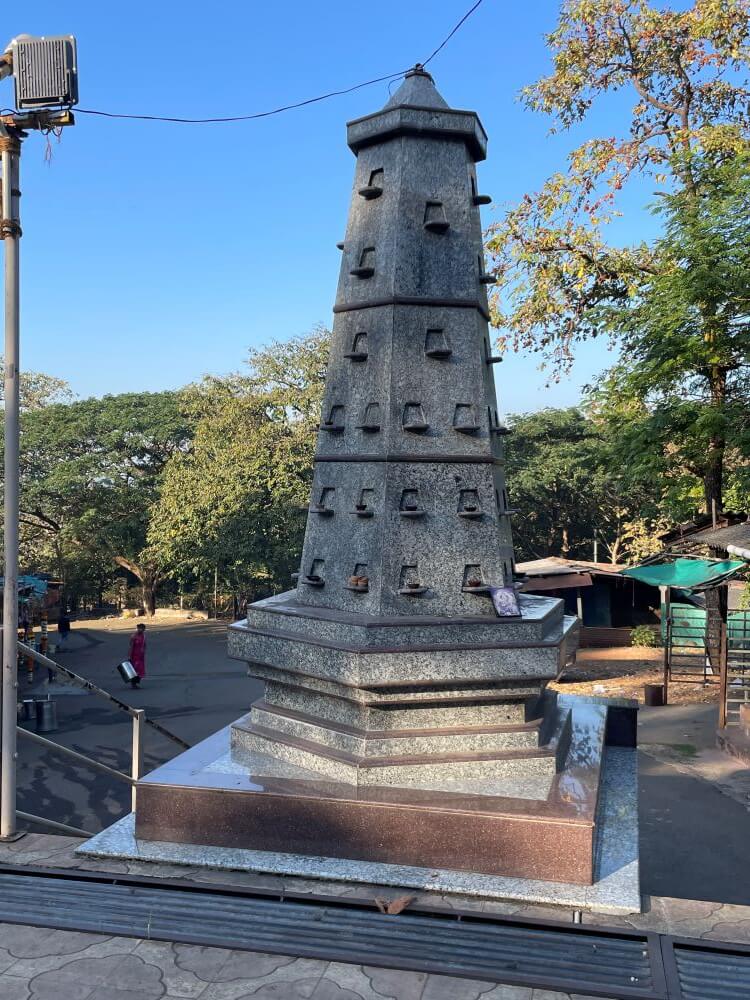
Dahanu Taluka, situated in the hilly and coastal region, is blessed by nature. This tribal-dominated taluka is bordered by Talasari Taluka and the Gujarat border to the north, Palghar to the south, Jawhar and Vikramgad to the east, and the Arabian Sea to the west. In this taluka, which is the birthplace of the unique and world-famous Warli painting style of the tribals, there are also famous temples like Mahalakshmi (Dahanu), Mahalakshmi (Vivalvedhe), and the Saibaba Temple (Narpad). One of these is the Santoshi Mata Temple at Ashagad on the Dahanu-Charoti road. There are many shops selling flowers and prasad on the way to the temple. The spire of the new temple catches the eye from a distance. After walking some distance, one can see a large lamp post (Deepmal) on the temple steps. Once the steps end, there is a Havan Kund in the paved open space. There are two paths to enter the temple in front. After climbing the steps, there is a spacious courtyard. There are lions on both sides near the entrance of the temple. There are gatekeepers on both sides along the walls of the entrance. The temple consists of a Sabha Mandap (assembly hall) and a Garbhagriha (sanctum sanctorum). In the Garbhagriha, there is a vermilion-smeared idol of the Goddess on a pedestal. The idol wears a silver crown. Behind the idol of the Goddess in the Garbhagriha, there are large stone boulders. The temple was constructed by keeping those boulders as they were. To the right of the Goddess are the vermilion-smeared stones (Tandale) of two other goddesses. Many devotees tie coconuts of vows and Chunris brought for the Goddess on the window grills of the temple.
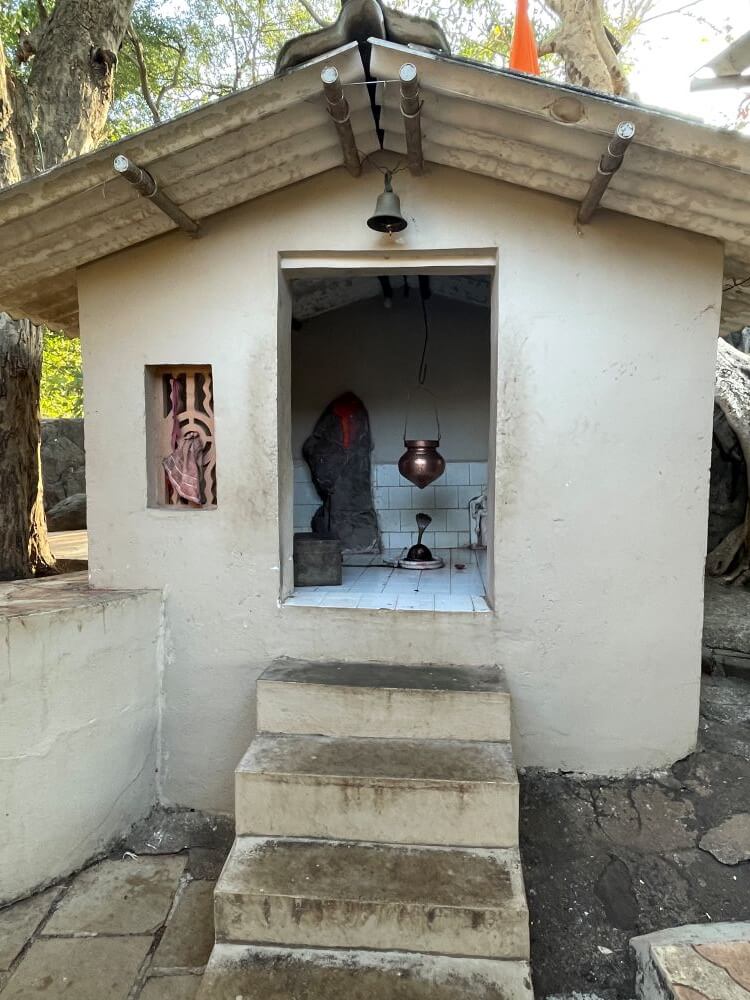
To the left of the temple is a Hanuman temple. There are two Shiva temples here. In one of them, there is an idol of Parvati along with a Shivling. Near the back wall to the left of the Linga, there is an upright stone. The other temple contains only a Shivling. In the spacious Sabha Mandap to the right of the temple, devotees perform Udyapan. Priests are available for Udyapan every Friday from 10 to 2. In the hall to the left of the temple, Mahaprasad is organized for devotees every Friday from 10 am to 1 pm. The Samadhi of Jethya Bala Karmoda is also located in the temple premises. Behind the temple is the cave that was the original site of the Goddess. One has to descend steps to reach here. This area has been paved, and there is a tin shed on the path leading to the cave. The Goddess’s footprints (Paduka) are kept near the entrance of the cave. The entrance has a small iron gate. Since the mouth of the cave is narrow, one has to bow down to enter. Only one person can enter the cave at a time. After climbing a few steps inside the cave, there is a vermilion-smeared Swayambhu stone of the Goddess in the rock crevice. Devotees tie a Chunri at a spot here and make a vow to the Goddess. From here, one can see the dense forest surrounding the temple premises.
Devotees believe that this Goddess does not send her devotees back empty-handed. Therefore, many devotees come here for her darshan. There is a large crowd of devotees on Friday, which is the day of the Goddess. The premises are also bustling with crowds of devotees during the Navratri festival.
This sacred temple stands as a testament to deep spiritual devotion, ancient architectural grandeur, and rich local cultural traditions.
The sanctum sanctorum houses the divine idol consecrated according to ancient Vedic traditions, surrounded by serene courtyards and traditional temple architecture.
Navratri, Maha Shivratri, Annual Temple Jatra & Deepotsav
Compare and book flights, secure top-rated local hotels near the temple, hire reliable guides, and rent cars instantly.
Extend your pilgrimage by visiting other highly sacred temples located nearby.


Add ₹999 more to unlock FREE SHIPPING!
Your sacred cart is currently empty.
Shop Photo FramesFill in your delivery details below to place your order.
Add comment