
Add ₹999 more to unlock FREE SHIPPING!
Your sacred cart is currently empty.
Shop Photo FramesThe land of Nandurbar district, nestled in the Satpuda mountain ranges, is enriched by the Tapi River flowing through it. The Dayadara Waterfall in Dhadgaon, the Satpuda Wildlife Sanctuary, and the Shilpaneshwar Wildlife Sanctuary are special attractions for tourists in the district. The Bhil, Pavra, and Kokna tribal communities have resided here for thousands of years. The festivals of the tribal community, such as Holi, Diwali, and the fair of Bhilat Dev, are particularly famous. In addition, the Tarpa tribal dance of this region is also renowned. In such a district, the ancient temple of Vagheshwari Devi, located on a hill near Nandurbar city, is the main center of faith for devotees.
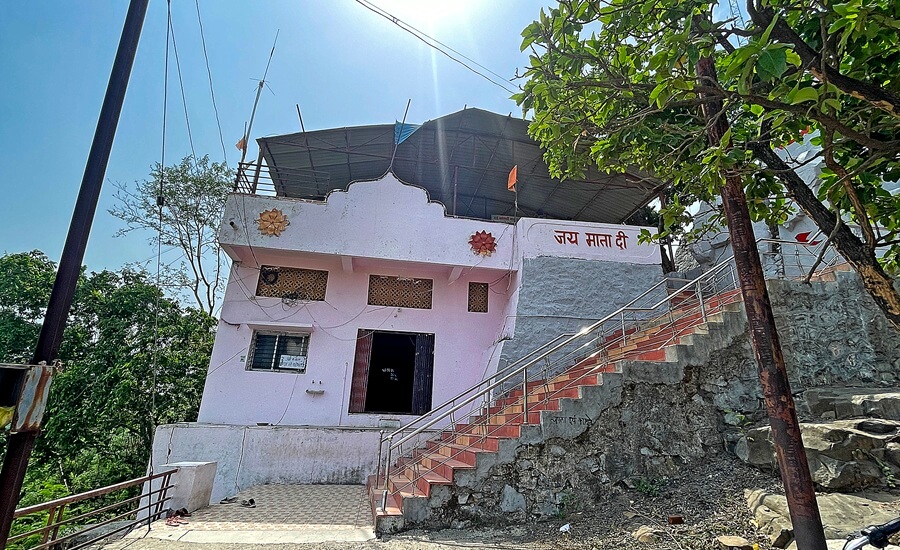
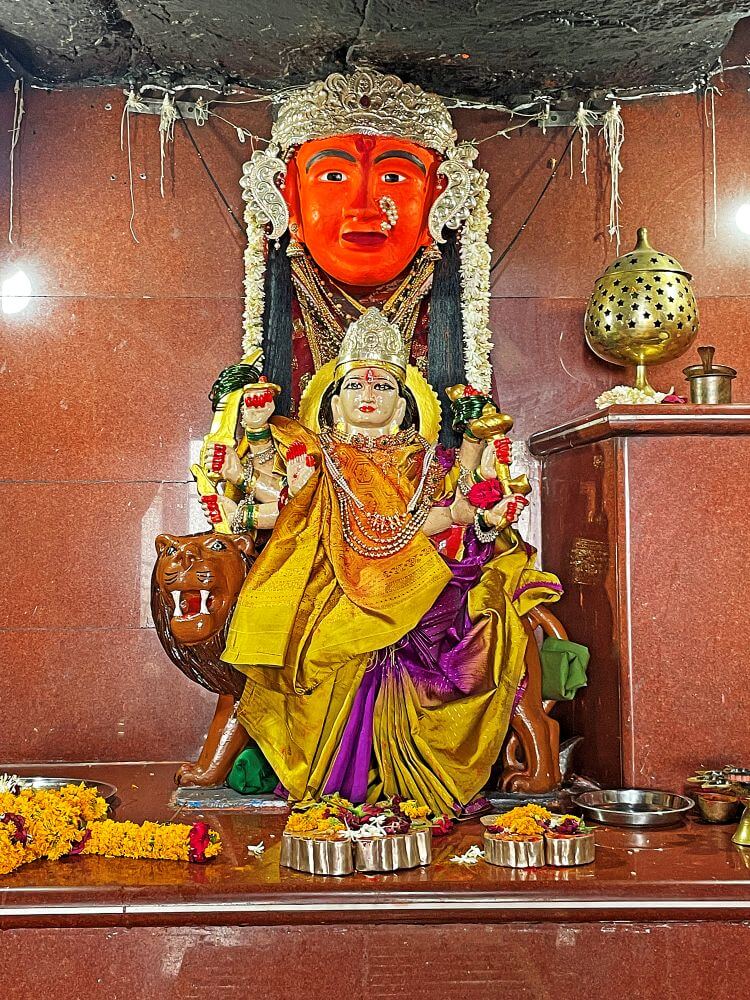
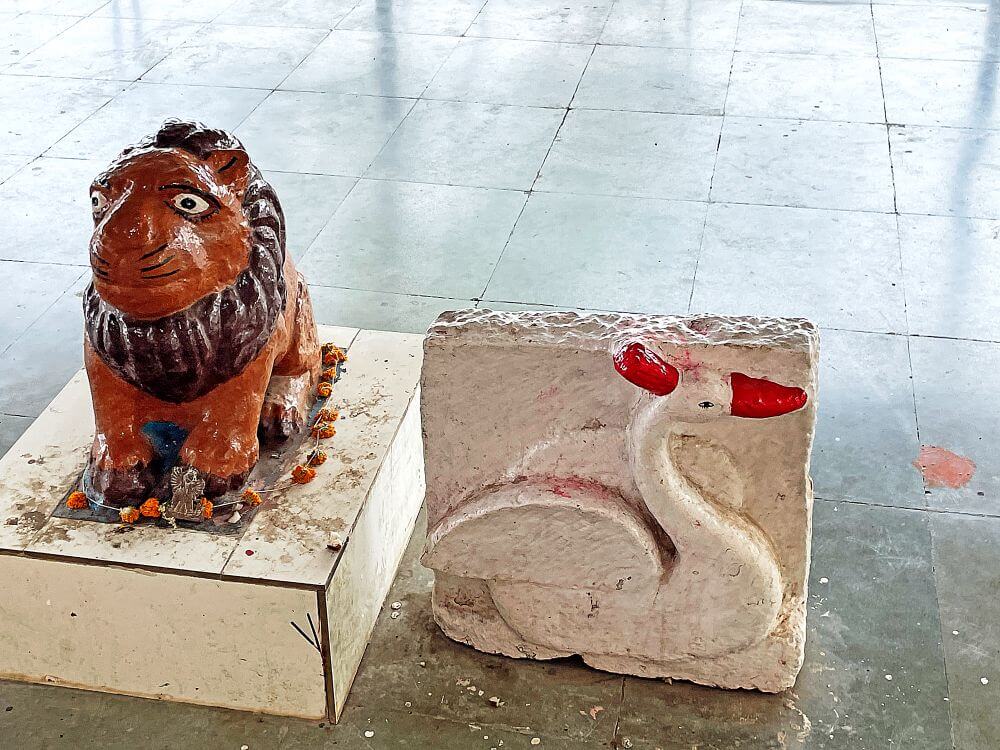
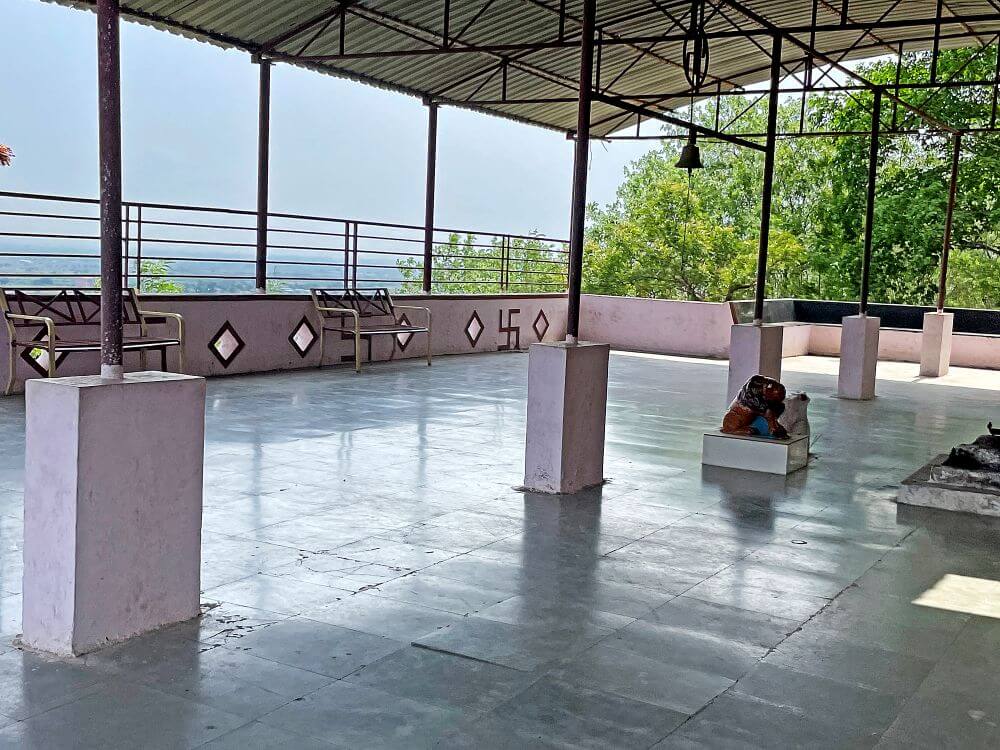
This temple dates back to the sixteenth century. However, it is said that since the idol of Goddess Vagheshwari in the temple is Swayambhu (self-manifested), it must have been worshipped since time immemorial. The legend of the temple states that Saurashtra in Gujarat is the original abode of the Goddess. While traveling from there on a lion through the Satpura mountain range, the Goddess was pleased by the natural beauty and this elevated location, and The Goddess established Herself right here. There is a paved road from the foothills to reach this temple situated on a high hill. At the foot of the hill stands the temple archway. From the parking area, one can reach the temple by climbing about twenty steps. On one side of the steps is a rocky cliff, and on the other is a safety railing. On the adjacent rock face, images of Mahadeva and Ganesha are painted. Climbing the steps leads into the paved courtyard of the temple.
This temple dates back to the sixteenth century. However, it is said that since the idol of Goddess Vagheshwari in the temple is self-manifested, it must have been worshipped since time immemorial. The legend of the temple states that Saurashtra in Gujarat is the original abode of the Goddess. It is believed that while traveling from there on a lion through the Satpura mountain range, the Goddess was captivated by the natural beauty and this elevated location, and thus she chose to reside here. There is a paved road from the foothills to reach this temple situated on a high hill. An archway of the temple stands at the base of the hill. From the parking area, one can reach the temple by climbing about twenty steps. On one side of the steps is a mountain cliff, and on the other is a safety railing. Images of Mahadeva and Ganesha are painted on the adjacent rock face. Upon climbing the steps, one enters the paved courtyard of the temple.
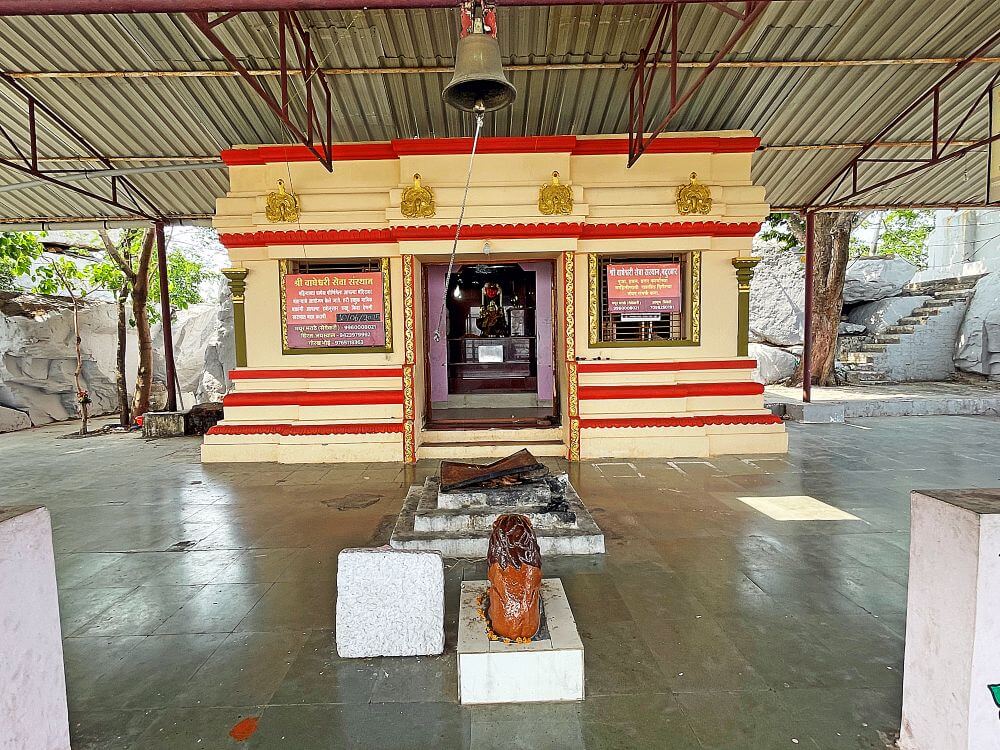
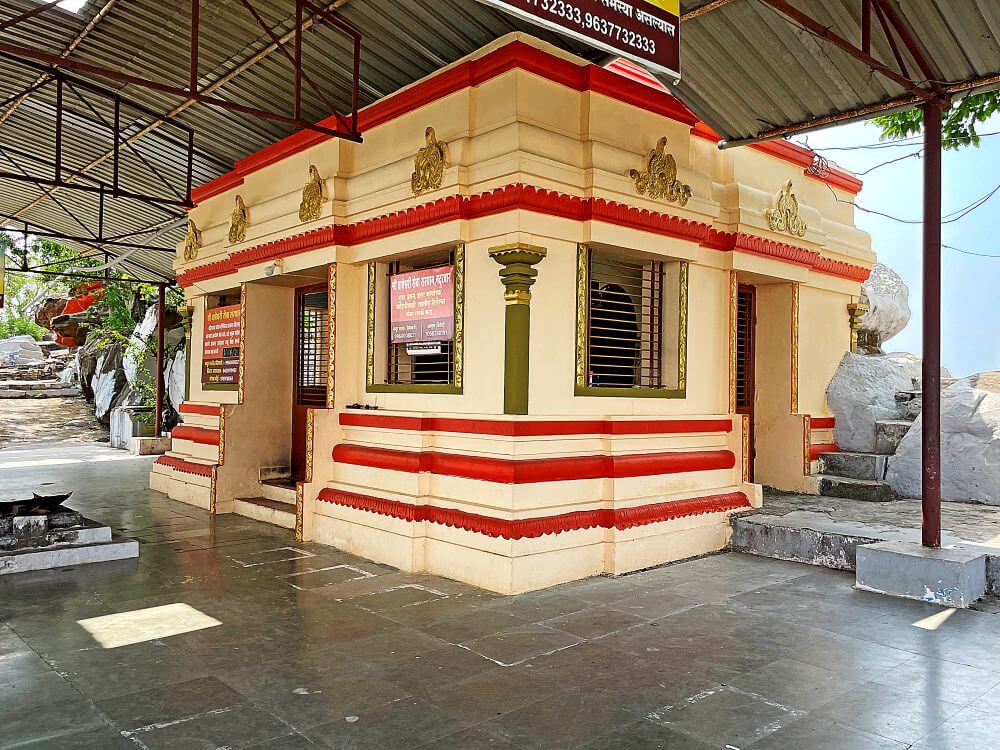
On the ceiling of the sanctum sanctorum, there is a square-shaped shikhara, and there are niches for deities in the center of the walls on all four sides. On both sides of these niches are dwarf pillars, topped with arches and kalashas. On each of the four walls of the shikhara, there are three sub-spires. At the top of the shikhara, there is a stupi, surmounted by a kalasha. Behind the temple, there is a Mhasoba temple formed from a natural rock formation. Here, on a natural stone pedestal, is the swayambhu stone idol of Lord Mhasoba, featuring horns and ears on the head. On the vertical, flat rock face here, paintings of various deities are depicted. Nearby, under a banyan tree, is an idol of Maruti.
At a short distance from the arch at the foothills lies the Kundakeshwar Mahadev Temple. In the assembly hall of this temple, there is a Nandi on a stone pedestal, and in the sanctum sanctorum, there is a Shiva Linga. Above the Shiva Linga, there is a brass replica of a five-hooded serpent holding an umbrella, an abhishek vessel hanging from the ceiling, and a trident and damaru placed to the side. Behind the Shiva Linga, in a niche in the wall, is a marble idol of Lord Ganesha. Beside the Shiva temple is the temple of Goddess Hinglaj. Inside the temple, there is an eight-armed marble idol of Goddess Hinglaj seated on a throne on a stone pedestal. In the hands of the Goddess are a trident, a sword, a bow, a fire pit, a lotus flower, a noose, a conch, and one hand is in the gesture of fearlessness. The Goddess wears a crown on her head and is adorned with fine garments and ornaments. Beside the Goddess is an idol of Lord Ganesha.
Chaitra Navratri and Sharadiya Navratri festivals are celebrated with great enthusiasm at the temple. During this time, programs such as scripture reading, devotional singing, discourses, sermons, night-long vigils, traditional folk performances, and musical events are organized in the temple. Thousands of devotees from the surrounding areas visit during this period to seek the blessings of the Goddess and to fulfill their vows. Mahaprasad is organized at the temple during all festivals and on every full moon day. The temple witnesses a large influx of devotees on full moon days, new moon days, Tuesdays, Fridays, and Sundays.
This sacred temple stands as a testament to deep spiritual devotion, ancient architectural grandeur, and rich local cultural traditions.
The sanctum sanctorum houses the divine idol consecrated according to ancient Vedic traditions, surrounded by serene courtyards and traditional temple architecture.
Navratri, Maha Shivratri, Annual Temple Jatra & Deepotsav
Compare and book flights, secure top-rated local hotels near the temple, hire reliable guides, and rent cars instantly.
Extend your pilgrimage by visiting other highly sacred temples located nearby.

Add ₹999 more to unlock FREE SHIPPING!
Your sacred cart is currently empty.
Shop Photo FramesFill in your delivery details below to place your order.
Add comment