
Add ₹999 more to unlock FREE SHIPPING!
Your sacred cart is currently empty.
Shop Photo FramesIt is believed that the king of the cowherds, Nanda, held his court in Nandurbar, which is why this place has been known as ‘Nand Darbar’ since ancient times. Over time, the name evolved into Nandurbar. Even today, the city of Nandurbar is referred to as ‘Nandbhumi’. The ancient temple of Khodai Mata, the presiding deity (Gramdevata) of this land, is a place of deep faith for thousands of devotees. The ten-day fair held here during Navratri is famous, drawing pilgrims not only from Maharashtra but also from Gujarat and Madhya Pradesh. There is a strong belief that this awakened (Jagrut) Goddess fulfills the wishes of her devotees, leading to millions visiting for her blessings.
It is believed that the Khodai Devi here is the same as Khodiyar Mata, who is worshipped in Rajasthan and Gujarat. According to legend, in the 7th century, King Shilbhadra ruled over Vallabhipur in the Saurashtra region. Mamani Gadhvi, a resident of Roishala village, was a close associate and friend of the King. Jealous courtiers, disliking this friendship, poisoned the Queen’s mind by suggesting that the shadow of the childless Gadhvi was inauspicious for the King and his family. Consequently, the Queen forbade Gadhvi from entering the court. Deeply insulted, Gadhvi prayed to Lord Shiva and was blessed with seven daughters—Aval, Jogal, Togal, Janbai, Holbai, Bijbai, Sosai—and one son, Mehrak. Once, when Mehrak was bitten by a venomous snake, Janbai went to the netherworld (Patal-lok) to fetch nectar. On her return, her foot got stuck in a rock in the river, causing an injury. She then traveled to the mortal world riding on the back of a crocodile. Because she arrived limping, she came to be known as ‘Khodiyar Mata’ (Khodi meaning limp), and the crocodile became her vehicle.
Local villagers state that this shrine has been established since time immemorial, although scholars estimate the temple to be about seven hundred years old. It is said that as herdsmen traveled across the Narmada, they developed faith in Khodiyar Devi, who was worshipped in Gujarat and Rajasthan. Wishing to have a temple for the Goddess in their own region, they likely established Khodai Devi here.
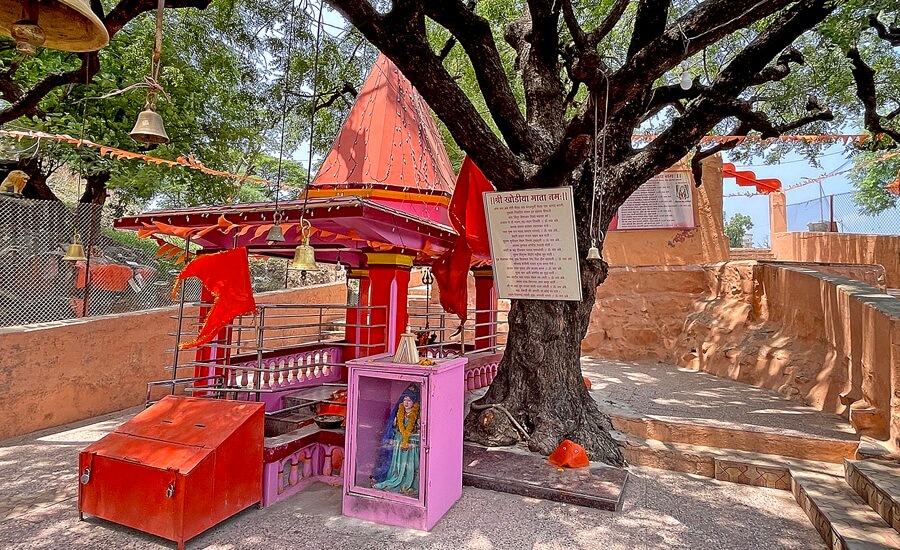
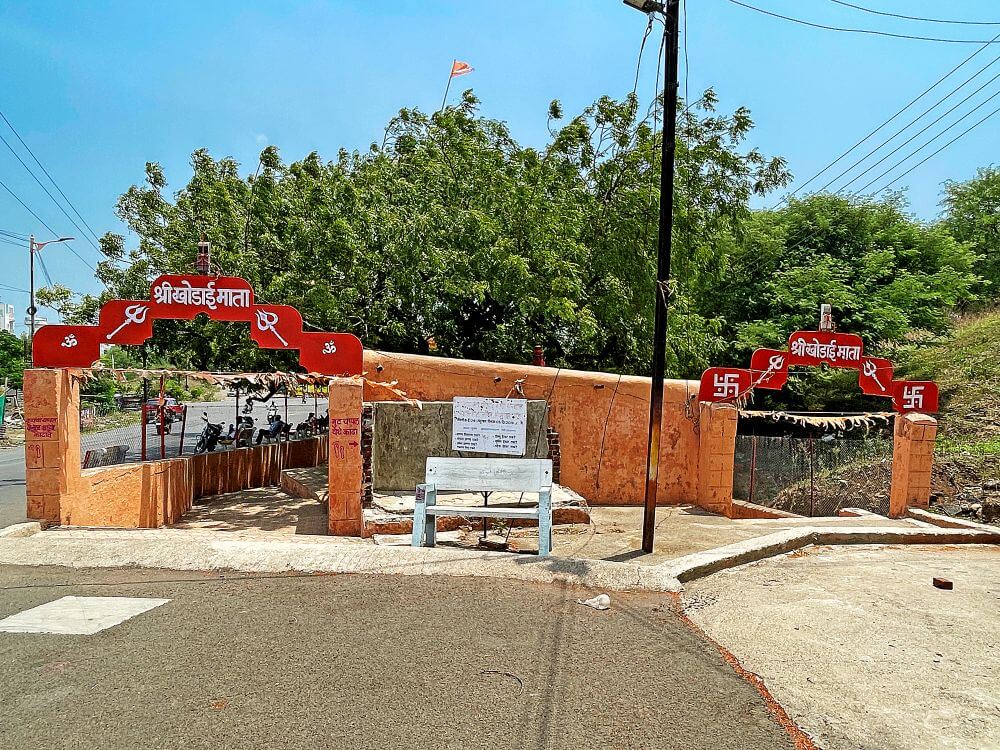
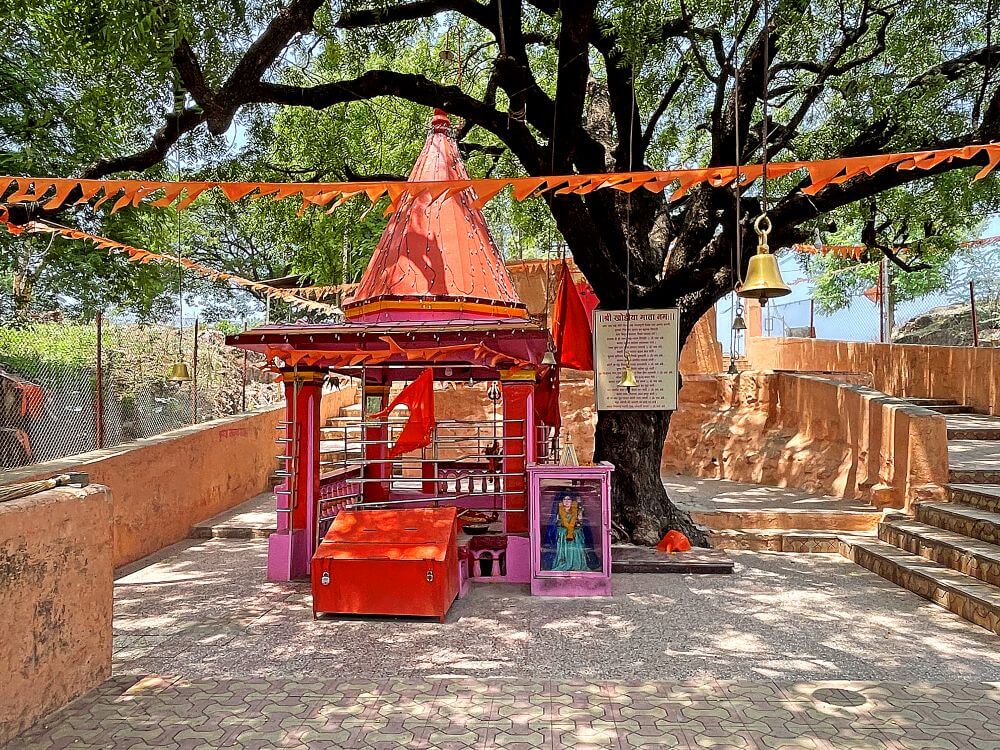
Located in the heart of Nandurbar city, the temple has a simple welcome arch in its boundary wall. One enters the temple courtyard by descending about 15 steps, which are flanked by railings. The courtyard features ancient trees with many bells hanging from their branches. A Yajna-kund (sacrificial fire pit) is situated in front of the Khodai Devi temple. The temple itself is located at a lower level than the courtyard, accessible by descending three more steps. This temple, a place of faith for thousands, is remarkably simple and small. The roofless temple is supported by four square pillars, with beams and a ceiling above. Except for the entrance, the temple is enclosed by a railing on all four sides.
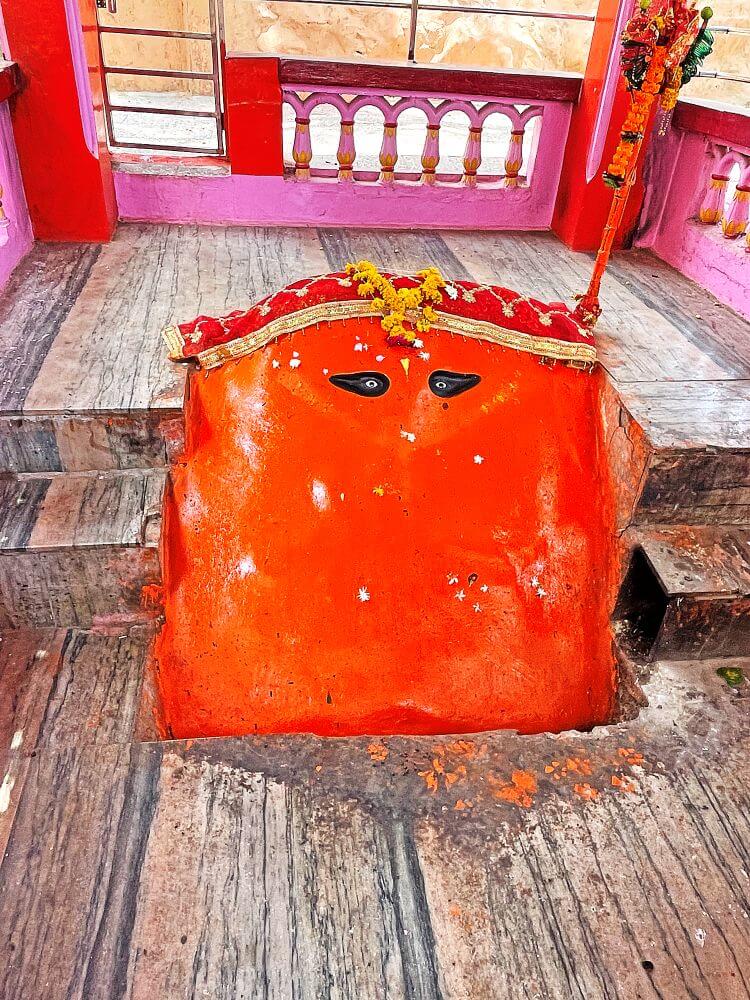
It is said that because Khodai Devi is a guardian deity, she moves freely throughout the universe; hence, her temple is kept completely open. In the center of the temple, in a hollowed-out area, stands the self-manifested (Swayambhu) stone idol of the Goddess. The vermilion-smeared idol has silver eyes and a silver crown. Beside the idol are a trident and, in front, baskets where devotees offer grain and flour during festivals. The hexagonal spire on the roof is adorned with an Amalaka and a Kalash.
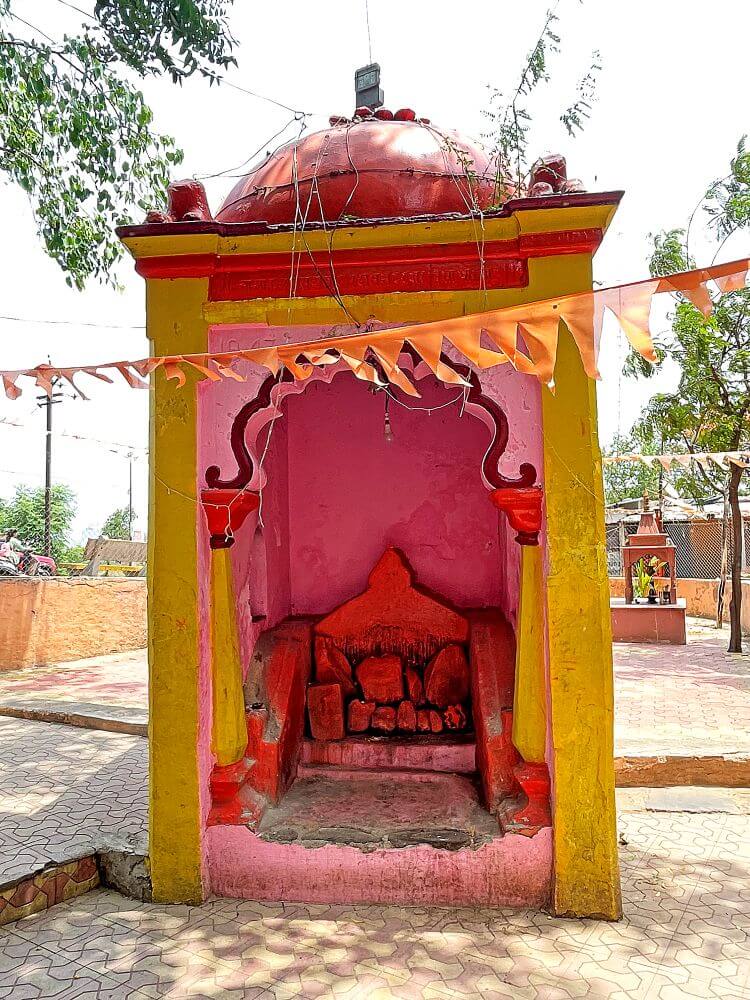
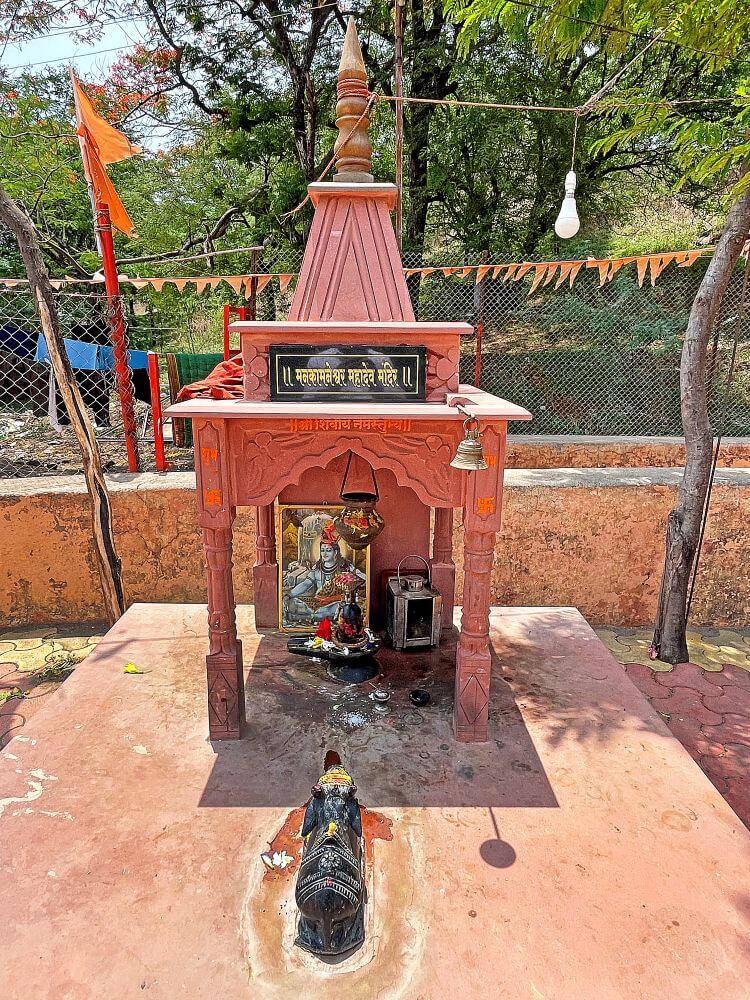
Outside the temple, near the entrance, is a marble idol of Khodai Devi housed in a glass shrine. Under the trees at the back, there are stones smeared with vermilion representing local deities. Beside this temple stands a small, doorless shrine built in 1943, where all the stone idols are also smeared with vermilion. The roof of this shrine features a dome-shaped spire topped with a Kalash. On the platform built around the trees near this temple, there are more vermilion-smeared stones.
The Sharadiya Navratri festival is the main annual event at this temple, during which a large ten-day fair is held. This is considered the second-largest fair in the region after the one held every twelve years at the Kedareshwar Temple in Prakasha, Nandurbar district. Devotees from Maharashtra and the borders of Gujarat and Madhya Pradesh attend this fair. The primary right to perform the Goddess’s worship remains with the tribal community. Chaitra Navratri and other festivals are also celebrated here. Every Tuesday, Friday, Amavasya (new moon), and Purnima (full moon), there is a large influx of devotees seeking the Goddess’s darshan.
This sacred temple stands as a testament to deep spiritual devotion, ancient architectural grandeur, and rich local cultural traditions.
The sanctum sanctorum houses the divine idol consecrated according to ancient Vedic traditions, surrounded by serene courtyards and traditional temple architecture.
Navratri, Maha Shivratri, Annual Temple Jatra & Deepotsav
Compare and book flights, secure top-rated local hotels near the temple, hire reliable guides, and rent cars instantly.
Extend your pilgrimage by visiting other highly sacred temples located nearby.

Add ₹999 more to unlock FREE SHIPPING!
Your sacred cart is currently empty.
Shop Photo FramesFill in your delivery details below to place your order.
Add comment