
Add ₹999 more to unlock FREE SHIPPING!
Your sacred cart is currently empty.
Shop Photo FramesThe village of Angāpur, nestled in Sātārā Tālukā, is renowned for its unique Bhadrotsav in honour of Bhagavān Ganapati. A distinctive feature of this village is that Gaṇeśotsav is not celebrated in any household or publicly here. While Gaṇeśotsav is celebrated throughout Mahārāshtra, Angāpur observes a distinct Bhadrotsav at the Ātmagajānana Mandir instead. The murti of Ātmagajānana here is believed to be a form of Mayūreśvara of Morgaon. The state government has also honoured this temple by granting it ‘C’ grade pilgrimage site status.
The legend of this temple recounts that approximately three hundred and fifty years ago, a devout worshipper of Bhagavān Gaṇeśa from the goldsmith community in Angāpur would walk to Morgaon for the darśan of Mayūreśvara on every Saṅkaṣṭī Caturthī. This was his daily routine for many years; however, with advancing age, it became difficult for him to travel to Morgaon. On one Caturthī, he prayed to Bhagavān Gaṇeśa, saying, “O Mayūreśvara, I have served You until now; but being old, I can no longer continue this service.” At that moment, Mayūreśvara appeared to him in a vision, saying, “I am coming with you, but do not look back, otherwise I will stop there.” The devotee of Gaṇeśa began his return journey; but upon reaching Angāpur, when he looked back, Mayūreśvara vanished at that very spot. Where Mayūreśvara disappeared, a murti of Bhagavān Gaṇeśa manifested. A temple was built at that location, and Bhagavān Gaṇeśa was consecrated. That very place is now famous as the Svayambhū Ātmagajānana Mandir.
The village of Angāpur is situated on the banks of the Krishnā River, to the east of Sātārā city. This village, sanctified by the presence of Samarth Rāmdās Swāmī, has also been blessed by the company of Sant Gāḍge Mahārāj and Karmaveer Bhāurāo Pāṭīl. It was in the deep waters of the Krishnā River at Angāpur that Samarth Rāmdās Swāmī discovered the murtis of Shrī Rām and Āṅglāī Devī. Of these, Samarth Swāmī installed the murti of Shrī Rām in the temple at Chāphaḷ, and the murti of Āṅglāī Devī on Sajjangad. It is said that this village acquired the name Angāpur from the name of Āṅglāī Devī.
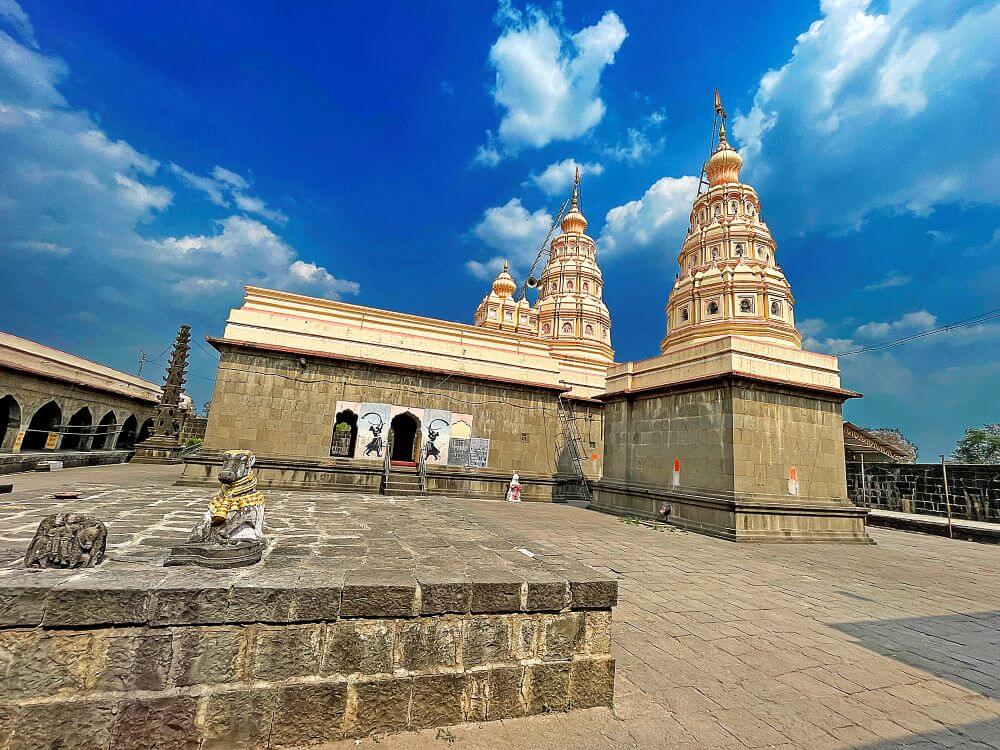
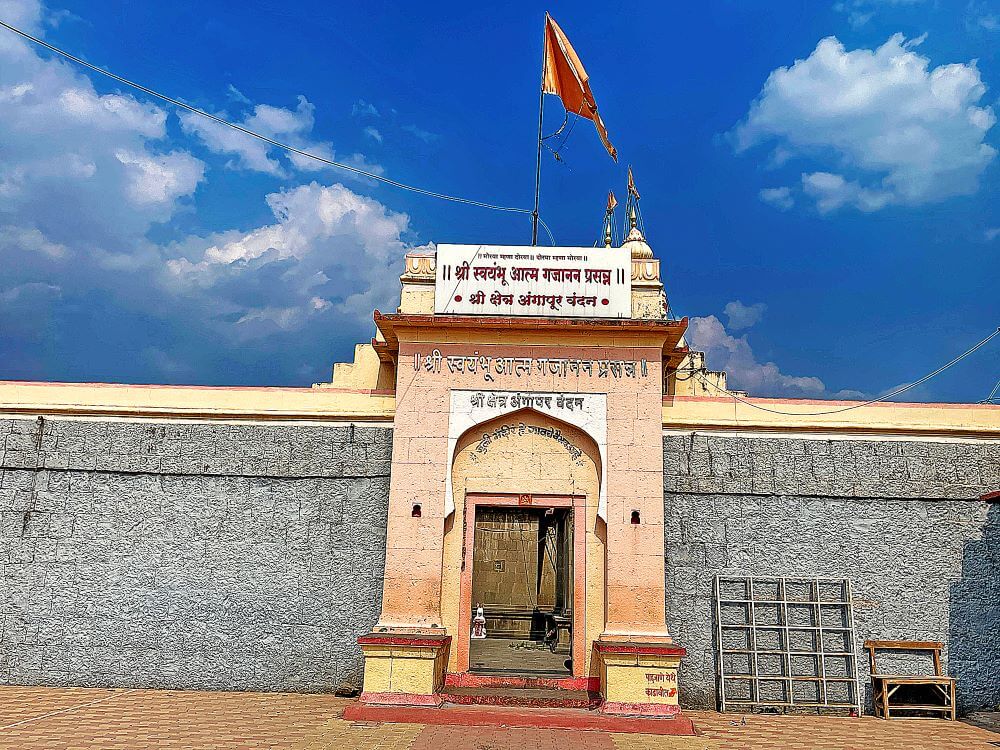
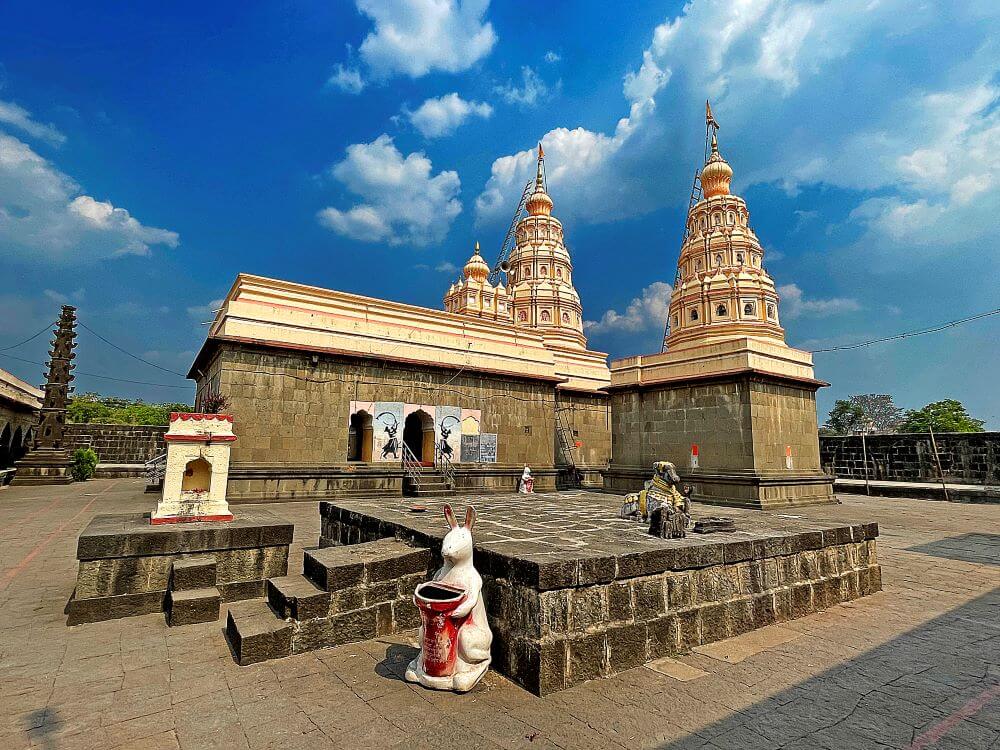
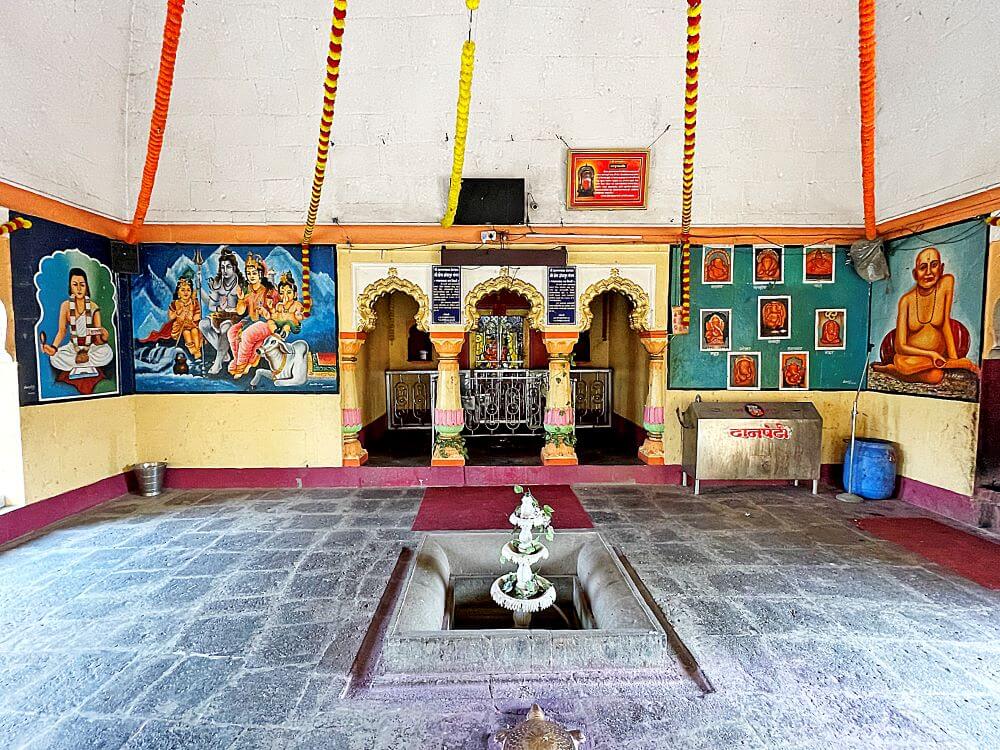
The Ātmagajānana Mandir is the village deity of Angāpur. A large rampart surrounds this temple, and entry into the temple premises is through the gateway in this rampart. Outside this rampart is a Hanumān Mandir, while inside there are many verandahs (ovaryā) providing facilities for performing religious rituals and for devotees to rest. The temple courtyard is spacious and paved with stone everywhere. The main temple here is dedicated to Bhagavān Gaṇapati, and its construction dates back to the Peshwa period. In front of the temple are two tall lamp towers (deepmāḷā), and in the assembly hall (sabhāmaṇḍap) of the temple, there is an automatic fountain. During the construction of the temple itself, a system was devised to collect rainwater and automatically channel it to this fountain.
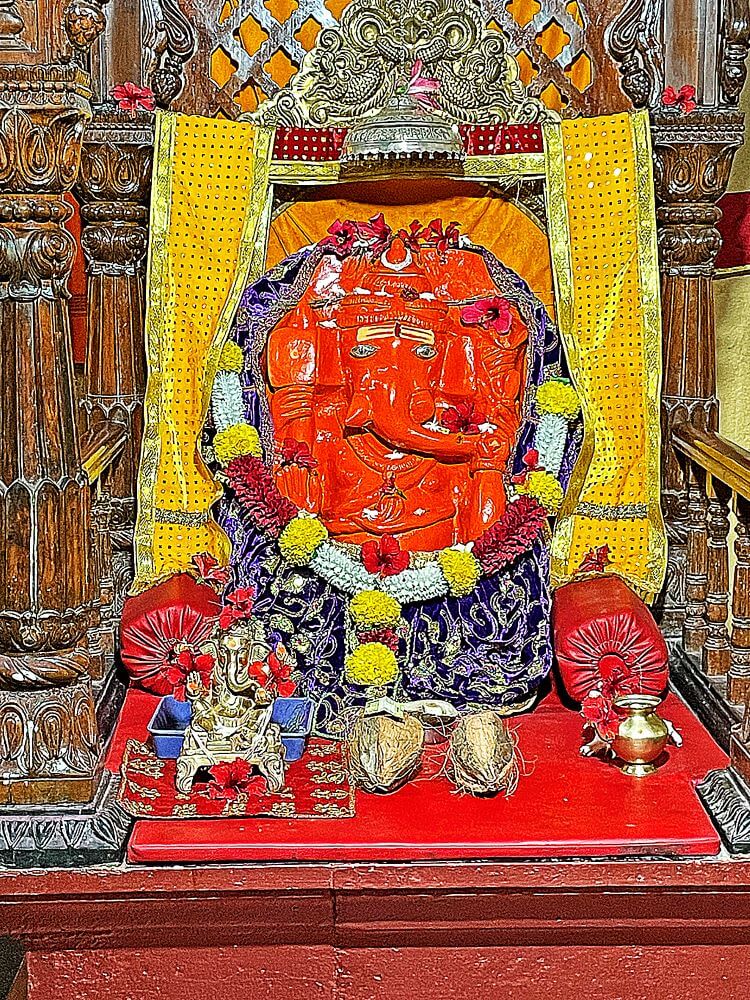
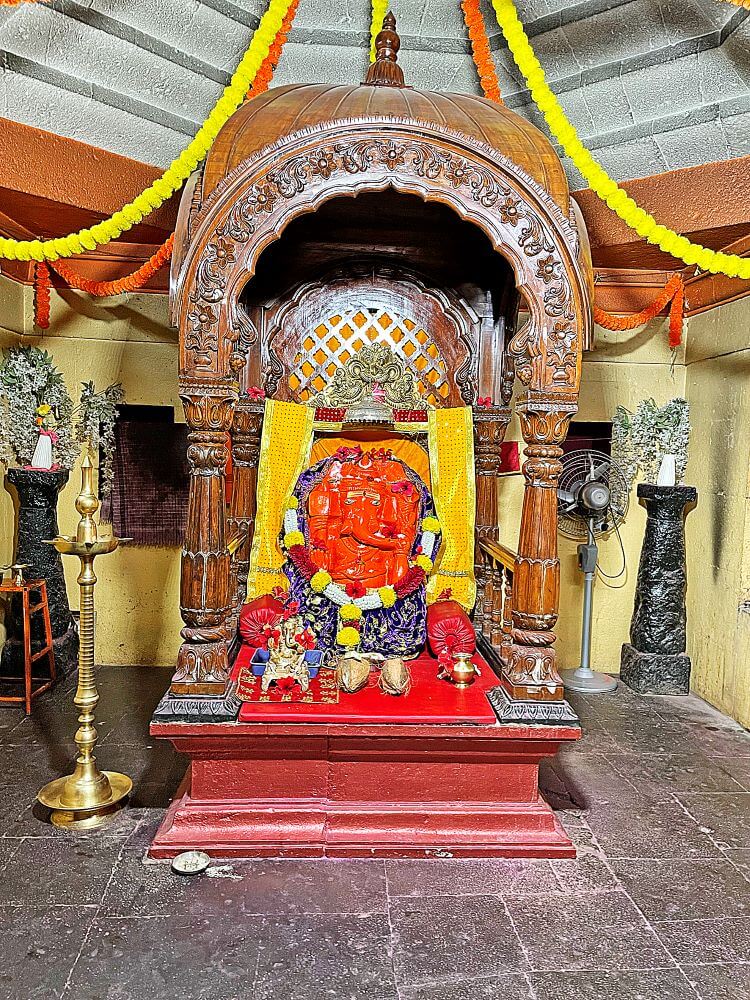
In the sanctum sanctorum (garbhagṛha) is a four-foot-tall murti of Ātmagajānana, facing north and adorned with vermillion (shendūr). The eyes of this murti are made of silver. It is said that there is a resemblance between this murti and the Mayūreśvara murti at Morgaon, one of the Aṣṭavināyakas. Additionally, within this complex, there is a Mahādev Mandir, and outside the temple, on a large platform, is a murti of Nandī. In nineteen hundred and eighteen, during a natural calamity, lightning struck the pinnacle of the Mahādev Mandir, causing the ancient Shivpiṇḍī here to break. Subsequently, the villagers performed Rudrābhiṣek and other religious rituals to consecrate a new Shivpiṇḍī.
Due to the presence of the awakened Svayambhū Gaṇeśa at Angāpur village, Gaṇeśotsav is not celebrated in any household or public place during the Gaṇeśotsav period. Even if villagers are away for work or business, they do not celebrate Gaṇeśotsav in their homes. Gaṇeśotsav here is a village fair, and this festival is called ‘Bhadrotsav’. The Bhadrotsav, which lasts for two days—Bhādrapad Caturthī and Pañcamī—has a two-hundred-year-old tradition. The nature of the Bhadrotsav here is such that the main honour of this festival belongs to the goldsmith community. The honoured member of the goldsmith community stays at the Ātmagajānana Mandir for approximately one month (or two months if there is an adhik māhīnā) from Nāgpañcamī until the second day of Gaṇeśa Caturthī. During this period, he bathes daily in the Krishnā River near the village and performs jalābhiṣek for all the deities in the village. During this time, he is not supposed to touch any other person.
There is another tradition in this village: on the day before Gaṇeśa Caturthī, after bathing in the Krishnā, about six hundred to seven hundred people, from children to the elderly, from Angāpur, Phaḍtarwāḍī, and Limbācīwāḍī, complete the circumambulation of Angāpur (known locally as ‘Dorā’) by walking sixty to sixty-five kilometres barefoot. During this time, they perform jalābhiṣek for the deities in the surrounding area. All these ‘Dorākarī’ return near the temple on the afternoon of Gaṇeśa Caturthī. At that time, infants offered as part of vows are placed on the ground. The ‘Dorākarī’ step over these babies and proceed. After this ritual, the ‘Dorākarī’ perform five circumambulations of the temple with the chant of ‘Morayā Mhaṇā Dorayā…’.
The main day of the Bhadrotsav is the second day of Gaṇeśa Caturthī, which is Pañcamī. On this day, in the evening, the ‘Bhadrapātra’ (an earthen pot, broken from the bottom to form a vessel) is placed on the head of the goldsmith devotee who has served Bhagavān Gaṇeśa for a month. Frankincense (ud), incense (dhūp), camphor (kāpūr), and dried dates (khārīk) are placed in this vessel and ignited. Carrying this on his head, the devotee parades through the entire village. This procession lasts for one hour. During this procession, devotees add frankincense to the ‘Bhadrapātra’ at various points. The area of Angāpur resonates with the chant of ‘Morayā Mhaṇā Dorayā, Dorayā Mhaṇā Morayā’ at this time. When this procession returns near the temple, the ‘Bhadrapātra’ is immersed. This festival is also known as the Ātmagajānana Bhadrotsav.
This sacred temple stands as a testament to deep spiritual devotion, ancient architectural grandeur, and rich local cultural traditions.
The sanctum sanctorum houses the divine idol consecrated according to ancient Vedic traditions, surrounded by serene courtyards and traditional temple architecture.
Navratri, Maha Shivratri, Annual Temple Jatra & Deepotsav
Compare and book flights, secure top-rated local hotels near the temple, hire reliable guides, and rent cars instantly.
Extend your pilgrimage by visiting other highly sacred temples located nearby.


Add ₹999 more to unlock FREE SHIPPING!
Your sacred cart is currently empty.
Shop Photo FramesFill in your delivery details below to place your order.
Add comment