
Add ₹999 more to unlock FREE SHIPPING!
Your sacred cart is currently empty.
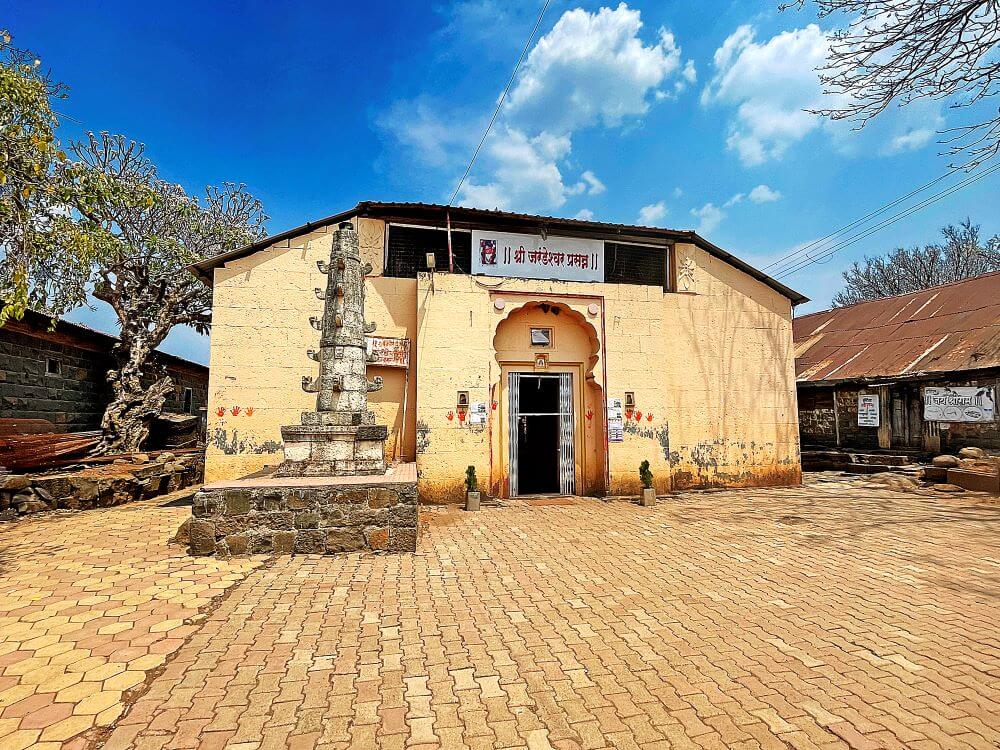
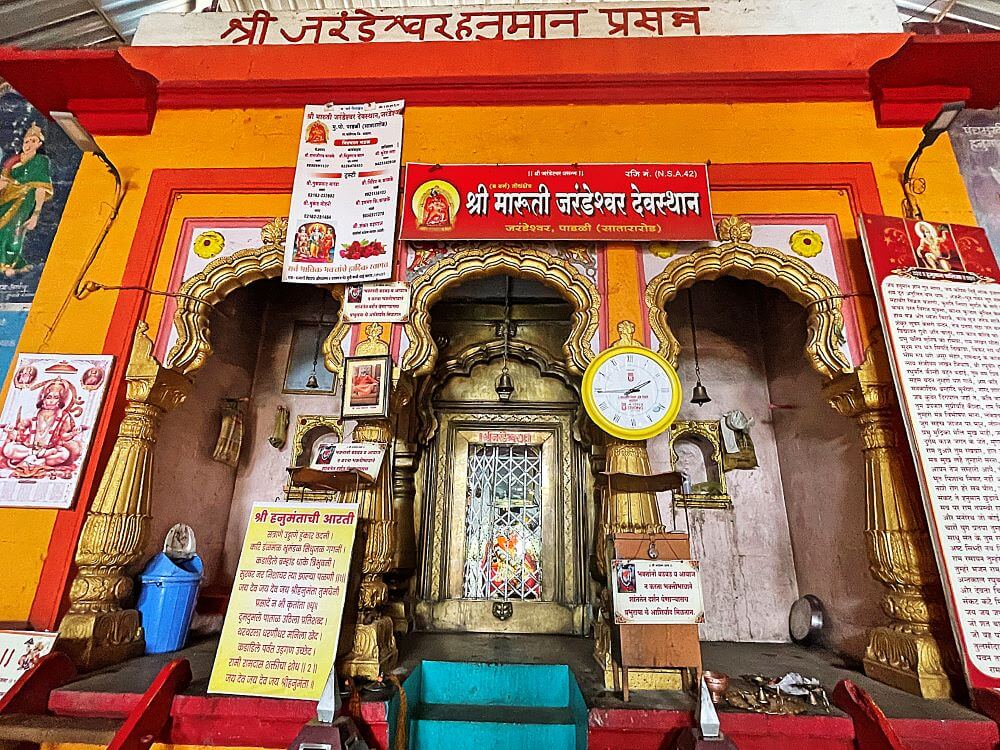
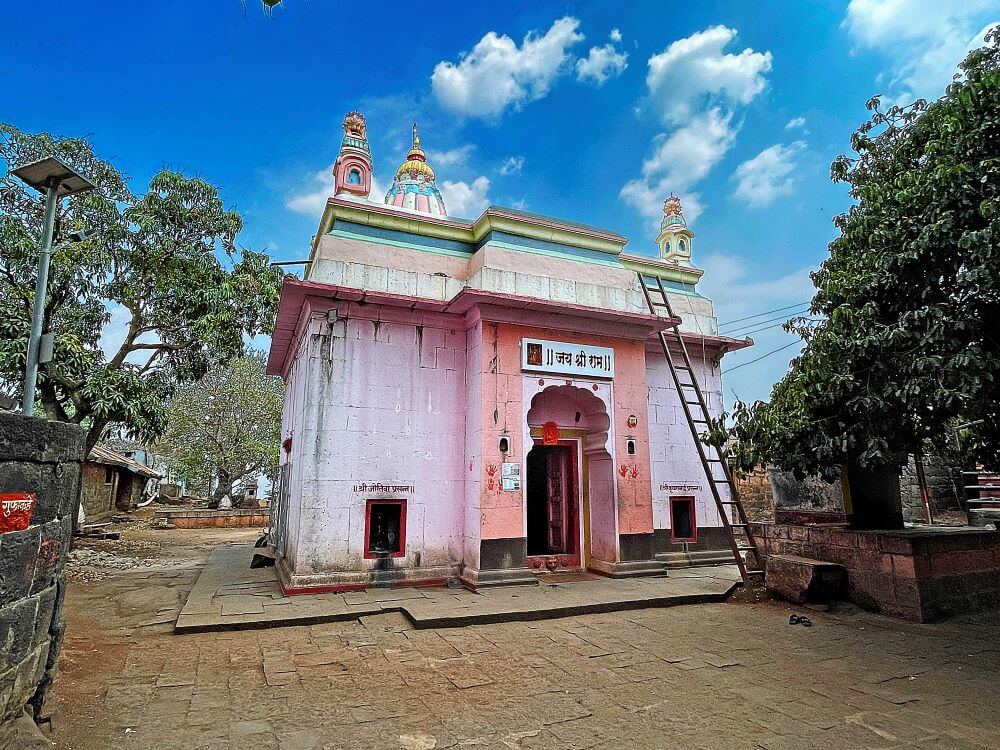
Shop Photo FramesThe Jarandeshwar Maruti temple, situated on a hill to the east of Satara city, is renowned as a ‘Jagrut Devasthan’ (an awakened or spiritually vibrant shrine). This temple holds significant religious and historical importance. Sant Tukaram Maharaj and Samarth Ramdas Swami resided here for some time. It is said that this temple was built by Samarth Ramdas Swami, and it was at this very location around 1655 that Chhatrapati Shivaji Maharaj offered his kingdom to Samarth as a devotional gift. The state government has granted this temple ‘B’ grade pilgrimage status.
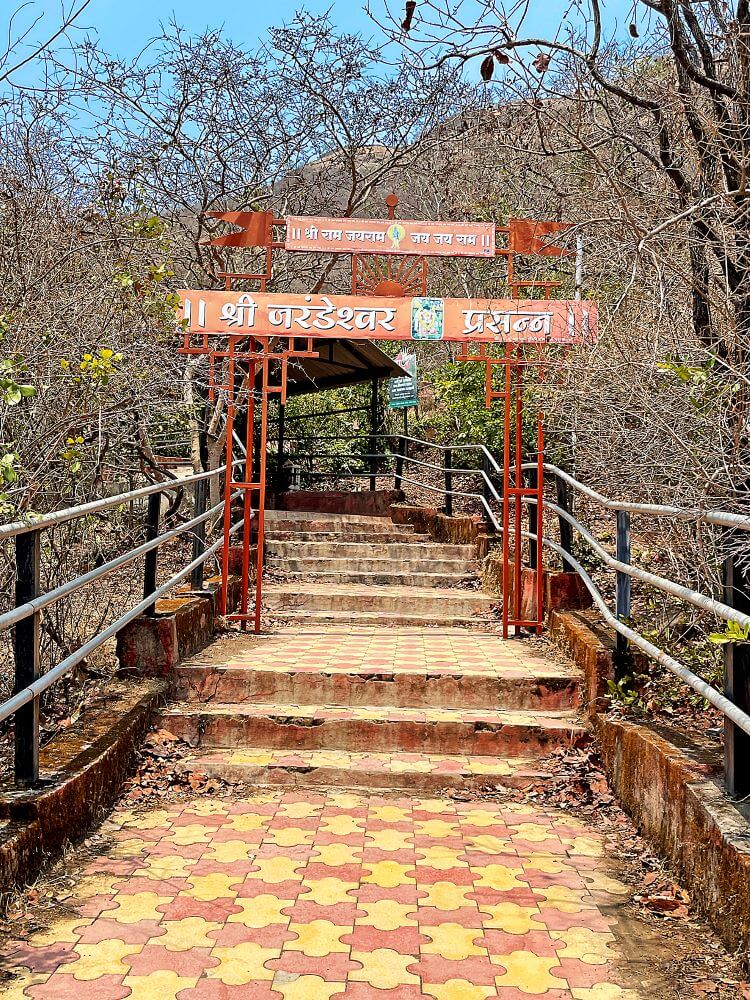
The Jarandeshwar Maruti temple is situated at an altitude of 3760 feet above sea level. There are four routes to reach this temple: one from Jamb village, the second from Padali village, the third from Shivthar via Bhimnagar, and the fourth from Koregaon via Jalgaon. It takes approximately one and a half hours to reach the temple using any of these footpaths. Among these, the path from Jamb village is relatively easier. Initially, there are three hundred and fifty to four hundred steps, after which one must continue along the mountain path to reach the temple. On the mountain plateau, in front of the main temple, stands a large Peepal tree, and beside it is a raised platform (chautara). Next to this platform is a small memorial dedicated to a cat named Bakoba. In front of it lies the main deity of the fort, the temple of Maruti and Jarandeshwar.
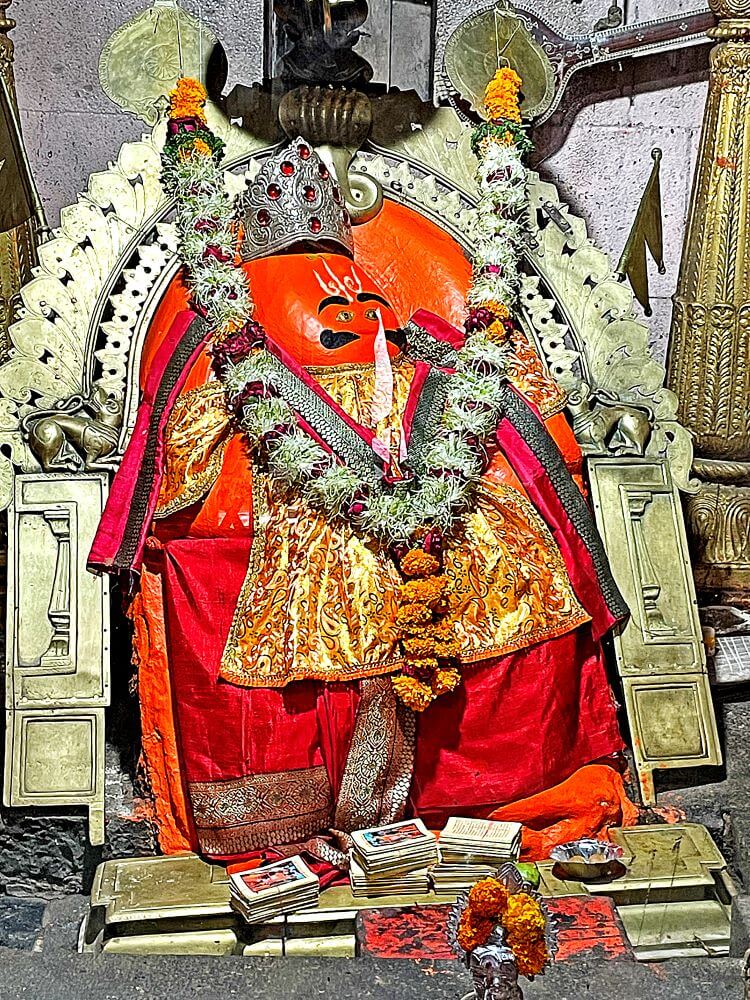
The legend of this temple states that Jarandeshwar is believed to be a part of the Dronagiri mountain that fell from the hands of Maruti (Hanuman) while he was carrying the Sanjivani herb for Lakshmana. The temple is built on a one-meter-high platform, and the idol of Maruti in the sanctum sanctorum is swayambhu (self-manifested). Records indicate that the sabhamandapa (main hall) of the temple was built around 1930 by Dasgiri Maharaj. An idol of Jarandeshwar Mahadev is installed on a stone pedestal within the hall. Additionally, the sabhamandapa houses statues of Sant Tukaram Maharaj, Samarth Ramdas Swami, and Chhatrapati Shivaji Maharaj. Furthermore, various scenes from the Puranas and the life of Shiva (Shivcharitra) are depicted here.
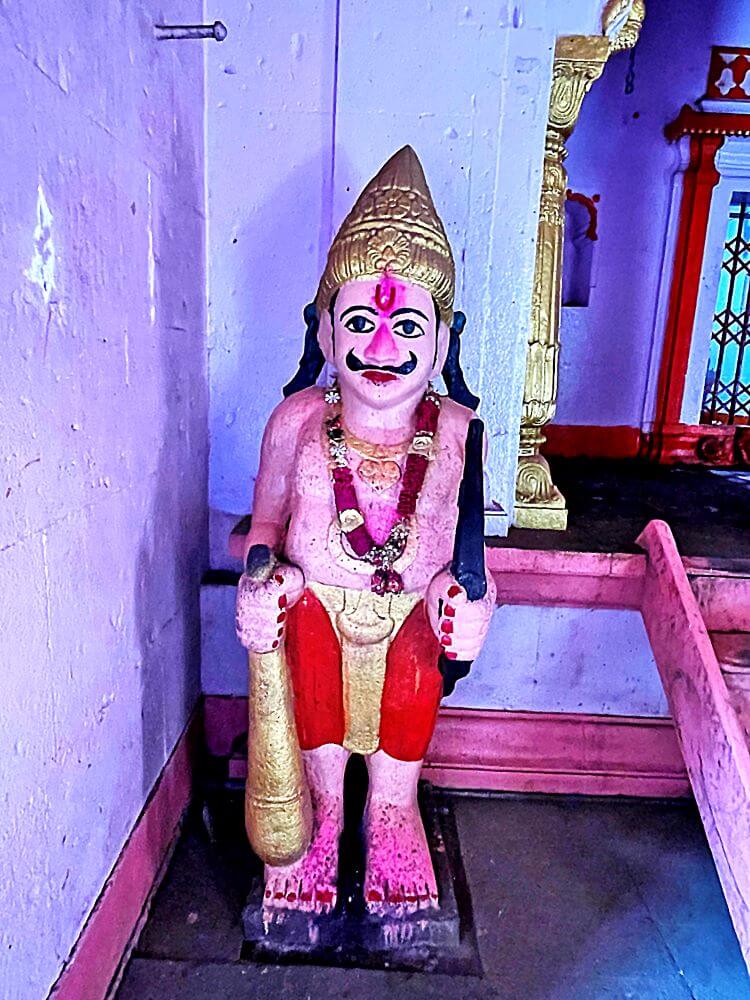
Behind the Jarandeshwar temple is a small temple of Dasmaruti. In front of it is the Shri Ram temple. Records indicate that the Shri Ram temple was built in the year 1862 by Kaloji Buwa. There is a legend regarding the construction of this temple. Kaloji Buwa was faced with the dilemma of whether to build the Shri Ram temple in front of or behind Jarandeshwar. At that time, Hanuman appeared to him in a vision and said, “I am in flight, and since Shri Ram is behind me, His temple should be built at the rear.” Consequently, the Shri Ram temple is situated behind the Jarandeshwar temple. Like the Jarandeshwar temple, the Ram Mandir is also built on a raised platform. In the sanctum sanctorum of the temple, there are marble idols of Shri Ram, Lakshman, and Sita. In the temple’s assembly hall (sabhamandap), there are five-and-a-half-foot-tall idols of the gatekeepers (dwarapalas). Both the Shri Ram temple and the Jarandeshwar temple are of Hemadpanti architecture. Behind the Shri Ram temple is the ‘Upasana Ghal’ (meditation cave) of Samarth, which houses the padukas (footwear) of Samarth. Samarth Ramdas Swami used to sit in this cave during his stay here.
The shrine of Jarandeshwar Maruti, a symbol of devotion and strength, is a spiritually awakened (jagrut) site, and it is renowned in the region for fulfilling the vows of devotees (navsala pavto). Because of this, thousands of devotees visit for darshan every Saturday during the holy month of Shravan. After the early morning Kakad Aarti, long queues of devotees form to receive the Khichdi Prasad. The air here resonates with the chants of Shri Ram and Maruti. From Jarandeshwar, one can see the forts and hills of Ajinkyatara, Yavteshwar, Meruling, Vairatgad, Chandan, Vandan, Nandgiri, Vardhangad, Pateshwar, and Janai-Malai.
At the foothills of Jarandeshwar lies the village of Triputi. It is well-known for the Samadhi Mandir of Gopalnath Maharaj located here.
Gopalnath Maharaj was a celibate Nath-yogi in the tradition of Eknath. The local people considered him an incarnation of Brahma. He was born in 1690, and in 1766, on the day of Shravan Amavasya, he attained Sanjeevan Samadhi at Triputi.
His treatise ‘Shiromani’ is renowned for its commentary and exposition on the concept of Parabrahman. Behind the temple, there is a constructed pond. Records indicate that this pond was built by Brahmendra Swami between the years 1758 and 1763.
The Gopalnath Samadhi Temple consists of a Sabhamandap (main hall) and a Garbhagriha (sanctum sanctorum). Portraits of Brahmendraswami, Dnyaneshwar Maharaj, and other saints are depicted in the Sabhamandap.
Water flows continuously from the second step of the Samadhi in the Garbhagriha (sanctum sanctorum). The Punyatithi Mahotsav of Gopalnath Maharaj is celebrated here during the period from Gokulashtami to Shravan Vadya Amavasya.
This sacred temple stands as a testament to deep spiritual devotion, ancient architectural grandeur, and rich local cultural traditions.
The sanctum sanctorum houses the divine idol consecrated according to ancient Vedic traditions, surrounded by serene courtyards and traditional temple architecture.
Navratri, Maha Shivratri, Annual Temple Jatra & Deepotsav
Compare and book flights, secure top-rated local hotels near the temple, hire reliable guides, and rent cars instantly.
Extend your pilgrimage by visiting other highly sacred temples located nearby.


Add ₹999 more to unlock FREE SHIPPING!
Your sacred cart is currently empty.
Shop Photo FramesFill in your delivery details below to place your order.
Add comment