
Add ₹999 more to unlock FREE SHIPPING!
Your sacred cart is currently empty.
Shop Photo FramesBhairavnath is revered as a manifestation of Lord Shiva. In many places across Bharat, Bhairavnath is worshipped as Kalbhairav. The temple of Gramdaivat Bhairavnath is situated in Washimbe, a village rich in historical and cultural heritage, located in Karmala Taluka. This temple, built in the Hemadpanthi architectural style, is said to be five hundred years old. Bhairavnath is considered the guardian deity of Washimbe and the surrounding region. He is also the Kuldaivat (family deity) of many families in this area. Devotees firmly believe that Bhairavnath here grants their wishes. Consequently, the temple sees a large gathering of devotees for Darshan, especially every Sunday.
The legend of Bhairavnath is narrated in the sacred text ‘Siddhantabodh’. This scripture was penned by the Muslim saint-poet Shahamuni, who was born in Pedgaon, Nagar District. It was composed in the year १७७८ during the Peshwa era. In addition to this text, the great author Shridhar Swami Nazarekar, who composed ‘Shivleelamrut’, has also presented the tale of Bhairavnath. According to this narrative, in ancient times, a demon named Kalasur greatly tormented the Rishis and Munis in the southern region. To seek liberation from this suffering, they approached Lord Shiva. Hearing their earnest pleas, Lord Shiva forcefully struck His matted locks upon the earth. From this act, a Siddha Purusha was created, and His name was Bhairavnath. As per Lord Shiva’s command, He drank water from the five Kundas in Patalaloka, thereby acquiring divine powers, and with these powers, He vanquished Kalasur.
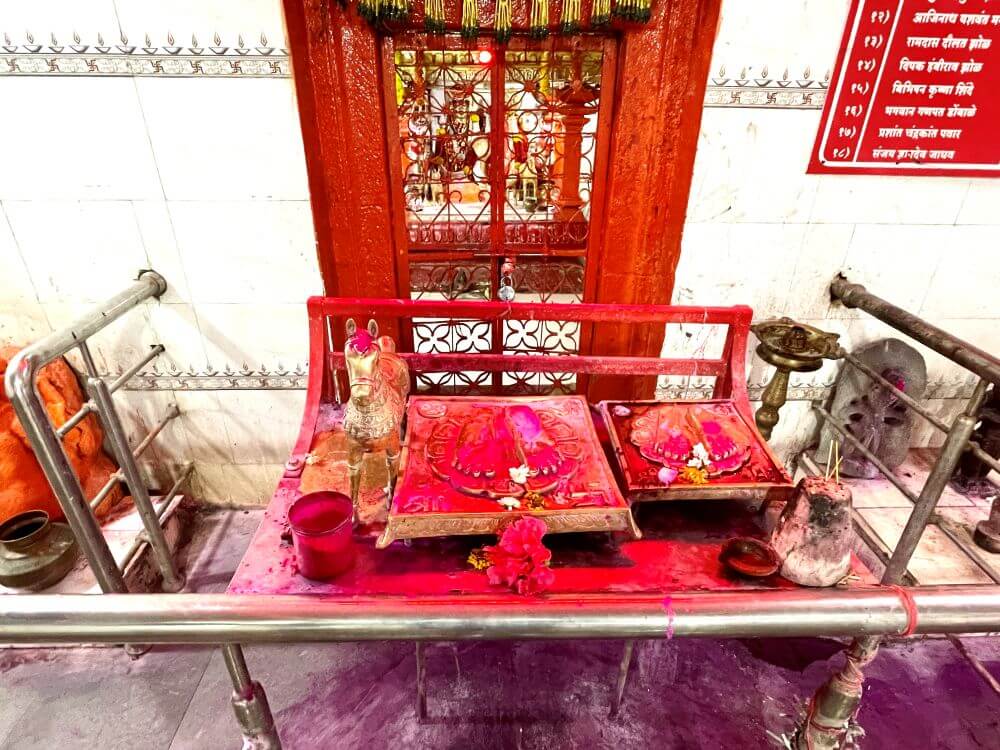
Bhairavnath is also known by the names Siddhanath, Kalbhairav, Bhairavnath, Sidoba, and Siddheshwar. According to one legend, pleased by the devotion of His devotee Dangoji, Bhairavnath came to Washimbe from Sonari in Dharashiv District. Dangoji would unfailingly walk to Sonari every year for the Darshan of Bhairavnath. Once, during the monsoon season, the Sina River here was in flood, preventing Dangoji from reaching Sonari for the deity’s Darshan. At that time, he sat on the riverbank and earnestly prayed to Bhairavnath. In response to his heartfelt request, the deity came to Washimbe to grant him Darshan. As a mark of this event, the footprints of the deity are shown imprinted on a stone platform outside the temple. It is believed that the deity arrived here on Chaitra Pournima.
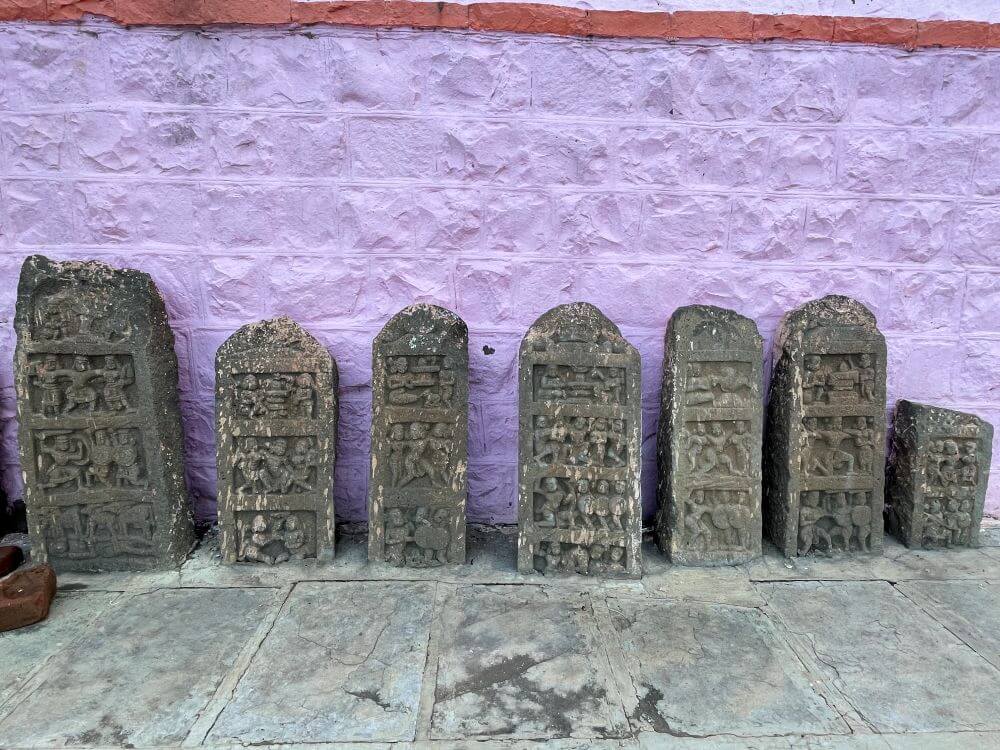
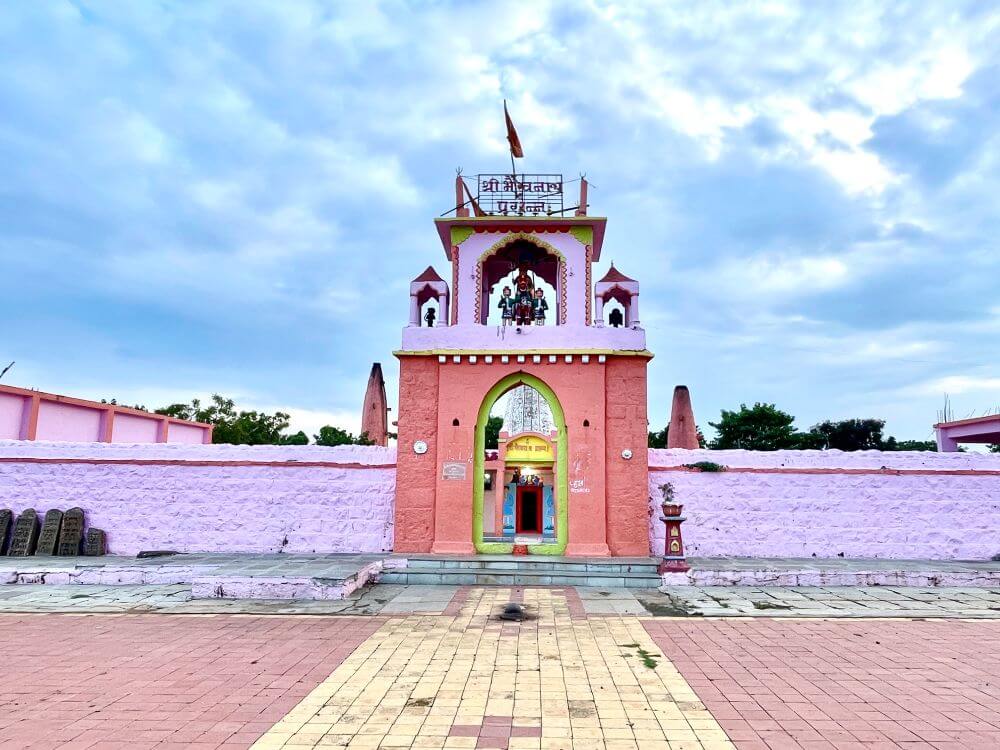
This ancient temple of Bhairavnath is situated in a spacious area at the entrance of Washimbe village. Within the seven to eight feet high stone rampart surrounding the temple, there is a fort-like stone entrance to the temple. On both sides of this entrance are pillars with deepkostakas (niches for lamps). On the upper floor of the two-storied entrance, there is an idol of Bhairavnath mounted on a horse, flanked by two dwarpal sculptures. In the meghadambari (canopy) on both sides of this idol, there is an idol of Garuda on the left and Maruti on the right. Adjacent to the entrance wall, on the outer side, there is a Tulsi Vrindavan and many Virgal sculptures.
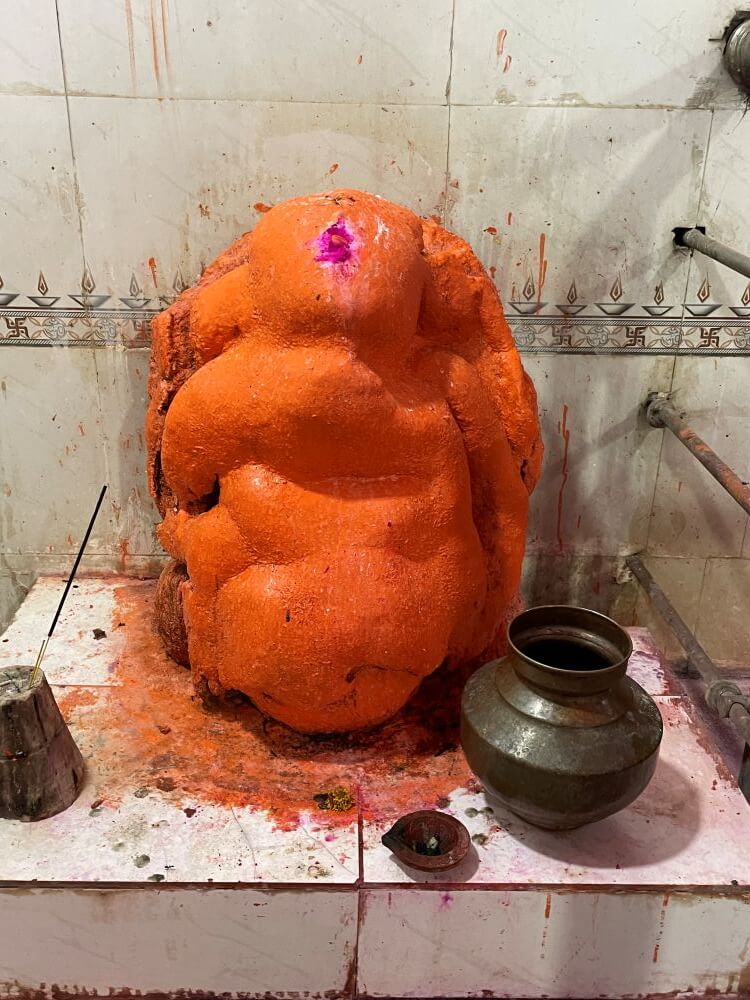
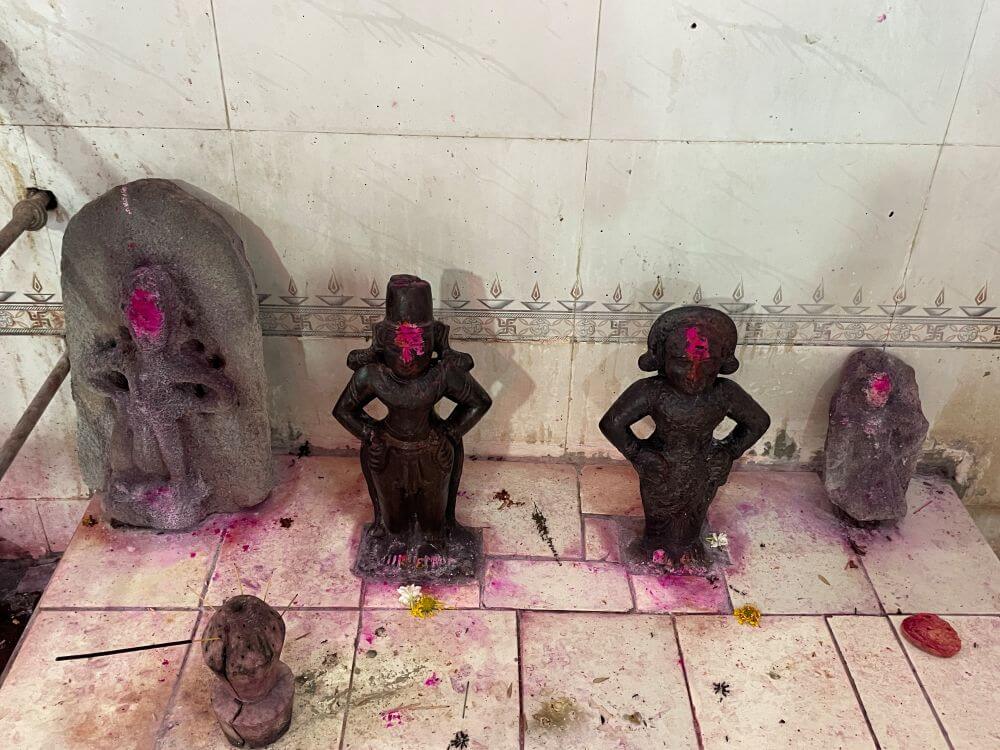
Through the entrance, one steps into the spacious courtyard of the temple. In the courtyard, in front of the temple, there are two deepstambhas (lamp towers) on large platforms on both sides. The temple’s structure comprises a Mandap, Sabhamandap, and Garbhagriha. The Mandap is designed as a Darshan Mandap. On both sides of the Sabhamandap’s entrance are paintings of dwarpalas, and at the lalata-bimba (lintel), a painting of the Goddess is depicted. Beyond the Sabhamandap, leaving a circumambulation path, the Garbhagriha is situated. Inside the Sabhamandap, near the front wall of the Garbhagriha, there are stone idols of Ganapati, Vitthal-Rukmini, and other deities. Near the entrance of the Garbhagriha, there is a brass horse and brass padukas (footwear) of Bhairavnath and Jogeshwari Devi.
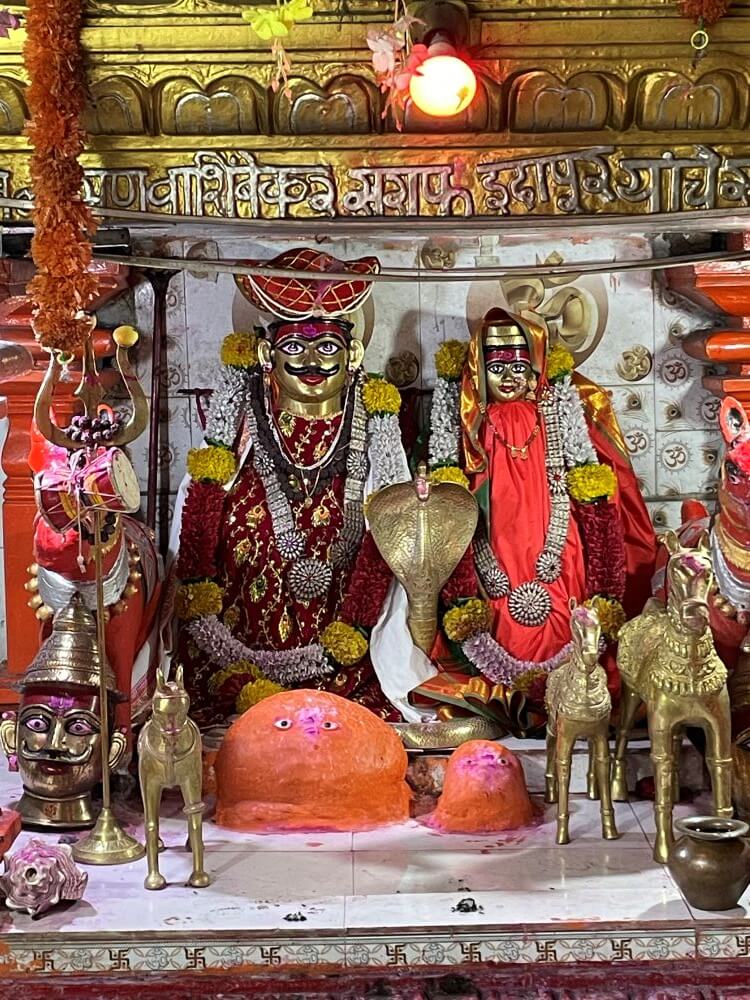
Inside the Garbhagriha, within a stone makhara (shrine) on a vajra-pitha, are the idols of Bhairavnath and Jogeshwari Devi. Both these idols have brass masks, and in the middle of the idols, there is a brass serpent. Bhairavnath wears a pagadi (turban) on His head. On both sides of these idols are sculptures of two horses. In front of the idols are the self-manifested stones of the Lord and the Goddess. On both sides of these stones are brass masks and horses. The ceiling of the Garbhagriha has a square bhingi kathada (railing) with a shikhara (spire) in the center, standing in a lotus flower. This shikhara is adorned with carved designs.
On Hanuman Jayanti, which is Chaitra Pournima, a grand Yatra (fair) and Saptah (week-long devotional program) are organized at this temple. During this Saptah, Akhand Haripath, Dnyaneshwari Parayan, Bhajan, Kirtan, and Mahaprasad are arranged. Thousands of devotees participate in the procession that takes place on the night of the Yatra. During this time, many saffron flags are attached to tall poles and waved. Many devotees from the district attend to witness this celebration.
This sacred temple stands as a testament to deep spiritual devotion, ancient architectural grandeur, and rich local cultural traditions.
The sanctum sanctorum houses the divine idol consecrated according to ancient Vedic traditions, surrounded by serene courtyards and traditional temple architecture.
Navratri, Maha Shivratri, Annual Temple Jatra & Deepotsav
Compare and book flights, secure top-rated local hotels near the temple, hire reliable guides, and rent cars instantly.
Extend your pilgrimage by visiting other highly sacred temples located nearby.


Add ₹999 more to unlock FREE SHIPPING!
Your sacred cart is currently empty.
Shop Photo FramesFill in your delivery details below to place your order.
Add comment