
Add ₹999 more to unlock FREE SHIPPING!
Your sacred cart is currently empty.
Shop Photo FramesIn the history of the Sikh community in Mumbai, the Guru Tegh Bahadur Nagar (GTB) area in Sion-Koliwada holds special significance. This locality, which emerged from the rehabilitation of Punjabi and Sikh refugees who settled in Mumbai after the Partition, is today known as ‘Chota Punjab’. The Gurdwara Sri Dashmesh Darbar is situated in this very area. It is counted among the prominent Gurdwaras in Mumbai. A building that houses the holy copy of the Guru Granth Sahib is called a Gurdwara. This is not merely a place of worship for the Sikh community, but it functions as an important center for the community’s educational, healthcare, and socio-cultural activities.
Guru Tegh Bahadur Nagar, situated on the border of the Mumbai suburbs of Sion and Wadala, was formerly a Koliwada. After the Partition of 1947, countless Sikh and Hindu brethren had to migrate to India from Rawalpindi, Peshawar, Lahore, Multan, and the North-West Frontier Province in present-day Pakistan. Many Sindhi refugees who arrived from the Sindh province were settled in camps at Ulhasnagar near Kalyan. Similarly, rehabilitation for Sikh and Punjabi brethren was carried out in the Sion-Koliwada area. Initially, the government of the time provided temporary accommodation for these displaced citizens in the old military barracks here. That arrangement was referred to as a military camp or ‘Koliwada Camp’. Over time, rehabilitation colonies were established here. Later, this area was named in memory of the ninth Guru of the Sikhs, Guru Tegh Bahadur.
In extremely adverse circumstances, the Sikh community connected their roots with the soil of Mumbai, relying on their innate quality of ‘Chardi Kala’—the tendency to remain in high spirits, positive, and joyful even in difficult situations. “Naam Japo, Kirat Karo, aur Vand Chako,” meaning remember the Lord’s name, work honestly, and share what you have with others, is the teaching of Guru Nanak Dev. Following this, the Sikh religion gives the highest place to the concepts of ‘Sangat’, the community of people gathered at the feet of God, and ‘Pangat’, eating together while setting aside caste, creed, and religion. For this purpose, around 1947-48, local Sikhs gathered and established the Guru Granth Sahib in a small tin shed here and began the recitation of the Lord’s name. This is the origin of this Gurdwara. Later, as the community became economically stable, the need to expand this religious site was felt. Consequently, on January 6, 1968, on the day of Guru Gobind Singh Jayanti, the foundation stone of this Gurdwara was laid by the renowned Sikh saint Baba Jeevan Singh Karsewale. This Gurdwara was named ‘Gurdwara Sri Dashmesh Darbar’. ‘Dashmesh’ is a title of Guru Gobind Singh, meaning ‘The Tenth Sovereign’.
Guru Gobind Singh was the tenth and final Guru of the Sikhs. The ninth Guru of the Sikhs, Guru Tegh Bahadur, was his father, and Gujari was his mother. After the martyrdom of Guru Tegh Bahadur (1675 AD), Guru Gobind Singh ascended the throne at the tender age of ten. Through his effective leadership, he organized the Sikh community and created political awareness among them. He also initiated the baptism ceremony called ‘Khande Di Pahul’ (Amrit). Bhai Daya Singh, Bhai Dharam Singh, Bhai Mohkam Singh, Bhai Sahib Singh, and Bhai Himmat Singh were the first to be initiated. They are called the ‘Panj Pyare’. After this, Guru Gobind Singh himself took initiation from them, his disciples. This is considered an unprecedented event. After this initiation, his followers began to add the title ‘Singh’ after their names and started wearing the ‘Panj Kakar’—Kesh (uncut hair), Kangha (comb), Kachera (undergarment), Kara (steel bracelet), and Kirpan (sword). His followers are addressed as ‘Khalsa’, meaning the pure and sacred. Guru Gobind Singh is the founder of the Khalsa Panth. He provided military training to his followers and created a disciplined army. He gave the battle cry, “Waheguru Ji Ka Khalsa, Waheguru Ji Ki Fateh.” In many battles against Aurangzeb, the followers of Guru Gobind Singh achieved victory. After the death of Aurangzeb, during the conflict between his sons for the throne of Delhi, Guru Gobind Singh supported Aurangzeb’s eldest son, Bahadur Shah, and helped him ascend the throne. Because of this, Bahadur Shah held Guru Gobind Singh in high regard.
An important work of Guru Gobind Singh was that in 1708 AD, he declared that after him, no human would be the Guru, but the ‘Guru Granth Sahib’ would be their final Guru, thus ending the tradition of living Gurus in the Sikh religion. The Guru Granth Sahib, the holy scripture of the Sikhs, consists of 1,430 pages, 5,894 Shabads (hymns), and is written in the Gurmukhi script. ‘Ik Onkar’ is the first word in the Guru Granth Sahib. It is called the Mool Mantar. This scripture includes the teachings (Bani) of six Sikh Gurus, including Guru Nanak, as well as 15 Hindu-Muslim saints and 14 poets who believed in ‘Ik Onkar’, that God is one. Along with Saint Kabir, Ravidas, and Baba Farid, it also includes the verses of Saint Namdev. The fifth Guru of the Sikhs, Guru Arjan Dev, compiled and edited this scripture in 1604 AD.
There is a very close emotional bond between the Sikh religion, which originated in Punjab, and Maharashtra. 61 hymns of Saint Namdev are included in the Guru Granth Sahib. Similarly, the Gurdwara at Nanded is included among the five most sacred Takhts of the Sikhs. These five Takhts are: Akal Takht (Amritsar), Takht Sri Harimandir Sahib (Patna Sahib), Takht Sri Keshgarh Sahib (Anandpur), Takht Sri Damdama Sahib (Talwandi), and Takht Sachkhand Sri Hazur Sahib (Nanded). It was at Nanded that Guru Gobind Singh ordered his followers to follow the Guru Granth Sahib and installed the Guru Granth Sahib as the eternal Guru (Guru Gaddi). It was here that he passed away on October 7, 1708. The Gurdwara Sri Dashmesh Darbar at GTB Nagar is dedicated to the sacred memories of Guru Gobind Singh.
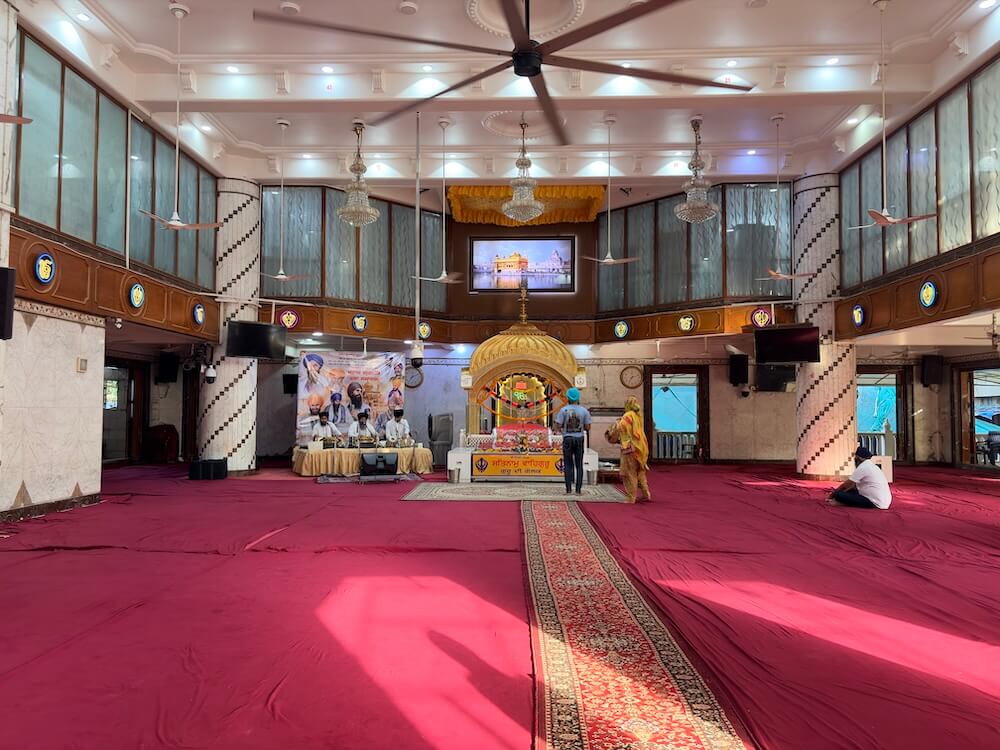
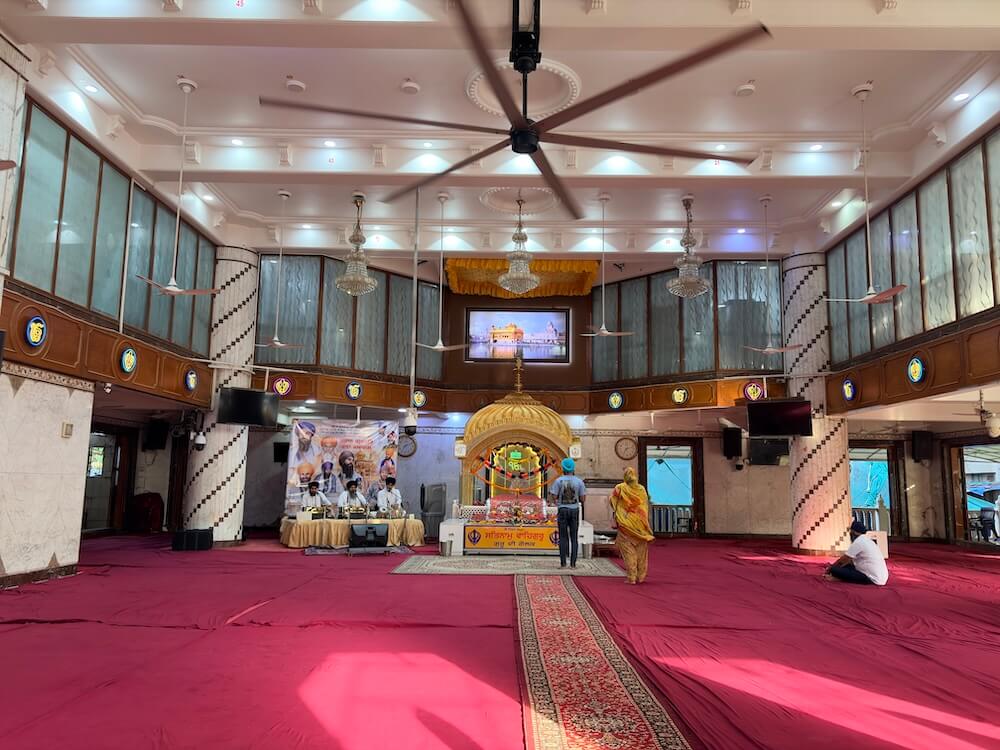
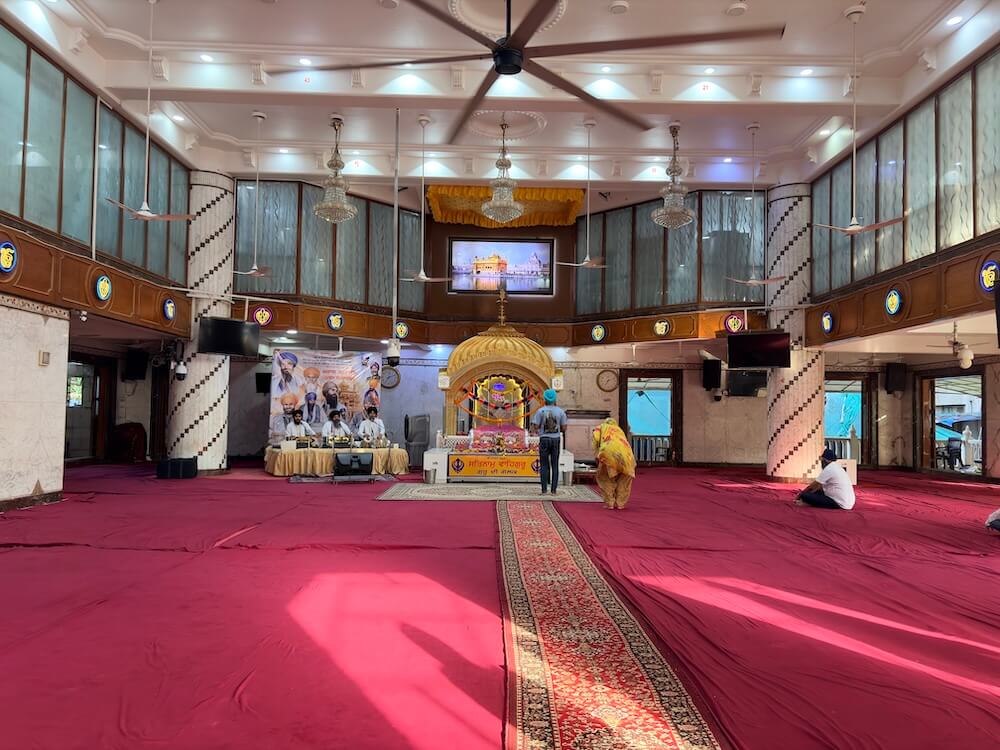
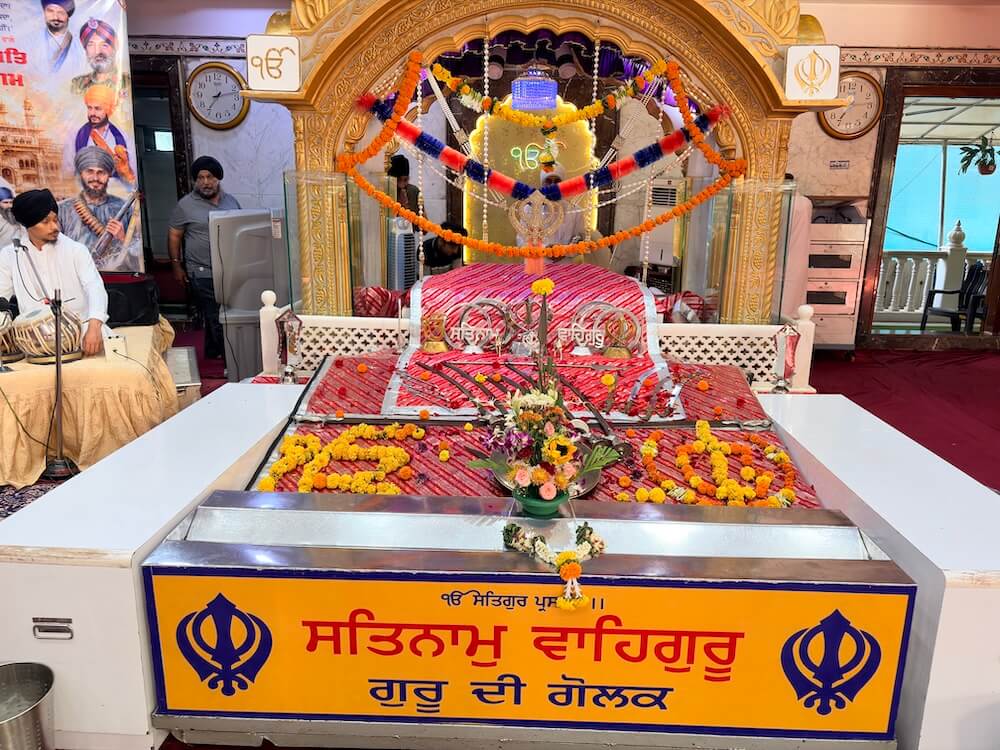
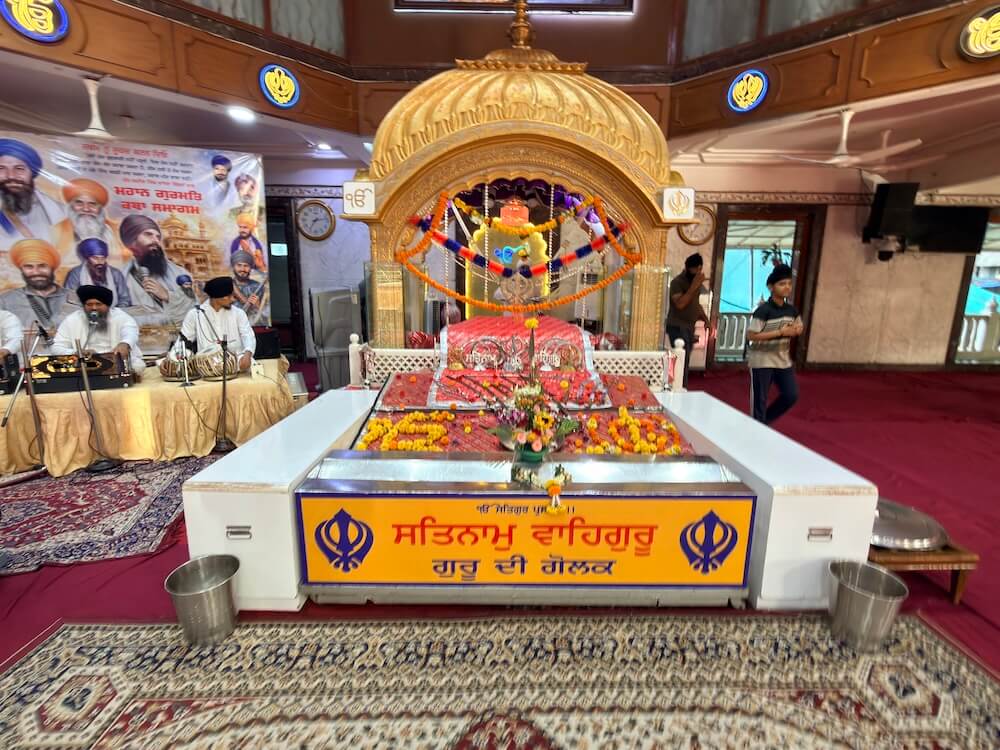
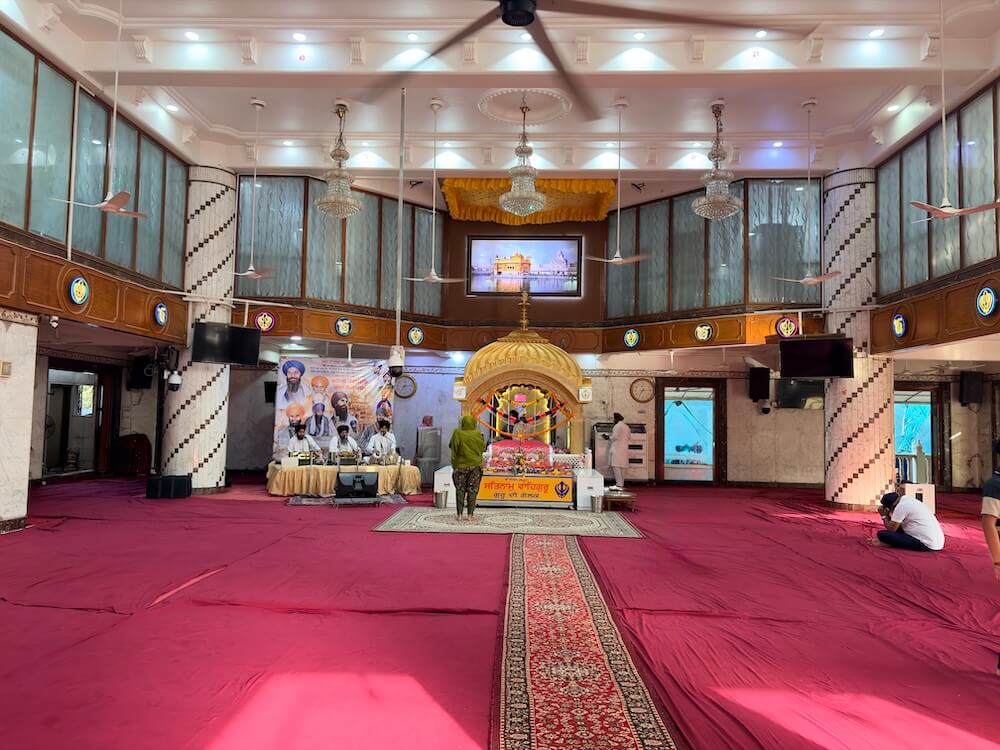
An excellent example of modern and traditional Sikh architecture, this magnificent Gurdwara is influenced by the architectural style of the ‘Harimandir Sahib Takht’. A large metal shed has been constructed in front of the Gurdwara for the convenience of devotees. Standing on a high plinth directly ahead is the grand, two-story structure of the Gurdwara, built in pristine white marble. It is adorned with domes and small chhatris (cupolas). The main dome features a gold-plated pinnacle (kalash). One enters the main hall of the Gurdwara, known as the ‘Darbar Sahib’, by climbing a total of 26 steps. To the left, the towering ‘Nishan Sahib’ (the sacred triangular flag) flutters in the breeze. The ‘Darbar Sahib’ of this Gurdwara is extremely spacious and grand, with glasswork installed in the upper sections. The walls and ceiling are decorated with ‘Meenakari’ (enamel work). A carpet is spread across the floor of the ‘Darbar Sahib’ for devotees to sit and participate in the congregation. Directly in front is the domed ‘Palki Sahib’, inlaid with golden ornamental metal sheets. It is also referred to as the Takht. Within it lies the ‘Manji Sahib’, a muslin-covered bed, upon which the sacred Guru Granth Sahib is enshrined, draped in ‘Rumala Sahib’, an ornate silk cloth. Behind the ‘Palki Sahib’, on the wall above, is a grand image of the Golden Temple of Amritsar. To the left of the ‘Palki Sahib’ is a small stage where daily ‘Kirtan’ (singing of Gurbani) and ‘Katha’ (discourses) take place. Devotees from not only GTB Nagar but from various parts of Mumbai come here to listen to these.
The lower floors of the building house the Langar Hall, office, classrooms, library, and a community hall for social activities. The Langar hall is considered a vital part of the Gurdwara. Following Guru Nanak Dev’s teaching of “Vand Chako”—meaning to share whatever one has with others—the Sikh community faithfully conducts the Langar, a free community kitchen. Food is served to everyone who arrives, without any discrimination based on caste, religion, language, or economic status. All tasks in the kitchen, from cooking food to washing dishes, are performed by devotees themselves as a form of selfless service (Seva).
Devotees of all faiths can visit this Gurdwara from 4:00 AM to 9:30 PM. The daily routine begins at ‘Amrit Vela’ (approximately 3:30 AM to 4:00 AM). At this time, the ‘Prakash’ ceremony is performed, where the Guru Granth Sahib is brought from the rest chamber and formally placed upon the Takht. This is followed by ‘Nitnem’ (daily morning prayers including Japji Sahib, Jaap Sahib, and the Kirtan of ‘Asa Di Var’) until 8:00 AM. Prayers and Kirtan are held again in the afternoon and evening. Between 8:30 PM and 9:00 PM, after the ‘Rehras Sahib’ (evening prayer), the ‘Sukhasan’ ceremony (the ritual of respectfully carrying the Guru Granth Sahib to the rest chamber) is performed.
Throughout the year, various religious, social, and cultural festivals are celebrated here with great enthusiasm and in the traditional manner. ‘Gurpurab’ is the most significant of these. On the occasion of the ‘Prakash Parv’ (birth anniversary) of Guru Nanak Dev and Guru Gobind Singh, a grand procession featuring the sacred scripture is taken out, known as ‘Nagar Kirtan’. In this procession, Sikh youth perform ‘Gatka’ (the traditional Sikh martial art). Additionally, ‘Baisakhi’, marking the foundation day of the Khalsa Panth, is celebrated here with great fervor. On this day, the entire premises are illuminated with decorative lights.
This sacred temple stands as a testament to deep spiritual devotion, ancient architectural grandeur, and rich local cultural traditions.
The sanctum sanctorum houses the divine idol consecrated according to ancient Vedic traditions, surrounded by serene courtyards and traditional temple architecture.
Navratri, Maha Shivratri, Annual Temple Jatra & Deepotsav
Compare and book flights, secure top-rated local hotels near the temple, hire reliable guides, and rent cars instantly.
Extend your pilgrimage by visiting other highly sacred temples located nearby.


Add ₹999 more to unlock FREE SHIPPING!
Your sacred cart is currently empty.
Shop Photo FramesFill in your delivery details below to place your order.
Add comment