
Add ₹999 more to unlock FREE SHIPPING!
Your sacred cart is currently empty.
Shop Photo FramesTuljapur’s Tulja Bhavani Temple, one of the ‘Sadetin’ (three and a half) Shakti Peethas, is well-known in Maharashtra. The Bhavani sword of Chhatrapati Shivaji Maharaj is named after this Goddess, who was the family deity (Kuldevata) of the Maharaj. There are many temples of this Goddess across Maharashtra in various places. In some of these temples, the Goddess is also known by other names. One such ancient and famous temple is located on the Honai hill near Hatnur village. The Goddess here, who is a form of Tulja Bhavani, is known by the name Honai. It is believed that this is a ‘Jagrut’ (awakened) Goddess who grants the wishes of her devotees.
This ancient temple is said to date back to the eleventh century. According to the legend surrounding the temple, the Goddess arrived from the Karnataka region and manifested at the Parit Ghat on the local stream. A shrine for the Goddess was established here; however, due to the disturbance caused by the waters of the Parit Ghat, the Goddess vanished from that place and Honai manifested on the hill. According to a divine vision granted by the Goddess to a devotee, an idol of the Goddess was discovered while excavating the hill. This temple was later built at that very site. It is said that Chhatrapati Shivaji Maharaj had considered building a fort on this hill dedicated to this Goddess, who is a form of Tulja Bhavani. However, due to the prevailing circumstances not being favorable at the time, Maharaj abandoned that plan. It is also narrated here that Shivray used to visit this place to seek the Goddess’s blessings.
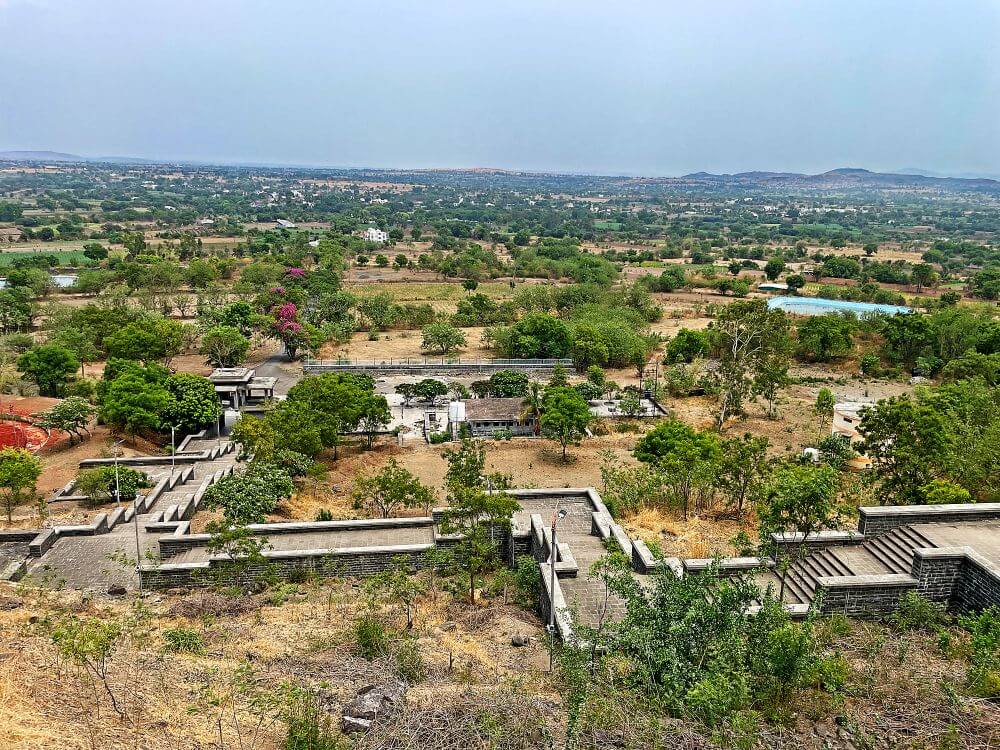
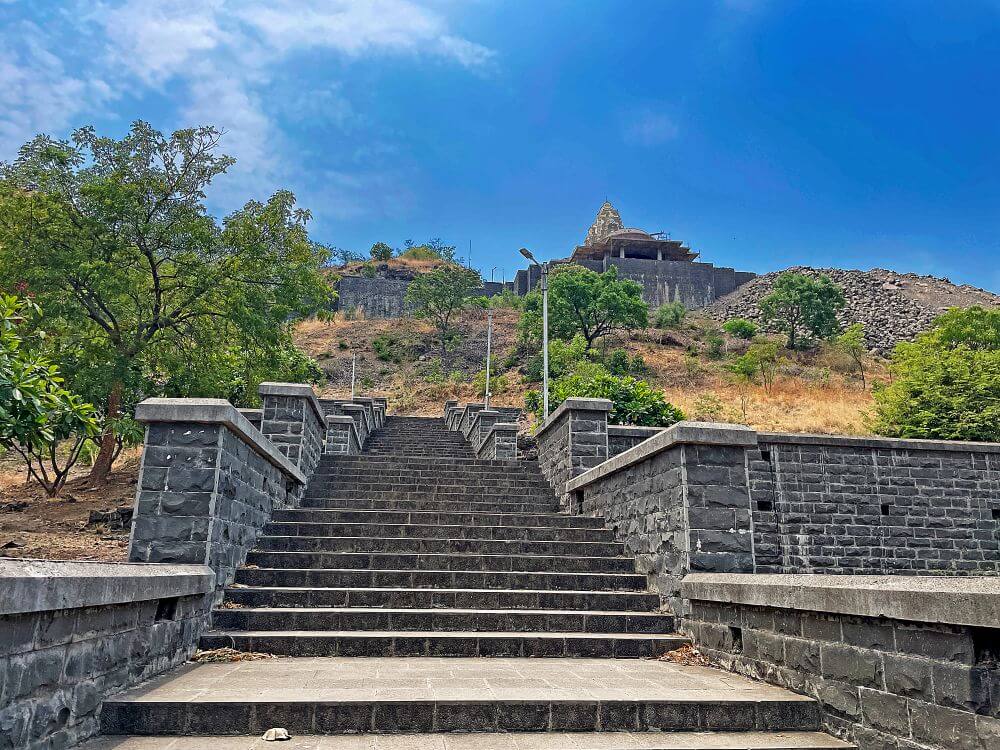
There is a paved asphalt road leading to the foothills of Honai Hill, located two kilometers from Hatanur village. There is a spacious parking area here. From this point, there are about 350 steps to reach the temple. Along the stairway, there are iron pillars equipped with electric lights. These lights are illuminated at night to provide lighting. There are safety railings on both sides of the steps. At the starting point of the stairway, there is a two-story entrance gate. On the upper floor of this entrance gate, there is a Nagarkhana. Inside the entrance, on both sides, there are sentries There is a room and a staircase leading to the Nagarkhana from here.
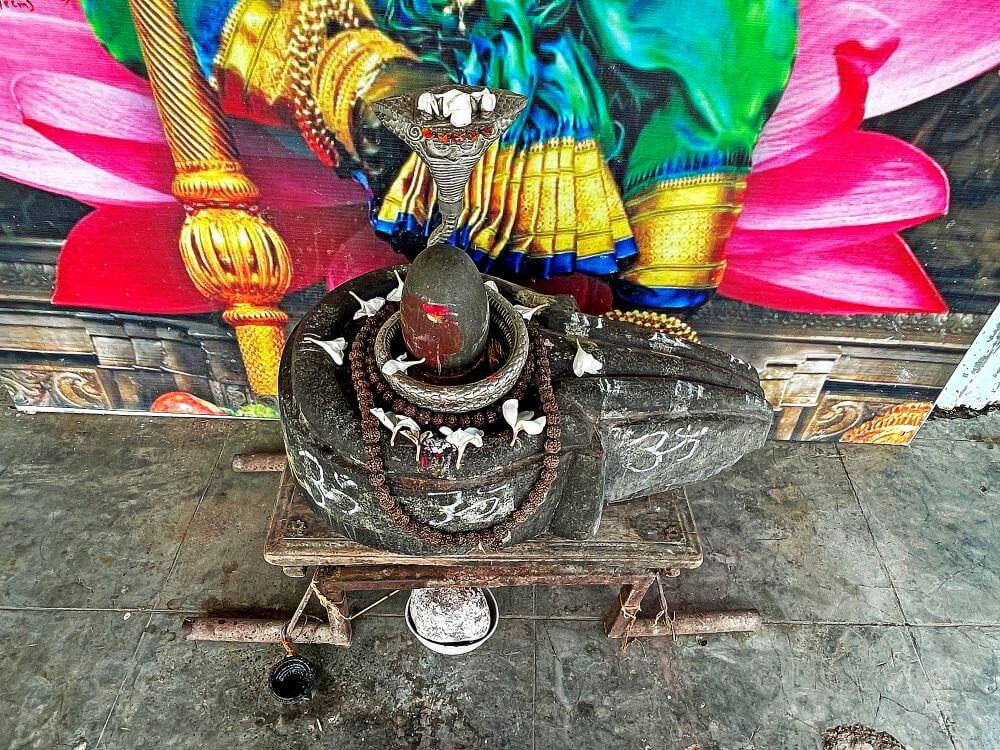
A short distance in front of the entrance, along the stairway, lie ancient stone Padukas and a Shiva Linga. Based on this, it is conjectured that this may have been an ancient Samadhi site. A short distance from here is a wrestling arena. During the time of the Jatra (pilgrimage fair), grand wrestling matches are held here. The stairway ends at the Goddess’s temple above. This temple stands on a platform about two feet high and is surrounded by a railing. The temple structure consists of a Mukhamandapa (porch), a Sabhamandapa (main hall), and a Garbhagriha (sanctum sanctorum). The Sabhamandapa has three entrances: one in the front and one each on the right and left sides. There are Mukhamandapas in front of all three entrances. Each Mukhamandapa features four square pillars with a roof supported by beams above them. Brass bells are hung from the ceiling.
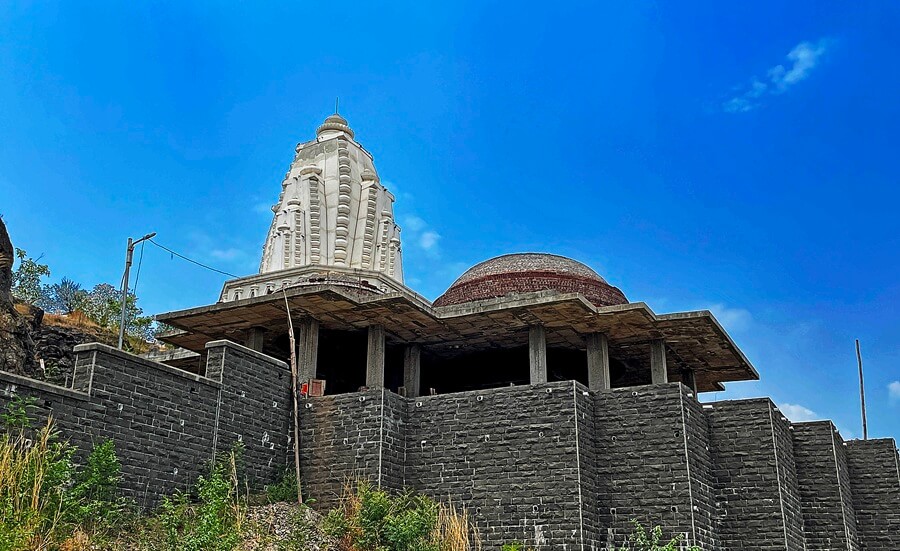
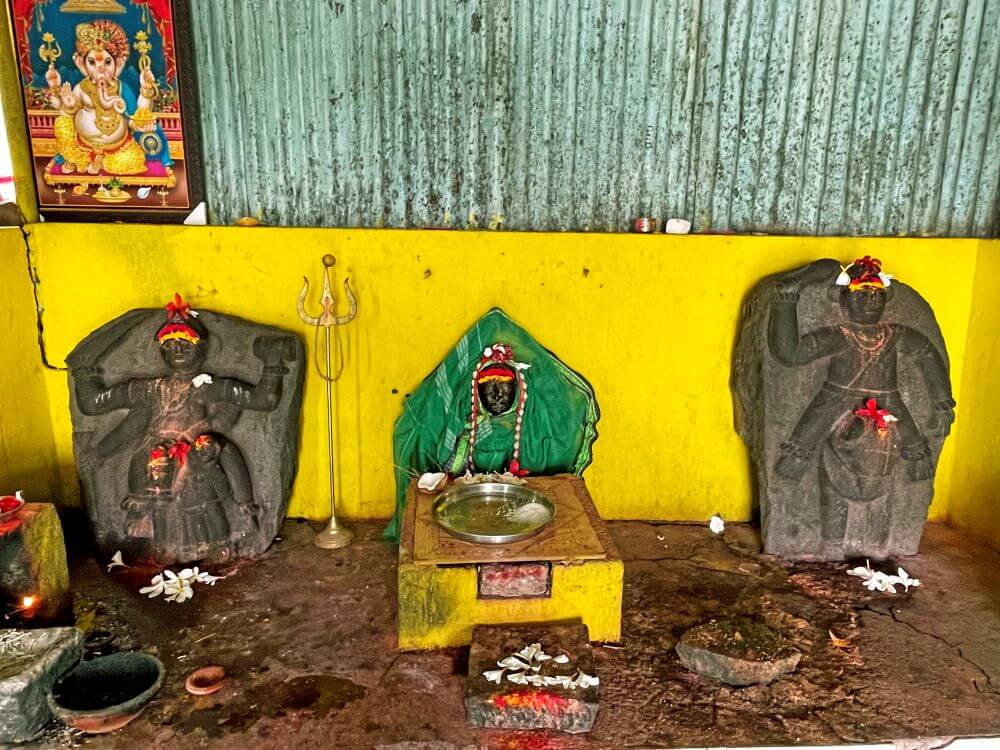
The temple’s sabhamandapa (main hall) is open in structure. It features two rows of four square pillars each. The pillars are positioned along the outer edges, supporting the roof beams above. The temple has a total of 24 pillars. On the front wall of the garbhagriha (sanctum sanctorum), on both sides of the entrance, there are sculptures of staff-bearing dwarapalas (gatekeepers). These sculptures On both sides of the walls above, there are lotus flower carvings. On the doorjambs of the sanctum sanctorum (Garbhagriha), there are lotus flower carvings at the base, with foliage and floral vine patterns above. On the lalatabimba (lintel center), there is an idol of Lord Ganesha, and the lintel band is adorned with leaf and flower carvings. The torana (archway) above the entrance features circular patterns. Inside the sanctum, on a vajrapitha (pedestal), stands the two-armed idol of Honai Devi, holding a shield and a sword. On the vajrapitha, to the left, is the idol of Tulja Bhavani riding a tiger, and to the right is the idol of Khandoba riding a horse. All three idols are ancient and carved in relief style from black stone. In the sanctum, in front of the Goddess, is a Shivling. The sanctum also contains brass bells offered as vows, cradles, and mirrors.
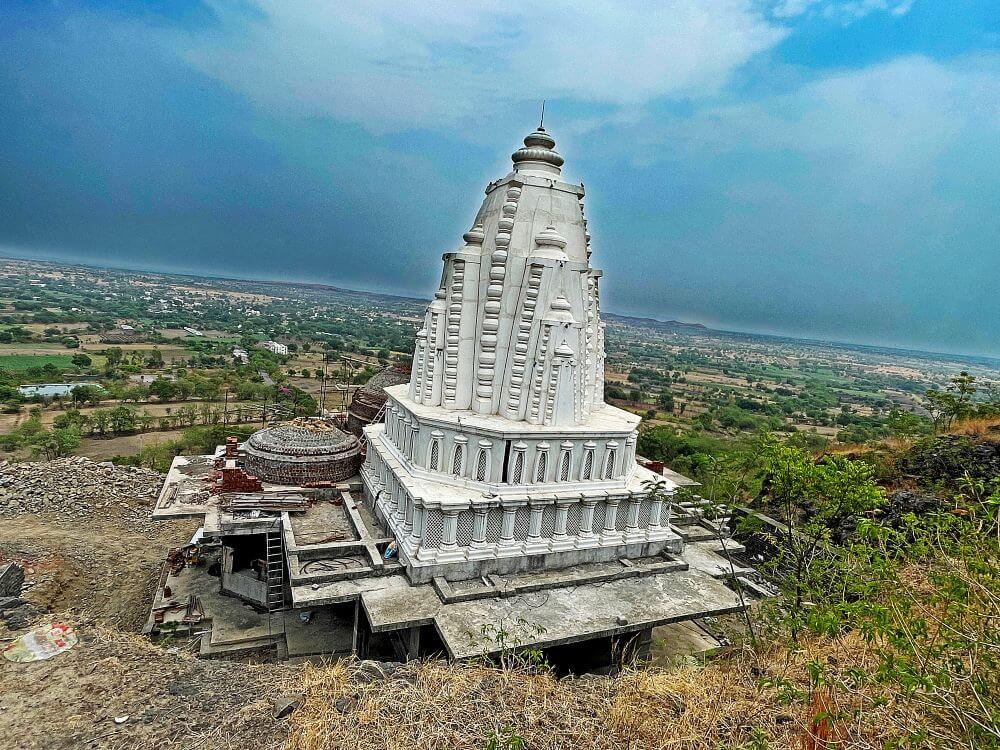
There is only a balcony (sajja) on the roof of the front porch (mukhamandapa). The roofs of the right and left porches feature Urushringa-style spires. All the sub-spires and the Amalakas on the main spire are topped with Kalashas. The roof of the assembly hall (sabhamandapa) has a safety railing on all sides, a dome-shaped spire in the center, and a Kalasha atop it. The roof of the sanctum sanctorum (garbhagriha) features an Urushringa-style spire, which includes a total of 44 sub-spires and There are 45 main shikhars (spires). All the amalakas atop the shikhars are adorned with kalashas.
At a short distance from the temple, there is a freshwater well. This well contains water throughout the year. A short distance from the well is an ancient temple of Khandoba, built in the Hemadpanti architectural style. The temple’s four-pillared assembly hall (sabhamandapa) houses two Nandi statues, and the sanctum sanctorum (garbhagriha) contains the stone idol of Khandoba. The Goddess’s main annual fair (jatrotsav) is celebrated with great enthusiasm at the temple on Magh Purnima. On this occasion, the Goddess is seated in a palanquin and taken on a procession around the village. On Dussehra, the Goddess’s palanquin procession departs from the village Patil Wada. On this day, devotees arrive at this temple from the temple near the stream by performing prostrations (dandavat). Chaitra Navratri and Sharadiya Navratri festivals are celebrated in the temple. During all festivals, thousands of devotees from across the state come to seek the Goddess’s blessings and fulfill their vows. There is a bustle of devotees here every Friday and Tuesday, as well as on Purnima and Amavasya.
This sacred temple stands as a testament to deep spiritual devotion, ancient architectural grandeur, and rich local cultural traditions.
The sanctum sanctorum houses the divine idol consecrated according to ancient Vedic traditions, surrounded by serene courtyards and traditional temple architecture.
Navratri, Maha Shivratri, Annual Temple Jatra & Deepotsav
Compare and book flights, secure top-rated local hotels near the temple, hire reliable guides, and rent cars instantly.
Extend your pilgrimage by visiting other highly sacred temples located nearby.


Add ₹999 more to unlock FREE SHIPPING!
Your sacred cart is currently empty.
Shop Photo FramesFill in your delivery details below to place your order.
Add comment