
Add ₹999 more to unlock FREE SHIPPING!
Your sacred cart is currently empty.
Shop Photo FramesNashik, known as the ‘Kashi of the West’, is home to ‘Tapovan’, a significant spiritual site. Situated on the sacred confluence of the Godavari and Kapila rivers, the Tapovan area houses the temple of Lakshmana. It is said that this is the sole temple of Lakshmana in the state. Lakshmana performed penance at this very place to wage war against Ravana’s son, Meghanaath. Furthermore, it was here that Lakshmana severed the nose and ears of Shurpanakha.
The legend of this temple recounts that Shurpanakha was the sister of Ravana, the king of Lanka. Ravana, who wanted to rule the entire world after slaying many demons, had also killed the husband of his own sister Shurpanakha. Afterward, Ravana sent Shurpanakha to live with his brother, Khara. At that time, the forest exile period of Rama, Lakshmana, and Sita was underway. They had arrived in this region for that purpose. Upon seeing Rama there, Shurpanakha became infatuated with his beauty. In her previous birth, Shurpanakha was an Apsara of heaven. Her name was Nayantara. She had turned into a demoness due to a curse from a sage. She assumed the beautiful form of Nayantara and told Rama that she wished to marry him. In response, Rama stated that he was married, but his younger brother was Lakshmana, telling her to go to him instead. Shurpanakha made a marriage proposal to Lakshmana as well, but Lakshmana refused her.
Thereupon, thinking, ‘Now if I kill Sita, there will be no obstacle in marrying Rama’, Shurpanakha rushed forward to kill Sita. Enraged by this, Lakshmana said, ‘You are very proud of your beauty, aren’t you? Wait, I shall disfigure you,’ and consequently cut off Shurpanakha’s nose and ears. It is believed that this place derived the name ‘Nasik’ following this incident. The temple of Lakshmana is situated at the exact spot where this event took place.
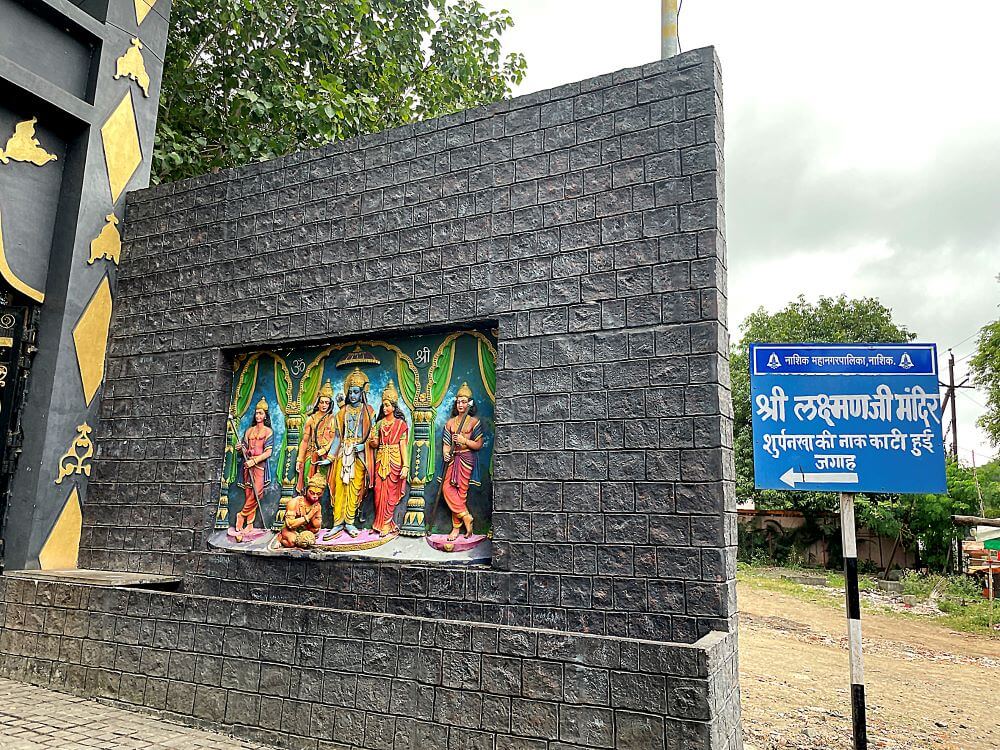
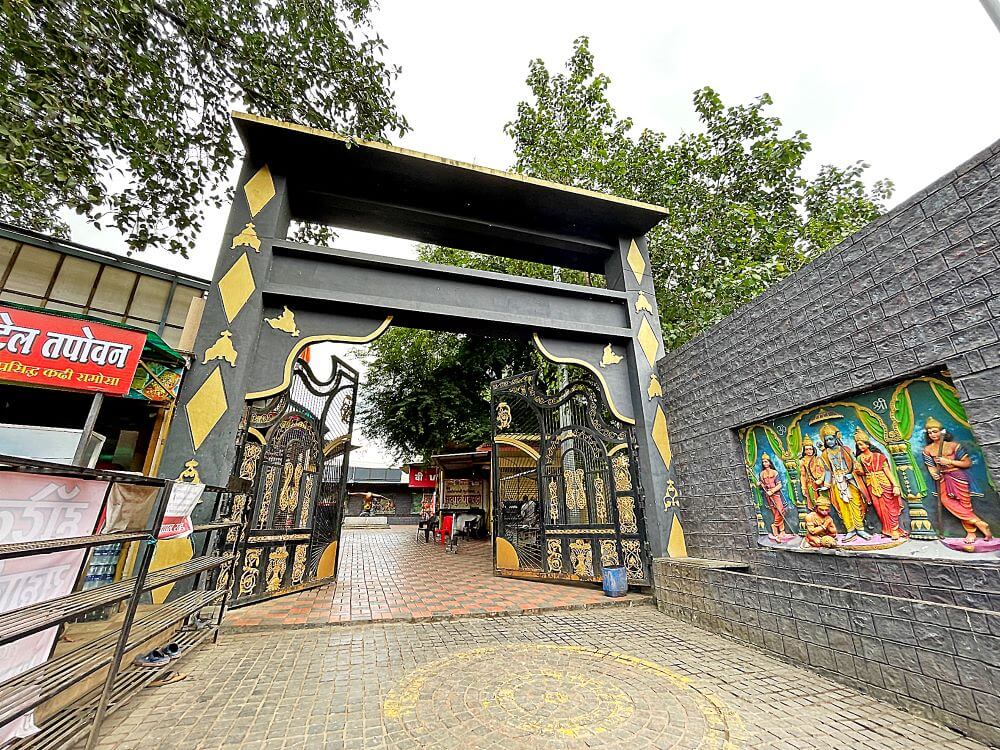
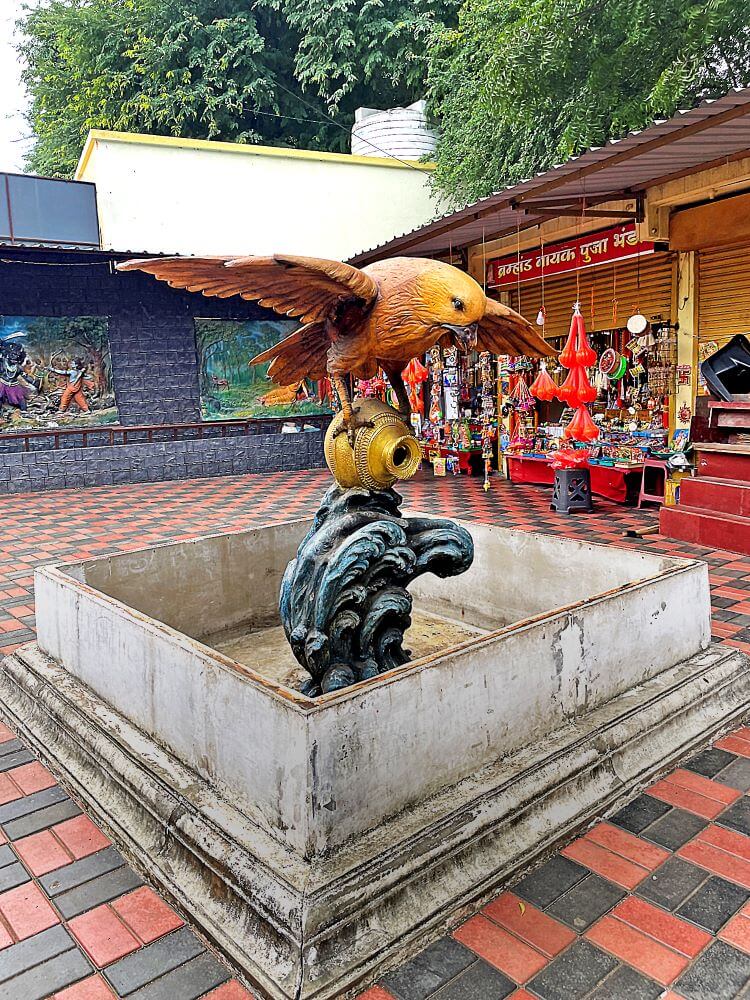
Upon passing through the temple archway and entering inside, one gets to see a beautiful, four to five feet tall, seated idol of Lord Ganesha. Right here, there are several shops selling books and Prasad. Relief sculptures (murals) depicting important episodes from the Ramayana are etched on the wall in front of the temple. There is an idol of Garuda in front of the temple entrance. It is said that there is a banyan tree within the temple premises which is extremely ancient. Even if this tree gets uprooted and falls, it regenerates anew from its roots.
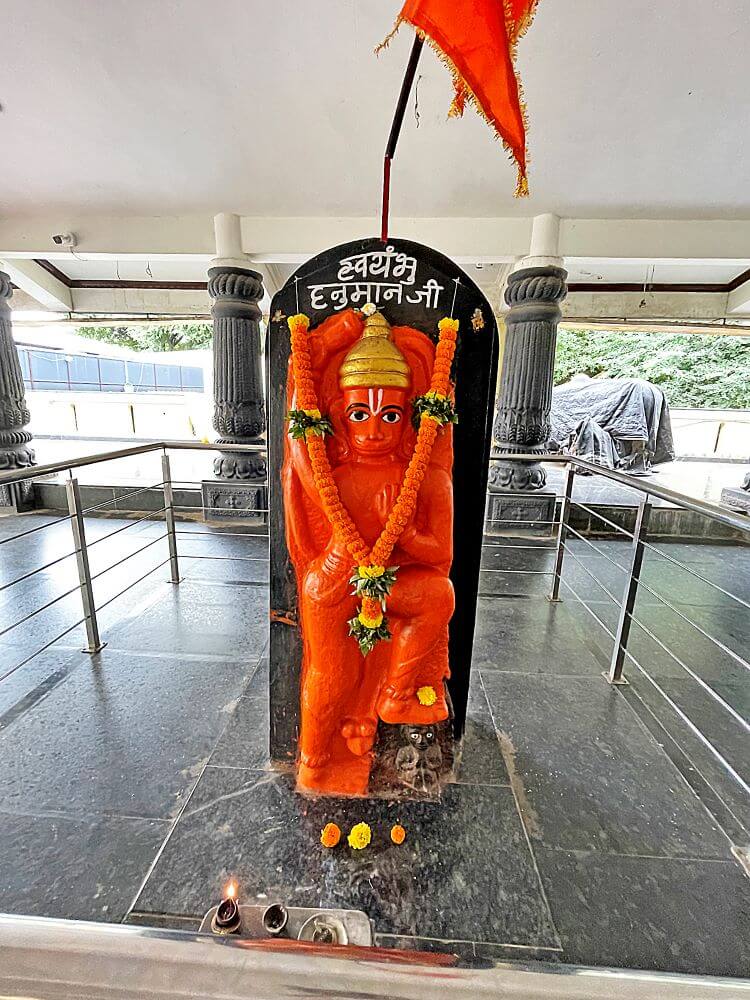
Being situated at a slight elevation, one has to ascend fifteen to twenty steps to enter the temple. In the spacious assembly hall (Sabhamandap) of the temple, there is a four-foot-tall self-manifested (Swayambhu) idol of Lord Hanuman. Along with this, adjacent to the assembly hall on the outside, a fine tableau depicting Lakshmana cutting off Shurpanakha’s nose has been created. This tableau can be viewed from the assembly hall of the temple.
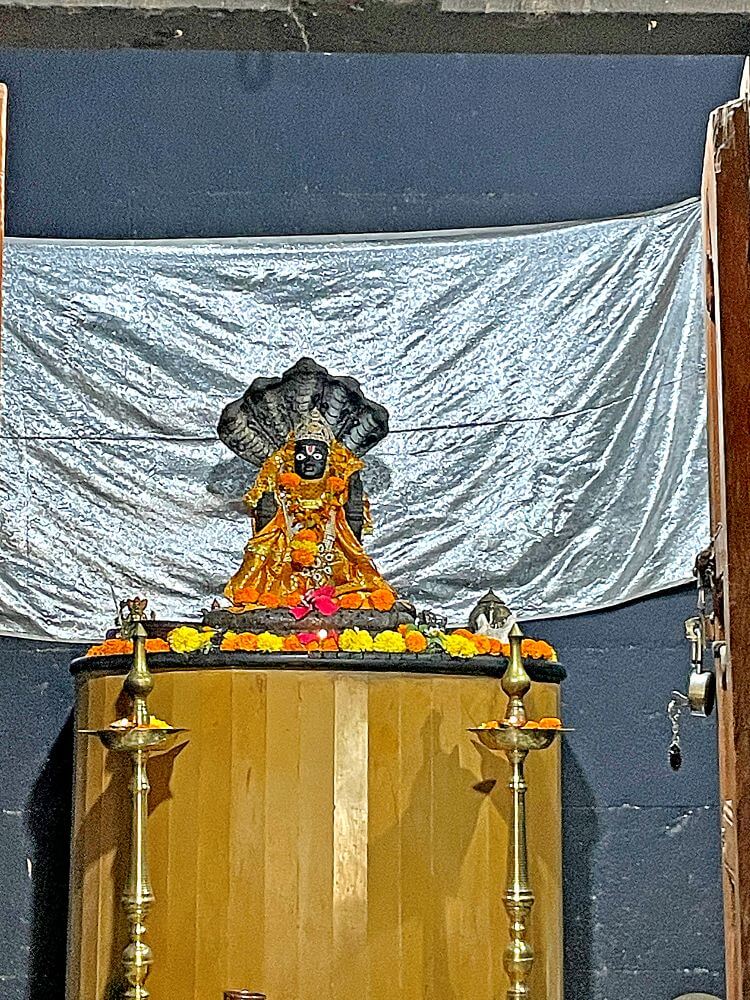
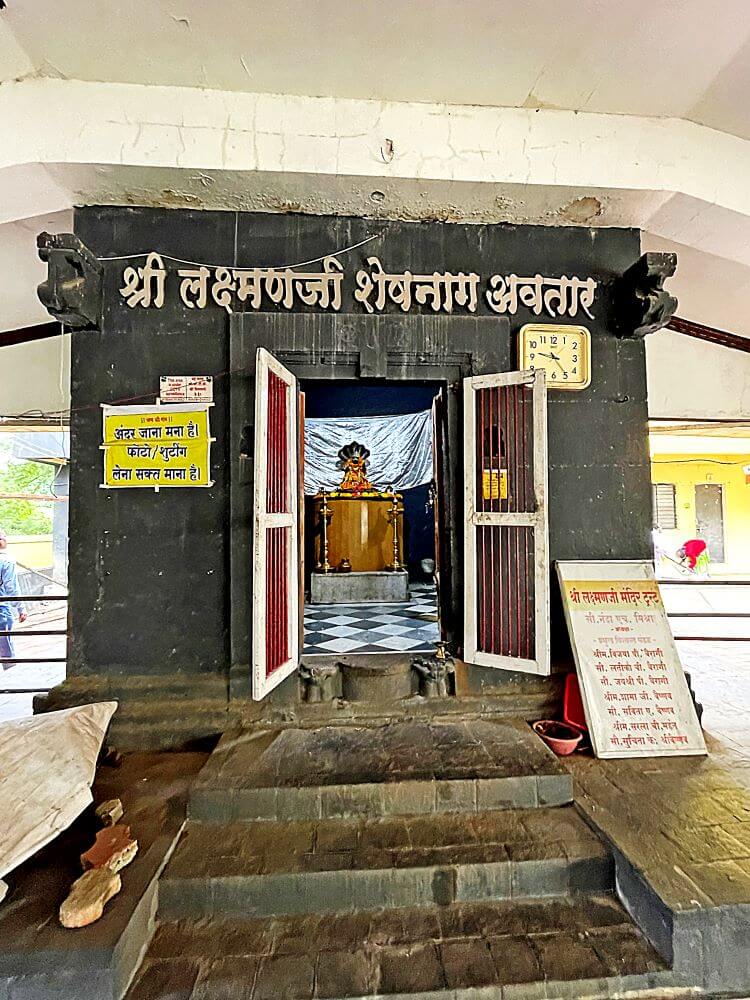
Above the entrance to the sanctum sanctorum (Garbhagriha) of the temple, ‘Shri Lakshman Sheshnag Avatar’ is inscribed. Lakshmana is considered an incarnation of Sheshnaga. Therefore, the idol of Lakshmana here is depicted alongside the five-headed Sheshnaga. This idol, carved out of a single continuous stone, rests on a raised platform. Lakshmana served Rama here during the period of exile, which imparts exceptional significance to this place.
This sacred temple stands as a testament to deep spiritual devotion, ancient architectural grandeur, and rich local cultural traditions.
The sanctum sanctorum houses the divine idol consecrated according to ancient Vedic traditions, surrounded by serene courtyards and traditional temple architecture.
Navratri, Maha Shivratri, Annual Temple Jatra & Deepotsav
Compare and book flights, secure top-rated local hotels near the temple, hire reliable guides, and rent cars instantly.
Extend your pilgrimage by visiting other highly sacred temples located nearby.


Add ₹999 more to unlock FREE SHIPPING!
Your sacred cart is currently empty.
Shop Photo FramesFill in your delivery details below to place your order.
Add comment