
Add ₹999 more to unlock FREE SHIPPING!
Your sacred cart is currently empty.
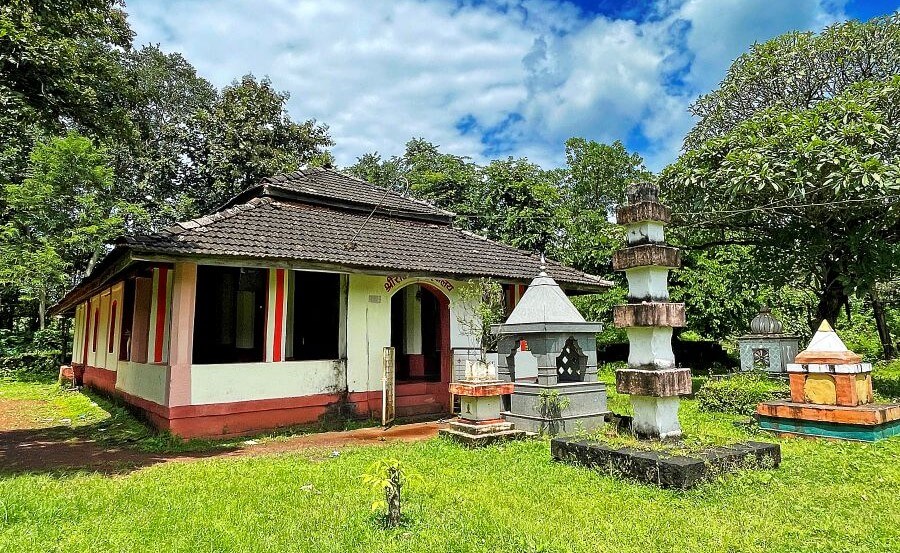
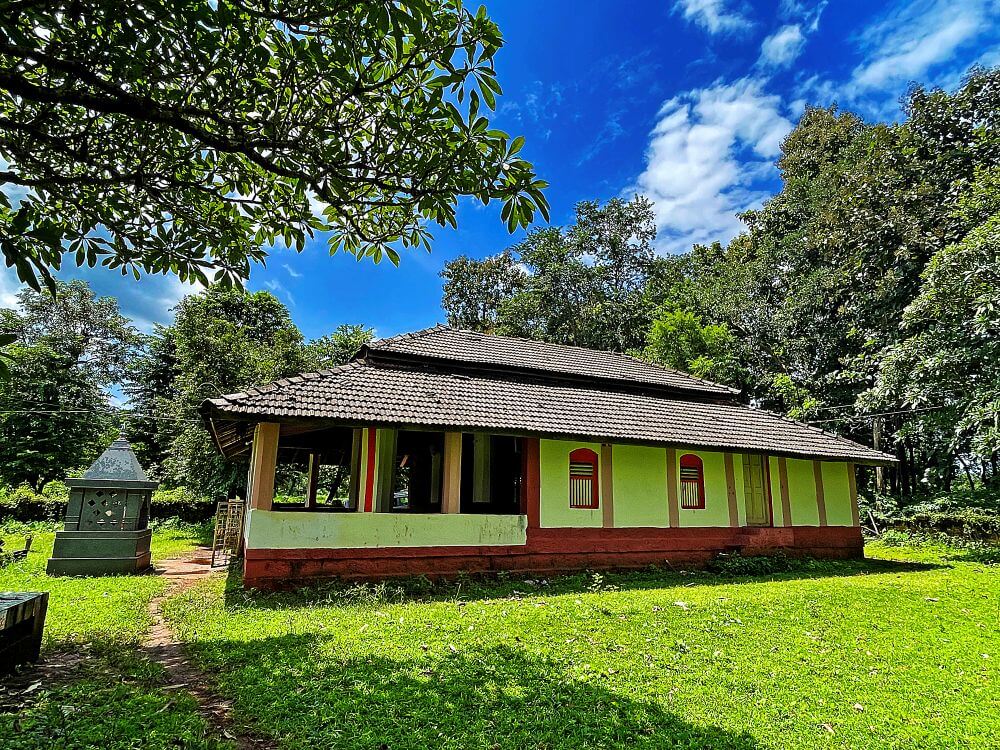
Shop Photo FramesIn the land of Konkan, various forms of Lord Shiva have been worshipped under different names since ancient times. The Rameshwar temple in Edgaon, located in the Vaibhavwadi taluka, is a sacred place of faith for devotees from the surrounding five villages and the entire taluka. Rameshwar Mahadev, the family deity of the Ravrane family, is the village deity of Edgaon and is one of the most renowned temples in the Vaibhavwadi taluka. This temple is constructed in the traditional Konkan architectural style with a sloping roof.
There are various mythological legends regarding the Rameshwar form of Lord Shiva. According to the Tulsi Ramayana, Ravana was a Brahmin. By slaying him, Lord Shri Rama incurred the sin of Brahmahatya. Shri Rama asked the sages how to cleanse himself of this sin. The sages advised him to install a Shiva Linga and worship it along with Sita and Lakshmana. Following the sages’ advice, Shri Rama decided to install a Shiva Linga on the seashore. However, he wished to worship the largest possible Shiva Linga. He sent Hanuman to the Himalayas to bring one; but as the auspicious time for the ritual approached and Hanuman had not yet returned, Shri Rama installed a sand Linga (Valukalinga) created by Sita. That Linga is currently in the sanctum sanctorum of the temple at Rameswaram in Tamil Nadu. When Hanuman returned with the divine Linga, he was disappointed to see the sand Linga. At that moment, Shri Rama instructed Hanuman to install the divine Linga right next to the sand Linga and assured him that pilgrims would not receive the fruits of their Rameshwar pilgrimage without having the darshan of the divine Shiva Linga. The Linga installed by Rama is known as Rameshwaram or Ramanath, and the one installed by Hanuman is known as Hanumandishwar. Following this, Rameshwar Shiva Lingas were installed in many places across India.
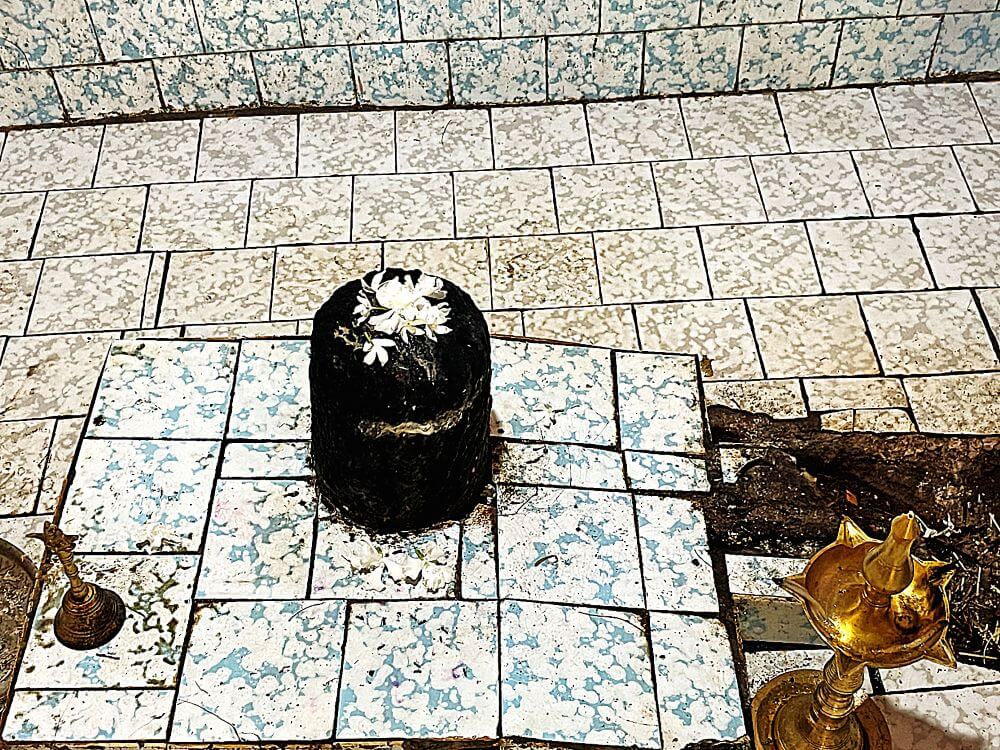
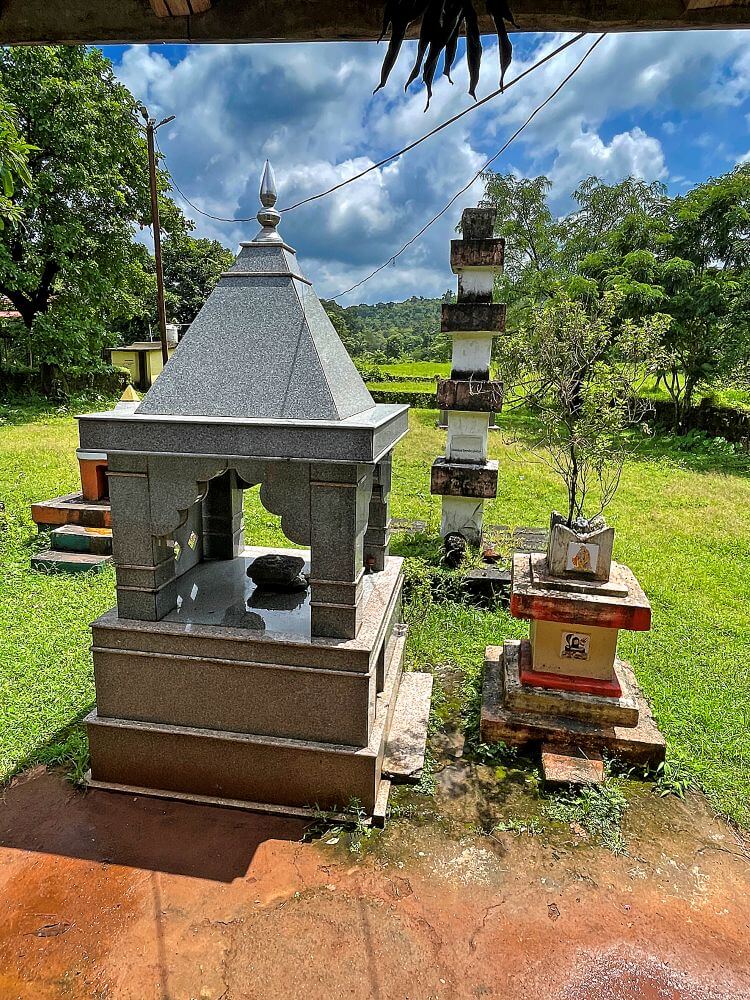
The Shiva Linga in the Rameshwar temple at Edgaon is in the form of an Urdhva Pashan (upright stone) Linga. The temple has a spacious courtyard surrounded by a boundary wall. Upon entering, one immediately sees a five-tiered lamp pillar (Deepastambha) on a stone platform. Beside it, on a high platform, is a small temple dedicated to the Seven Asaras. ‘Asara’ is a derivative of the word ‘Apsara’. They are water deities, and because they are always found in groups of seven, they are called ‘Sati Asara’. Their names are Matsyi, Kurmi, Karkati, Darduri, Jatupi, Sompa, and Makari. Next to this temple of the Seven Asaras is the temple of Satwai, also referred to as the Satwai of the Ravs. In front of the lamp pillar is a small umbrella-like structure housing a stone slab, which is considered the temple of the Gurav community of the village.
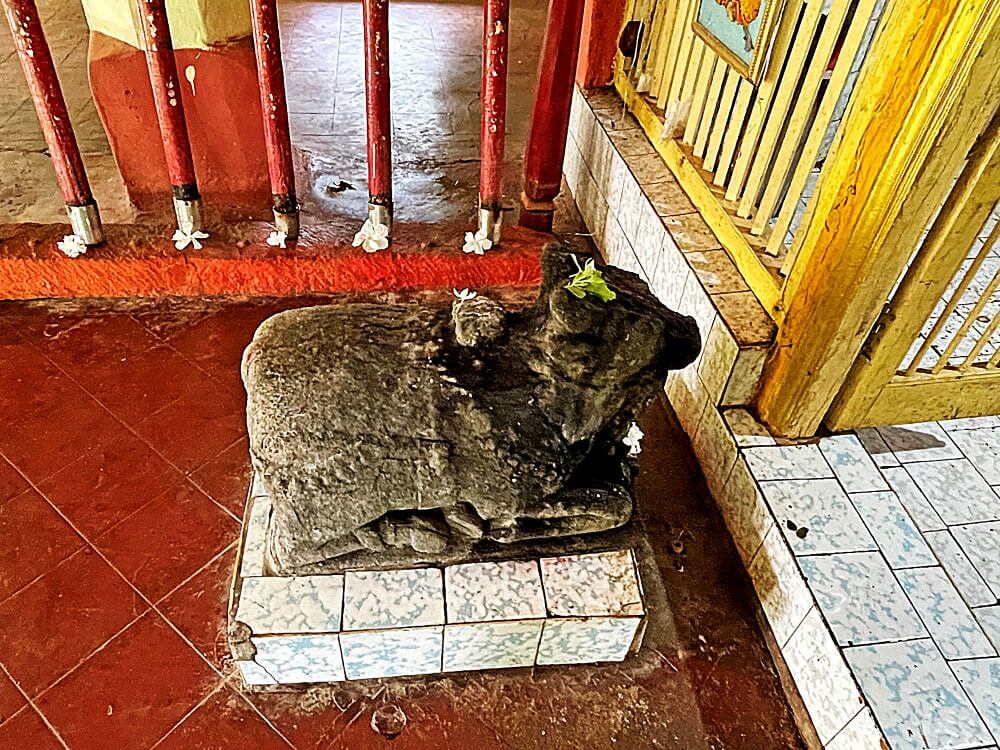
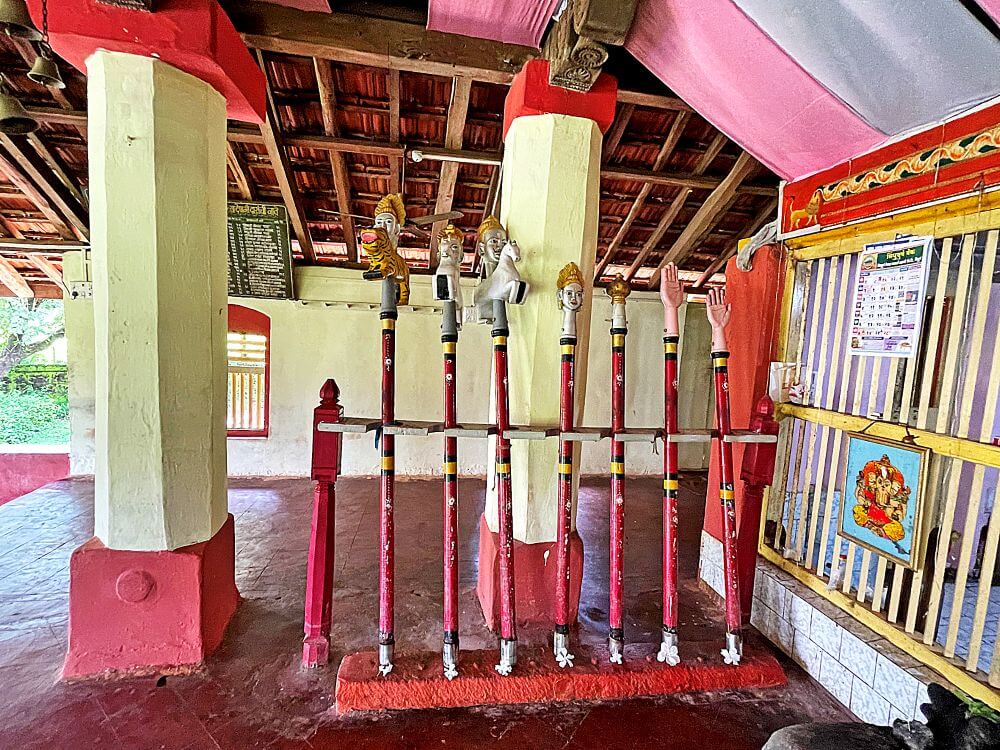
A short distance from the lamp pillar, the Rameshwar Mahadev temple is built on a high plinth. The temple’s assembly hall (Sabhamandap) is constructed on two levels. One enters the lower part of the hall by climbing three steps. This hall is semi-open in nature, with stone benches (Kakshasanas) built into the walls for devotees to sit. A few steps further up leads to the upper level of the hall. The structure of this hall consists of a wall with large windows and four octagonal pillars erected on both sides at some distance. Above, there is a sloping tiled roof supported by wooden beams. There is an idol of Nandi here. Nearby, the staffs (Kathis) of the village deities are placed, including the staffs of Rameshwar and Ravalnath, the kalash of Brahmandev, the mask of Pavanadevi, the mounted Navladevi, Gango Dev, and Itladevi riding a tiger. During the palanquin procession, these staffs are adorned with sarees. The front wall of the inner sanctum is fitted with iron bars. Near this wall is a stone idol of Ganesha. Inside, on a small platform on the ground, is the Urdhva Pashan Shiva Linga. Beside it are two stone idols of folk deities. There is a circumambulation path (Pradakshina marg) around this sanctum within the assembly hall.
Festivals such as Mahashivratri, Shravani Somvar, Tripurari Purnima, Navratri, Dev Deepawali, and Shimga are celebrated with great enthusiasm at this temple. On Mahashivratri, a procession of the village deities’ staffs, along with the main palanquin, is taken out with music and fanfare. Citizens from the surrounding five villages and those working in cities attend these festivals in large numbers.
Edgaon is the village of Police Inspector and Mumbai Police ‘Encounter Specialist’ Vijay Salaskar. He was martyred in the Mumbai terror attacks of November 2008. Ajmal Kasab had confessed to his murder. Before his death, Salaskar was the head of the Anti-Extortion Cell in Mumbai. In recognition of his patriotism and bravery, the Government of India awarded him the Ashoka Chakra posthumously on 26 January 2009. A memorial for the martyr Salaskar has also been built in Edgaon, near the Rameshwar temple.
This sacred temple stands as a testament to deep spiritual devotion, ancient architectural grandeur, and rich local cultural traditions.
The sanctum sanctorum houses the divine idol consecrated according to ancient Vedic traditions, surrounded by serene courtyards and traditional temple architecture.
Navratri, Maha Shivratri, Annual Temple Jatra & Deepotsav
Compare and book flights, secure top-rated local hotels near the temple, hire reliable guides, and rent cars instantly.
Extend your pilgrimage by visiting other highly sacred temples located nearby.


Add ₹999 more to unlock FREE SHIPPING!
Your sacred cart is currently empty.
Shop Photo FramesFill in your delivery details below to place your order.
Add comment