
Add ₹999 more to unlock FREE SHIPPING!
Your sacred cart is currently empty.
Shop Photo Frames‘Those whose feet reach Shirdi, all their miseries shall vanish…’ such is the glory of the Sai Baba Temple in Shirdi. Shirdi is one of the premier religious sites in the country. After Tirupati, the Sai Baba Temple here is counted among the wealthiest shrines in the nation. Every year, millions of devotees visit for darshan. It is the firm belief of devotees that merely by having darshan of Sai Baba, sorrows are dispelled and heartfelt wishes are fulfilled. The prophecy made by Sai Baba himself, that ‘devotees will flock to Shirdi like ants,’ is proven true today by the ever-increasing number of pilgrims.
It is said that Sai Baba first arrived in Shirdi in the year 1854. At that time, he was 16 years old. After staying in Shirdi for some time, he left suddenly. Years later, he returned to Shirdi during the wedding procession of a man named Chand Patil. At that time, Mhalsapati, the priest of the Khandoba Temple, addressed him as ‘Ya Sai’ (Welcome Sai). From that moment on, he came to be known as ‘Sai Baba’ in Shirdi. Sai Baba used to beg for alms twice a day from only 5 families in Shirdi. He spent a major part of his life in a dilapidated mosque called Dwarkamai. He lived there in the form of a fakir, wearing a white cloth tied around his head. Due to his attire, some considered him a Muslim and others a Hindu; however, Sai never bound himself to any caste or religion. Whether Hindu or Muslim, Sai Baba treated everyone with equality.
Sai Baba would always light lamps in the mosque using oil begged from the village merchants. One day, the merchants refused to give him oil. Then, Sai Baba poured water into the lamps and lit the wicks. This news spread like wildfire. The merchants realized their mistake and apologized to Sai Baba. After this divine miracle, everyone was convinced that Sai Baba was an incarnation of the Divine. Apart from this, hundreds of miracles and stories associated with him are popular among devotees.
There is not much concrete evidence regarding Sai Baba’s birth and early life. It is believed that he was born in the village of Pathri in the Parbhani district of Maharashtra. Once, when asked by a devotee, Sai Baba mentioned that he was born on the 28th of September. Therefore, Sai Baba’s Jayanti is celebrated every year on the 28th of September. According to references in the book ‘Sadguru Sai Darshan’ written by Shashikant Shantaram Gadkari, Baba was born into a Brahmin family. His Gotra was Kaushik, and he was a Yajurvedi Brahmin. Sai Baba’s father’s name was Gangabhau and his mother’s name was Devkigiri. Sai Baba was the third of five siblings, and his original name was Haribhau Bhusari.
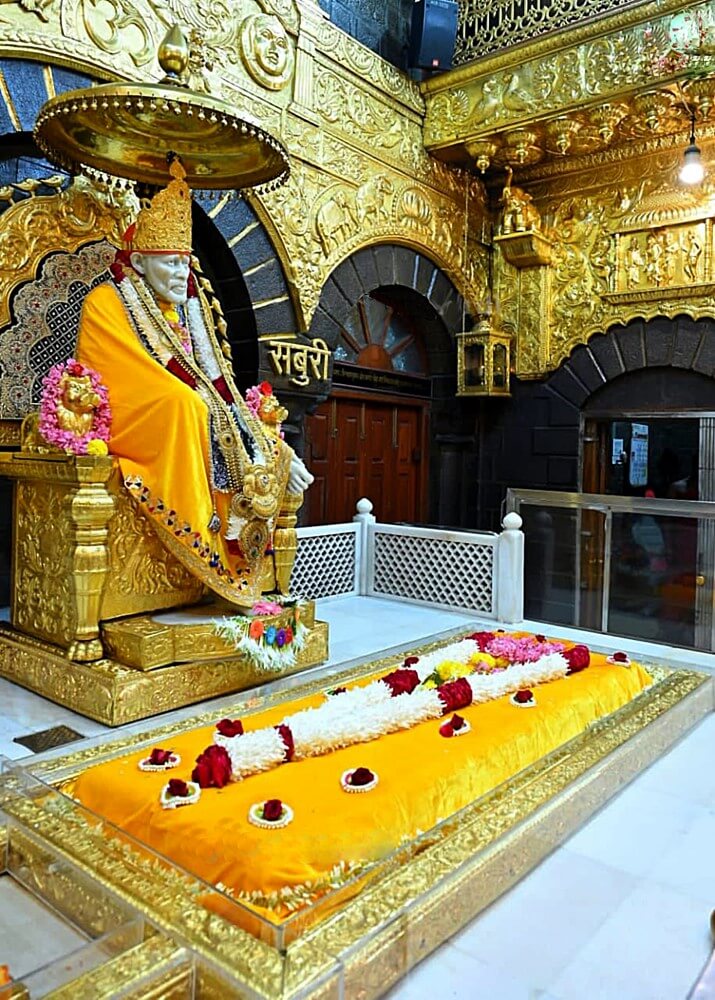
Sai Baba took Samadhi on the 15th of October 1918. The stone building where this Samadhi is currently located was constructed at the behest of Sai Baba by the wealthy Gopalrao alias Bapusaheb Butti of Nagpur . This building was formerly referred to as ‘Butti Wada’.
According to mentions in the Sai Charitra, it was Sai Baba’s wish to build a sanctum in the Butti Wada and install an idol of Murlidhar on a throne. With that in mind, the work of crafting the Murlidhar idol began. While this was underway, Sai Baba’s health was deteriorating day by day. Everyone was worried, fearing whether Baba would even get to set foot in this grand mansion built according to his own wishes. Then, summoning everyone, Sai Baba said, “My end is near, keep me in the Butti Wada from now on,” and departed from this world. Thereafter, instead of becoming a Murlidhar temple, the Butti Wada became the Samadhi Temple of Sai Baba. The Murlidhar idol that was prepared for installation in this temple has been preserved by the Sai Sansthan as a memento of Sai Baba.
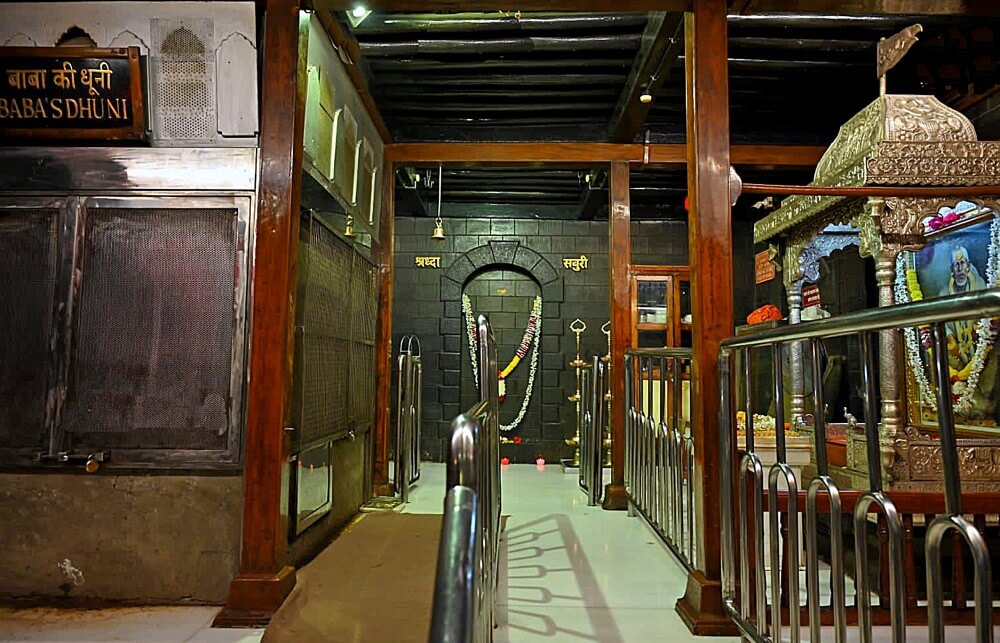
Sai devotees Chandorkar and R. B. Pradhan had previously outlined a sequence for temple visits in Shirdi. According to this, devotees were to bathe in the Godavari, first have darshan of Baba’s Guru Samadhi, then go to Dwarkamai for darshan of the Dhuni, visit the Chavadi for darshan of Baba’s Padukas, and finally have darshan of Sai Baba’s Samadhi, followed by darshan of the Nandadeep and the Pipal and Neem trees in Lendi Baug; however, due to the current crowds of devotees, it is no longer possible to plan accordingly.
Behind the Sai Samadhi Temple is the Gurusthan. Shirdi residents had once seen a 16-year-old youth meditating under a Neem tree. Sai had then stated that this place belonged to his Guru. He asked devotees to light incense here every Thursday and Friday. This Gurusthan and the Neem tree here are places of reverence for devotees. In front of Sai Baba’s image here, there is a Shiva Linga and Nandi. In front of the temple, there is a large vessel for incense, where devotees light incense with devotion.
From the time Sai Baba arrived in Shirdi, he resided in Dwarkamai (the mosque) for 60 consecutive years. Baba bestowed his grace upon countless devotees at this very place. When Sai Baba arrived in Shirdi, Dwarkamai was a dilapidated mosque. Later, at Baba’s behest, Nana Chandorkar and Kaka Dixit renovated it. The stone upon which Baba used to sit is also here. The Dhuni (sacred fire) ignited by Sai Baba back then is still burning continuously today. To relieve devotees from their troubles, Baba used to give them Udi from this Dhuni. Baba also used to prepare food for the poor at this place.
Near Dwarkamai is the Chavadi, sanctified by Sai Baba’s presence. It is said that Baba used to stay at this Chavadi on alternate days. Currently, there is an image of Baba here, and next to it is a bedstead. Baba was given a bath on this bedstead after his Mahasamadhi. Besides this, there are many places that keep the memories of Sai Baba alive, such as Lendi Baug, Nandadeep, the Khandoba Temple, and the Shyam Sundar Samadhi. Every Thursday evening, a Palkhi procession of Sai Baba is taken out, in which thousands of devotees participate. This Palkhi circumambulates the town of Shirdi and is then brought to Dwarkamai.
In the main Samadhi Temple, Aarti is performed for Sai Baba five times a day. The first Bhupali Aarti is at 4:15 AM, Kakad Aarti at 4:30 AM, Madhyana Aarti at 12:00 PM, Dhup Aarti after sunset, and Shej Aarti at 10:30 PM. Devotees can register for Aarti through the official website of the Shri Sai Baba Sansthan Trust, online.sai.org.in . For devotees, the Shirdi Sansthan has provided well-equipped Bhakta Niwas (pilgrim accommodation) and free Mahaprasad facilities.
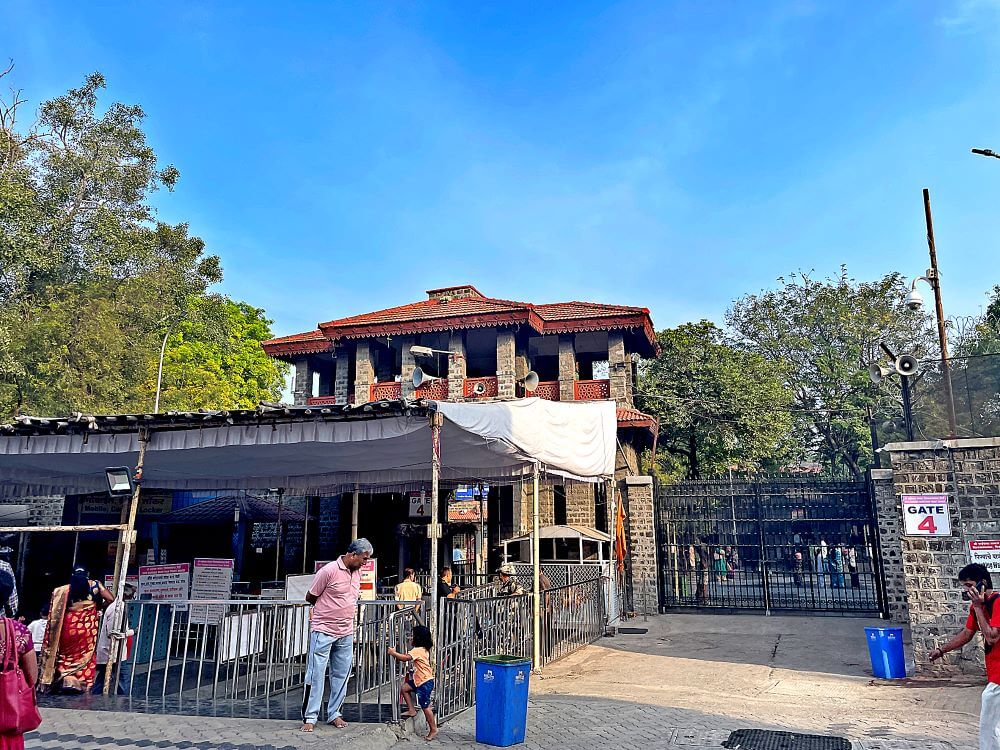
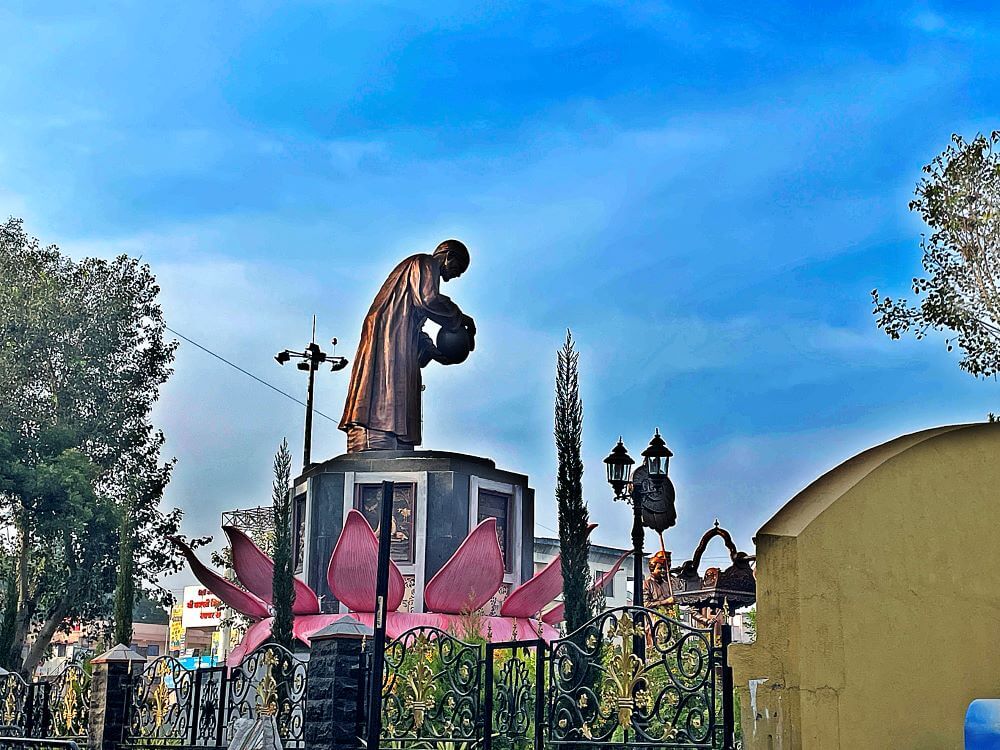
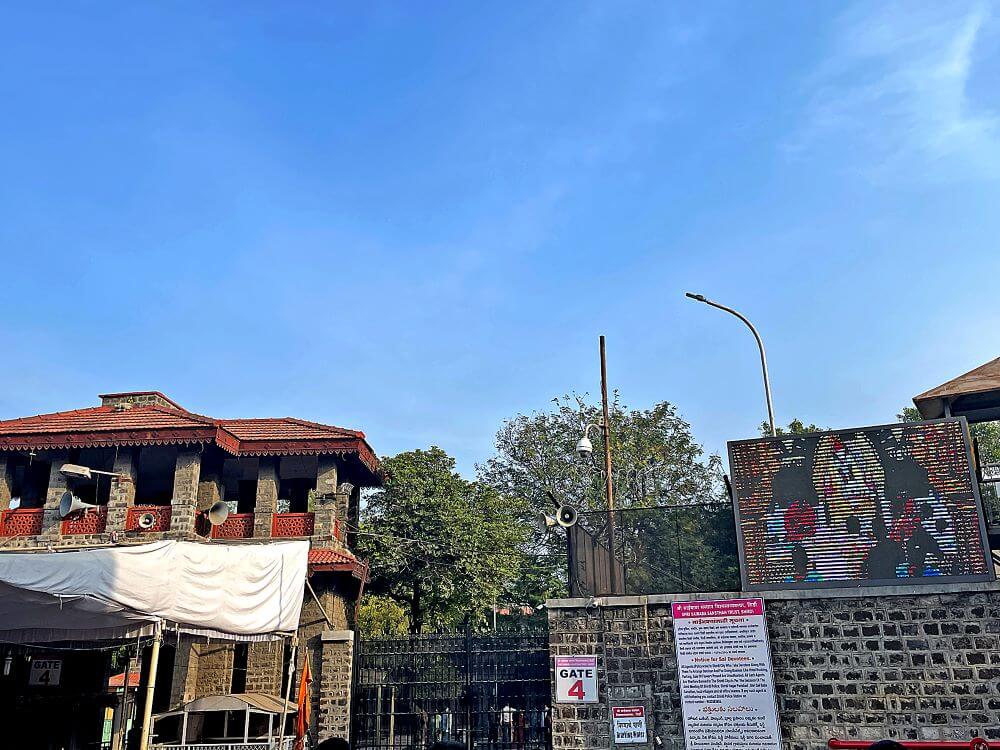
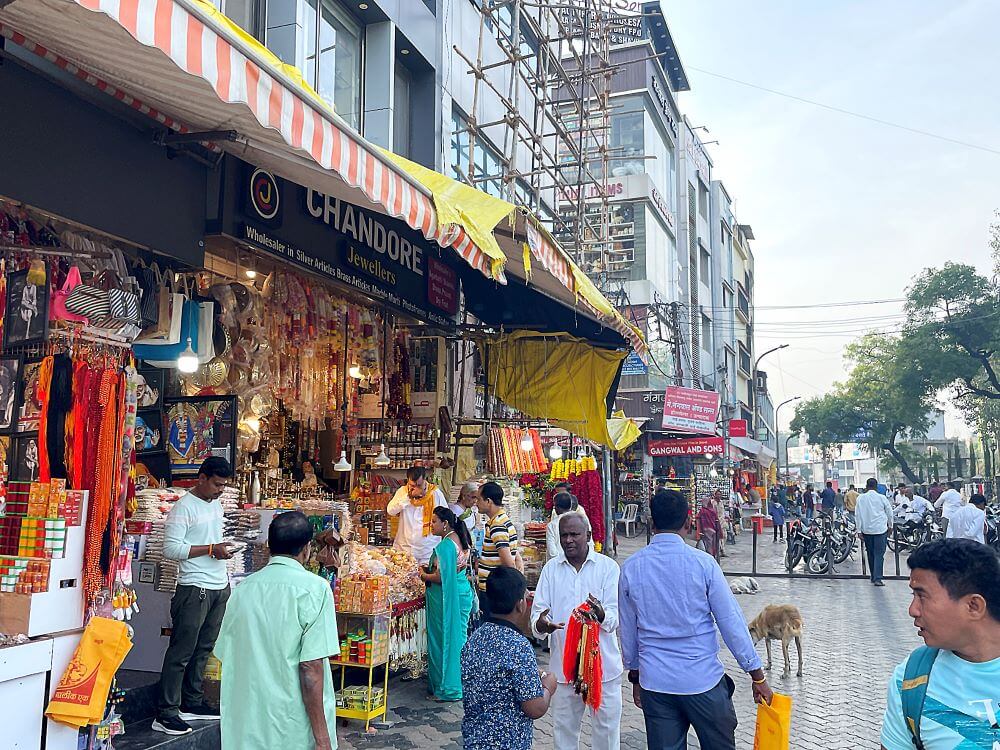
This sacred temple stands as a testament to deep spiritual devotion, ancient architectural grandeur, and rich local cultural traditions.
The sanctum sanctorum houses the divine idol consecrated according to ancient Vedic traditions, surrounded by serene courtyards and traditional temple architecture.
Navratri, Maha Shivratri, Annual Temple Jatra & Deepotsav
Compare and book flights, secure top-rated local hotels near the temple, hire reliable guides, and rent cars instantly.
Extend your pilgrimage by visiting other highly sacred temples located nearby.

Add ₹999 more to unlock FREE SHIPPING!
Your sacred cart is currently empty.
Shop Photo FramesFill in your delivery details below to place your order.
Add comment