
Add ₹999 more to unlock FREE SHIPPING!
Your sacred cart is currently empty.
Shop Photo FramesThe Mayureshwar Ganpati Temple in Pohegaon, Ahilyanagar, is renowned as a spiritually awakened site where a self-manifested (Swayambhu) idol of Lord Ganesha appeared beneath a Shami tree. A unique tradition of this village is that the residents do not sell the milk produced in their homes; instead, they bring it to this temple every morning and distribute it free of charge to the visiting devotees. Previously, the villagers themselves performed this service for the devotees, but now, thanks to the temple trust, it is managed in a more organized manner.
Located along the Kopargaon-Sangamner highway, the Mayureshwar Temple in Pohegaon stands at the intersection of five villages: Pohegaon, Sonewadi, Chandekasare, Jhagadephata Derde, and Nagadwadi in the Kopargaon taluka. As the presiding deity of Pohegaon, this site is a place of deep faith for thousands of devotees. Mayureshwar Ganpati is widely known as a deity who grants the wishes of those who pray to Him.
The legend of this site states that where the temple stands today, there was once ancestral farmland belonging to the Rohamare family of Pohegaon. There was a large Shami tree on that land (which still stands in front of the temple today). One day, a self-manifested idol of Ganesha appeared near the base of this Shami tree. That same night, Lord Ganesha appeared in a dream to Balaji Rohamare of the Rohamare family and said, “I have arrived beneath the Shami tree. Please consecrate Me.” Following this divine vision, the Rohamare family built a small temple near the Shami tree where the idol had appeared and performed the consecration.
For the next few years, devotees from the surrounding areas visited this small temple to seek Ganesha’s blessings and express their heartfelt desires. As devotees began to experience that their wishes were fulfilled after worshipping this Ganesha, the temple’s fame grew day by day, and crowds of people from the region began to gather for darshan.
To manage the large influx of devotees, the villagers took the initiative in 1995 to build a new temple. Thanks to the generous contributions of benevolent devotees, this beautiful and spacious temple stands today.
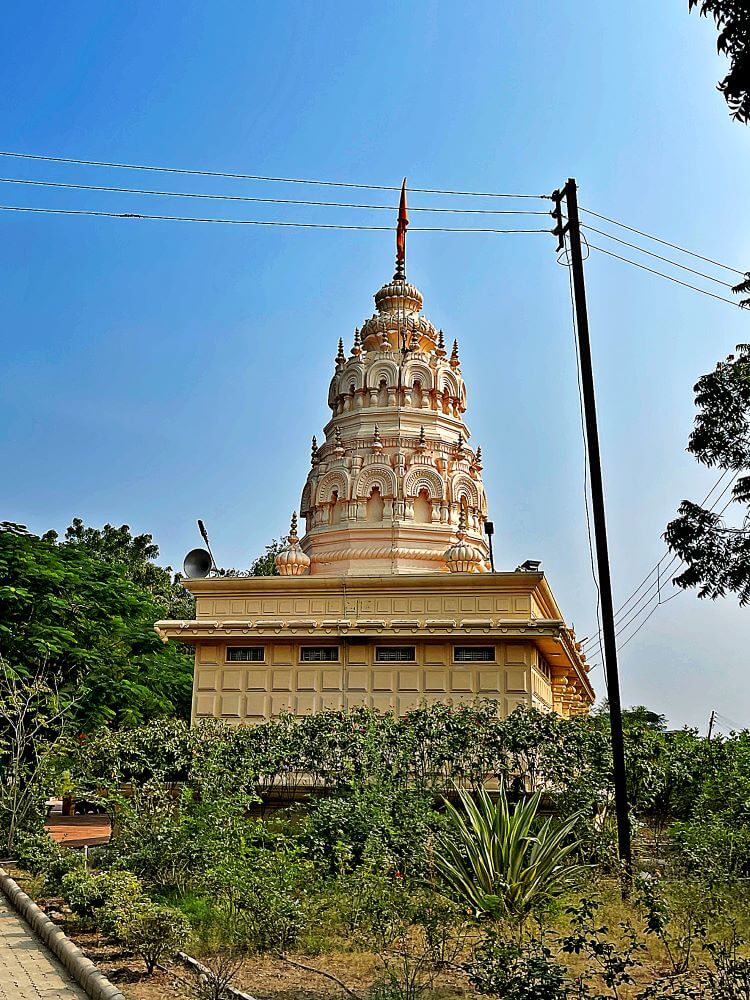
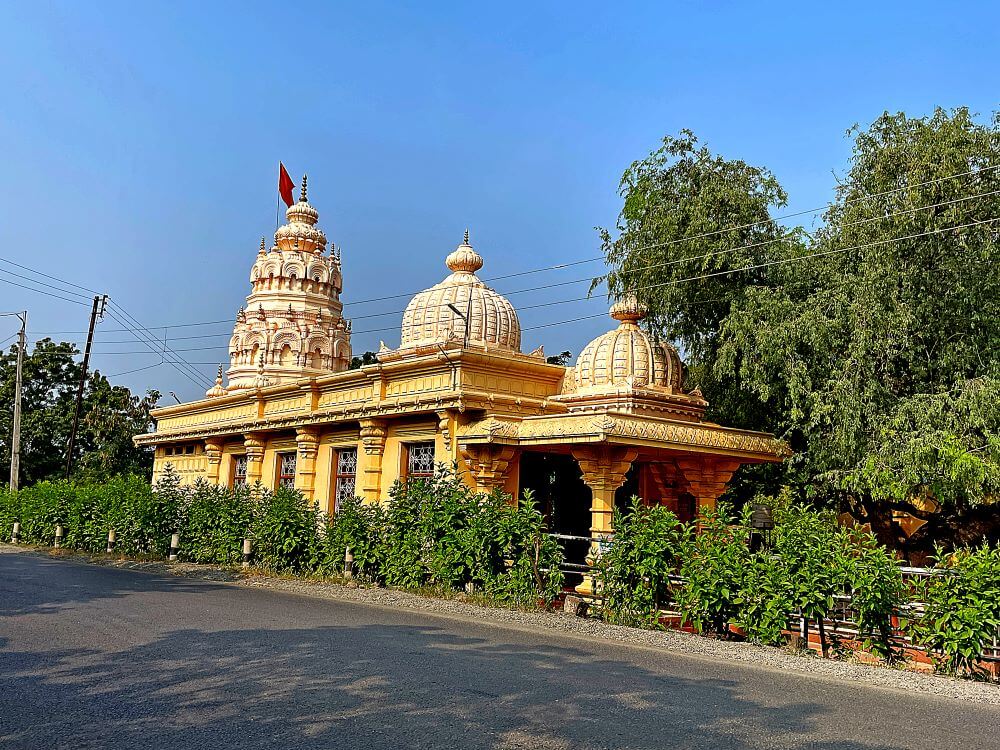
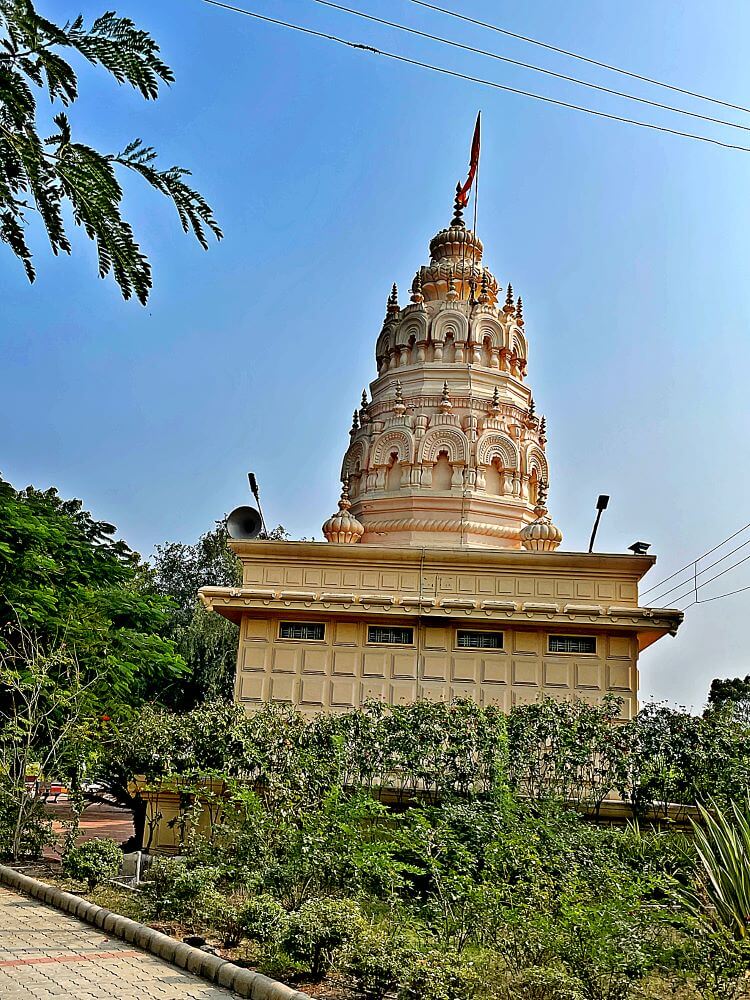
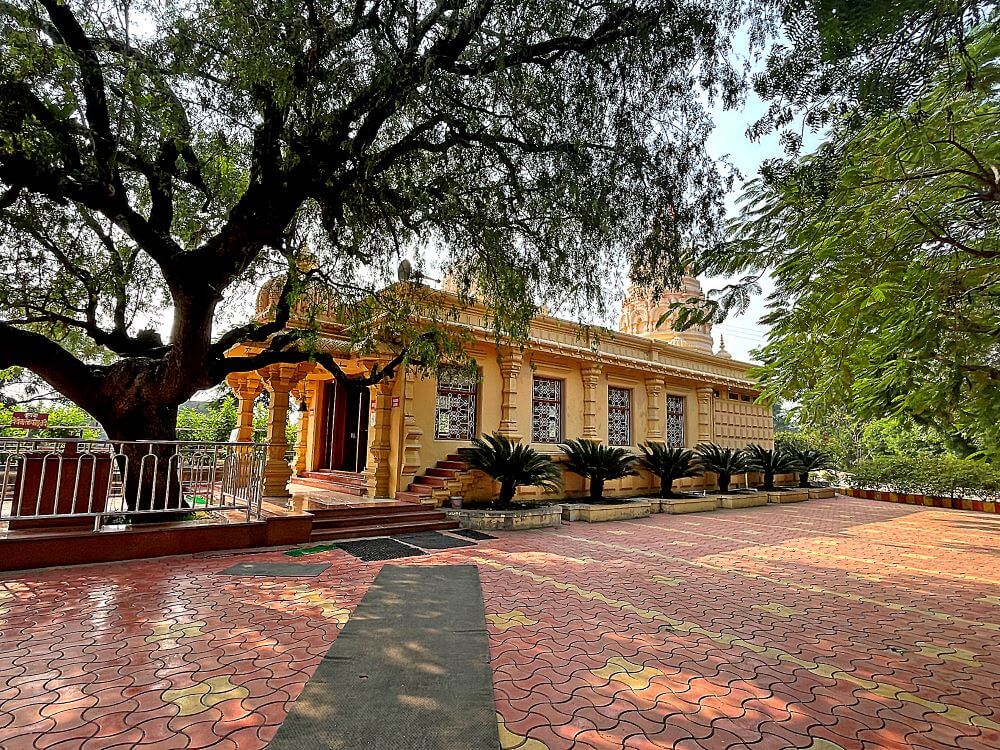
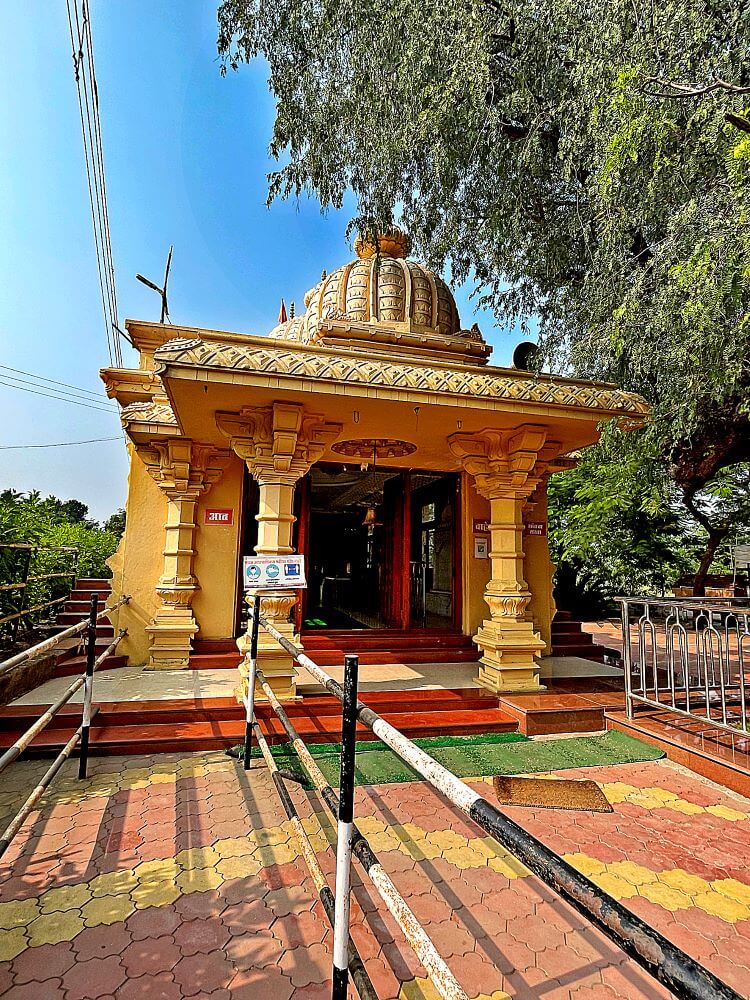
The architecture of the Mayureshwar Temple is a beautiful blend of ancient and modern styles. The temple’s tall spire (kalash) catches the eye from a distance. The temple premises are spacious and paved throughout. There is a Shami tree near the temple entrance. Before entering the temple, devotees first pay their respects to the idol beneath the Shami tree and then proceed for the darshan of Mayureshwar inside. (It is considered sacred to have a Shami tree near a Ganesha shrine. Shami leaves are offered to Ganesha. It is said that before going into exile, the Pandavas placed all their weapons in the hollow of a Shami tree. Since then, it has been the custom to offer Shami leaves when worshipping weapons. The Shami tree holds great importance in religious rituals and Ayurveda. For this reason, the Shami tree has been granted the status of ‘State Tree’ in the states of Rajasthan and Telangana.)
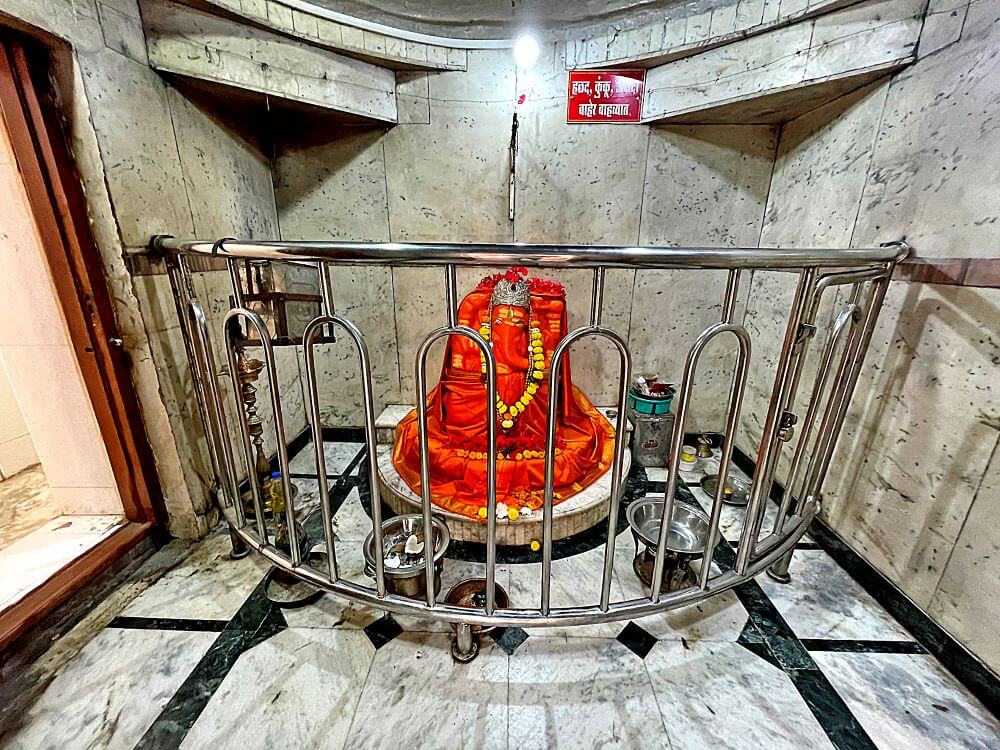
The temple consists of a darshan mandap, a sabha mandap (assembly hall), and a garbhagriha (sanctum sanctorum). The use of marble gives the sabha mandap a distinctive appearance. A queue system has been arranged to manage the crowds of devotees. An inscription on the lintel of the sanctum sanctorum mentions that the original temple was built in 1954. Inside the sanctum, on a marble pedestal, sits the vermilion-anointed idol of Mayureshwar. Mayureshwar’s crown is made of silver, while His eyes are made of gold. Additionally, the tilak on His forehead is also made of gold. The temple has 3 spires, and the tallest one above the sanctum is carved with replicas of many smaller spires. Due to the many trees in the temple premises, the area remains lush, green, and peaceful.
Every Tuesday, Sankashti Chaturthi, and Angarki Chaturthi, thousands of devotees come here for darshan. The Maghi Ganesh Chaturthi festival is celebrated here on a grand scale.
On this day, many devotees from Yeola, Lasalgaon, Kopargaon, and the surrounding areas walk from distances of 20 to 40 km to visit. During this time, free snacks, khichdi, and tea are provided to all visiting devotees. The temple remains crowded with devotees for darshan until 12 midnight.
It is a custom to worship Ganesha first when starting any task. Similarly, if there is any important work in the surrounding five villages, a coconut is first offered to the Ganesha here before the work begins. The villagers believe that this ensures all tasks are completed without any obstacles.
This sacred temple stands as a testament to deep spiritual devotion, ancient architectural grandeur, and rich local cultural traditions.
The sanctum sanctorum houses the divine idol consecrated according to ancient Vedic traditions, surrounded by serene courtyards and traditional temple architecture.
Navratri, Maha Shivratri, Annual Temple Jatra & Deepotsav
Compare and book flights, secure top-rated local hotels near the temple, hire reliable guides, and rent cars instantly.
Extend your pilgrimage by visiting other highly sacred temples located nearby.


Add ₹999 more to unlock FREE SHIPPING!
Your sacred cart is currently empty.
Shop Photo FramesFill in your delivery details below to place your order.
Add comment