
Add ₹999 more to unlock FREE SHIPPING!
Your sacred cart is currently empty.
Shop Photo Frames
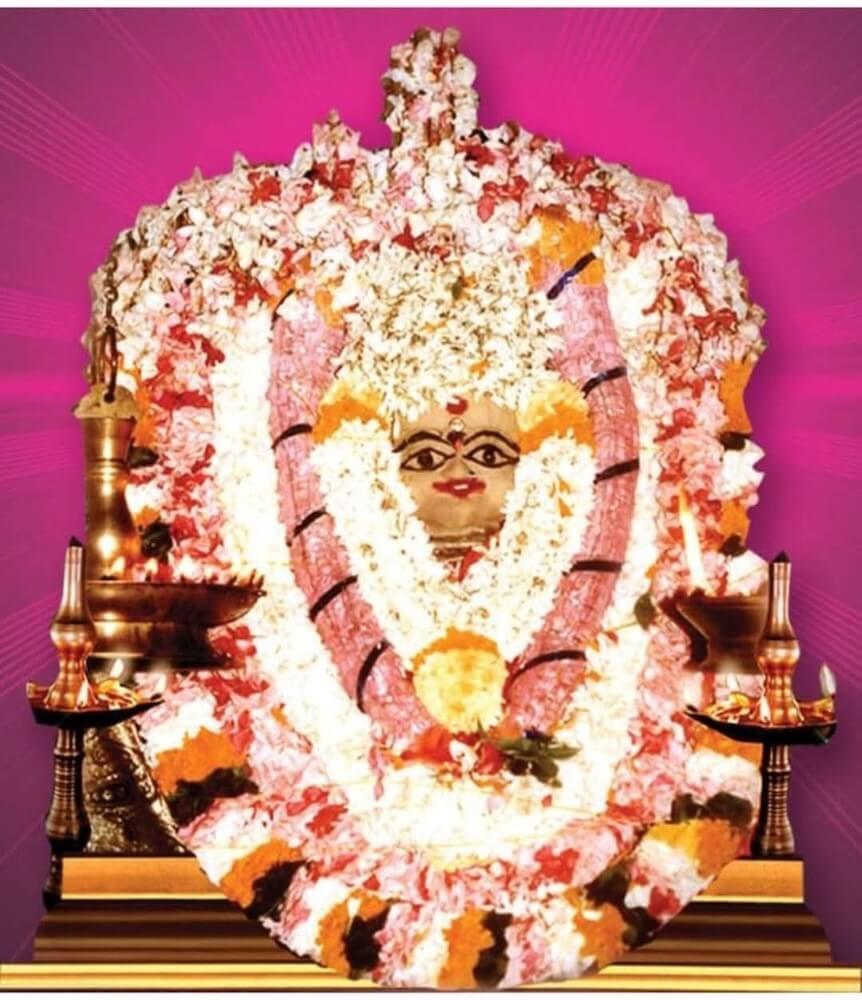
Sarkara Devi Kshethram is one of the finest examples of Kerala’s secular and cultural harmony, proudly standing in Chirayinkeezhu in Thiruvananthapuram district. This renowned Bhadrakali temple has a history that stretches back several centuries. The pre-siding deity is Goddess Bhadrakali, worshipped here as the primordial divine energy, Adi Parashakti. The idol is uniquely installed facing north, which is considered highly auspi-cious and rare in Kerala temple traditions. The temple has witnessed several historically significant events over the centuries and shares deep historical ties with the Travancore royal family. It is regarded as one of the major pilgrimage centres in South India. In 1748, the famous Kaliyoottu festival was formally initiated here by the Travancore ruler Anizham Thirunal Marthanda Varma.
Sarkara Devi Temple is considered one of the most prominent Shakti temples in South Kerala, carrying a rich spiritual heritage and centuries-old traditions. Although there are no exact historical records regarding the temple’s origin, it is widely believed to be more than a thousand years old. From ancient times onward, the temple has been renowned for Bhadrakali worship and tantric rituals. During the reign of the Travancore kings, especially under Marthanda Varma, the temple gained greater importance and royal patronage.
The most historically significant aspect of the temple is the famous “Kaliyoottu Mahot-savam.” The present form of this ritual festival is believed to have begun in 1748. The festival ritually reenacts the legendary battle between Goddess Bhadrakali and the asura Darika, making it one of the oldest ritual festivals in Kerala. Another notable event asso-ciated with the temple involves the legendary Malayalam actor Prem Nazir. He famously dedicated an elephant to the temple during the festival celebrations, and the ceremonial installation of the elephant remains a cherished memory among devotees even today.
The primary myth associated with the temple revolves around the battle between Bhadrakali and Darika. According to legend, Darika was a powerful asura whose atrocities disturbed both gods and humans. To destroy him, Goddess Bhadrakali incarnated and ultimately defeated him after a fierce battle. The famous Kaliyoottu festival is conducted in remem-brance of this divine victory.
Another popular legend connected with the temple name involves jaggery merchants. It is said that in ancient times, merchants traveling through the region with jaggery rested at a roadside shelter nearby. One of the jaggery pots they carried suddenly became impossible to lift despite repeated attempts. Considering this a divine sign, the merchants realized the presence of the Goddess at that spot. Later, Vilwamangalam Swamiyar arrived there, experienced the divine presence of the Goddess, and declared the place a sacred Shakti shrine. According to legend, worship later began there under his guidance, eventually leading to the establishment of the temple. It is also believed that the place and temple derived the name “Sarkara” from this incident involving jaggery (“Sharkkara” in Malayalam).
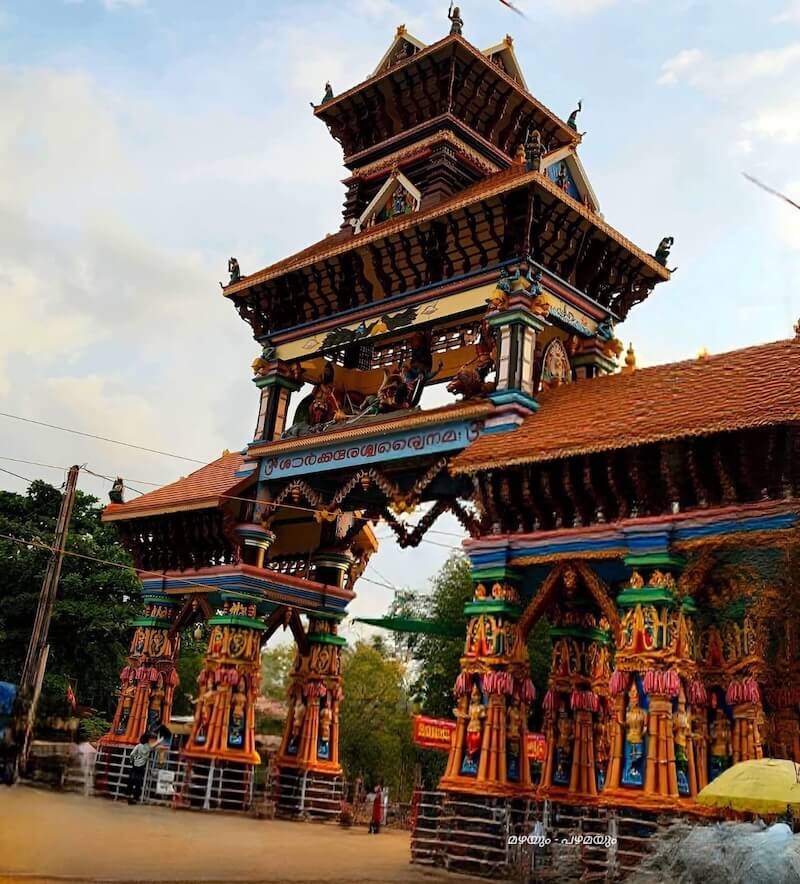
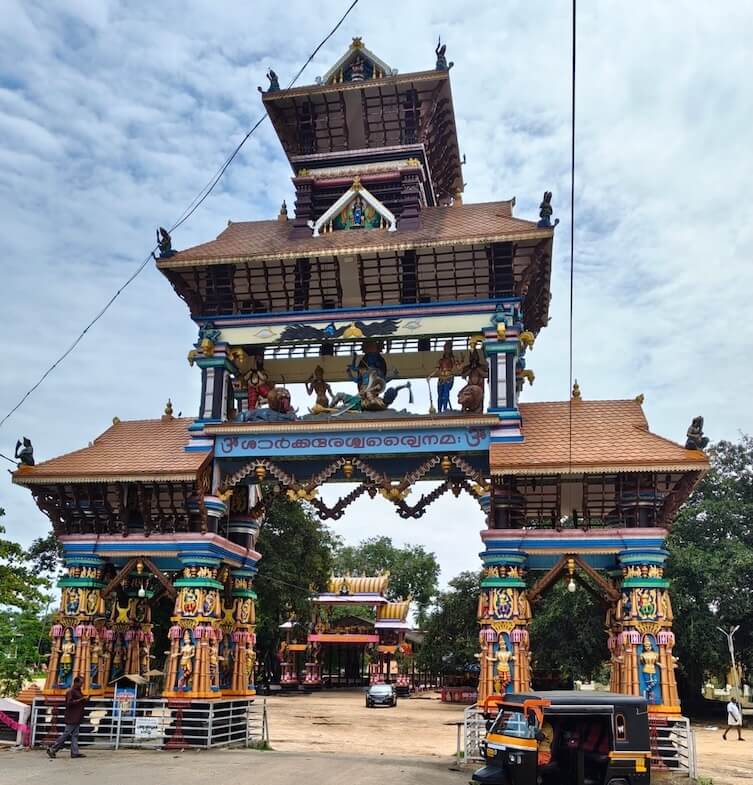
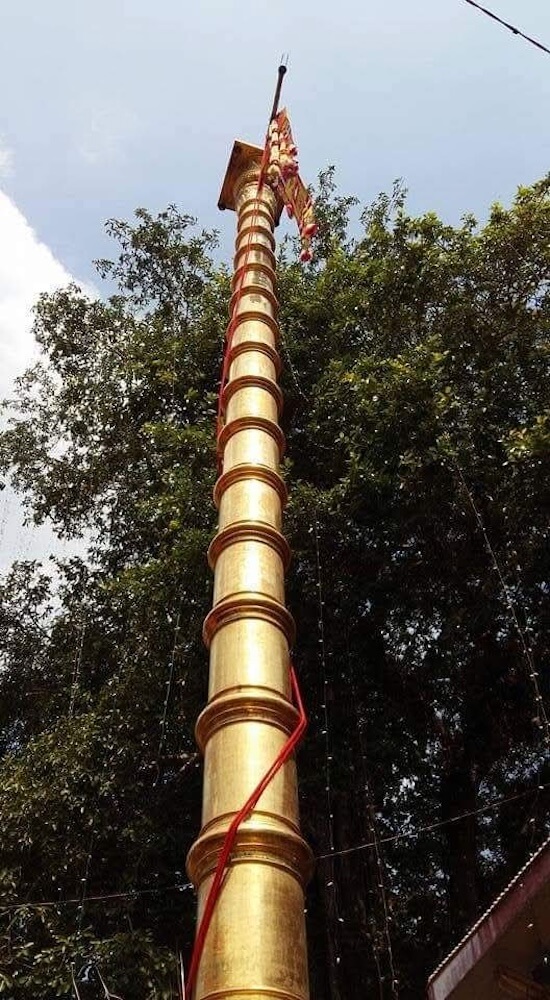
Viewed from the outside, Sarkara Devi Temple reflects the beauty and serenity of tradi-tional Kerala temple architecture. Sloping tiled roofs, ancient-style structures, surround-ing walls, entrance gateways, and the spacious temple courtyard together create a deeplyspiritual and historical atmosphere. Though the main gopuram is not very tall, it radiates an aura of antiquity and devotion. The wide pathways, stone-paved courtyard, coconut groves, and old trees around the temple add to its peaceful and sacred ambiance.
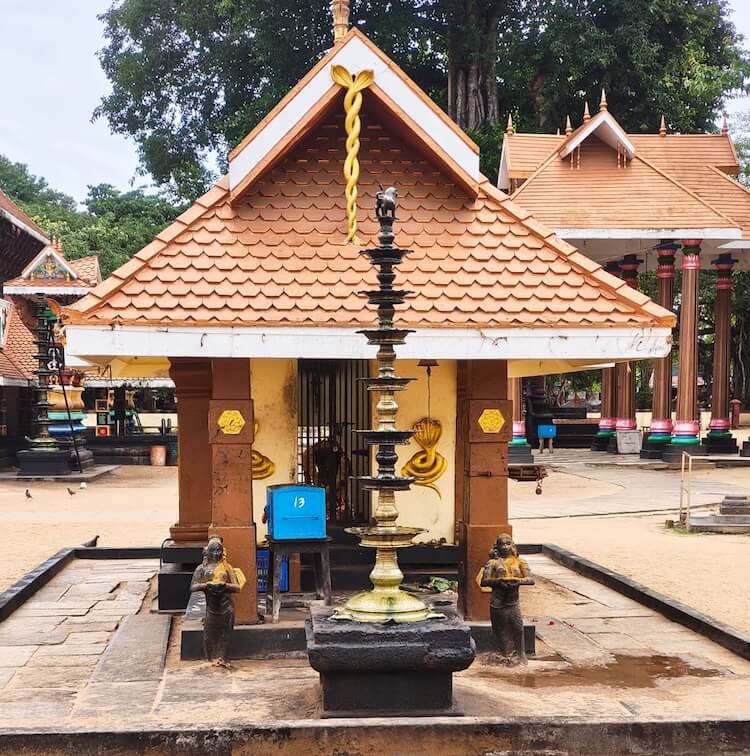
As devotees move closer to the sanctum, the glow of oil lamps, the fragrance of incense, and the sound of sacred chants create a spiritually uplifting experience. Traditional wooden carvings and sloping roofs further highlight the temple’s heritage and architec-tural elegance. The sanctum sanctorum is a unique two-storied square-shaped structure roofed with copper plates. The upper level is decorated with sculptures of various deities including Lord Krishna, Durga, Ganesha, Vishnu, and Narasimha. The main deity, Goddess Bhadrakali, is worshipped as a divine form embodying both fierce power and maternal compassion. The north-facing idol is considered one of the temple’s rarest fea-tures. The nalambalam surrounding the sanctum, along with rows of traditional lamps, enhances the temple’s mystical atmosphere and divinity. Even from the outside, one can feel its peaceful and spiritual presence.
Alongside the main deity, the temple also houses several sub-shrines. In accordance with traditional Kerala tantric temple architecture, these shrines are arranged around the sanc-tum and nalambalam. Devotees can worship them while circumambulating the temple. The major sub-deities include Lord Ganesha, Veerabhadra, serpent deities (Naga De-vatas), Yakshi, and Brahmarakshas. These deities are closely associated with Bhadrakali worship and the temple’s tantric traditions. Devotees believe that the presence of Veer-abhadra and the serpent deities especially reinforces the temple’s identity as a powerful Shakti shrine.
The most important festival of the temple is the “Kaliyoottu Mahotsavam,” one of Ker-ala’s oldest and rarest ritual festivals. Based on the story of Bhadrakali slaying Darika, the festival includes tantric ceremonies, special rituals, and dramatic ritual reenactments of the battle.
Another major celebration is the “Sarkara Bharani,” observed during the Bharani star in the Malayalam month of Meenam. Thousands of devotees gather at the temple on this occasion to worship the Goddess and perform offerings such as Thookkam. Navaratri is also celebrated with special rituals and decorations dedicated to Goddess worship. On Vijayadashami, many families arrive with children for the Vidyarambham ceremony.
During the Mandala season, the temple becomes vibrant with lamp decorations and special worship. In addition, every Bharani day in the Malayalam calendar month is observed as an auspicious day for Bhadrakali worship.
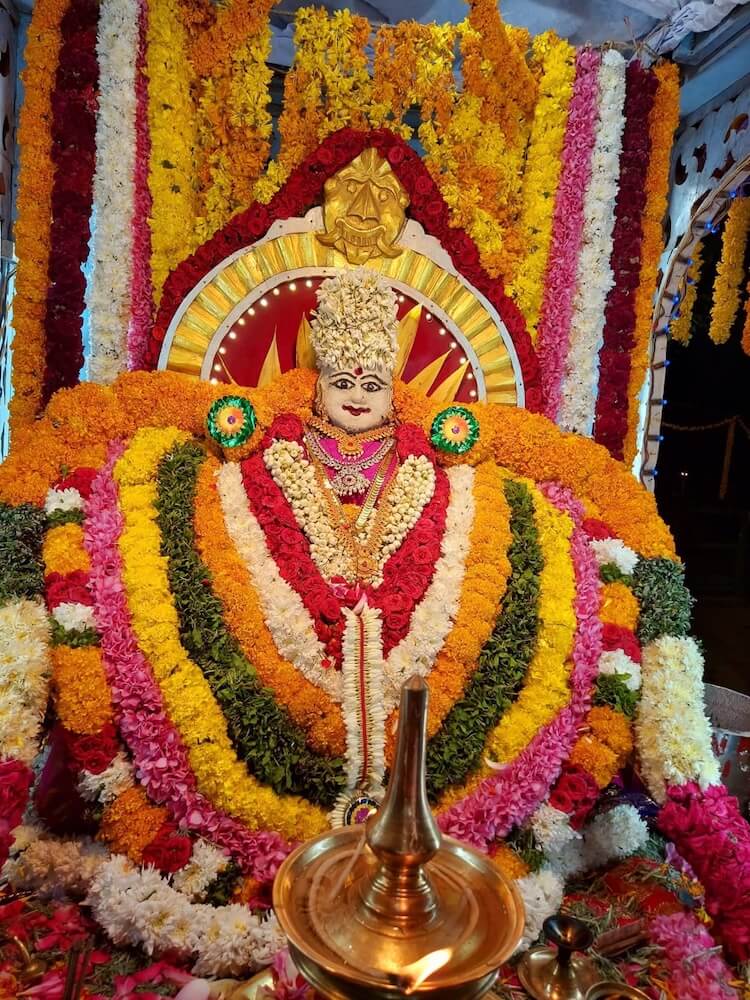
The temple’s offerings and rituals are deeply connected with Bhadrakali worship and beliefs associated with protection and removal of negative influences. Devotees offer prayers seeking health, prosperity, protection from enemies, family well-being, and peace of mind. Among the major offerings, “Muzhukkappu” is one of the most important, where the deity is adorned in a special ceremonial decoration.
Payasam offering is another popular ritual. “Urul Vazhipadu,” in which devotees roll around the temple as an act of devotion, is especially performed for children’s health and relief from afflictions. During Sarkara Bharani, the rare offering known as “Thookkam” is also performed. Other important offerings include Bhadrakali Pooja, special tantric rituals, Naga Pooja, and lamp offerings.The temple opens daily at 4:00 AM. Nirmalya Darshanam and Abhishekam are conducted at 4:30 AM, followed by Ganapathi Homam at 5:00 AM. Pantheeradi Pooja takes place at 6:00 AM, and Nivedyam along with Seeveli is conducted at 6:30 AM. Ushapooja is performed at 7:30 AM, after which devotees are allowed darshan. Ucha Pooja and Seeveli are held at 10:30 AM, and the temple closes around 11:30 AM. In the evening, the temple reopens at 5:00 PM. Deeparadhana is performed at 6:30 PM, followed by Athazha Pooja and Seeveli at 7:45 PM. After completing all rituals, the temple closes at 8:00 PM. Timings may vary during festivals and special occasions.
This sacred temple stands as a testament to deep spiritual devotion, ancient architectural grandeur, and rich local cultural traditions.
The sanctum sanctorum houses the divine idol consecrated according to ancient Vedic traditions, surrounded by serene courtyards and traditional temple architecture.
Navratri, Maha Shivratri, Annual Temple Jatra & Deepotsav
Compare and book flights, secure top-rated local hotels near the temple, hire reliable guides, and rent cars instantly.
Extend your pilgrimage by visiting other highly sacred temples located nearby.


Add ₹999 more to unlock FREE SHIPPING!
Your sacred cart is currently empty.
Shop Photo FramesFill in your delivery details below to place your order.
Add comment