
Add ₹999 more to unlock FREE SHIPPING!
Your sacred cart is currently empty.
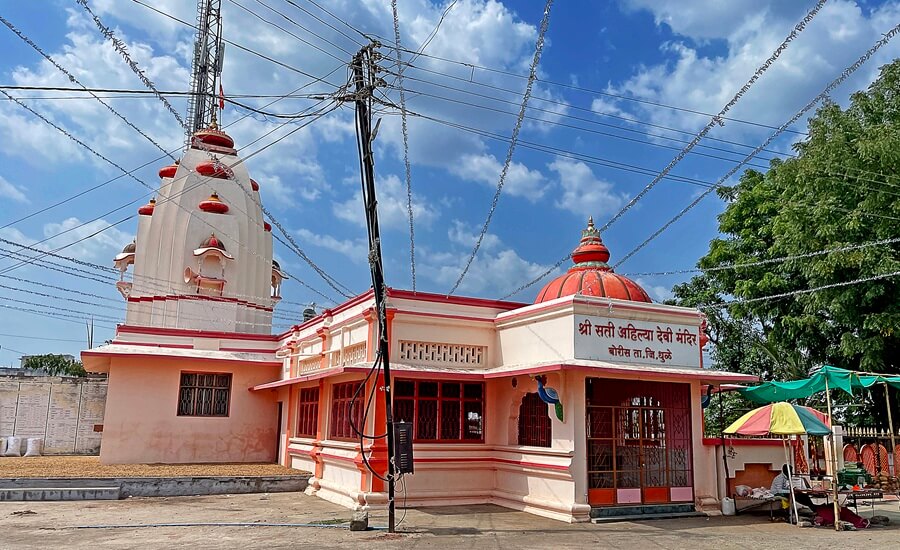
Shop Photo FramesIn the Hindu tradition, temples were built with the purpose of preserving faith and memory. The worship of deities and the creation of temples were established to seek protection from evil forces and to receive the grace of benevolent powers. In many places, there are temples dedicated to Sadgurus and saints who lead lives toward spiritual liberation. Some temples were built as a result of vows, while others were constructed for the purpose of deliverance from curses. The Sati Ahilyadevi Temple in Boris village of Dhule taluka was built with the intention of attaining relief from mental distress and curses. It is widely believed that the Sati Mata here, who is a center of faith for thousands of devotees, is one who grants the wishes of those who make vows.
The legend regarding the temple is that in the year 1832, after the passing of her husband, Ahilyadevi expressed her desire to perform Sati. However, the villagers confined her to her home to dissuade her from doing so. Ahilyadevi’s resolve to perform Sati was so intense that the lock of the house broke and the doors opened on their own. Escaping from the house, Ahilyadevi sacrificed her life upon her husband’s burning funeral pyre. Yet, due to the opposition faced from the villagers, Ahilyadevi cursed the entire village to remain in perpetual mourning before her death. To seek liberation from this curse, the villagers installed idols of her and her husband at the site where Ahilyadevi performed Sati on the day of Paush Vadya Chaturdashi in the year 1887 and commenced regular worship. Consequently, the village was freed from the Sati curse, and the wishes of the devotees who came for the darshan of Sati began to be fulfilled. As a result, the number of devotees increased day by day. Today, thousands of devotees regularly come here for the darshan of Sati Ahilyadevi.
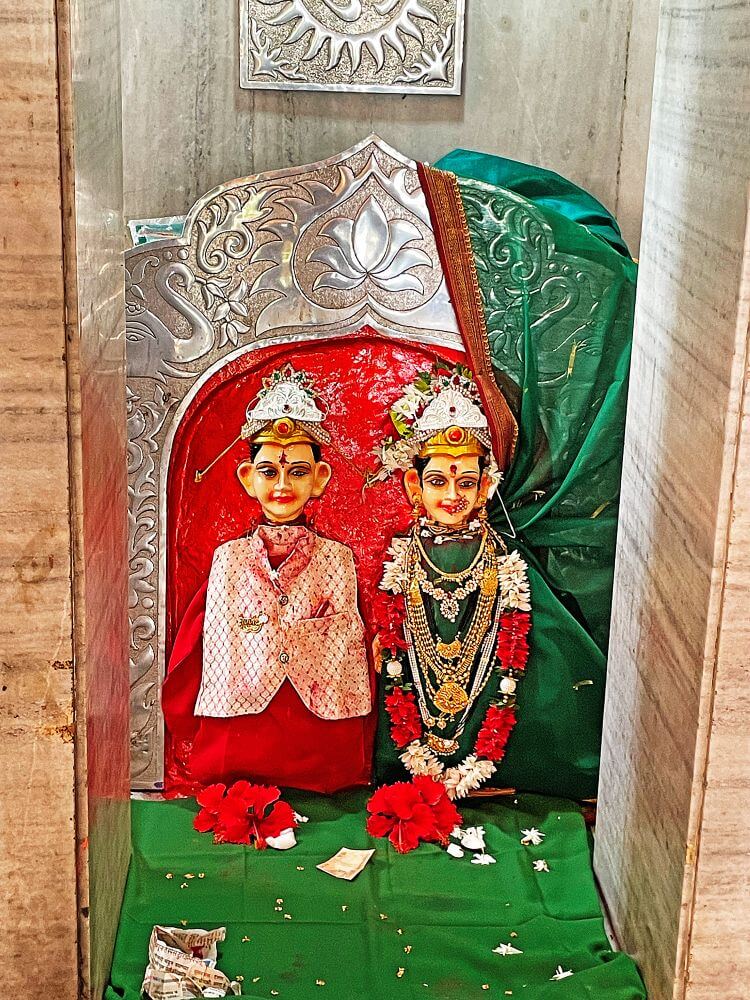
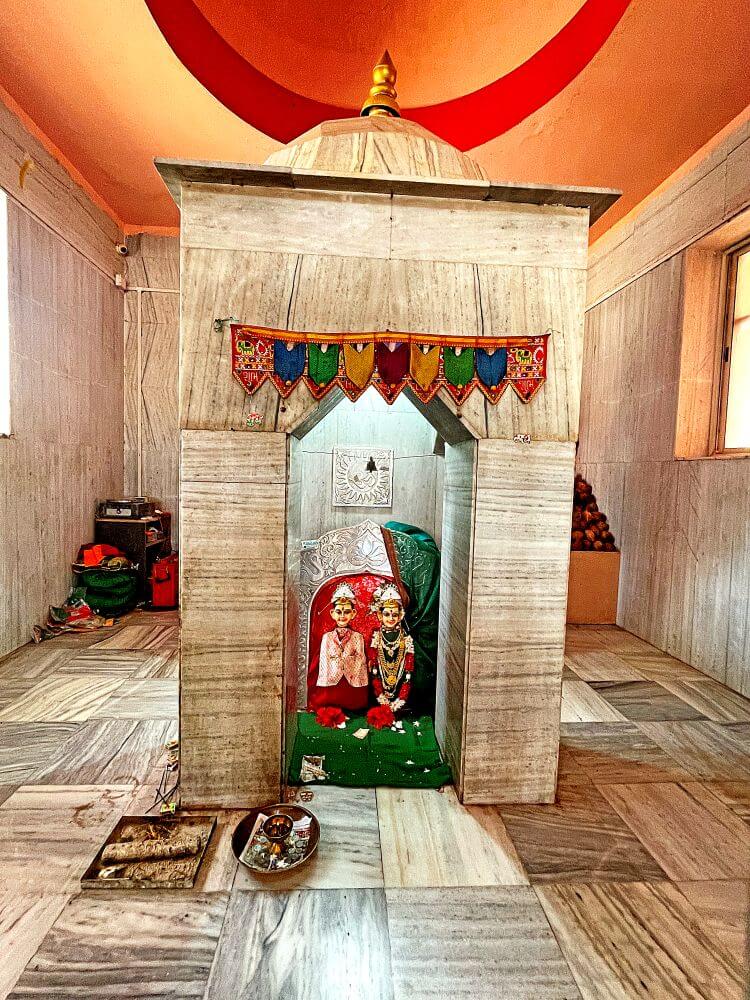
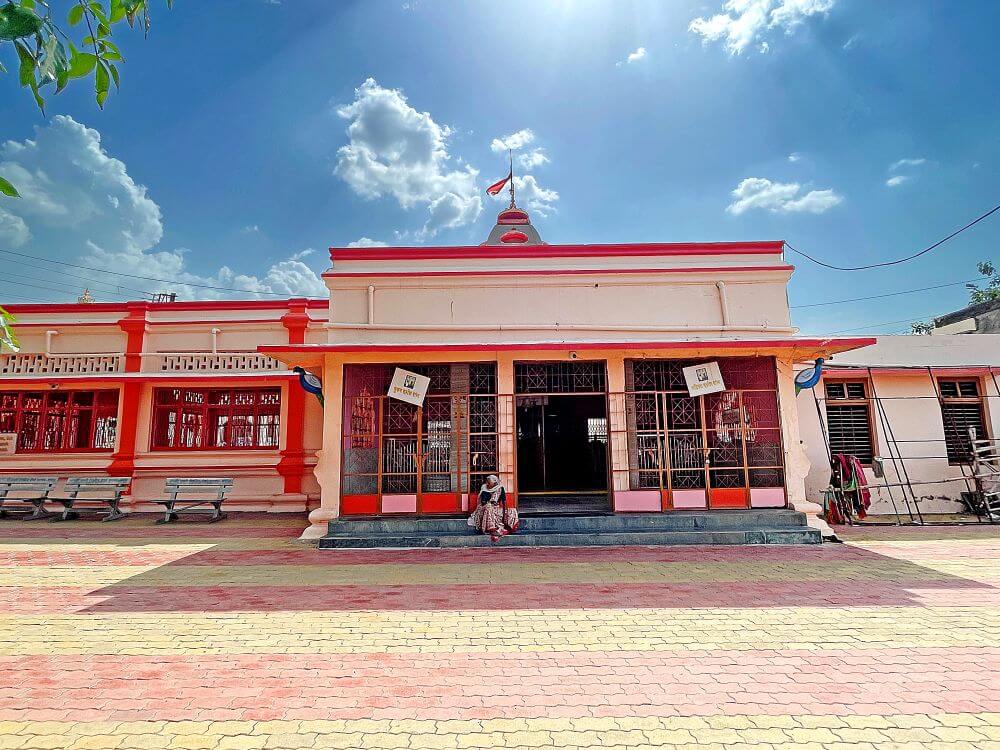
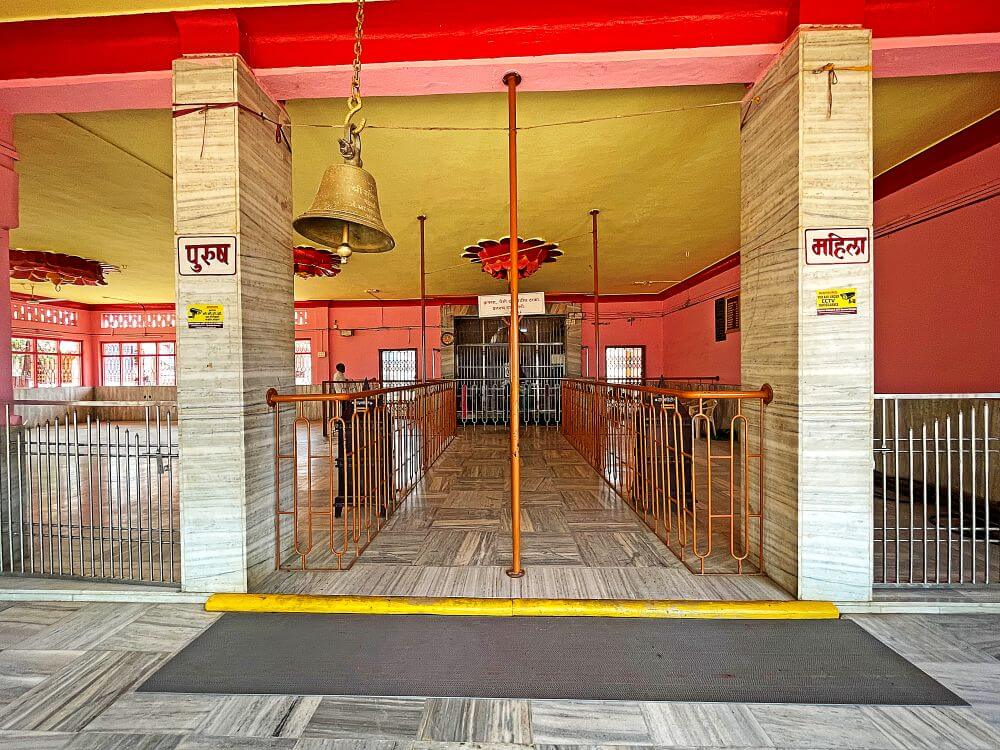
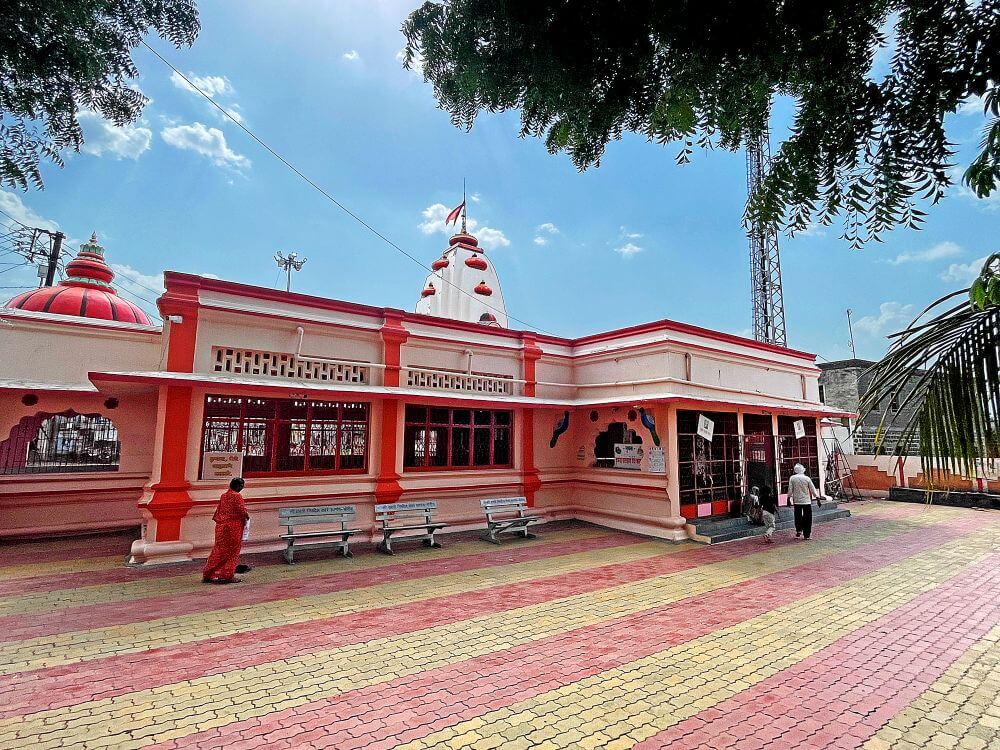
In the temple boundary wall located in front of the spacious parking area, the temple’s There is an entrance gate followed by a Mukhamandapa (front pavilion) featuring four circular pillars. The Sabhamandapa (main assembly hall) here is enclosed and is equipped with windows to allow for light and ventilation. The ceiling of the Sabhamandapa is adorned with relief-style carvings of lotus flowers at various intervals. To ensure that devotees can have an easy Darshan, a queue system has been arranged within the Sabhamandapa. The walls of the Garbhagriha (sanctum sanctorum) have windows, and the ceiling features a dome. The floor and walls of the Garbhagriha are covered with marble tiles. Inside the Garbhagriha, upon a Vajrapitha (sacred pedestal) within a marble Makhar (shrine) topped with a domed Shikhara and Kalasha, are the relief-style, vermilion-anointed idols of Sati Ahilyadevi along with her husband Rama. These idols are adorned with garments and ornaments, and wear crowns upon their heads. Behind the idols, the silver Prabhavali (halo) features lotus flower carvings. On the wall behind the Makhar, there is a silver image of the Sun. There is a circumambulation path around the Makhar.
The temple roof features a parapet on all four sides, and the entrance hall (mukhamandapa) is crowned by a dome with vertical ribbing, topped with an amalaka and a kalasha. Above the sanctum sanctorum (garbhagriha) stands a square-shaped shikhara. On all four walls of the shikhara, the lower section is adorned with crescent-shaped carvings, while the upper sections contain niches for deities (devakoshtakas). Above these niches, the walls are decorated with relief-style dome carvings. The pinnacle of the shikhara is adorned with an amalaka and a kalasha. The temple courtyard, paved with paver blocks, features large trees lining the perimeter walls on all four sides, along with seating arrangements for the devotees.
The annual fair is celebrated at the temple for fifteen days, starting from Paush Vadya Chaturdashi. During this time, the Naivedya brought from Virdel village, the maternal home of the Goddess, is offered to Her. This includes offerings of Varan, Bhat, and Batti. Throughout these fifteen days, a large marketplace featuring various goods is set up in the surrounding area. Items such as household goods, entertainment tools, agricultural equipment, grains, food items, sweets, toys, cows, buffaloes, oxen, and bullock carts are bought and sold. Before this fair, a Kirtan Saptah commences in the temple from Paush Vadya Tritiya. Additionally, annual festivals such as Chaitra Padwa, Dussehra, and Diwali are also organized. On Chaitra Padwa, a gift of a saree and blouse is brought from the maternal home of the Goddess.
This sacred temple stands as a testament to deep spiritual devotion, ancient architectural grandeur, and rich local cultural traditions.
The sanctum sanctorum houses the divine idol consecrated according to ancient Vedic traditions, surrounded by serene courtyards and traditional temple architecture.
Navratri, Maha Shivratri, Annual Temple Jatra & Deepotsav
Compare and book flights, secure top-rated local hotels near the temple, hire reliable guides, and rent cars instantly.
Extend your pilgrimage by visiting other highly sacred temples located nearby.


Add ₹999 more to unlock FREE SHIPPING!
Your sacred cart is currently empty.
Shop Photo FramesFill in your delivery details below to place your order.
Add comment