
Add ₹999 more to unlock FREE SHIPPING!
Your sacred cart is currently empty.
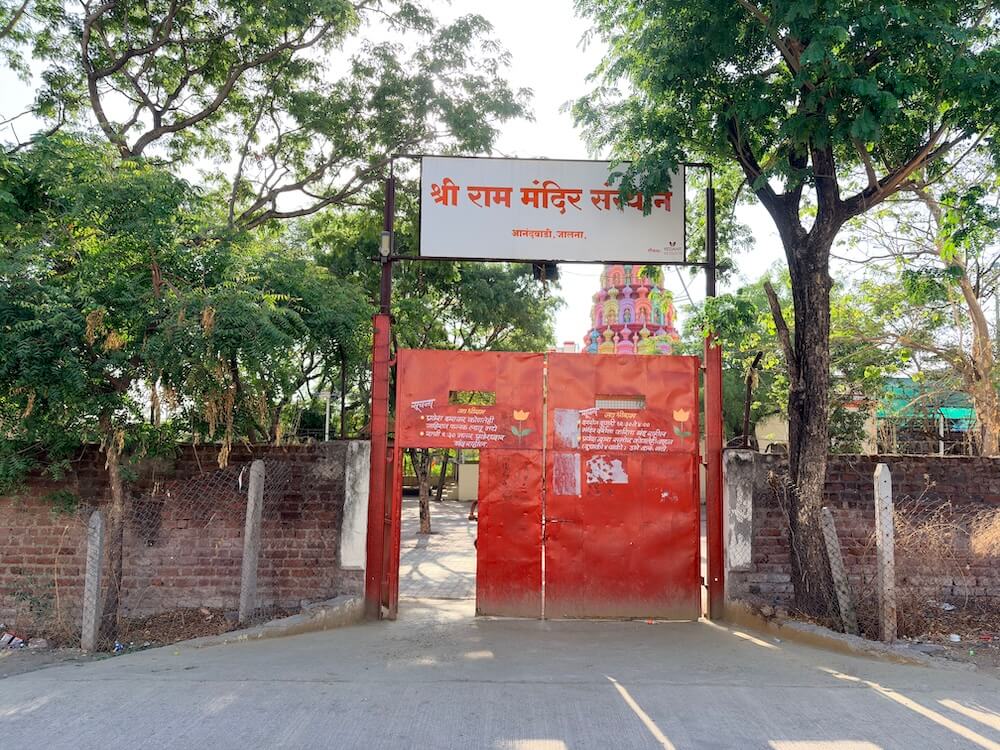
Shop Photo FramesThe Shri Ram Temple, situated in Anandwadi within the Juna Jalna area of Jalna city, possesses a devotional tradition spanning approximately १३० years. While most temples in India were established for various historical or religious reasons, the story of this temple in Jalna is truly unique. This temple is widely renowned as the place that Kalbhairava himself offered to Lord Shri Ram for His residence. Established in the year १८९५ under the inspiration of the great saint Shri Brahmachaitanya Gondavalekar Maharaj, this temple is a sacred site that preserves the invaluable heritage of the Ramdasi tradition.
The history of Jalna city is ancient and diverse. This historical city is primarily situated on the banks of the Kundalika River. According to ancient documents and folk traditions, the original name of this city was ‘Janakpur’. This name is believed to be associated with King Janaka, the father of Mother Sita from the Ramayana. The entire region is also linked to the stay of Lord Ramachandra and Mother Sita during their exile. According to some local legends, Mother Sita resided in this area during her period of exile. In the medieval period, the name of this city changed to ‘Jalna’. There are various opinions among historians regarding this renaming. According to one view, the city was founded or developed by a wealthy Muslim merchant who was a weaver by profession. In Urdu or Persian, a weaver is called a ‘Julaha’, and it is believed that the city derived the name Jalna from this profession.
According to another reference, it is said that the city was named after Janulla Shah Baba. From a historical perspective, Jalna has always been an important trading center. During the reign of Mughal Emperor Akbar, this city was part of the Mughal Empire. Akbar had granted this city as a jagir to his Navratna, Abul Fazl. During the time of Aurangzeb, military and civic facilities were significantly increased here. In the year १७२५, Kabil Khan, under the orders of Nizam-ul-Mulk, built the Jalna Fort, also known as ‘Mastgad’. The historic ‘Battle of Assaye’ between the British and the Marathas in the year १८०३ took place in the village of Assaye in the Bhokardan taluka, which is part of this district. The Anandwadi area falls under Juna Jalna. The name ‘Anandwadi’ means a settlement of happiness or joy. This place is located very close to the railway station.
The legend regarding this temple is that about three hundred and fifty to four hundred years ago, there was a shrine of Bhairoba, or Kalbhairavanath, here. At that time, this entire area was surrounded by a dense forest. Due to this forest, no devotees or priests would venture here. In the year १८९५, a miraculous event occurred at this place. Sadguru Anandsagar Maharaj, the supreme disciple of Shri Brahmachaitanya Gondavalekar Maharaj, arrived at this desolate temple. Anandsagar Maharaj had brought the Shri Ram Panchayatan given by his Guru to this temple. He placed the Panchayatan in the temple of Bhairavanath and went out into the village to seek alms. When he returned to the temple after begging for alms, he witnessed an extraordinary scene. The Shri Ram Panchayatan had automatically installed itself on the main pedestal in the sanctum sanctorum, and the Kalbhairavanath that was previously there had moved outside and sat down. Through his merit and spiritual power, Anandsagar Maharaj communicated with Kalbhairavanath. During this dialogue, Kalbhairavanath gave his consent that Shri Ram should be installed in the sanctum sanctorum. Due to this divine revelation, in the same year, i.e., १८९५, Shri Ram was formally installed here at the auspicious hands of Sadguru Shri Brahmachaitanya Gondavalekar Maharaj. It is said that in this way, Kalbhairava gave his own place to Lord Shri Ram and went to sit outside. After Anandsagar Maharaj, Ramanand Maharaj and subsequently Prahlad Maharaj took charge of the temple as Mahants according to the Guru-Shishya tradition.
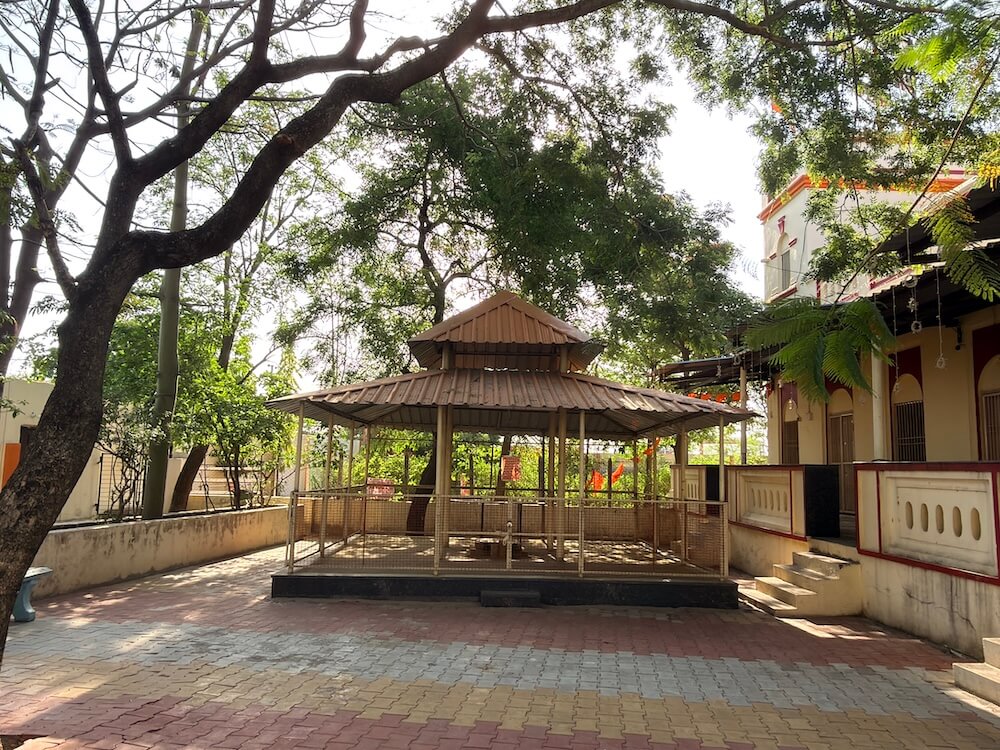
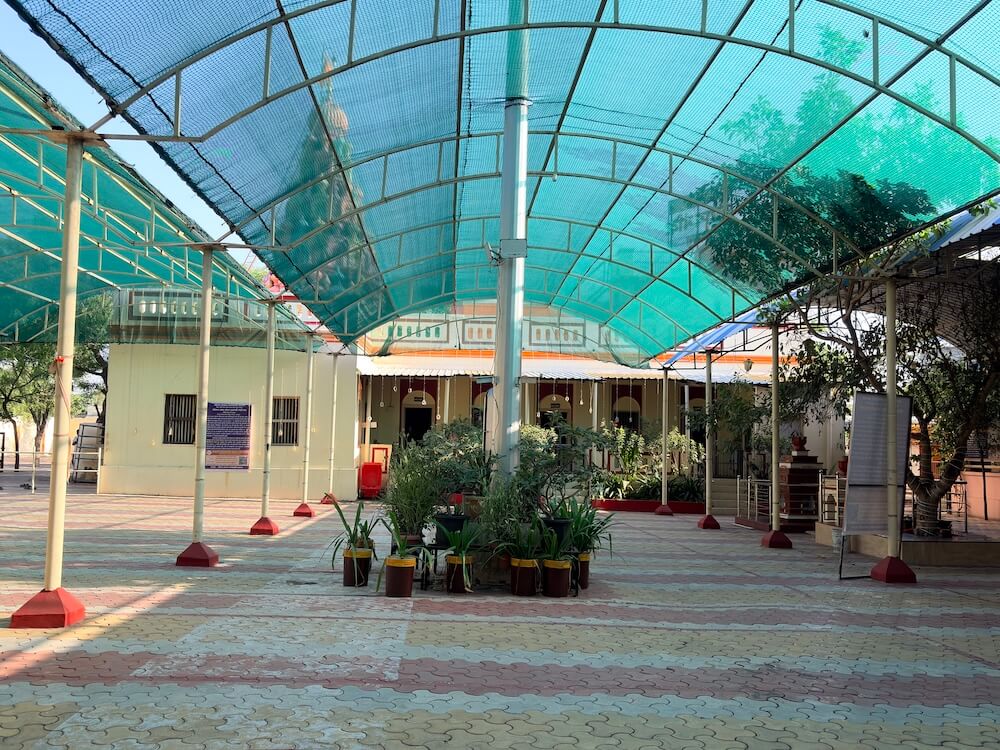
This temple is located in the Juna Jalna area of the city. There is a spacious parking lot in front of the temple for vehicles. One enters the large courtyard of the temple through a gate in the surrounding wall. A large part of this courtyard is covered by a beautiful green garden, while the remaining area is paved with paver blocks. In this courtyard, there is a pond called ‘Ramkund’, and a well, which is the main source of water, is built in one corner of this pond. In the past, beautiful Tulsi Vrindavans have been constructed as a memorial to the sacred spots where saints like Anandiswami Maharaj, Anandsagar Maharaj, Ramanand Maharaj, and Ramabhau Maharaj used to sit for meditation in this courtyard.
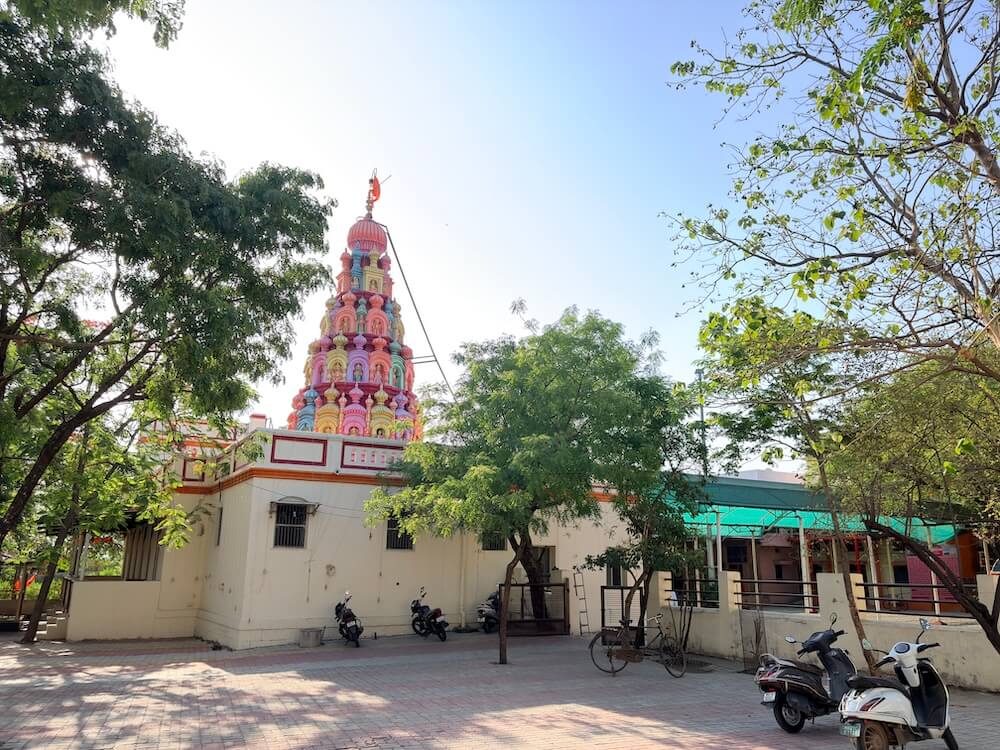
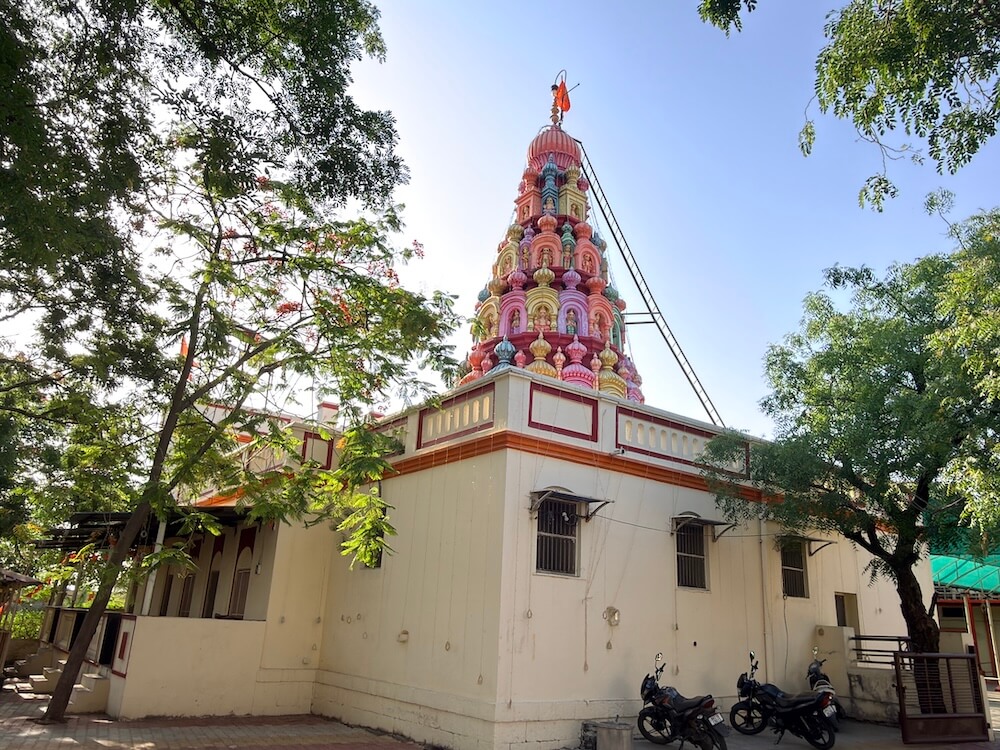
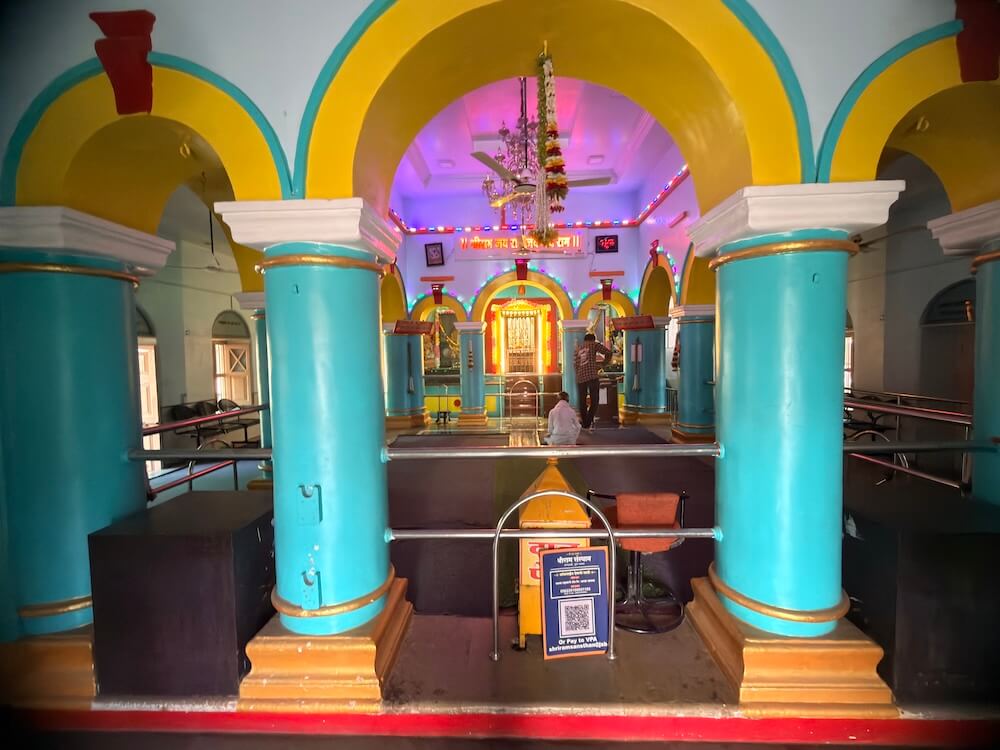
The structure of this temple consists of a Sabha Mandap (assembly hall) and a Garbhagriha (sanctum sanctorum). The Sabha Mandap is slightly elevated from the ground level of the courtyard. There are four steps to climb in front of the main entrance of this Sabha Mandap. Two large stone platforms are built on both sides of these steps, and elephant sculptures are installed on them. The door frames of the main entrance of the Sabha Mandap feature vertical carvings, and a beautiful sculpture of Ganpati is carved on the lintel. This enclosed Sabha Mandap has windows at various places to ensure proper airflow and light. There are three separate doors on the right side and three on the left side of the Sabha Mandap. Including the main entrance, the Sabha Mandap has a total of seven doors. There is seating arrangement for devotees in the Sabha Mandap. In this Sabha Mandap, there are a total of sixteen circular pillars connected to each other by semicircular arches. All these pillars stand on square-shaped bases. A separate meditation room for Sadguru Anandsagar Maharaj has also been built in this Sabha Mandap. On the front wall of the sanctum sanctorum in the Sabha Mandap, i.e., on both sides of the main entrance, beautiful portraits of great saints like Anandsagar Maharaj, Shri Brahmachaitanya Gondavalekar Maharaj, Ramanand Maharaj, and Prahlad Maharaj are displayed.
The sanctum sanctorum of the temple is situated at a slightly higher elevation than the floor of the assembly hall. There are five steps to enter this sanctum. Inside, on a Vajrapitha (sacred pedestal), there is a small pillar and an ornate canopy with a domed ceiling. Seated on a silver throne beneath it are the pristine white marble idols of Lord Shri Rama, Lakshmana, and Mother Sita. The main idol of Lord Shri Rama is established in the center of the platform. Shri Rama is depicted in a Sthanaka (standing) posture, with a gentle and pleasant smile on His face. In His right hand, He holds an arrow, and in His left, a bow. To the right of Shri Rama stands the idol of His brother, Lakshmana, who is also depicted in a standing posture, mirroring the form of Shri Rama. To the left of Shri Rama sits Mother Sita. During the time of Shri Brahmachaitanya Gondavalekar Maharaj, these idols were consecrated through special religious rituals. According to the faith of local devotees, there are also miraculous stories prevalent in this area of tears flowing from the eyes of these idols. Directly in front of these main idols, at their feet, is a small stone idol of Lord Hanuman, the supreme devotee of Shri Rama. On the main Vajrapitha below, a copper Shri Ramapanchayatan is also installed, flanked by two small brass Gajrajas (elephants) on either side. The interior of the sanctum features a domed ceiling; the first two layers of this ceiling contain empty niches, while the topmost layer is carved with a beautiful wheel design.
On the temple roof, near the entrance, is a Nagarkhana (drum house). Above the sanctum, a magnificent five-tiered circular main Shikhara (spire) has been constructed. Each tier of this Shikhara contains beautiful niches housing attractive idols of various deities. Small miniature spires are also crafted above each of these niches. At the very pinnacle of the main Shikhara sits a circular Amalaka and a golden Kalash. Directly in front of this main temple, in the courtyard, is a small, independent temple of Lord Maruti. Additionally, adjacent to the wall of the Bhaktaniwas (pilgrim lodging) building in the courtyard, there is a small shrine dedicated to Kalbhairavnath. On the Vajrapitha within this shrine, an ancient stone idol of Kalbhairavnath, adorned with vermilion, is installed. This is the original idol of Kalbhairavnath, which was historically installed in the main temple; it is said that after the arrival of Lord Shri Rama, the deity chose to vacate his place for Rama and move outside.
For the convenience of devotees and pilgrims, the temple administration has constructed several facilities on the premises. A large Bhaktaniwas building has been built in this vast courtyard to provide accommodation for devotees arriving from out of town for Darshan. A spacious dining hall has been constructed adjacent to this building. During festival periods, large-scale community feasts are organized for the thousands of devotees who visit. In this temple, following the teachings of Shri Brahmachaitanya Gondavalekar Maharaj, the highest importance is given to Annadan (offering of food), and therefore, Mahaprasad is regularly organized here. Next to this dining hall is a large storage room (Kothar) to keep the grains for Mahaprasad safe, and beside it, a large, fully equipped kitchen has been built for cooking.
An unbroken tradition of devotion is considered the primary feature of this place. The thirteen-syllable Mahamantra, “Shri Ram Jai Ram Jai Jai Ram,” given by Shri Brahmachaitanya Gondavalekar Maharaj, is continuously chanted by the priests and devotees who visit here. Various programs of continuous chanting (Namjap) are organized in the temple. Every day, Kakada Aarti is performed at dawn and Shejarti at night. All these daily religious rituals in the temple are performed strictly according to the rules laid down by Gondavalekar Maharaj himself. Among all the festivals throughout the year, Ram Navami is considered the largest and most important annual festival of this temple. This Ram Navami festival is celebrated with great enthusiasm over a total of nine days, from Chaitra Shuddha Pratipada, i.e., Gudi Padwa, to Chaitra Shuddha Navami. During these nine days, continuous Bhajans, Kirtans, discourses, and a grand seven-day Ramkatha and Harinam Saptah are organized in the temple. On the main day of Ram Navami, at exactly 12:00 PM, the birth celebration of Lord Shri Rama is observed in a highly devotional atmosphere and with great splendor. An extremely important part of this festival is the Palkhi (palanquin) procession. On this day, a beautiful palanquin carrying the idol or image of Shri Rama is decorated and taken through the entire Anandwadi area with music and celebration. Apart from this, festivals like Dussehra, Diwali, the entire month of Shravan, Purushottam Maas (Adhik Maas), Ashadhi Ekadashi, Kartiki Ekadashi, and Das Navami, the death anniversary of Samarth Ramdas Swami, are also celebrated here with enthusiasm. Devotees can have Darshan here daily from 6:00 AM to 12:30 PM and from 4:00 PM to 9:30 PM.
This sacred temple stands as a testament to deep spiritual devotion, ancient architectural grandeur, and rich local cultural traditions.
The sanctum sanctorum houses the divine idol consecrated according to ancient Vedic traditions, surrounded by serene courtyards and traditional temple architecture.
Navratri, Maha Shivratri, Annual Temple Jatra & Deepotsav
Compare and book flights, secure top-rated local hotels near the temple, hire reliable guides, and rent cars instantly.
Extend your pilgrimage by visiting other highly sacred temples located nearby.


Add ₹999 more to unlock FREE SHIPPING!
Your sacred cart is currently empty.
Shop Photo FramesFill in your delivery details below to place your order.
Add comment