
Add ₹999 more to unlock FREE SHIPPING!
Your sacred cart is currently empty.
Shop Photo FramesIt is said that where the Gods reside, that is Awas. It is for this reason that there are many ancient temples in the village of Awas in Alibaug taluka. It is said that this village is even mentioned in the Skanda Purana due to the Vakratunda temple located here. According to information from the book ‘Ashtagar’ from the Angre era, upon learning about this awakened shrine, Shrimant Nanasaheb Peshwa himself came here and had the current temple constructed. He also made arrangements for a permanent source of income for worship and rituals. The shape of the trunk of the Ganesha idol here resembles the Om. Such an idol is considered rare.
The legend of this temple is that a king named Abhijit had no children. To be blessed with progeny, he went to the nearby Kaneshwar region to worship Mahadeva. Pleased by his devotion, Mahadeva initiated him into the Vakratunda mantra. Through the worship of this mantra, Vakratunda Ganesha manifested and granted the king the boon of having a son. The king then requested Vakratunda Ganesha to reside here. Ganesha, honoring the request of his devotee, agreed to stay. Since Ganesha, that is, the Divine, actually resides here, this village became known as Awas.
It is said that five hundred years ago, this idol was discovered in a desolate area. At that time, there was a forest of Kewada in this vicinity. A Brahmin named Mainkar lived nearby. One day, while clearing this area, he found this idol. He then placed this idol at the spot where the temple currently stands. The installation was performed and the worship rituals commenced. Although the lineage of this Brahmin did not continue, the local community of Brahmins continued the worship of Lord Ganesha. A provincial inspector who visited the village instructed the Brahmins that the worship of this Ganesha must be performed only by a Brahmin with the surname Mainkar. Subsequently, he brought Yashwant Ballal Mainkar, a Brahmin from Apta known to him, along with his family to Awas. For many years thereafter, this temple remained in the form of a hut. Shrimant Nanasaheb Peshwa had this temple constructed. A record stating, ‘Vakratunda Ganapati Devalaya, Mahal Awas, Tarf Ashtagar, Mamle Chaul, Renovation by Kardey Aapabhat Bhate Mutalik Deshmukh, Date: Balaji Bajirao Peshwe, Tarf Sashti,’ is found on page 22 of the book ‘Angrekalin Ashtagar’.
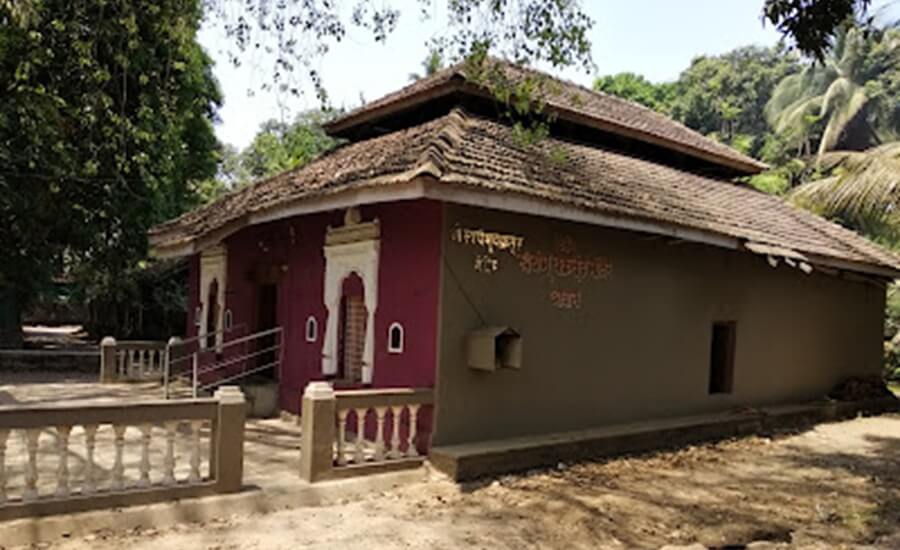
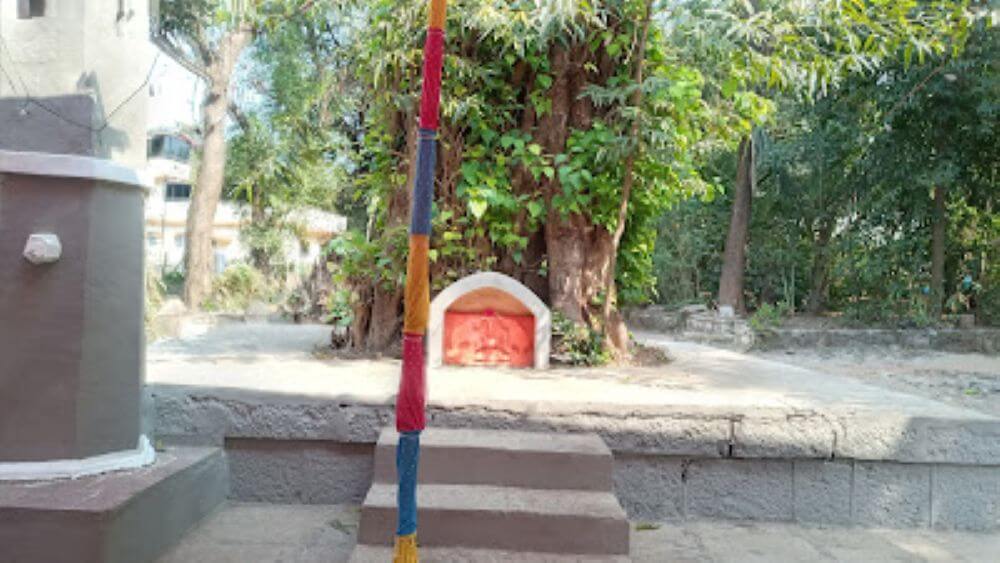
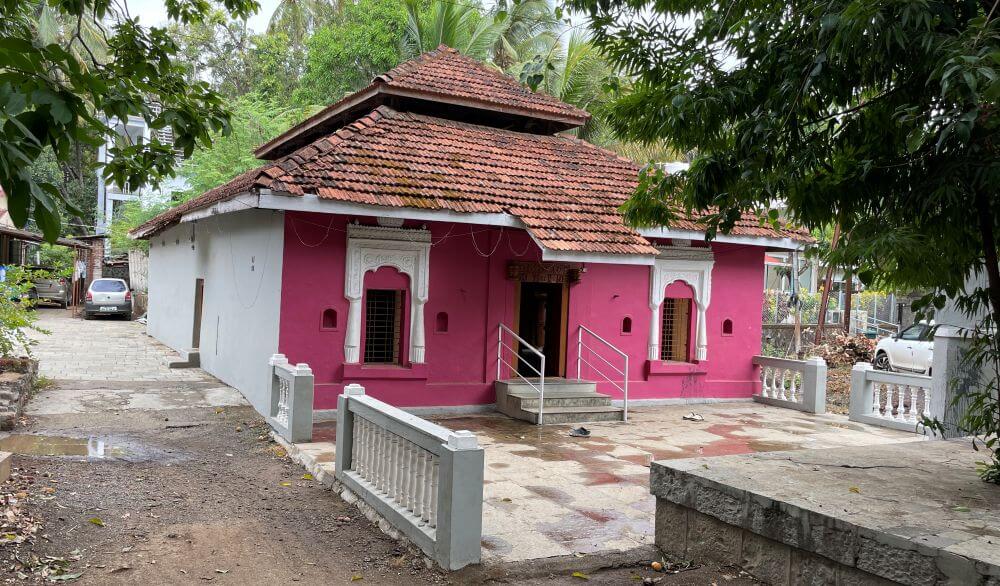
Situated in the heart of Aawas village, this temple, like others in the village, features a tiled roof. Beneath a large banyan tree in front of the temple, there is a vermilion-anointed sculpture of Gajalakshmi placed on a stone platform. Outside the temple, there is an ancient stone lamp pillar and a Tulsi Vrindavan. Two-storied The construction of this temple is of the traditional style and made of wood. The structure of the temple consists of a Sabha Mandap and a step-pyramid style dome (the original ancient temple) within it. There are three steps to enter this temple, which is situated slightly elevated from the ground. The entrance of the temple is wooden and features intricate carvings. There is also distinctive craftsmanship on the lintel above the entrance. There are windows on the walls on both sides of the entrance, with lamp niches on either side of them. Along these windows, there is craftsmanship consisting of two pillars topped by an arched gateway.
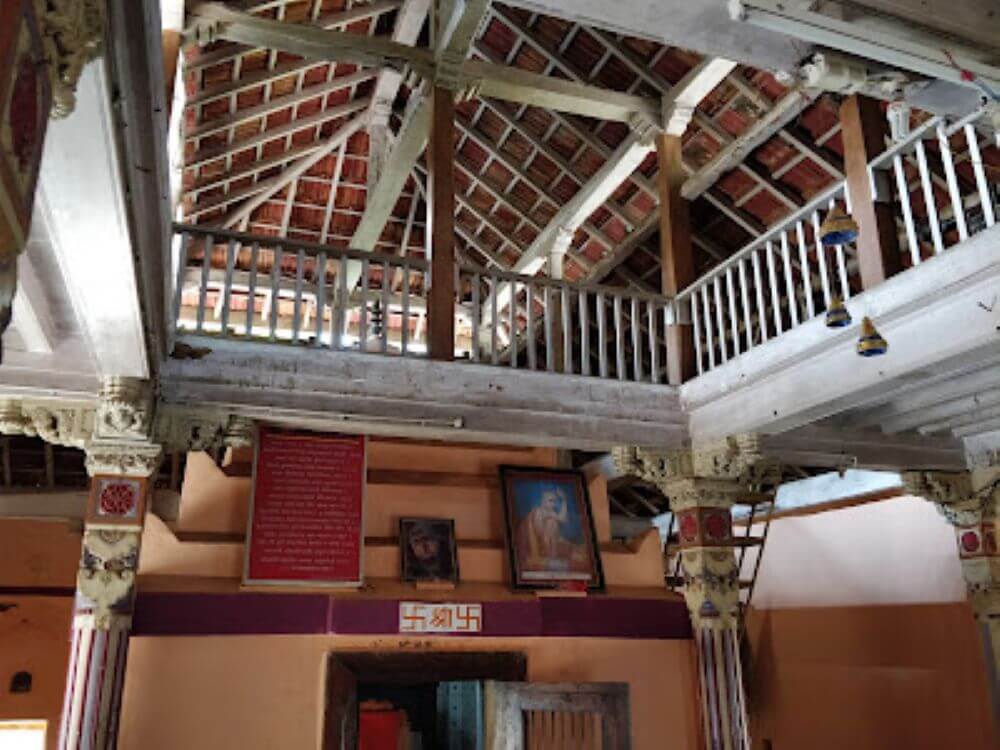
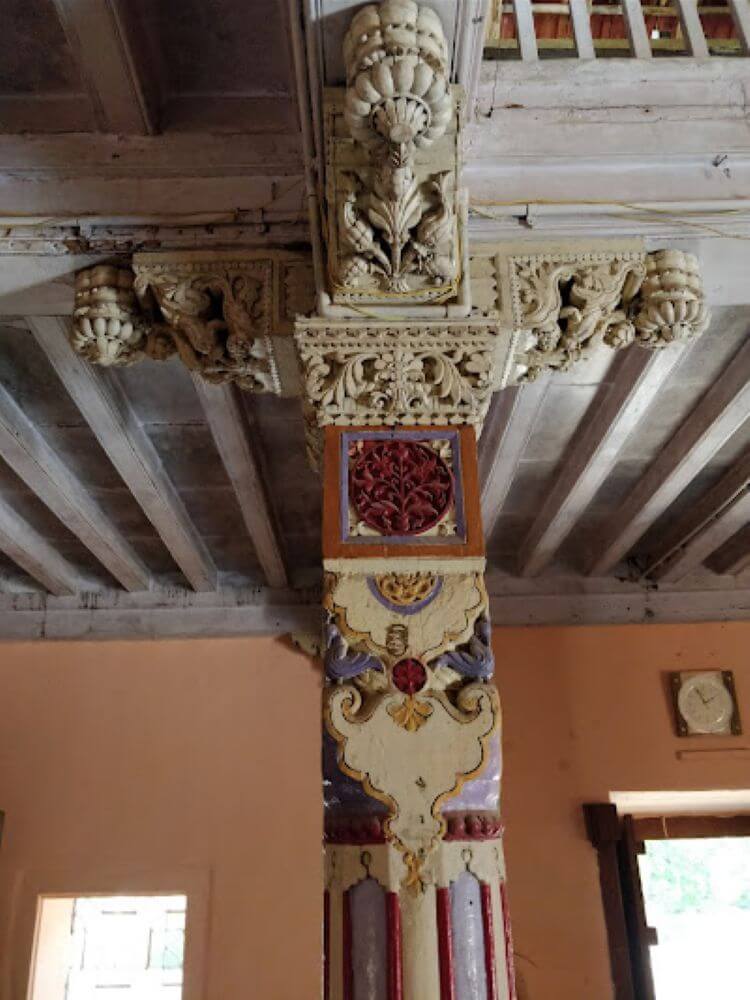
This entrance leads into the main assembly hall (Sabha Mandap) of the temple. This two-storied, enclosed assembly hall has been constructed primarily using wood. There is a gallery (Sajja) supported by the pillars within the hall. Devotees are provided with seating facilities in this gallery on the second floor. The wooden pillars here feature exquisite, intricate carvings towards the top. The sanctum sanctorum (Garbhagriha) of the temple is located at the front of this assembly hall. This sanctum sanctorum was the original temple. The structure suggests that the outer portions of the temple were constructed at a later period.
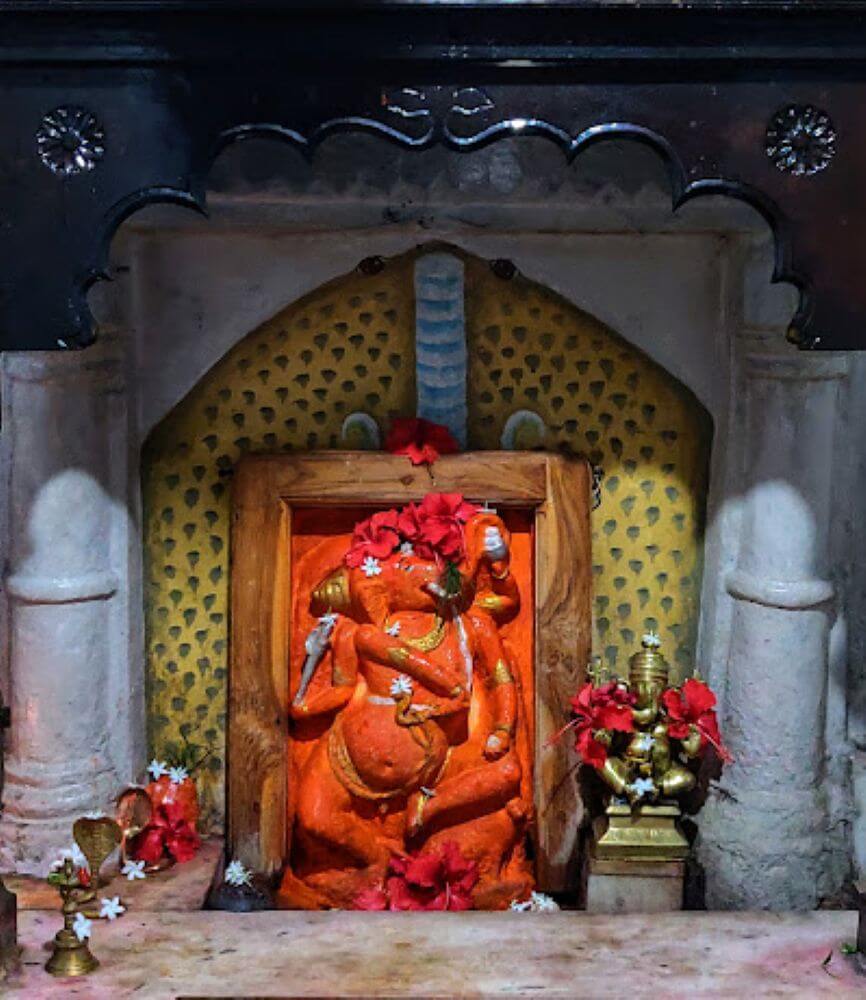
In the sanctum sanctorum, the idol of Vakratunda Ganesha is seated within a shrine placed upon a low-height Vajrapitha. This idol is highly distinct and unique. The back of the idol faces west, while the chest and abdomen face east; however, the face is turned towards the north. The trunk is curved in the shape of an Omkara. Such an idol is considered rare. The sanctum has an independent, fully stone-carved spire. Beside this idol is a brass idol of Ganesha. This brass idol is placed in the palanquin gifted by the Peshwas to the temple and taken out in a procession. There is a circumambulation path around the sanctum sanctorum. On this path, at the rear side, there are two large-sized Shiva Lingas. It is said that they are extremely ancient. Every year, in the month of Bhadrapada, a one-and-a-half-day Ganesha worship is held here.
This sacred temple stands as a testament to deep spiritual devotion, ancient architectural grandeur, and rich local cultural traditions.
The sanctum sanctorum houses the divine idol consecrated according to ancient Vedic traditions, surrounded by serene courtyards and traditional temple architecture.
Navratri, Maha Shivratri, Annual Temple Jatra & Deepotsav
Compare and book flights, secure top-rated local hotels near the temple, hire reliable guides, and rent cars instantly.
Extend your pilgrimage by visiting other highly sacred temples located nearby.


Add ₹999 more to unlock FREE SHIPPING!
Your sacred cart is currently empty.
Shop Photo FramesFill in your delivery details below to place your order.
Add comment