
Add ₹999 more to unlock FREE SHIPPING!
Your sacred cart is currently empty.
Shop Photo FramesGuhagar is recognized as an exceptionally beautiful village in the Aparant, or Konkan region. The Valukeshwar Temple in the village of Asagoli is considered one of the most ancient and renowned temples in the district. The temple and its surroundings are a major attraction for both devotees and tourists. In the Sahyadri Khand of the Padma Purana, the temple is mentioned as ‘Uttare Jambukadevi Dakshine Valukeshwar’ (Jambukadevi in the North and Valukeshwar in the South). This confirms that this site is extremely ancient and existed even before the Puranas were composed.
The legend of the temple states that when a cowherd struck the Vyadeshwar Linga in Guhagar with an axe, the Linga split into two pieces. One piece fell at Asagoli, where the Valukeshwar Temple was built, and the other fell on a hill at Anjanvel, where the Talkeshwar Temple was constructed. Therefore, devotees believe that this site is an extension of Lord Vyadeshwar himself. According to the ‘Guhagar Mahatmya’ manuscript, Goddess Sita herself created a Shiva Linga from sand for worship here, which is why this shrine is named Valukeshwar. The Padma Purana also mentions that in ancient times, the boundary of Guhagar extended up to the Valukeshwar Temple. Although the site is ancient, the current temple structure dates back to the Peshwa era.
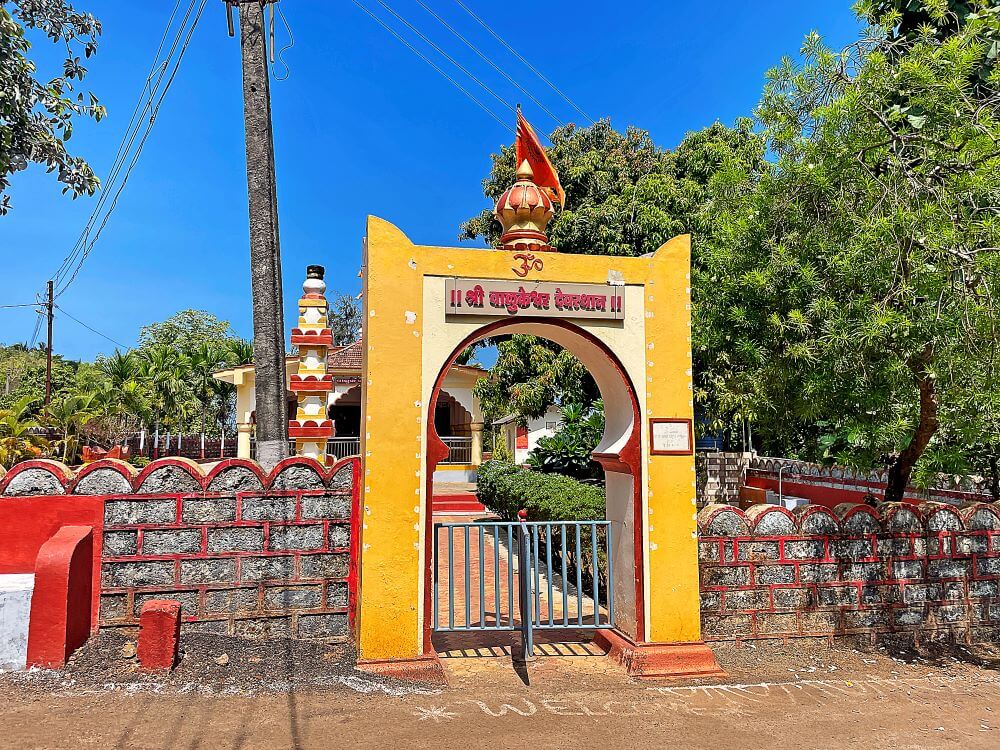
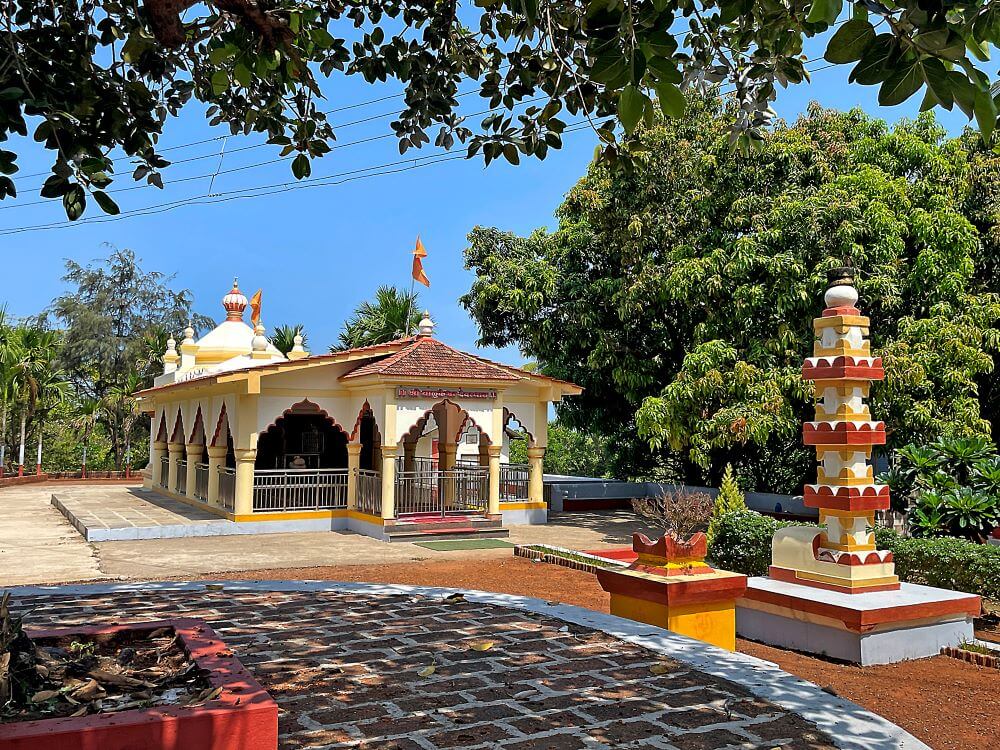
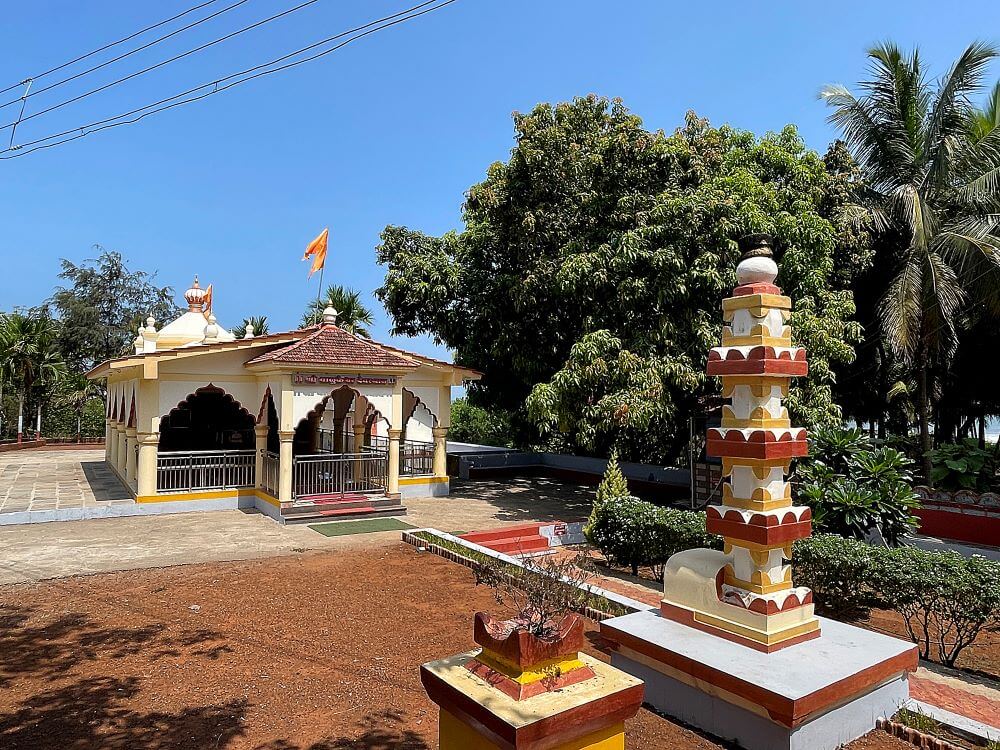
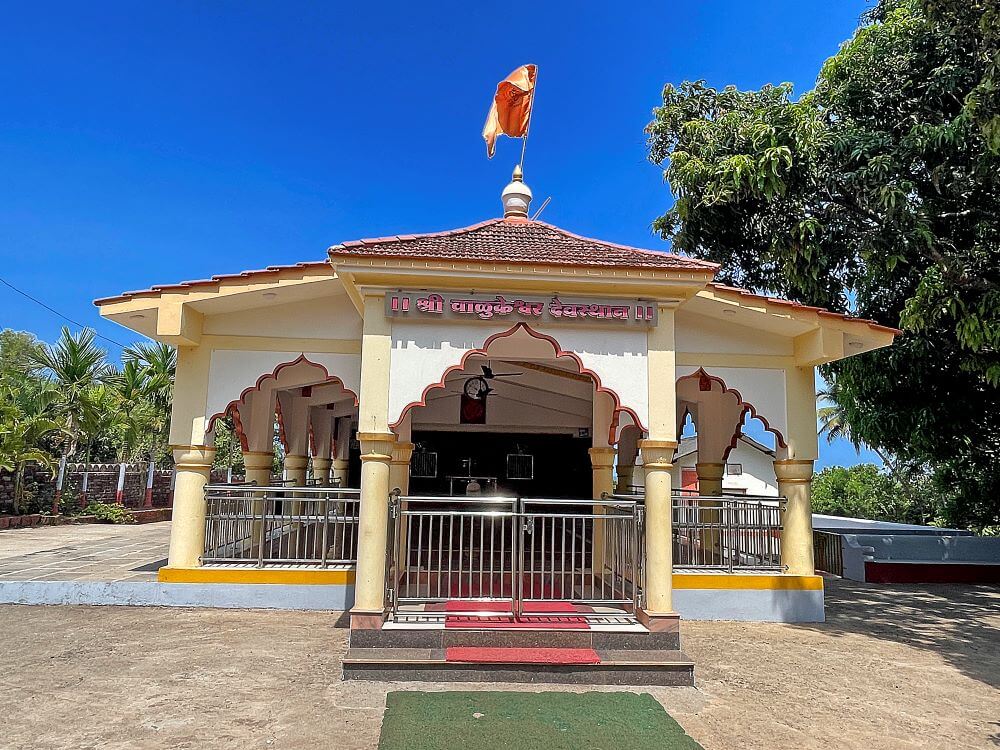
Guhagar is divided into three parts: Khalcha Pat, Varcha Pat, and Dev Pat. The region is characterized by coconut and betel nut groves, casuarina forests, a long coastline, and beautiful, charming Konkan-style houses situated on both sides of the road running parallel to the shore. Even today, the courtyards of many houses here are seen plastered with cow dung. One can reach the Valukeshwar Temple in Asagoli village via the road in Khalcha Pat. With the vast sea and coconut trees everywhere, the Valukeshwar Temple is located barely २०० feet from the sandy beach. The temple is surrounded by a fortification wall, and a small, beautiful pinnacle is installed above the arch of the entrance gate. There is a paved path from the entrance to the temple, and a beautiful garden has been developed on both sides of the path.
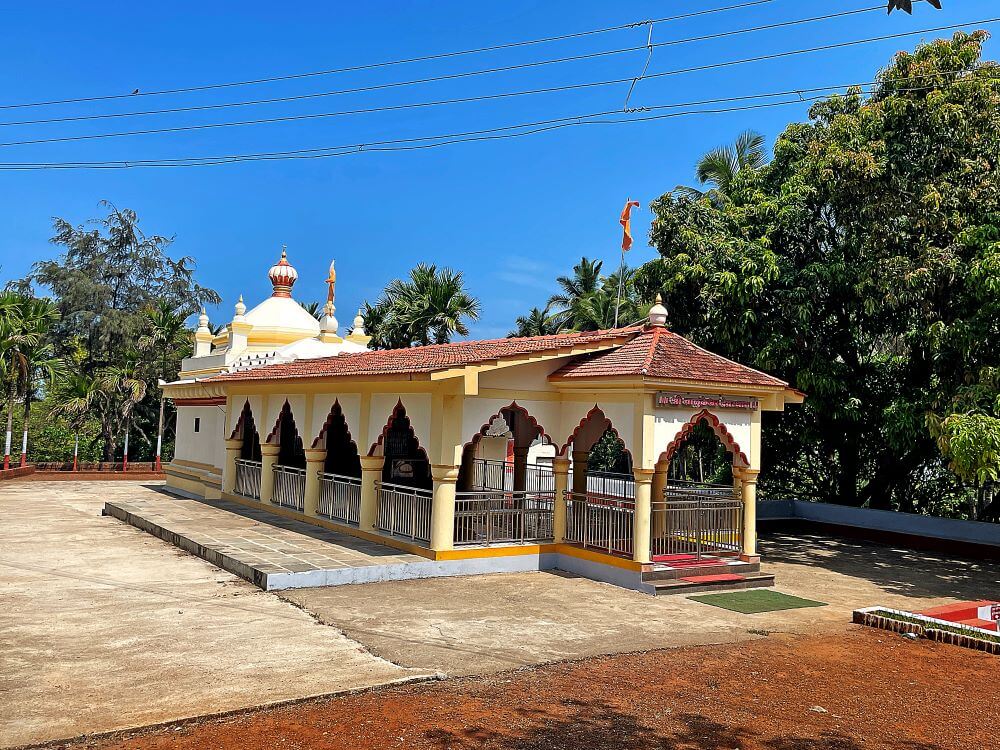
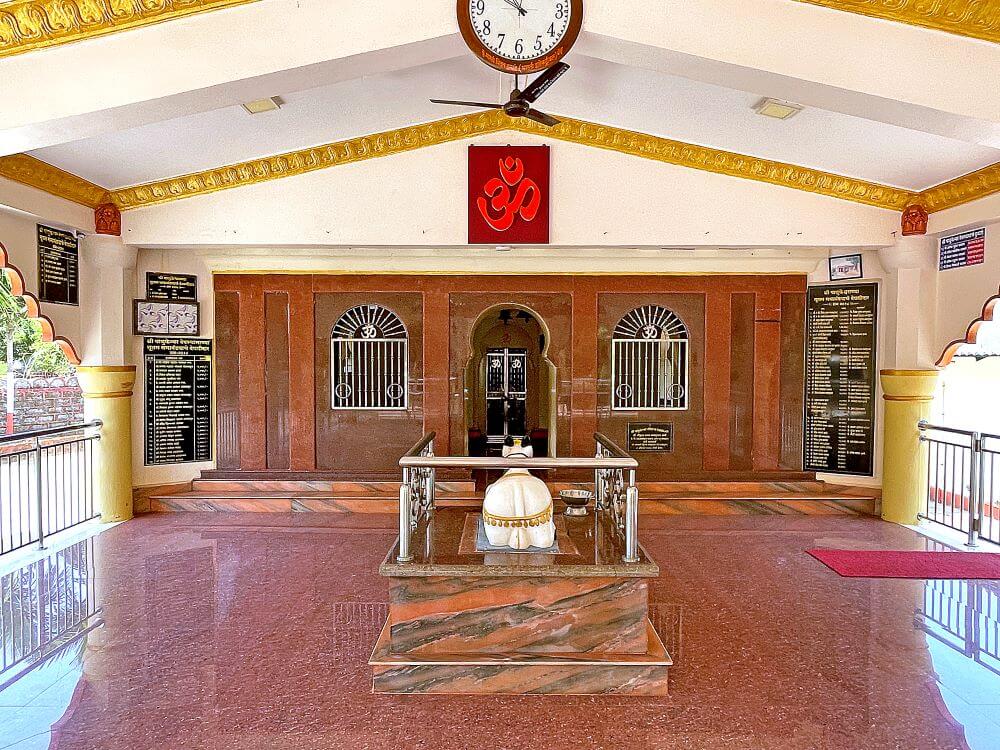
In front of the temple stands a Deepmal (lamp pillar), and next to it is a Tulsi Vrindavan. The temple consists of a Darshan Mandap, Sabha Mandap, Antarala, and Garbhagriha. The Darshan Mandap and Sabha Mandap are open-style structures. All the pillars here are connected to each other at the top by arched carvings. In the center of the Sabha Mandap, there is an idol of Nandi carved from a single stone on a marble pedestal. There are १४ pillars in the walls of the Sabha Mandap, with Ganesha idols carved at the top of each. In the Antarala, to the right of the entrance to the Garbhagriha, is the place for Lord Ganesha, and to the left is the place for Lord Shriram. A unique feature of the Ganesha idol here is that it holds a rosary (Japamala) in one hand. The Garbhagriha of the temple is about ३.५ feet lower than the Antarala. Inside, there is a beautiful Shiva Linga made of Shaligram stone. In front of this Linga is an idol of Goddess Parvati. The Garbhagriha is topped with an octagonal Shikhara (spire) crowned with a pinnacle.
Behind the temple, adjacent to the seashore, is a large fresh-water pond built of stone. A unique feature is that despite being right next to the high-tide line of the sea, the water in this pond remains fresh. The pond is divided into two parts: Aruna and Varuna. The design of the pond allows one side to be used by humans, while the other side is accessible for animals to drink water. This pond was built in १७५३ by a person named Vaijnath Bhat Sharangpani (Khare). Records indicate that he also built the well and the Dharmashala (pilgrims’ rest house) near the temple. There is a path from the temple fortification leading to the pond and the beach.
The Mahashivratri festival is celebrated on a grand scale at the temple. During this time, devotees line up for Darshan starting from the previous day. There is also a large crowd of devotees on Shravani Mondays and Tripuri Purnima.
This sacred temple stands as a testament to deep spiritual devotion, ancient architectural grandeur, and rich local cultural traditions.
The sanctum sanctorum houses the divine idol consecrated according to ancient Vedic traditions, surrounded by serene courtyards and traditional temple architecture.
Navratri, Maha Shivratri, Annual Temple Jatra & Deepotsav
Compare and book flights, secure top-rated local hotels near the temple, hire reliable guides, and rent cars instantly.
Extend your pilgrimage by visiting other highly sacred temples located nearby.


Add ₹999 more to unlock FREE SHIPPING!
Your sacred cart is currently empty.
Shop Photo FramesFill in your delivery details below to place your order.
Add comment