
Add ₹999 more to unlock FREE SHIPPING!
Your sacred cart is currently empty.
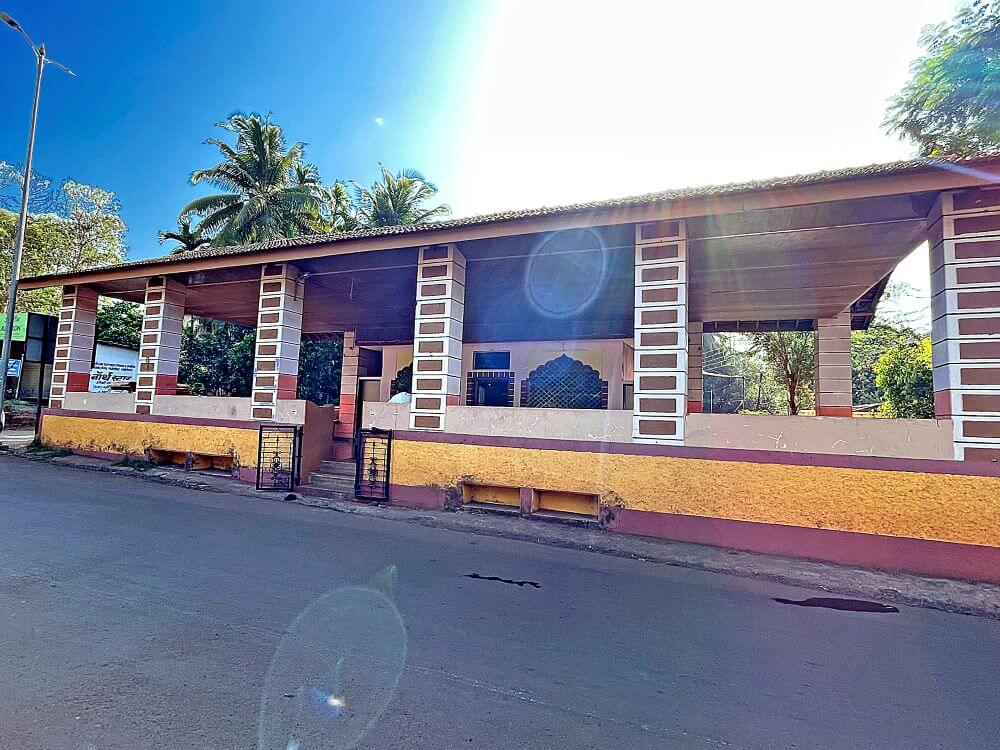
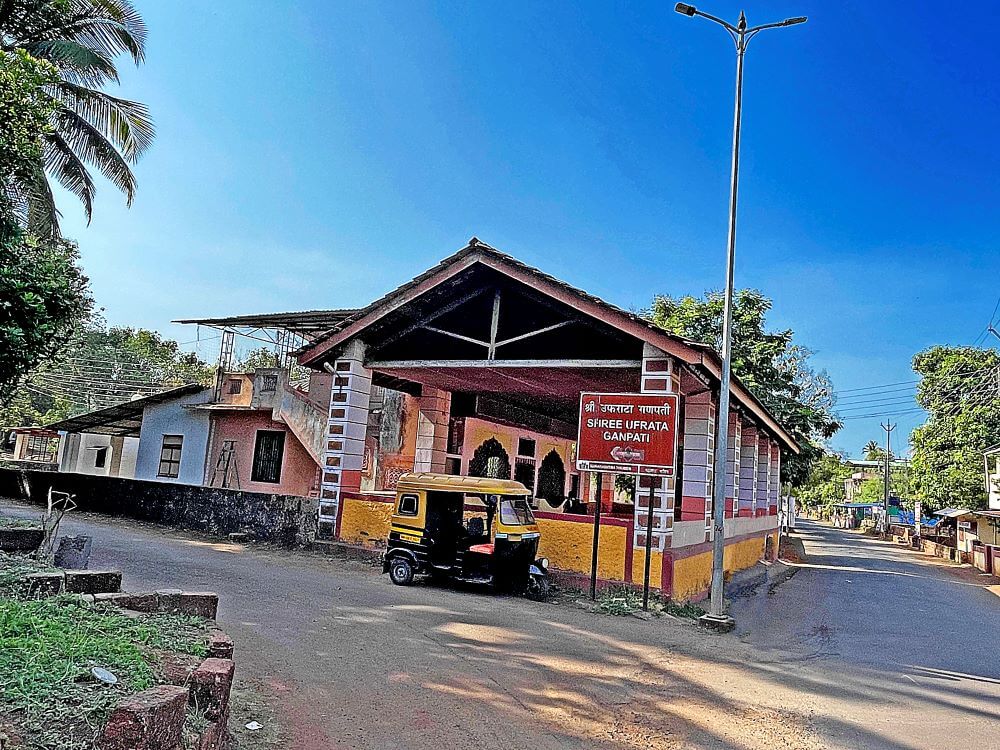
Shop Photo FramesIn the Guhagar taluka of Ratnagiri district, known as the land of gods in Konkan, there are many places of worship for Lord Ganesha. Among these, the Dashabhuja Ganpati Temple in Hedvi, the Ganpati Temple in Ashtavane, and the Upharata Ganpati situated in the central part of Guhagar are famous. While all other temples in Guhagar face east, only the Upharata Ganpati Temple faces west. It is said that Lord Ganesha changed His direction to avert a crisis looming over the village, which is why this deity came to be known as Upharata (the one who turned around).
The legend of the temple states that about 400 years ago, the sea suddenly became turbulent. A dance of massive waves began, and these waves started moving away from the shore toward the village of Guhagar. A fear arose that the village would be submerged. Villagers left their homes and fled in every direction to save their lives. At such a time, a devotee of Lord Ganesha from the Khare family went to the temple and prayed to the Lord, “Save Guhagar from this calamity.” At that time, the Ganpati idol was facing east, meaning it was seated with its back to the sea, but hearing the fervent call of the devotee, He turned back toward the west. He turned His face toward the sea and calmed the turbulent waters. Within a short time, the great danger to Guhagar was averted. Since then, this Ganpati became west-facing, and because He sat facing the sea, He was named Upharata Ganpati. Even today, this Ganpati is the family deity (Kuldaivat) of many Khare families here.
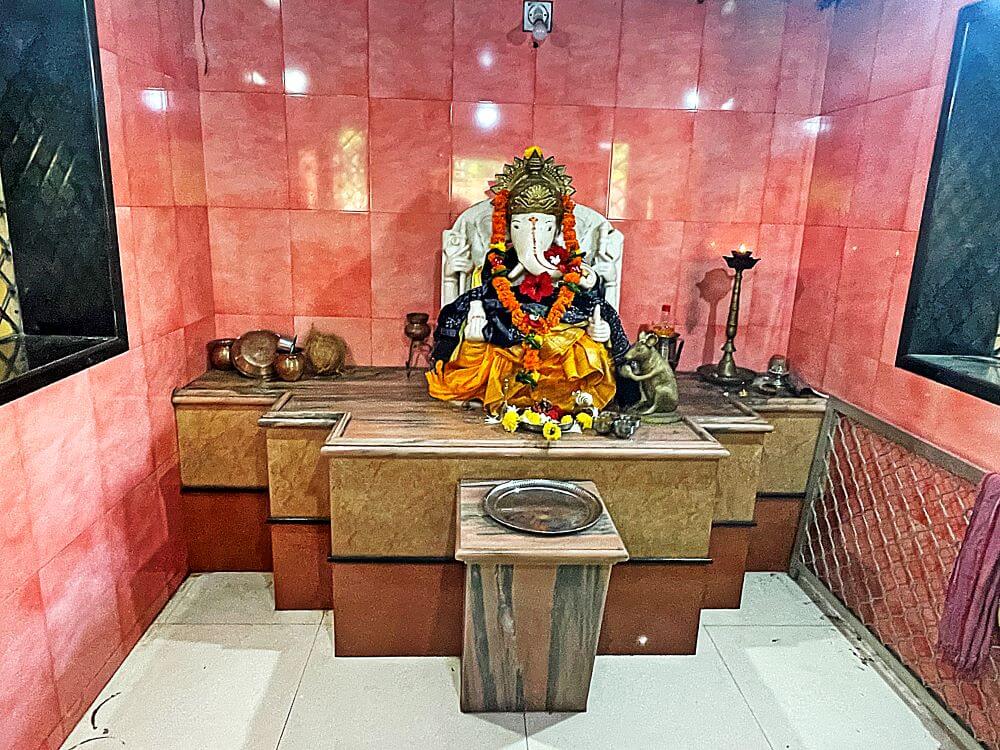
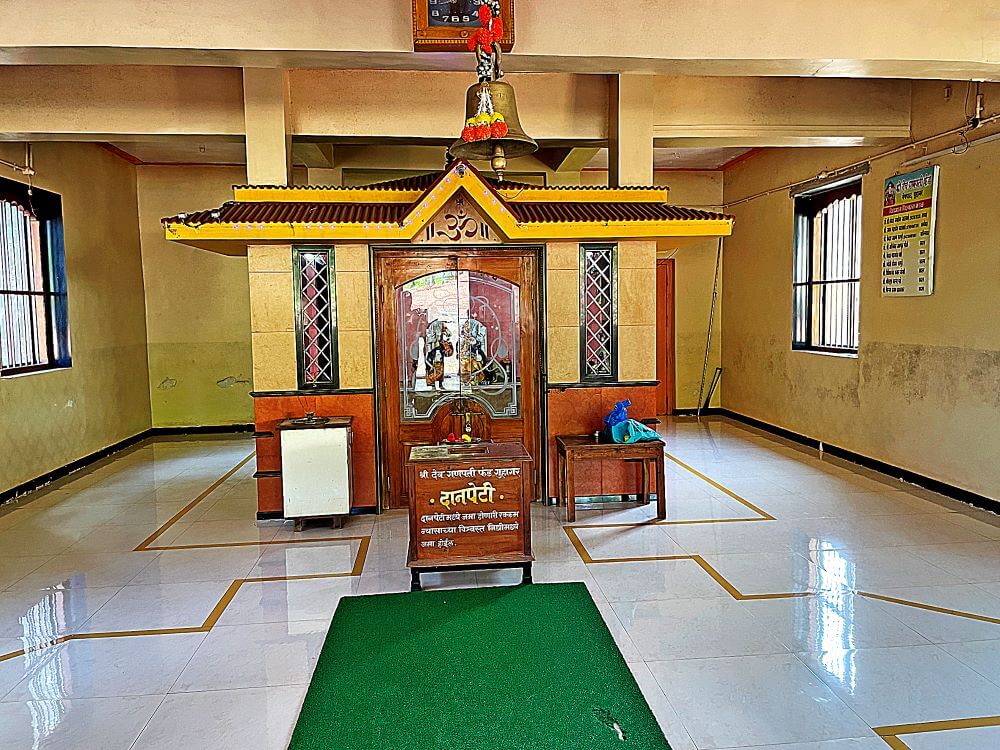
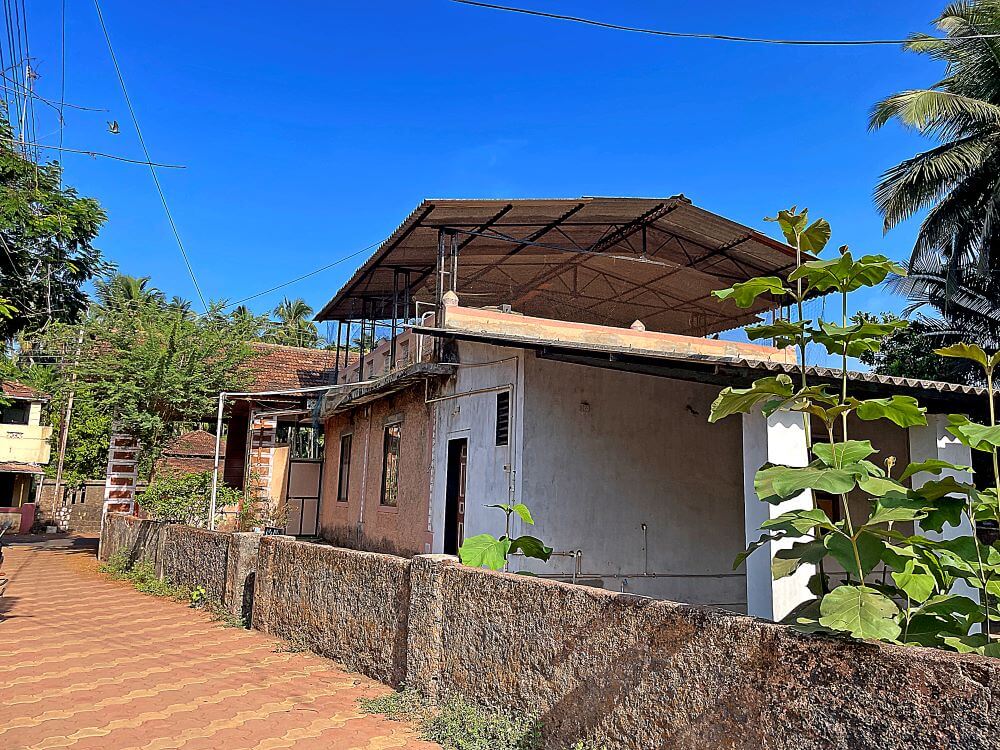
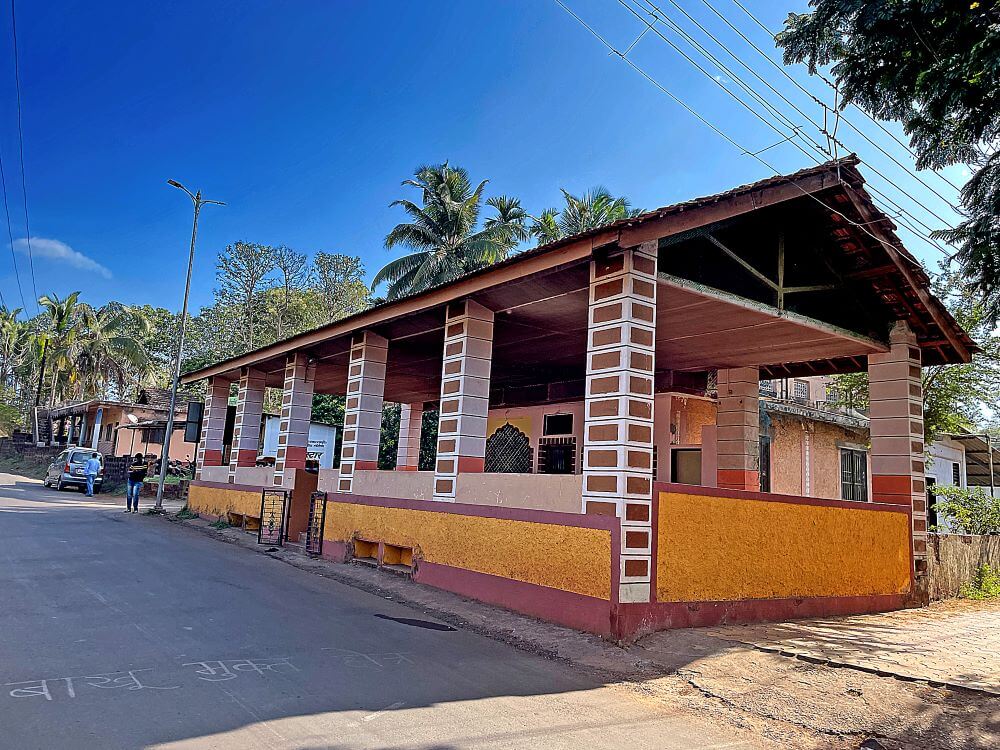
According to the Vyadeshwar Mahatmya manuscript written in 1637, when Shridhar established this village, he also installed this Ganpati, and it was considered a Siddhapitha at that time. After the renovations carried out in 1978-79 and 2008, the temple attained its current form. The tiled temple structure consists of an open assembly hall (Sabhamandap), a main assembly hall, and the sanctum sanctorum (Garbhagriha). In the open assembly hall, there are railings on all three sides for devotees to sit. In the main assembly hall, the sanctum sanctorum has been built in the center, leaving space for circumambulation (Pradakshina). The white, two-and-a-half-foot-tall Ganesha idol is placed on a three-foot-high marble pedestal in the sanctum. The idol has a crown on its head, the trunk is turned to the left, and there is a serpent-thread (Nagasutra) around the stomach. In one of the right hands of the four-armed idol is a trident (Trishul), and in the other is a Modak. In one of the left hands is an axe (Parshu), and in the other is a broken tusk. There is a garland of Rudraksha around the neck and the mouse (Mushakraj) at the feet.
It is said that during the early period of Muslim rule, this idol was hidden in the sand. After the turbulent times ended, around the year 1600, the idol was unearthed and reinstalled. According to another legend, the Ganesha idol was found in the sea by fishermen. Thereafter, the villagers installed this idol on the Guhagar beach. Devotees believe that this Ganpati fulfills their vows. A festival is held here for three days from the third to the fifth day of the month of Magh. The festival includes programs like Kirtan, a play, and a Mahaprasad. The arrangements for the temple’s worship are managed by the Khare family. During the Ganesh Utsav, the Khare family does not install a clay Ganesha idol; instead, they worship a brass idol and a Ganesha stone (Ganesha Gotya) from the Narmada River.
Apart from the Upharata Ganpati Temple, other famous shrines in Guhagar include Vyadeshwar, Velneshwar, and the Durgadevi Temple. Along with its religious significance, Guhagar is also famous as a tourist destination in Konkan. Coconut and areca nut orchards, casuarina forests, a long, clean, and beautiful beach, the Gopalgad Anjanvel Fort, as well as the ancient stone wall in the sea near Velneshwar and the Bamanghal in Hedvi are important places from a tourism perspective.
This sacred temple stands as a testament to deep spiritual devotion, ancient architectural grandeur, and rich local cultural traditions.
The sanctum sanctorum houses the divine idol consecrated according to ancient Vedic traditions, surrounded by serene courtyards and traditional temple architecture.
Navratri, Maha Shivratri, Annual Temple Jatra & Deepotsav
Compare and book flights, secure top-rated local hotels near the temple, hire reliable guides, and rent cars instantly.
Extend your pilgrimage by visiting other highly sacred temples located nearby.


Add ₹999 more to unlock FREE SHIPPING!
Your sacred cart is currently empty.
Shop Photo FramesFill in your delivery details below to place your order.
Add comment