
Add ₹999 more to unlock FREE SHIPPING!
Your sacred cart is currently empty.
Shop Photo FramesThe Veleshwar Temple, located near Tamastirth in Ladghar village of Dapoli taluka, is one of the ancient and renowned Shiva temples in the Konkan region. Situated on the seashore, this Pandava-era temple is famous for Lord Veleshwar, who is believed to cure children suffering from ‘Vela’ (a condition where the limbs and body become thin while the abdomen swells). Devotees have deep faith that by consuming the sacred water (Tirth) from this temple, children suffering from this ailment are restored to health. It is because the deity cures ‘Vela’ that he has been named Veleshwar.
The legend of the temple states that the land where the temple stands on the seashore was once an open field covered with thick grass. A cowherd from the village used to bring his cattle here to graze. One of the cows in the village would often wander away and follow the herd. After this continued for many days, the cowherd kept a watch on her. He noticed that every day, the cow would release her milk over a stone in the grass and then depart near a rock in the nearby sea. He informed the owner of the cow about this. When the owner inspected the spot, he discovered a Shiva Linga there. Subsequently, a small temple was built around this Linga.
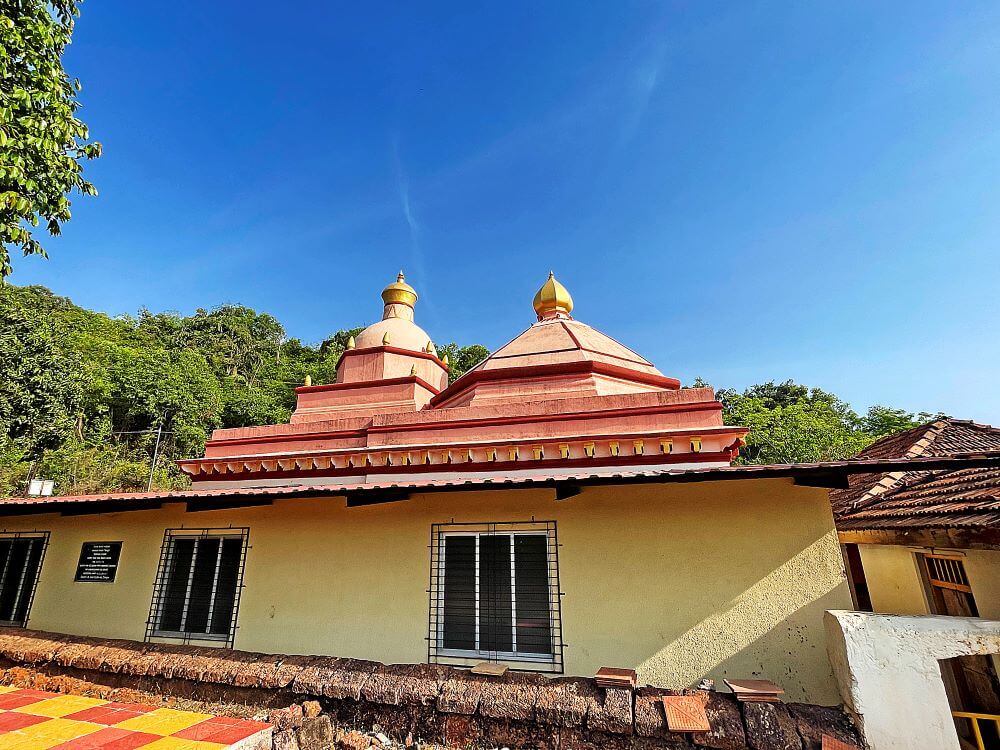
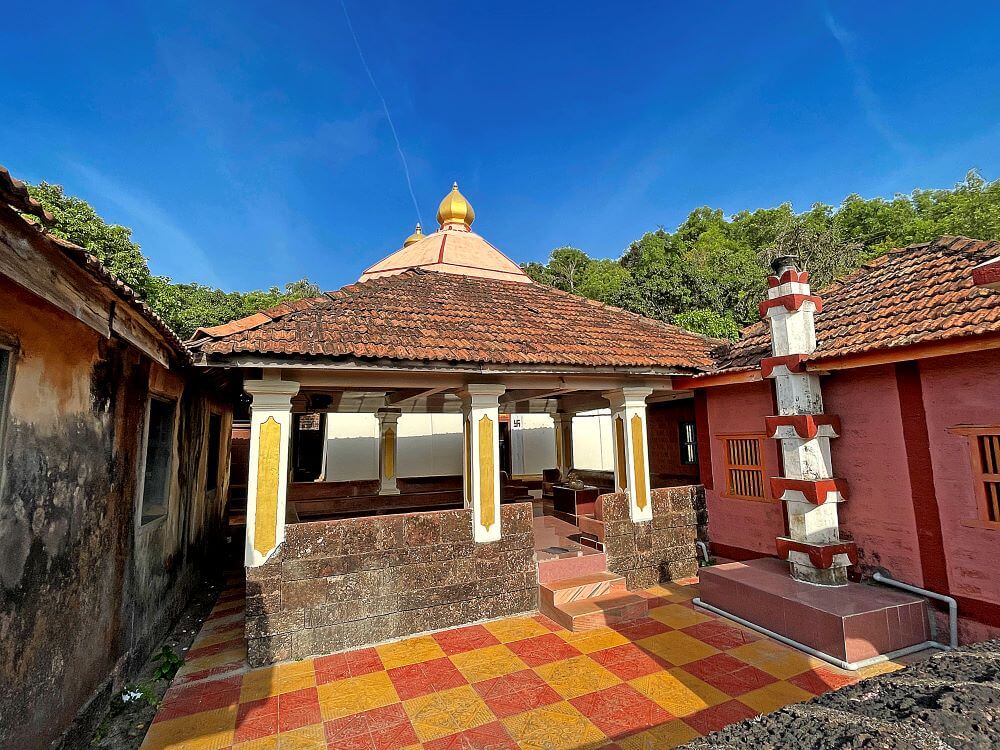
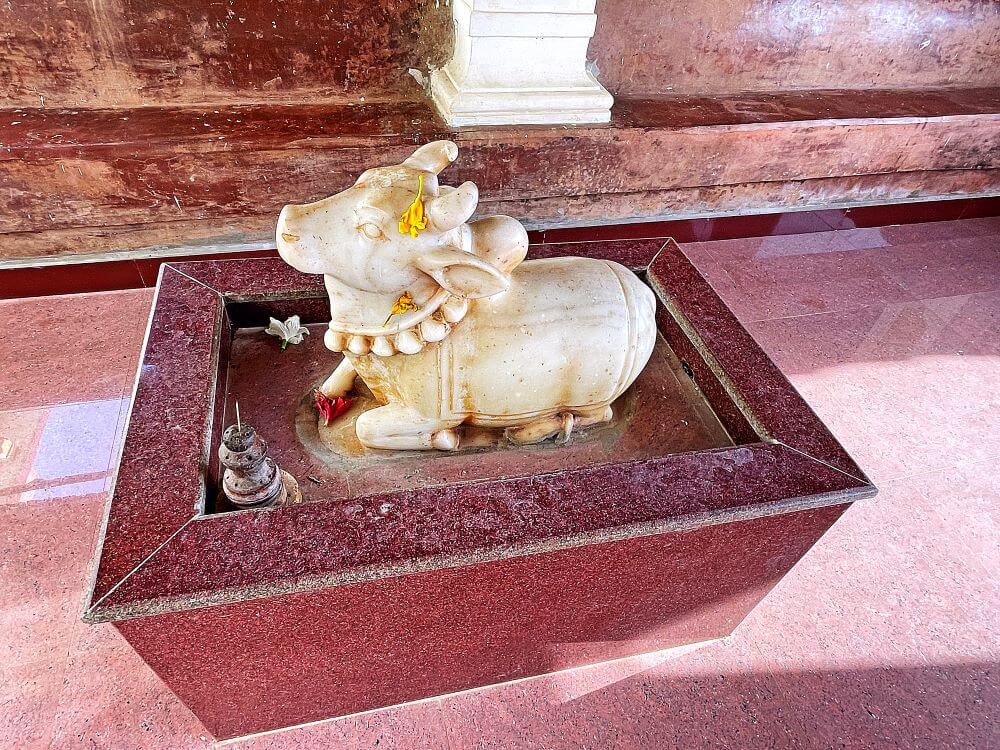
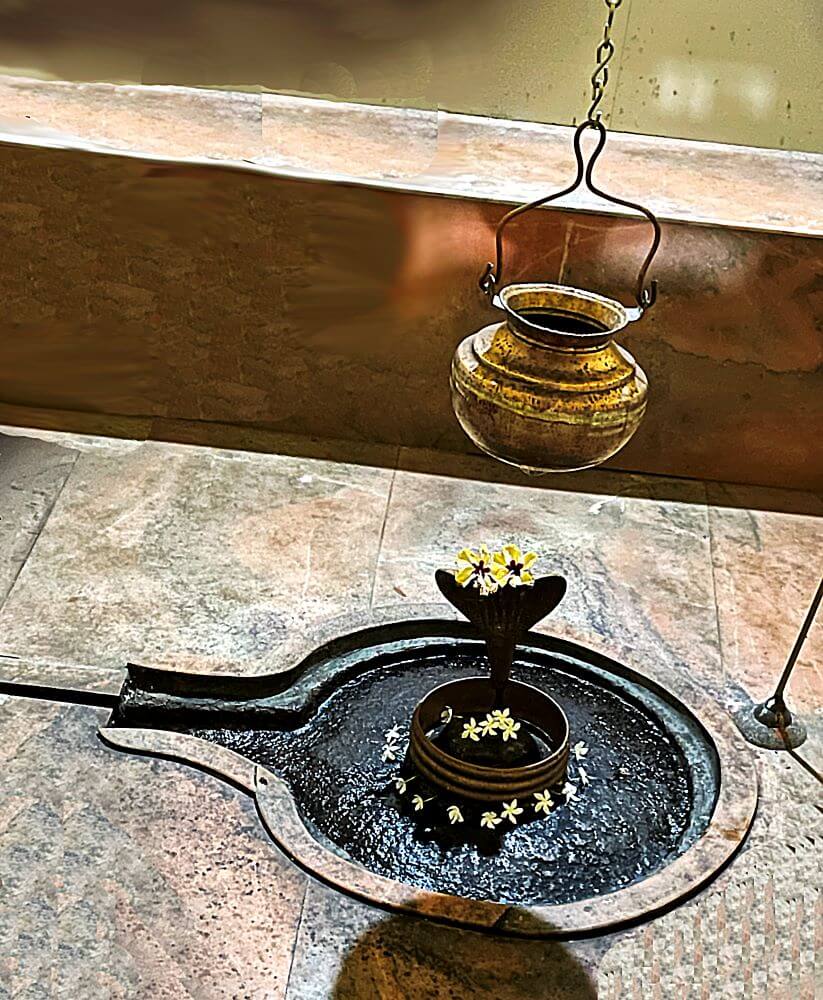
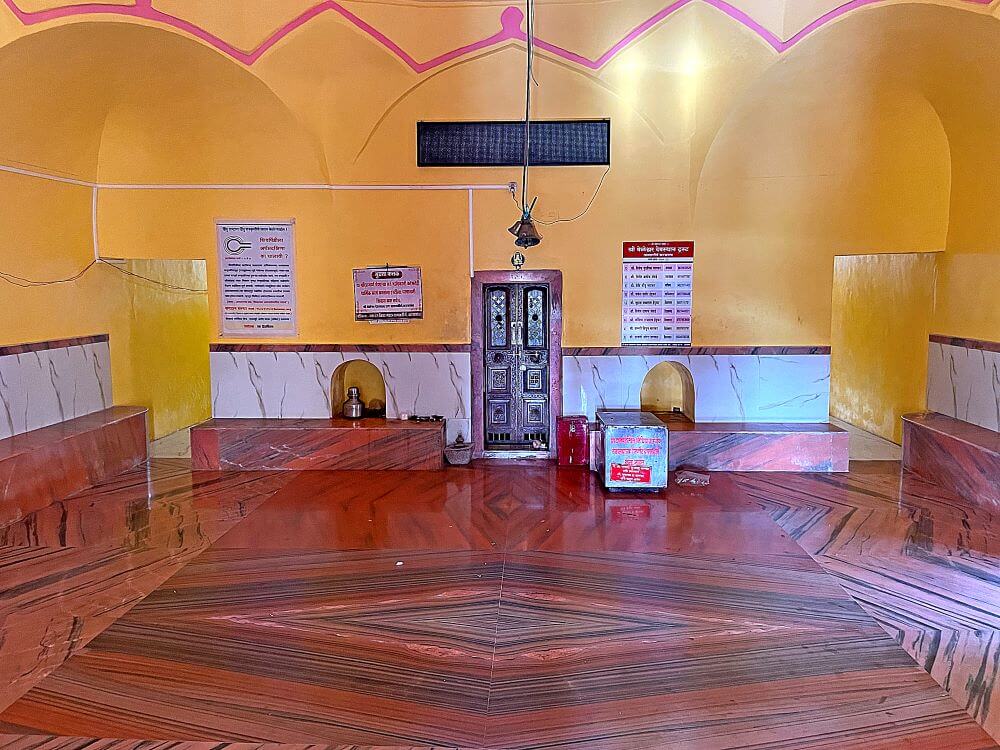
The Ladghar beach is a favorite destination for tourists. It is the only beach in Maharashtra that appears colorful. Because the sand there is reddish in color, the water at the shore appears reddish. Hence, it is called ‘Tamastirth’. The Veleshwar Temple adjacent to this beach is believed to be from the Pandava era. The current structure of the temple is said to date back to the Peshwa period. The temple is located right by the road in Veleshwar village on the Dapoli-Burondi route. The temple has been receiving a royal grant (Sanad) since the Peshwa era. The entrance and the fortification wall made of laterite stone appear to have been reconstructed recently. Near the small entrance is a Nagarkhana, and beside it stands a Deepastambha (lamp pillar). At the base of the Deepastambha, there is a small Shiva Linga and an idol of Nandi. The temple is structured with a Sabha Mandap (assembly hall), Antaral (vestibule), and Garbhagriha (sanctum sanctorum). The Sabha Mandap is tiled, and on one of its platforms, there is a marble Nandi. The platform features intricate carvings. There is stone seating in the Sabha Mandap for devotees. The Antaral and Garbhagriha are situated at a slightly higher level than the Sabha Mandap. A space has been provided for circumambulation (Pradakshina) from the Antaral. The Garbhagriha houses an intact Shiva Linga made of black stone. Devotees believe that if children suffering from ‘Vela’ are brought to the temple and given the sacred water to drink, they are cured. Many parents bring such children to this temple.
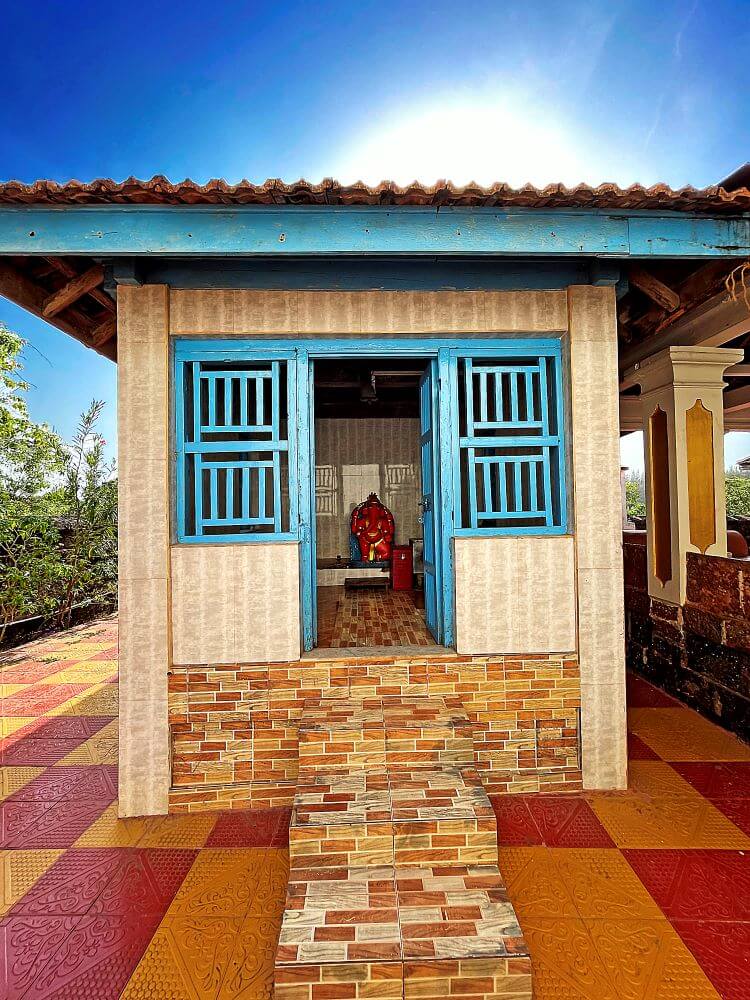
In the temple premises, there is a temple of Bal Ganesha. It houses a standing idol of Bal Ganesha smeared with vermilion. Nearby is a Maruti temple as well. Both these temples have tiled roofs. Besides these temples, there is an ancient and famous Dattatreya Temple adjacent to Ladghar beach. The legend of this temple is that a Dattatreya devotee from Ladghar village named Pandurang More found Dattatreya Padukas (footprints) at the base of an Audumbar tree on a hill north of the village, following a vision in his dream. Those Padukas were installed here, and over time, a temple was built.
Next to the Dattatreya Temple is the shrine of Kalbhairav. The legend of this temple is that in ancient times, the area around the Dattatreya Temple was a dense forest with many wild animals. Once, a villager who had come for the festival at the Dattatreya Temple was killed by a tiger. As a remedy, the villagers built a temple here for Shri Kalbhairav, the commander of the gods, and started the tradition of offering a rooster and a goat as sacrifice (Naivedya) during the festival. The festival of Shri Kalbhairav is celebrated elsewhere on Kalbhairav Jayanti in the month of November; however, in Ladghar village, it is celebrated in conjunction with Dattatreya Jayanti. This festival is celebrated one day before the birth of Dattatreya. Now, while other traditions are maintained, the practice of animal sacrifice has been permanently stopped.
Two days before Dattatreya Jayanti, a procession (Wari) for alms departs from here according to Dattatreya tradition. For two days, this procession visits the villages of Burondi, Karajgaon, Lalbag, Ladghar, and Karde. On the second day of the procession, vows are made to Kalbhairav, and Mahaprasad is distributed to the visiting devotees. The next day is the birth anniversary, during which programs like Bhajans and Kirtans are held in the temple from 8:30 PM until dawn. On the day after the birth anniversary, the palanquin of Dattatreya leaves the temple, visits the Veleshwar Temple and Chandika Temple at Tamastirth, and returns to the temple around the afternoon. A large fair is held here for three days starting from the day of the palanquin procession. At that time, the Ladghar beach is crowded with devotees.
This sacred temple stands as a testament to deep spiritual devotion, ancient architectural grandeur, and rich local cultural traditions.
The sanctum sanctorum houses the divine idol consecrated according to ancient Vedic traditions, surrounded by serene courtyards and traditional temple architecture.
Navratri, Maha Shivratri, Annual Temple Jatra & Deepotsav
Compare and book flights, secure top-rated local hotels near the temple, hire reliable guides, and rent cars instantly.
Extend your pilgrimage by visiting other highly sacred temples located nearby.


Add ₹999 more to unlock FREE SHIPPING!
Your sacred cart is currently empty.
Shop Photo FramesFill in your delivery details below to place your order.
Add comment