
Add ₹999 more to unlock FREE SHIPPING!
Your sacred cart is currently empty.
Shop Photo FramesThane, known as ‘Shristhanak’, was an ancient city that was once a city of temples. However, Portuguese invaders demolished many temples here during their reign. The Marathi army, under the leadership of Shrimant Chimaji Appa, put an end to these religiously extremist Portuguese. Thereafter, many temples were built here. The Kopineshwar Temple, the presiding deity of Thane, was renovated. One of the temples that was newly built here during the Peshwa era is the Vitthal Mandir near the Kopineshwar Temple.
This temple is owned by the Pandit family, who were the then-priests (Upadhye) of Thane. According to historical information, many people in Thane migrated due to the religious persecution by the Portuguese. This included the Pandit family, who were the then-priests of Thane. The Vasai campaign was launched under the leadership of Shrimant Chimaji Appa against this cruel Portuguese rule . In the year 1739, the Peshwa’s army captured areas like Vasai, Kalyan, and Thane, and drove the Portuguese away. Like many others who had left, the Pandit family also returned. At that time, between the years 1740 and 1751, the diplomat Vasudev Joshi (Murudkar), who had close ties with the Peshwa family, was the Subhedar of Kalyan. Thane was a part of the Kalyan Subha. During his time, in the year 1748, the Pandit family was granted their priesthood.
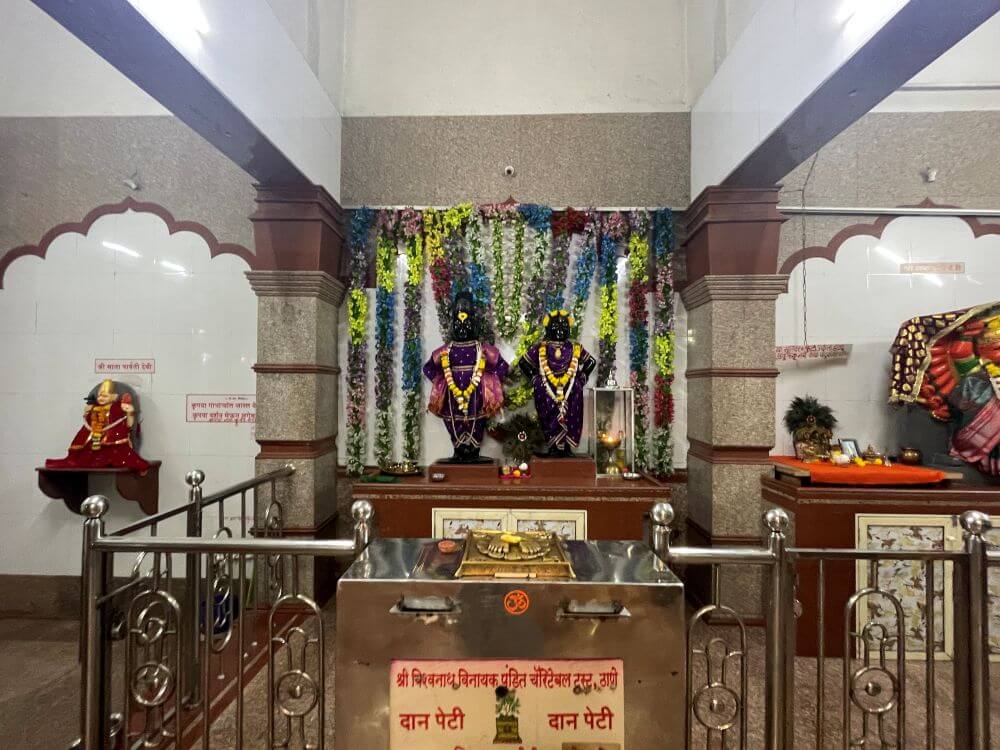
This family owned a piece of land near the lake shore here. They wished to build a Vitthal Mandir there. They were constantly striving for this. Finally, with the help of one of their patrons living in Mumbai, this first Vitthal Mandir in Thane was built in the year 1818. At that time, Vishwanath Vinayak Pandit, who was the chief priest, had invited Vedic scholars (Brahmin-vrinda) from Trimbakeshwar and Wai for the consecration of the idols in this temple. Amidst the chanting of mantras, Vitthal and Rukhumai were duly installed here. Along with the idols of Vitthal and Rukhumai, the Rameshwar Linga and an idol of Ganapati were also enshrined in the temple. The current temple structure has been built through renovations over time.
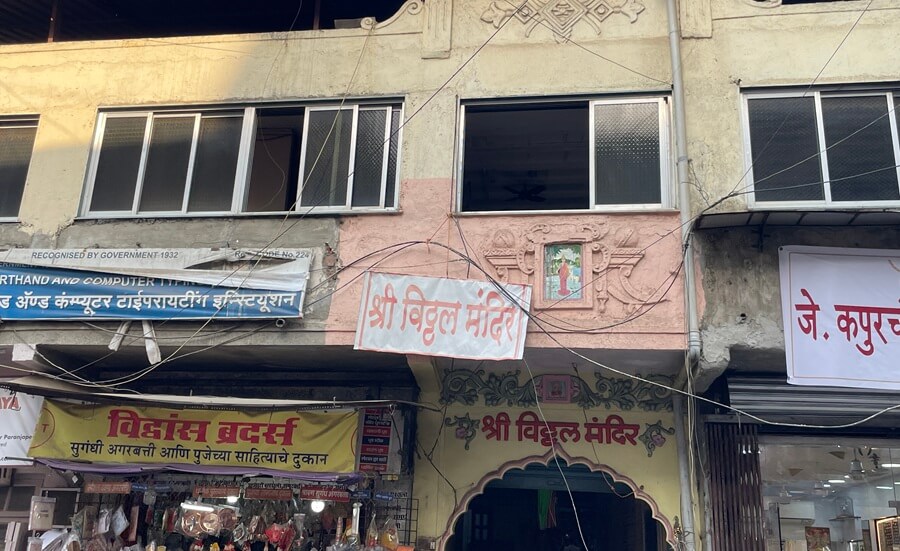
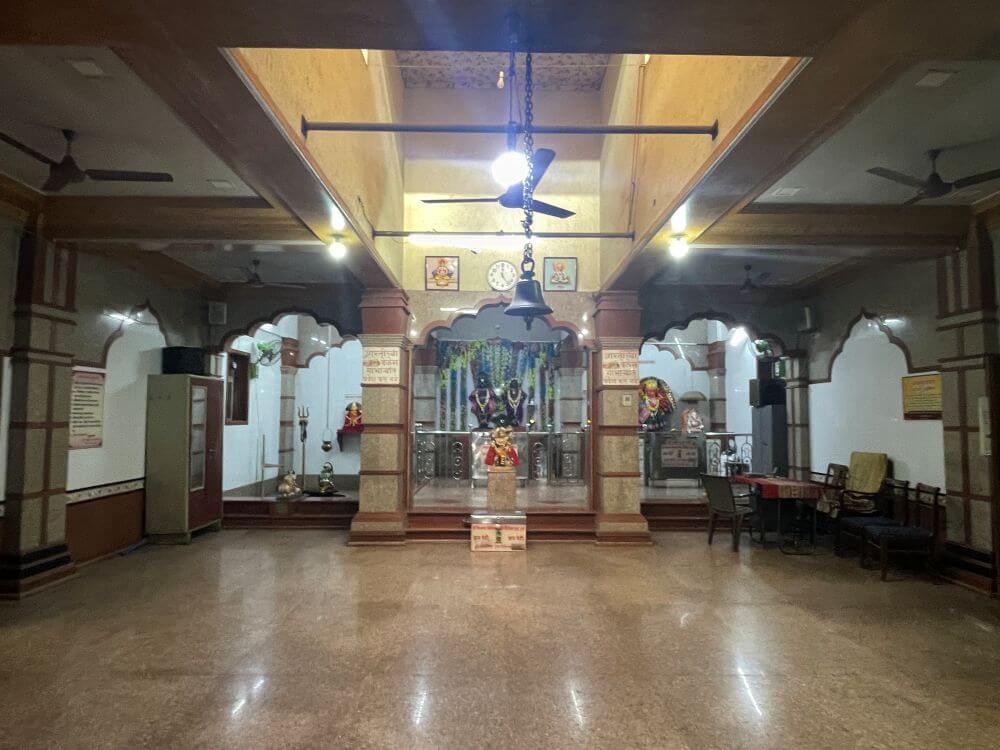
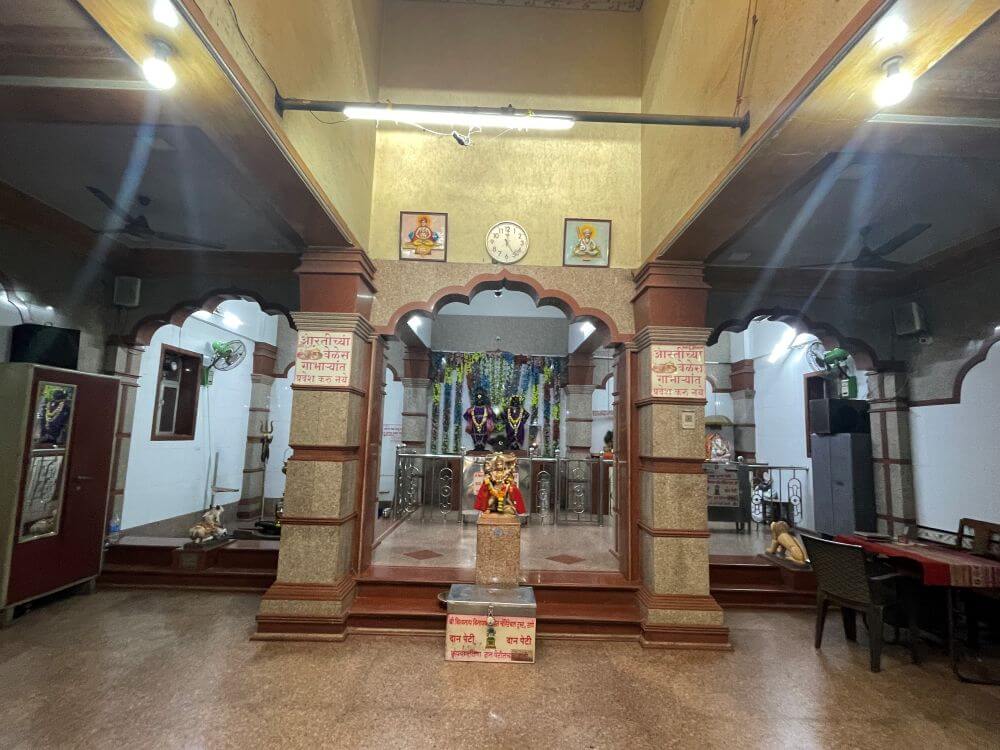
This temple, with a history of 250 years, stands on the road going from Jambhali Naka towards Thane station, very close to the Kopineshwar Temple. The entrance with the temple’s nameplate is visible amidst the crowd of shops. One does not feel from the outside that there is a spacious temple inside, but upon entering, the expanse of this structure is astonishing. This temple is on the ground floor of a two-story building. As soon as one enters through the main narrow door, the door to the temple’s assembly hall (Sabhamandap) is visible. Standing in front of it, one can see the pleasant idols of Vitthal-Rukhumai. The idea that devotees should be able to have Darshan of Vitthal-Rukhumai from the temple entrance itself was present in the original design of the temple. It has been preserved even in the renovation .
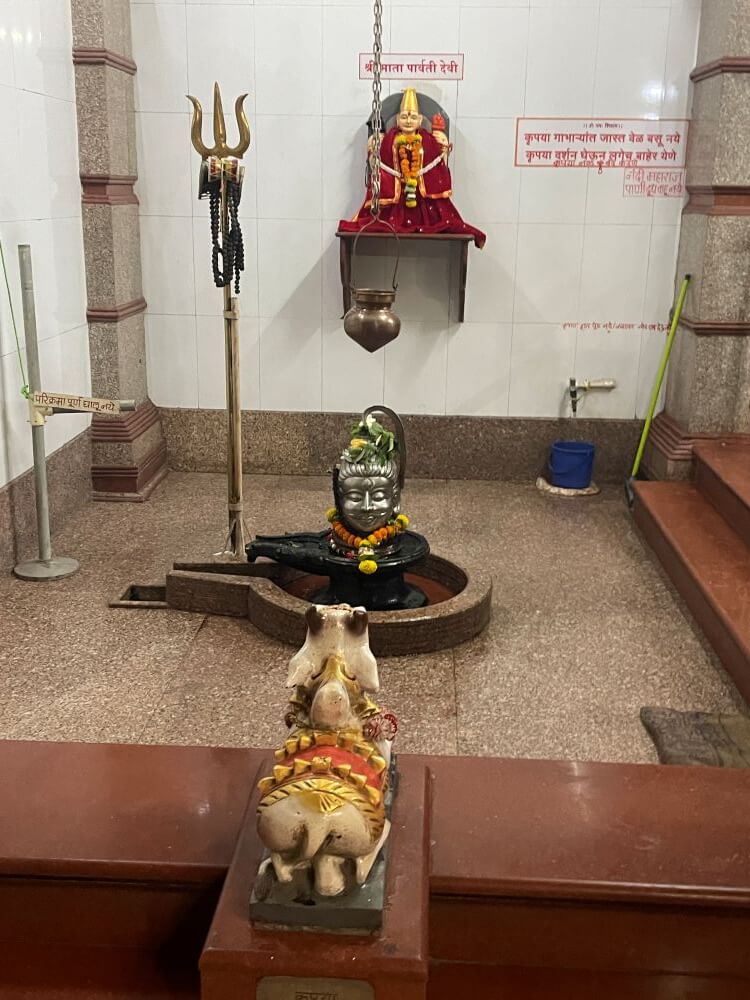
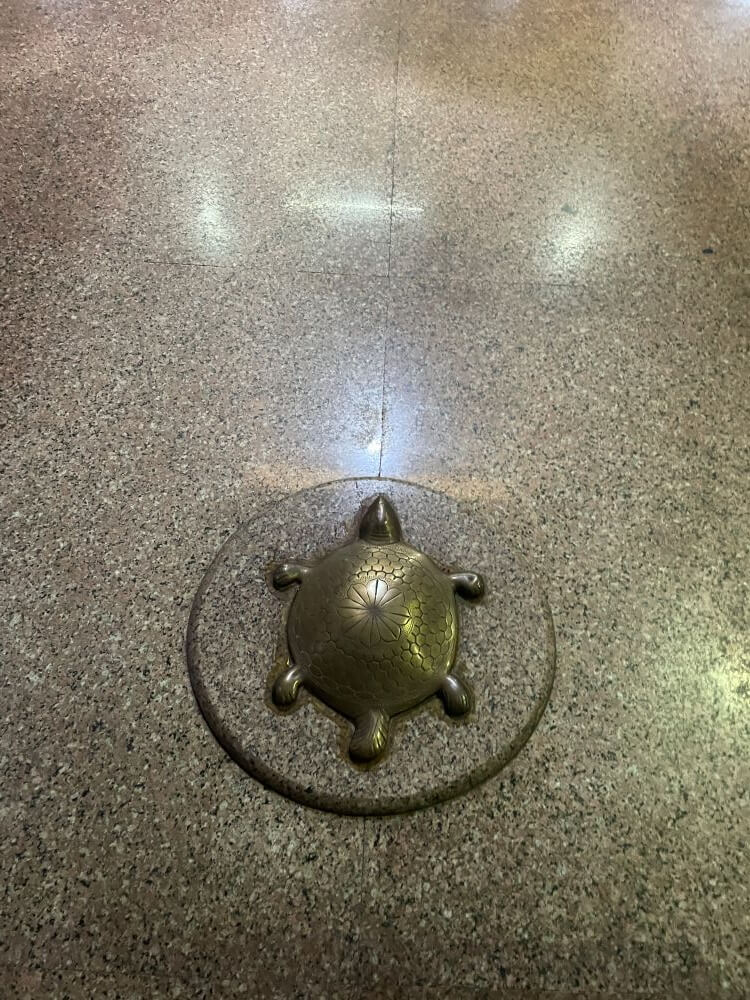
The structure of this temple consists of an assembly hall and an open sanctum (Garbhagriha). There is a small Kurma (tortoise) idol in the assembly hall. Next to the sanctum seen in front are the idols of Garuda and Maruti. On the left side is the Rameshwar Linga. There is a silver mask of Rameshwar on this Shiva Linga. Behind it is an image of Parvati. Nandi is seated in front. On the right side of the sanctum are the idols of Saptashrungi Devi and Ganapati. The idol of Saptashrungi here is a replica of the original idol at Vani. There is a lion idol in front of the Goddess. In the open sanctum of the temple, the idols of Vitthal-Rukhumai are in the center. Dressed in traditional attire, these idols of Vitthal-Rukhumai are decorated in different ways according to Ashadhi and Kartiki Ekadashi and other festivals.
There is a Darshan hall on the upper floor of the temple. It is said that this Darshan hall arrangement was made for women to listen to Kirtans. Along with the temple, this upper floor has also been renovated. The temple is maintained through the ‘Vishwanath Vinayak Trust’, which was established in 1901. Various programs like Akhand Harinam Saptah, Gita Saptah, and Bhagwat Saptah are organized in the temple. A special women’s Kirtan Saptah is also held here. During the Corona period, a food service for the needy was started through this temple. It is still ongoing.
The temple’s Darshan time starts from 6:30 in the morning. Except for the break from 12:30 in the afternoon to 4:00, Darshan can be taken until 9:00 at night. Many activities like the death anniversaries of Saint Namdev Maharaj, Saint Savta Maharaj, and Saint Sena Maharaj, as well as the birth anniversary and Sanjeevan Samadhi ceremony of Saint Dnyaneshwar Maharaj, Saint Tukaram Beej, and Krishnajanmashtami are organized in the temple.
This sacred temple stands as a testament to deep spiritual devotion, ancient architectural grandeur, and rich local cultural traditions.
The sanctum sanctorum houses the divine idol consecrated according to ancient Vedic traditions, surrounded by serene courtyards and traditional temple architecture.
Navratri, Maha Shivratri, Annual Temple Jatra & Deepotsav
Compare and book flights, secure top-rated local hotels near the temple, hire reliable guides, and rent cars instantly.
Extend your pilgrimage by visiting other highly sacred temples located nearby.


Add ₹999 more to unlock FREE SHIPPING!
Your sacred cart is currently empty.
Shop Photo FramesFill in your delivery details below to place your order.
Add comment