
Add ₹999 more to unlock FREE SHIPPING!
Your sacred cart is currently empty.
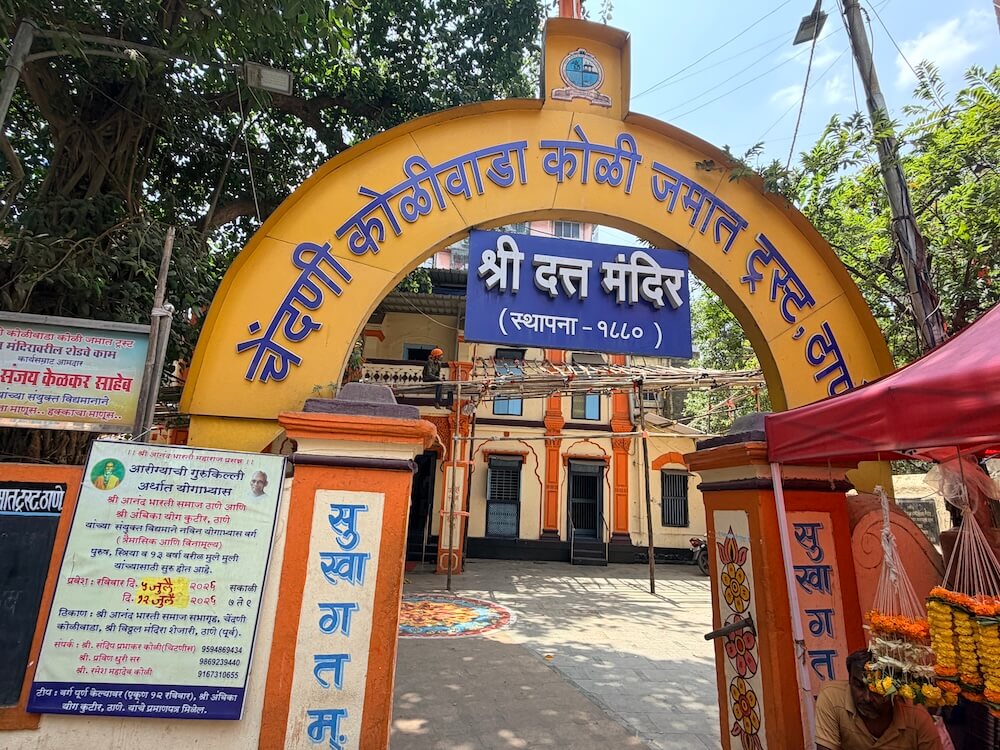
Shop Photo FramesAs you walk from near Thane railway station along the road beside the bustling ST bus depot towards the CIDCO bus stop, you come across Chendani Koliwada, known as Old Thane. Due to the railway station, ST depot, rickshaw stand, and the nearby flower market, this area is always crowded. Amidst this hustle and bustle lies the historic Dattatreya Temple of Thane. In the premises of this temple, which is the revered deity of the countless Koli brethren of Chendani Koliwada, the sacred padukas (footprints) of Swami Samarth of Akkalkot, established by his disciple Anand Bharati Maharaj, are also enshrined. Because of this, the temple has also gained significant importance for devotees of Swami.
Chendani is one of the oldest Koliwadas in Thane. The Dattatreya Temple here, established about one hundred and fifty years ago during the British colonial era, was inspired by Anand Bharati Maharaj. Anand Bharati’s name in his early life was Pandurang Nakhwa. He was born in 1831 into a Koli family with a background in the Gulam Nakhwa lineage. He became a disciple of Swami Samarth of Akkalkot. His family’s traditional occupation was fishing, which required him to go out to sea regularly for fishing. It is said that during one such journey, he experienced a direct miracle of Swami Samarth. The legend regarding this is that once, Pandurang Nakhwa had gone deep into the sea for fishing. At that moment, the sea suddenly surged, and water began to enter their ship.
Pandurang Nakhwa, the captain of a ship, remembered Swami Samarth with all his heart during such a dire crisis. As soon as he called out to Swami, his boat, which was drifting amidst massive waves, became completely steady within moments. Believing that it was only due to Swami’s grace that he and his sailors were saved, Pandurang Nakhwa decided to dedicate the rest of his life to the lotus feet of Swami. Following this, he went to Akkalkot for Swami’s darshan. There, Swami was immersed in devotional chanting with his devotees. Upon seeing him, Pandurang Nakhwa ran and placed his head at Swami’s feet. At that moment, Swami Samarth lifted him with affection and held him close to his chest. He said, “Oh son of a fisherman, why are you so afraid of this ordinary ocean? You have to cross the ocean of worldly existence (Bhavsagar). Ye anand lev aur bharti ho jav.” It is said that this incident took place before Swami Samarth’s avatar samapti, that is, before the year 1878 A.D.
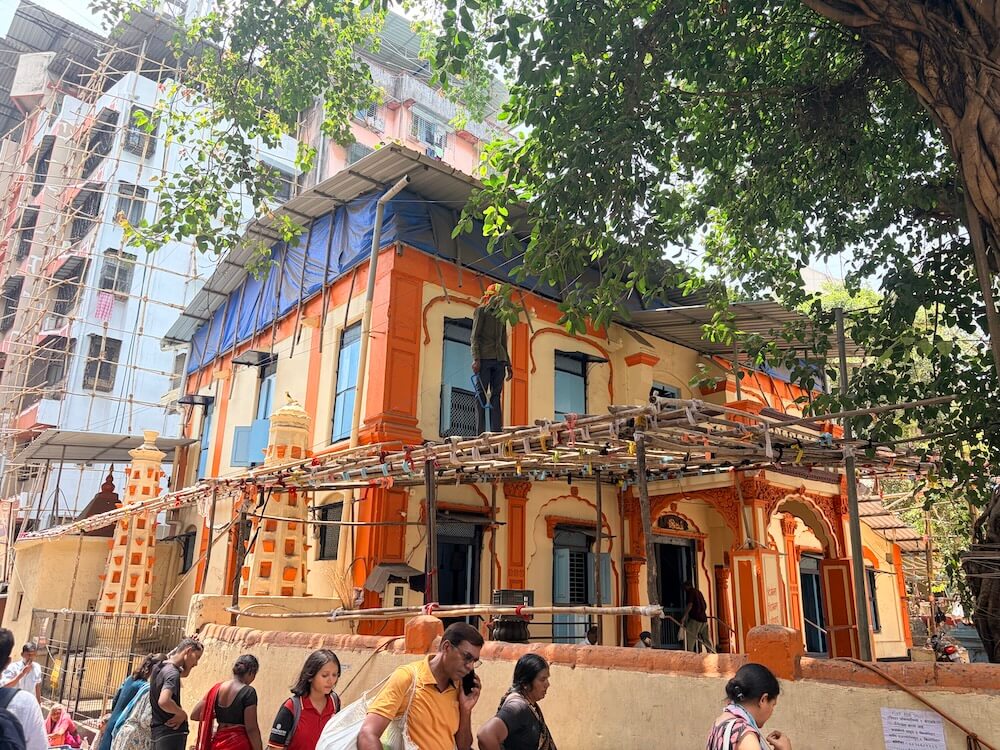
Following the command of Swami Samarth, Pandurang Nakhwa embraced Sannyasa. The British had introduced railway services here in 1853. On one side of the railway line in Thane was the Chendani Koliwada, while the city of Thane had expanded on the other. Pandurang Nakhwa built a simple hut under an Audumbar tree in this Chendani and began to engage in continuous bhajan and namasmaran there. Initially, the local residents used to call him ‘Pandubaba’. Over time, he came to be known as ‘Anand Bharati Maharaj’. He would regularly undertake the pilgrimage to Akkalkot along with his large group of disciples. Later, due to his advancing age, traveling became difficult for him. Therefore, his disciples insisted on installing the Swami’s Padukas in Thane itself. This request bore fruit, and in the year 1866, the sacred Padukas of the Swami were installed under the very Audumbar tree where Anand Bharati Maharaj resided. This installation took place 12 years before Swami Samarth’s Mahasamadhi. Subsequently, a beautiful temple was built next to this tree. In the year 1880, the idol of Lord Dattatreya was consecrated there. Over the course of time, many improvements were made to this temple. The last major renovation of the temple took place in the year 1921. This temple is considered a prominent spiritual center in Thane that preserves historical heritage.
Near the main entrance of the temple, there are old Banyan and Peepal trees intertwined together. A beautiful stone platform has been built around these trees. Right next to this platform, one can see a clean Tulsi Vrindavan. In this vicinity, the Samadhi Mandir of Kashinath Maharaj, the supreme disciple of Anand Bharati Maharaj, has been constructed. Behind this Samadhi Mandir of Kashinath Maharaj is the temple of the folk deity, Satoba. In earlier times, traditional treatments for snakebites were performed in this Satoba temple.
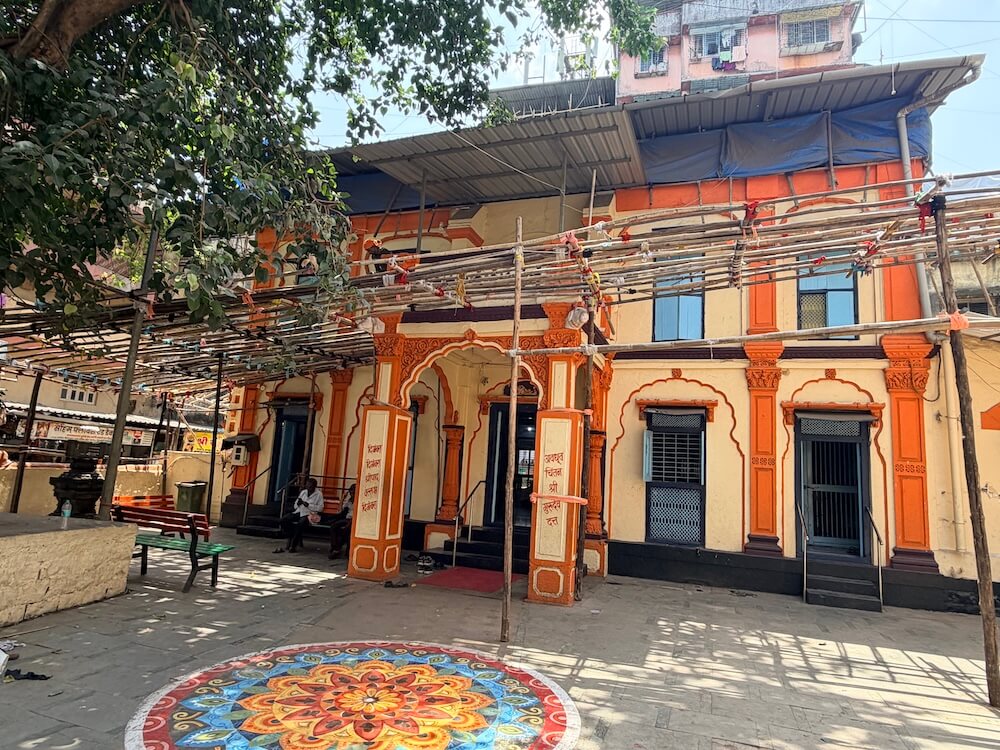
The original Dattatreya temple here is a two-story wooden structure. The ground floor of the temple consists of a spacious assembly hall (sabhamandapa) and the sanctum sanctorum (garbhagriha). Above the assembly hall, there is a second floor designed like a gallery. In earlier times, women would sit here to attend kirtans and religious discourses. The roof of this assembly hall is made of wood and is quite high. The tall spire (shikhara) of the sanctum sanctorum, located within the assembly hall, is seamlessly integrated into this roof. It is rare to find a sanctum sanctorum with such a spire in Maharashtra. The temple has two entrances. One of these doors opens to the left of the idol of Lord Dattatreya in the sanctum sanctorum. The second main door is located directly in front of the idol. On both sides of this main entrance, two tall stone lamp pillars (Deepmalas) have been erected.
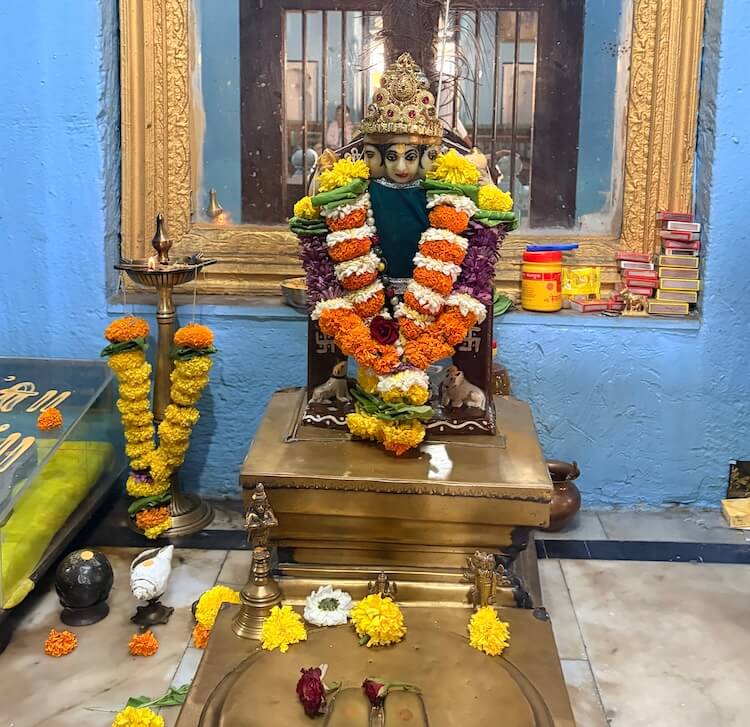
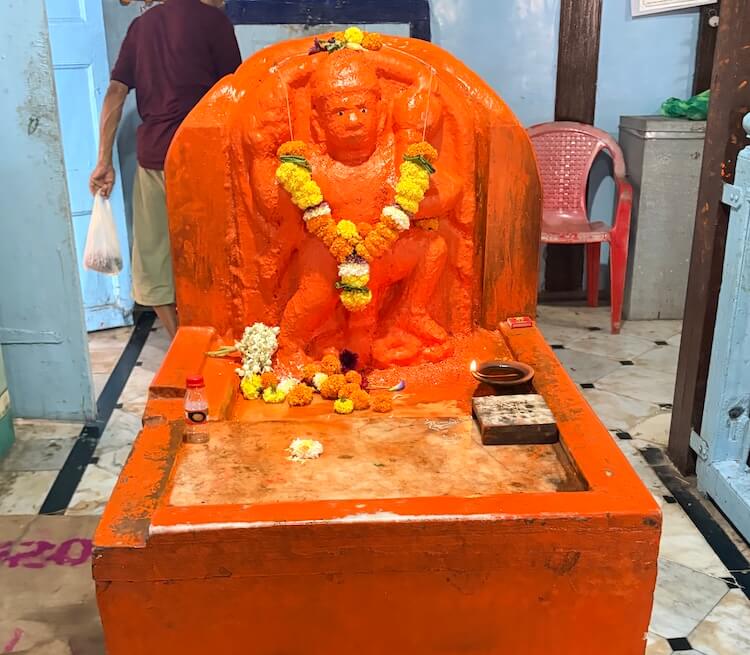
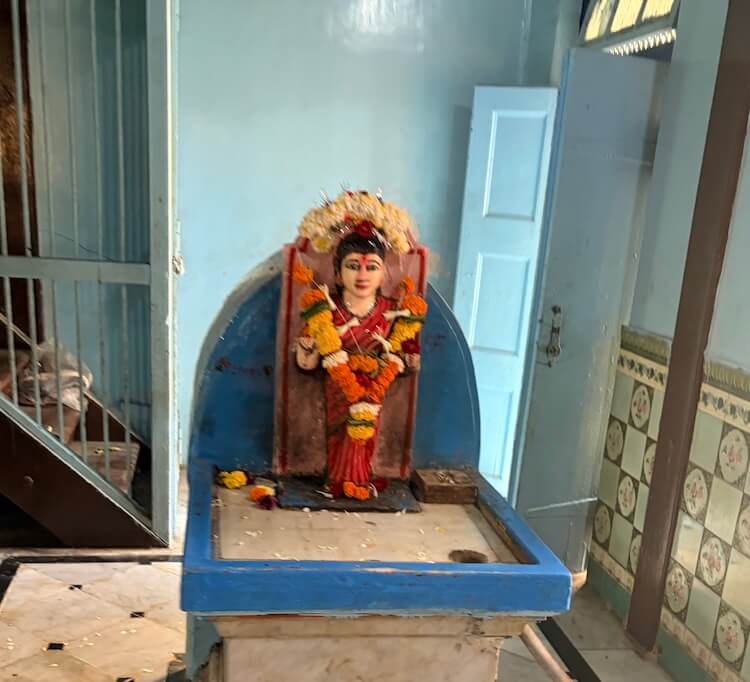
Upon entering the temple through the door on the left, one is immediately greeted by the beautiful idols of Vitthal and Rukhumai. These idols were consecrated in the year 1977. On one side of the sanctum sanctorum (Garbhagriha), an idol of Maruti is installed, and on the other side, an idol of Shitala Devi. Additionally, stone idols of Shankar and Ganpati are also enshrined here. On the front wall of the sanctum, there are marble statues of Akkalkot Swami Samarth on one side and Anand Bharati Maharaj on the other. In the main position within the sanctum, the serene idol of Dattatreya Maharaj is enshrined. Right in front of this idol, the Padukas (footprints) of Swami Samarth are placed. Every year, on the main day of Datta Jayanti, devotees are able to have a close-up darshan of these silver Padukas.
Festivals such as Ashadhi Ekadashi, Datta Jayanti, Nag Panchami, Ram Navami, Gokulashtami, and Hanuman Jayanti are celebrated with great enthusiasm at this temple. Hundreds of Koli brethren and devotees from the Chendani area participate in large numbers in all these festivities. Devotees can have darshan here daily from 6:00 AM to 12:30 PM and from 4:00 PM to 9:00 PM.
This sacred temple stands as a testament to deep spiritual devotion, ancient architectural grandeur, and rich local cultural traditions.
The sanctum sanctorum houses the divine idol consecrated according to ancient Vedic traditions, surrounded by serene courtyards and traditional temple architecture.
Navratri, Maha Shivratri, Annual Temple Jatra & Deepotsav
Compare and book flights, secure top-rated local hotels near the temple, hire reliable guides, and rent cars instantly.
Extend your pilgrimage by visiting other highly sacred temples located nearby.


Add ₹999 more to unlock FREE SHIPPING!
Your sacred cart is currently empty.
Shop Photo FramesFill in your delivery details below to place your order.
Add comment