
Add ₹999 more to unlock FREE SHIPPING!
Your sacred cart is currently empty.
Shop Photo FramesIn a research project conducted some years ago by the Shri Ram Sanskritik Shodh Sansthan, Delhi, across the country, they identified 294 pilgrimage sites bearing specific footprints of Shri Ram from his period of exile. These include locations from Ayodhya to Lanka. According to these records, the Shri Rameshwar Temple located at Patoda in Yeola Taluka is the 155th pilgrimage site. A unique feature of this temple is the belief among devotees that applying the water of the Ganga, which is present in a hidden form near the Shiva Linga, to warts on the body helps in curing them.
The legend of this temple states that in ancient times, this area was known as Dandakaranya. When Shri Ram arrived in this region during his exile, Sage Agastya was performing penance in a cave on the Ankai Fort, near present-day Manmad. While on his way to visit Sage Agastya, Shri Ram stayed at Patoda. Wherever Shri Ram stayed, he would install a Shiva Linga in the evening and perform worship. Similarly, he installed a sand Shiva Linga at Patoda. While the worship was in progress, a person suffering from warts arrived there. Seeing the radiance on Shri Ram’s face, the person felt that he must be a great ascetic. He began to plead with Shri Ram, saying, “I am suffering physical pain due to these warts. Please liberate me from this disease.” Upon Shri Ram saying “Tathastu” (so be it), the person’s warts were immediately cured, and his skin returned to its original state. At that time, the person offered brinjals he had with him as a gift to Shri Ram. Since then, it has been a tradition for devotees to offer brinjals to the deity at this temple.
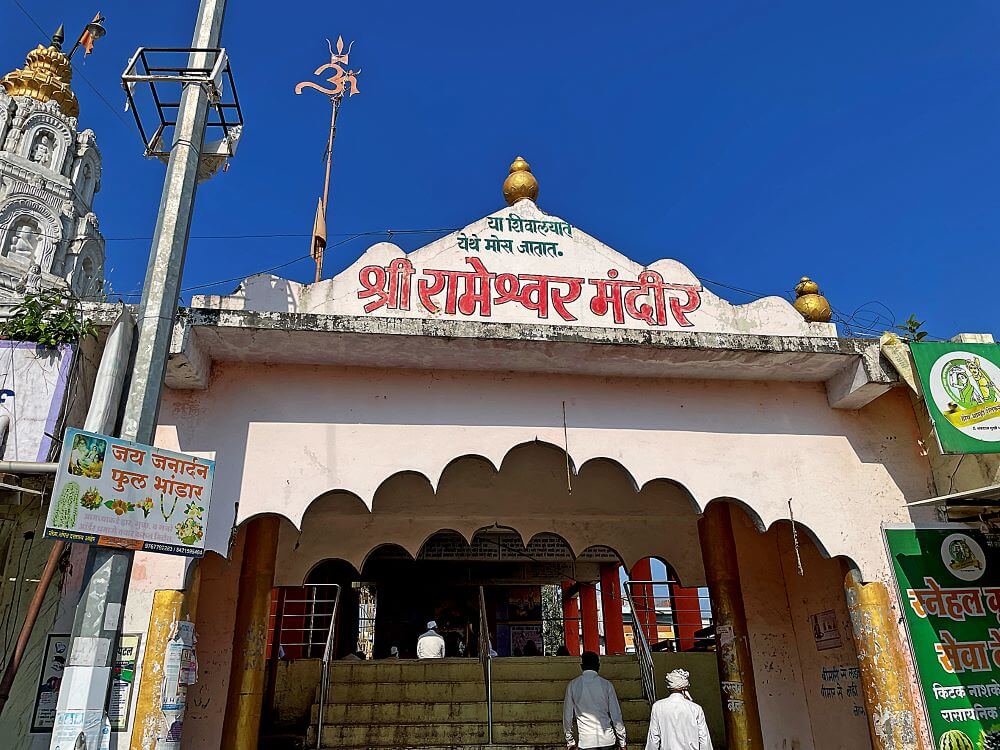
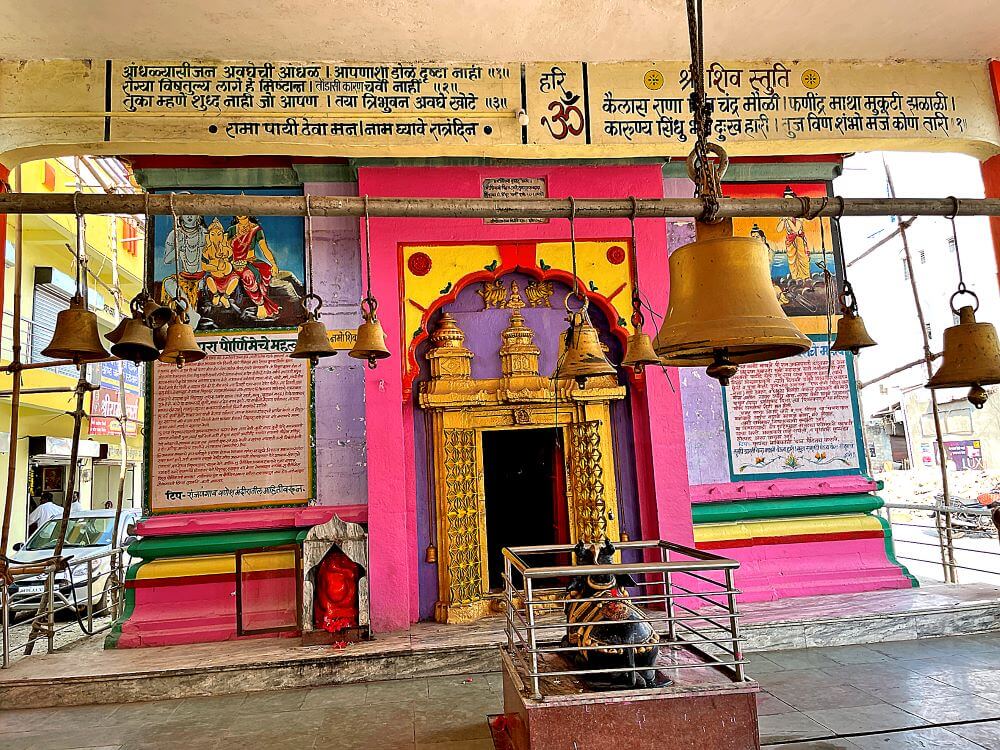
This famous Rameshwar site is located at Patoda on the Lasalgaon-Yeola road in Yeola Taluka. Situated right next to the marketplace, this temple is considered the village deity of Patoda. After entering through the arch on the main road and climbing five to six steps, one reaches the temple’s assembly hall (Sabhamandap). The temple consists of an assembly hall and a sanctum sanctorum (Gabhara). The assembly hall is spacious, and various religious programs are held there daily. On the walls of the assembly hall, hymns praising Lord Shiva and verses by Saint Tukaram are written in large letters. From the inscription present here, it is known that the Rameshwar Temple, built by Shivaji Vitthal Vinchurkar in the year 1790 (Shaka era), was renovated in the year 1878 (Shaka era) by Girijabai Shivdev Vinchurkar in memory of Khanderao Vitthal Vinchurkar. Additionally, information about the 294 pilgrimage sites with the specific footprints of Shri Ram is provided here in sequential order.
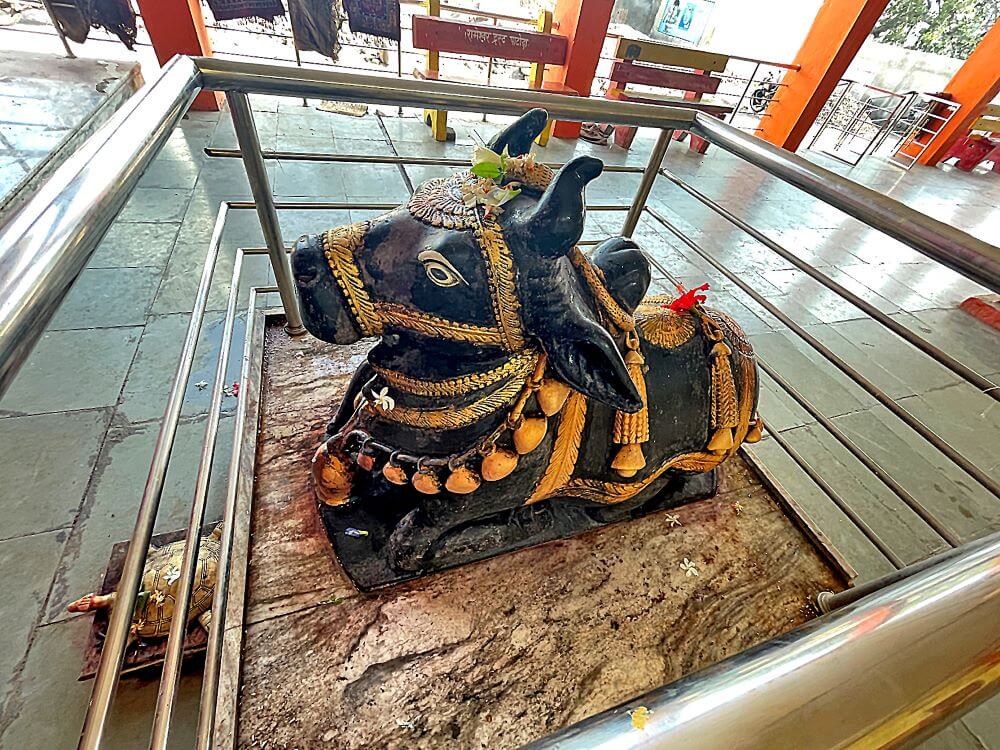
In front of the entrance to the sanctum sanctorum, there is a Nandi made of solid black stone on a pedestal. Exquisite craftsmanship can be seen on the door frame of the sanctum. On the left side of the door frame, there is an ancient idol of Lord Ganesha. It is said that this idol was found while digging for construction work in the village.
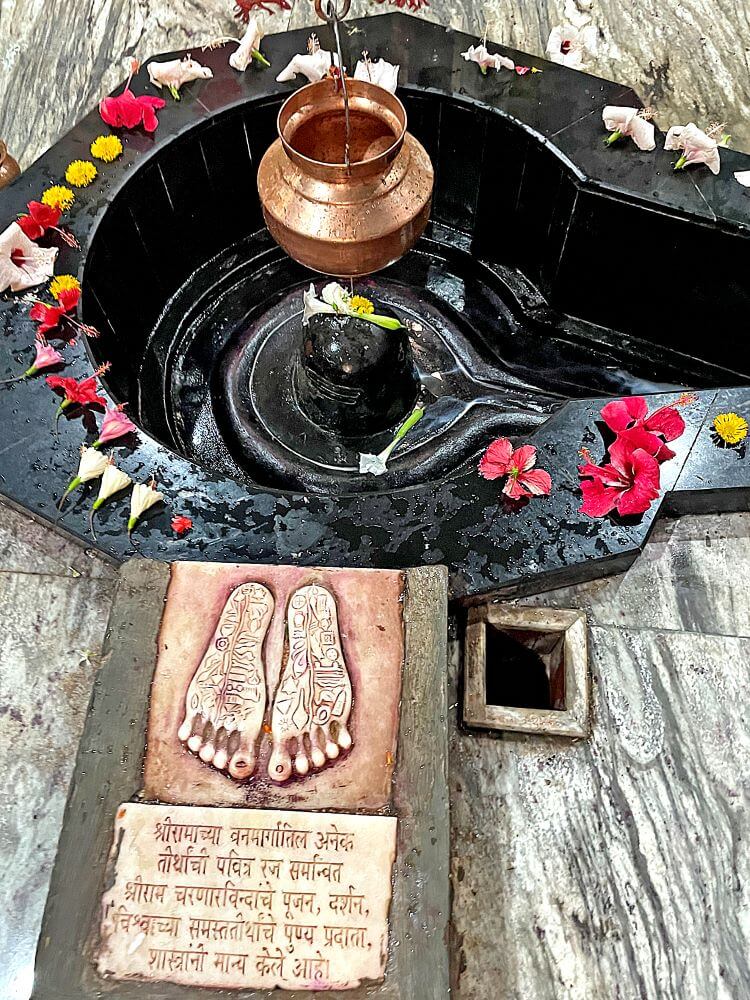
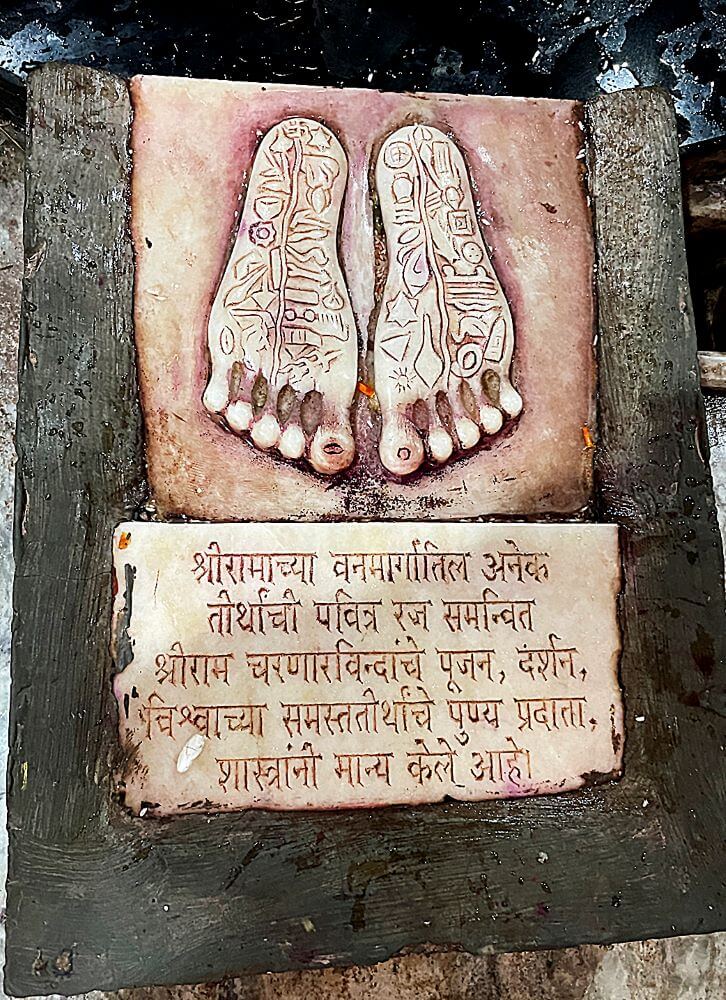
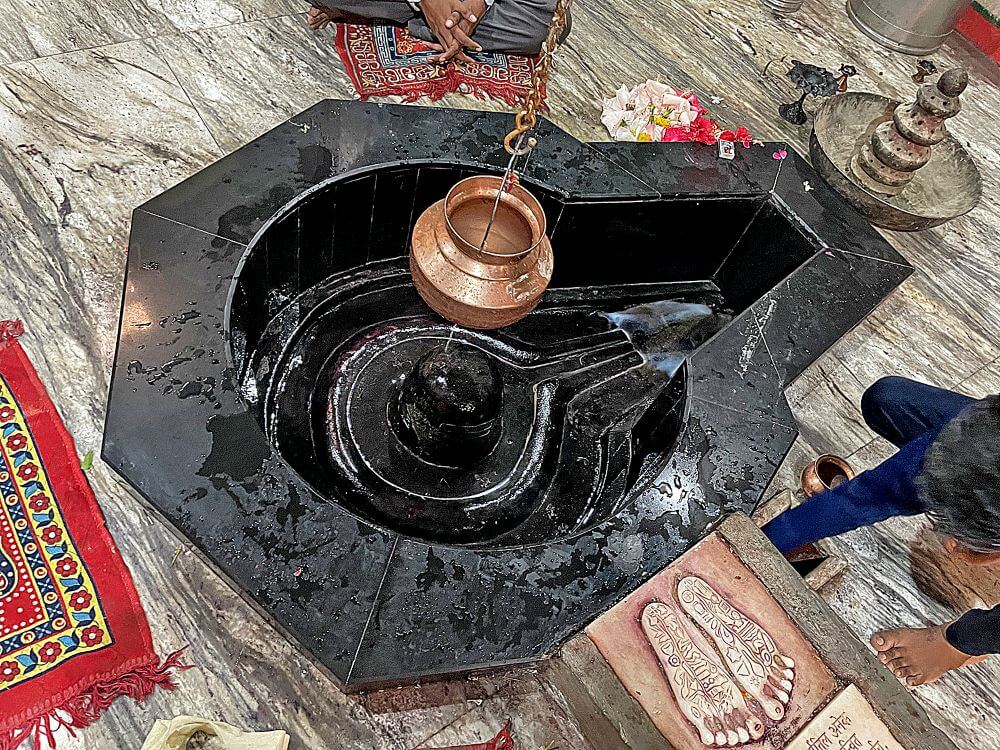
The sanctum sanctorum of this temple is unique. In front of the beautiful Shiva Linga here, there are special footprints (Padukas) of Shri Ram carved in marble. Some figures are carved on these Padukas, and below them, text is inscribed stating, “Worship and darshan of the lotus feet of Shri Ram, which are coordinated with the holy dust of many pilgrimage sites on Shri Ram’s path of exile, are considered by the scriptures to be the bestowers of merit of all the pilgrimage sites of the world.” Adjacent to these Padukas, near the Shiva Linga, there is a small square pit in the ground, 6 x 6 inches in size and one and a half feet deep. It is said that the Ganga has descended at this spot. It is believed that the water in this pit, which is only large enough for a hand to enter, is the holy water of the Ganga. There is water in it throughout all twelve months of the year, and it never increases or decreases. Devotees believe that if this holy water is applied to the body of a person suffering from warts, they are cured, and if brinjals are offered to Rameshwar, the wishes of the devotees are fulfilled. For this reason, devotees from many places come here for the darshan of Mahadeva and for treatment of warts.
Beautiful craftsmanship can be seen on the spire (Kalash) above the sanctum sanctorum. This spire, about 40 to 50 feet high, appears to be made of hundreds of small replicas of spires. Another feature of this temple is that if one listens by placing their ear against a niche in the outer wall of the temple, the sound of flowing water can be heard. A fair is held here on the last Monday of the month of Chaitra. Apart from this, the area takes on the form of a fair during Ram Navami, Mahashivratri, and Shravani Mondays. As this place is sanctified by the presence of Shri Ram, villagers say that along with thousands of devotees, many sages from Ayodhya visit this temple every year for darshan.
This sacred temple stands as a testament to deep spiritual devotion, ancient architectural grandeur, and rich local cultural traditions.
The sanctum sanctorum houses the divine idol consecrated according to ancient Vedic traditions, surrounded by serene courtyards and traditional temple architecture.
Navratri, Maha Shivratri, Annual Temple Jatra & Deepotsav
Compare and book flights, secure top-rated local hotels near the temple, hire reliable guides, and rent cars instantly.
Extend your pilgrimage by visiting other highly sacred temples located nearby.


Add ₹999 more to unlock FREE SHIPPING!
Your sacred cart is currently empty.
Shop Photo FramesFill in your delivery details below to place your order.
Add comment