
Add ₹999 more to unlock FREE SHIPPING!
Your sacred cart is currently empty.
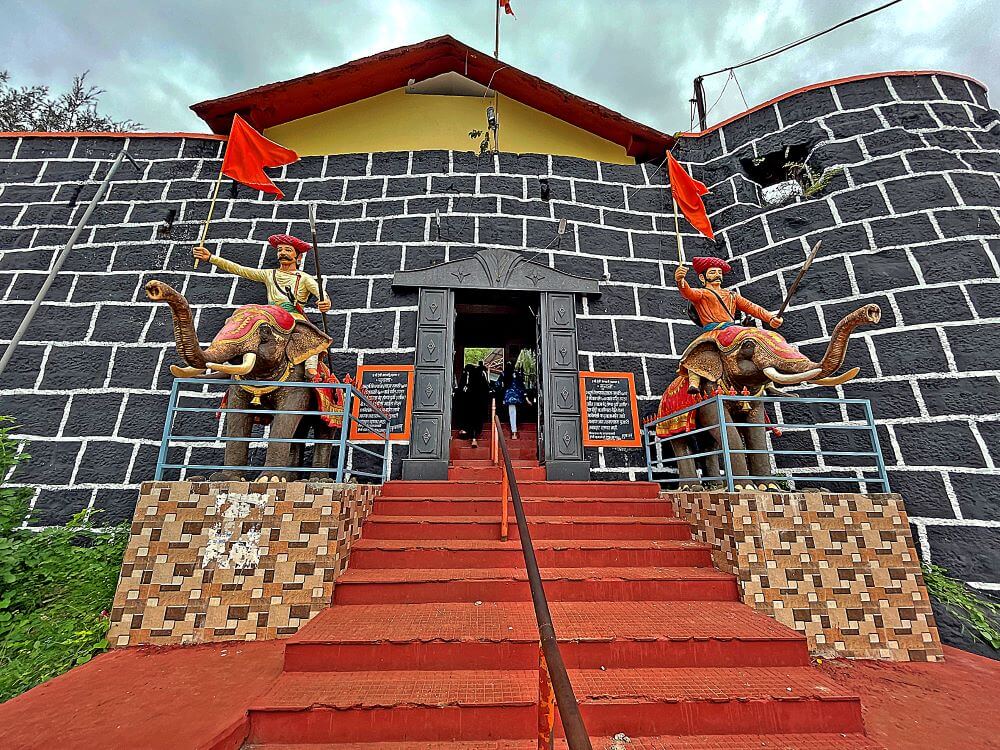
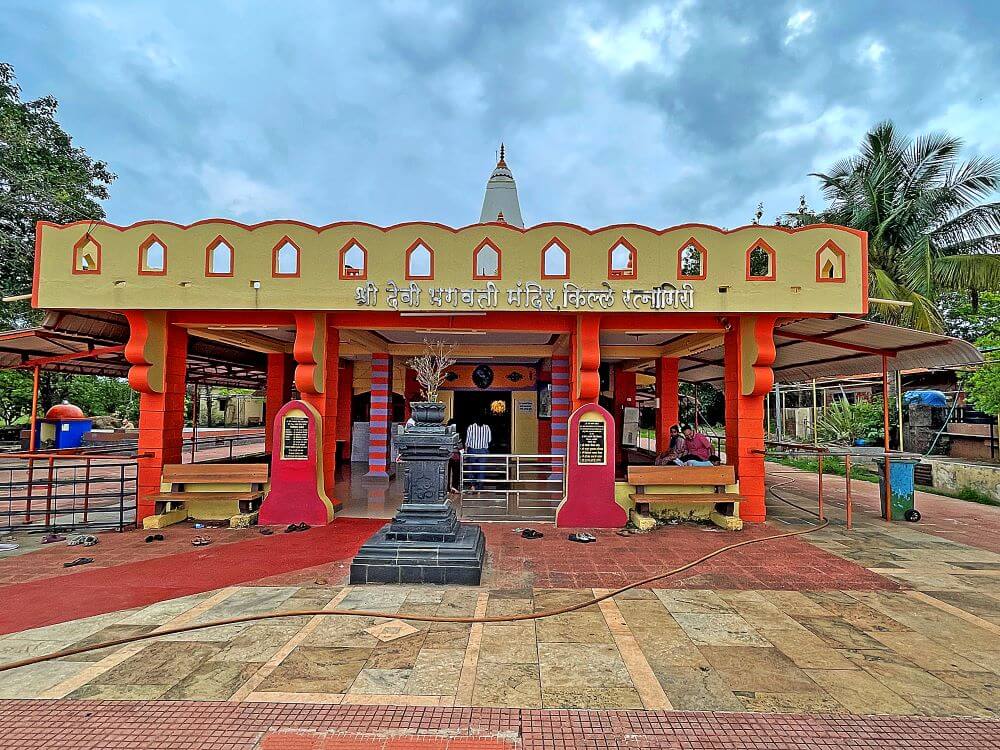
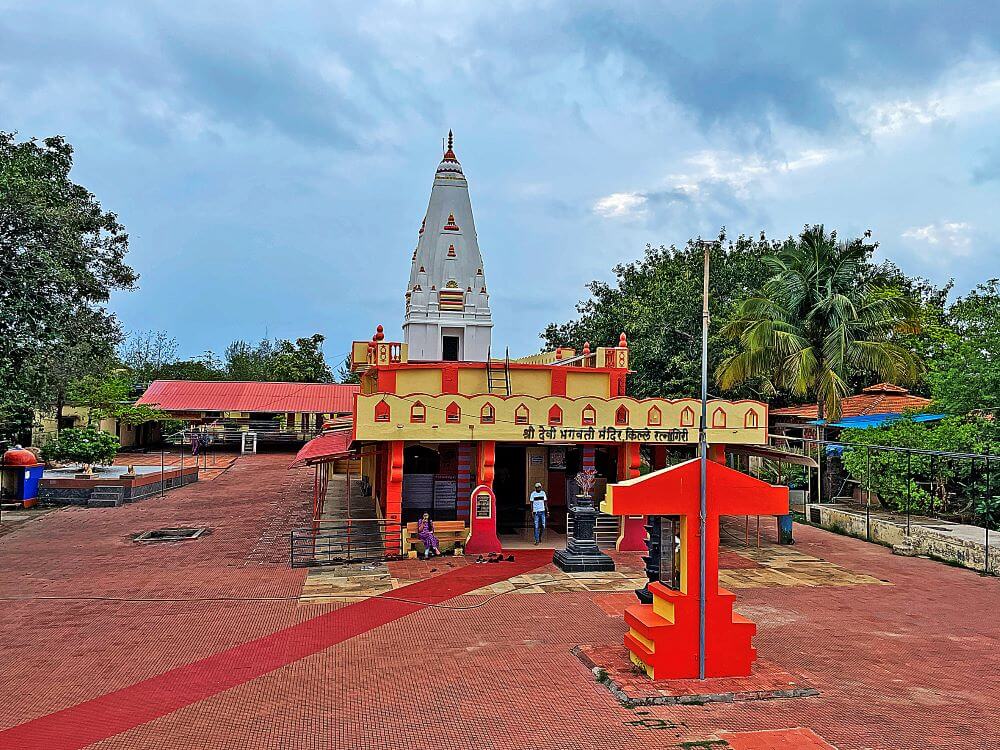
Shop Photo FramesRatnadurg Fort, nestled near Ratnagiri city in the Konkan region, is a cherished destination for history enthusiasts and tourists alike. According to historical records, this ancient fort, built in the year एक हजार दोनशे पाच, was conquered by Chhatrapati Shivaji Maharaj from the Adilshahi in the year एक हजार सहाशे सत्तर. This fort, sanctified by the presence of Chhatrapati Shivaji Maharaj, holds significant historical and religious importance due to the ancient Bhagavati Devi Temple located within its premises. It is believed that Bhagavati Devi, who vanquished the demon Ratnasura here, is the sister of Ambabai of Kolhapur.
The legend of the temple states that three formidable demons named Kolhasura, Karveera, and Ratnasura had become exceedingly powerful. The responsibility of their annihilation rested upon Ambadevi. After she slew Kolhasura and his son Karveera, the city of Kolhapur was established there. Ratnasura was exceptionally valiant. To defeat him, Ambadevi worshipped Mahadeva. As it was difficult for Ambadevi to slay Ratnasura, Mahadeva created two sisters, Devi Tembalai and Devi Bhagavati, to assist her. These three goddesses confronted Ratnasura in Jotiba’s pass near Kolhapur, and Devi Bhagavati severed his head with her Sudarshan Chakra. After the slaying of Ratnasura, Ambadevi bestowed the name Ratneshwari upon Devi Bhagavati and instructed her to reside in the Konkan region. Accordingly, Ratneshwari Bhagavati Devi arrived at the foothills where Ratnadurg Fort now stands. Thereafter, she manifested herself in a self-originated form on Ratnadurg Fort. Due to the presence of Ratneshwari Bhagavati Devi, the fort was named Ratnadurg, and the city became known as Ratnagiri.
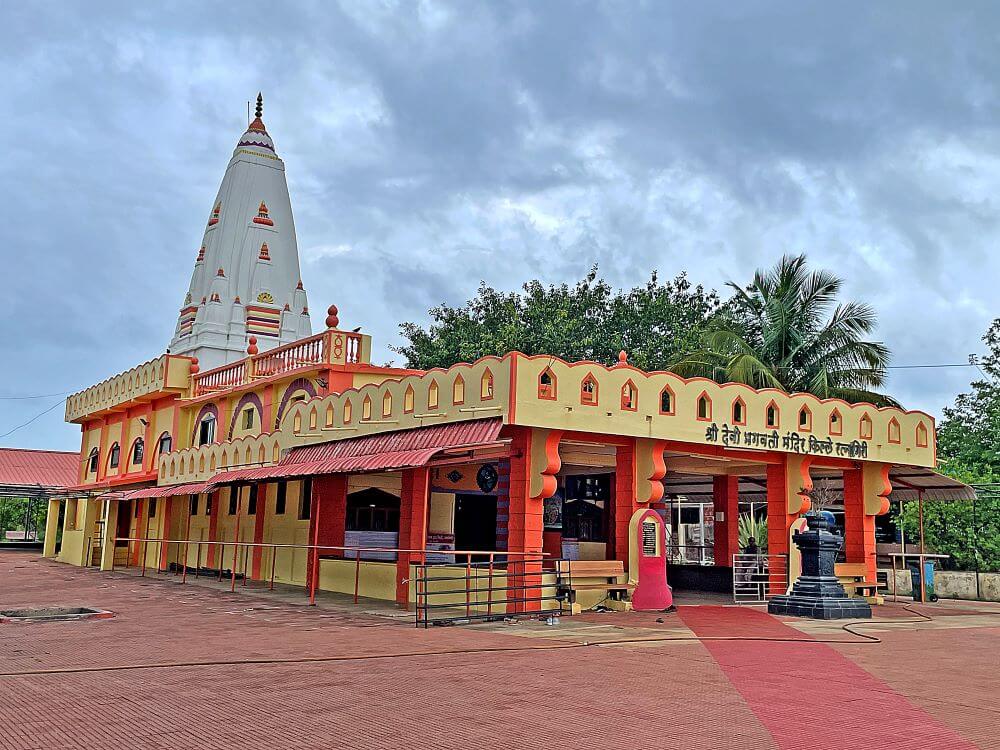
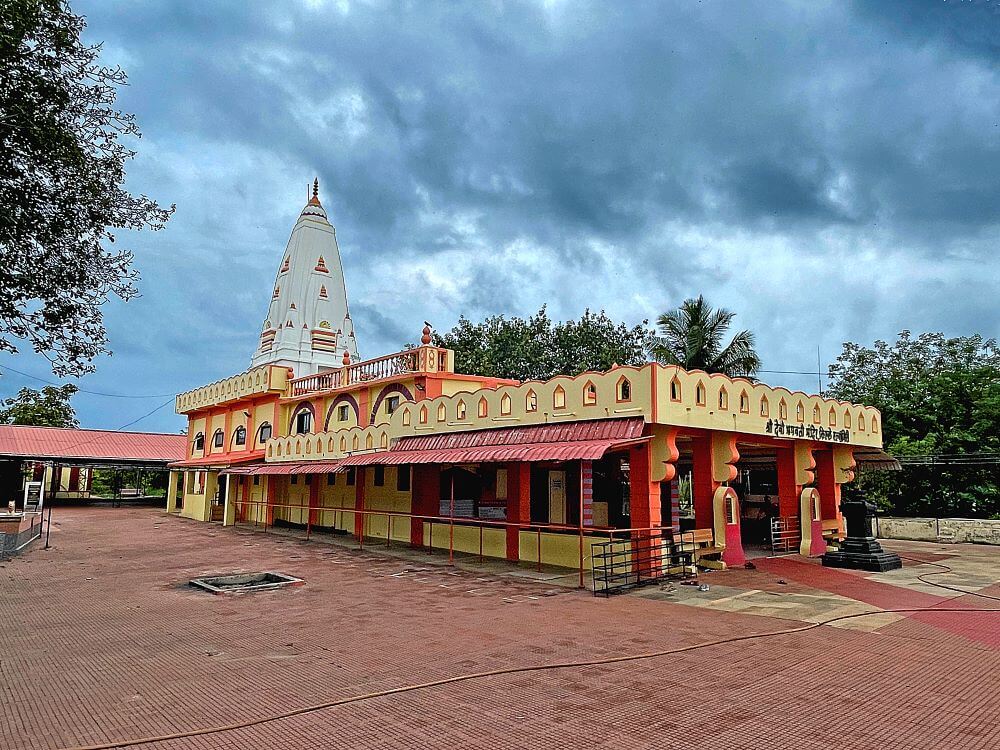
Ratnadurg Fort is situated to the west of Ratnagiri city, surrounded by the sea on three sides. (Previously, this fort was encircled by water on all four sides. The British filled one side to create a pathway for access.) Spanning an area of एकशे वीस acres, the fort is shaped like a horseshoe. It is said to have been built by King Bhoja, son of King Vihay Mark Dev of Goa, during the Shilahara dynasty. However, some also believe that the fort existed even before that. The Bhagavati Devi Temple, an integral part of this magnificent Ratnadurg Fort, is one of the most important and renowned ancient temples in the state. This exquisitely built temple is located a short distance from the Hanuman Temple near the fort’s entrance. The temple has undergone renovations periodically. It is recorded that Kanhoji Angre’s father, Sekhoji Angre, built a Hemadpanti dome for Bhagavati Devi. Chhatrapati Shahu Maharaj provided financial assistance for this temple to Ramchandrapant Naik Paranjape of the Bavadekar Sansthan. Bhagoji Keer, a generous merchant from Ratnagiri, renovated this temple in the year एक हजार नऊशे एक्केचाळीस. After a renovation undertaken by the temple trust a few years ago, the temple has acquired its current form.
In the sanctum sanctorum, there is a three-foot-tall self-originated idol of Devi Bhagavati. She holds a conch, discus, shield, and sword in her hands. During Navratri and Holi, golden and silver ornaments and jewellery are offered to this Devi. The silver mask of the Devi is six hundred years old. The grand silver throne behind the idol features distinctive carvings. The temple’s spire stands approximately सत्तर feet tall from the ground. A large fair is held here during Navratri. It is said that this Devi does not sit in a palanquin. Therefore, a boy is adorned in the Devi’s name. Temples of Devi’s brother Bhairav and sisters Jogeshwari, Navlai-Pavnai are located in Ratnagiri city. The Devi descends from the fort once a year to visit them.
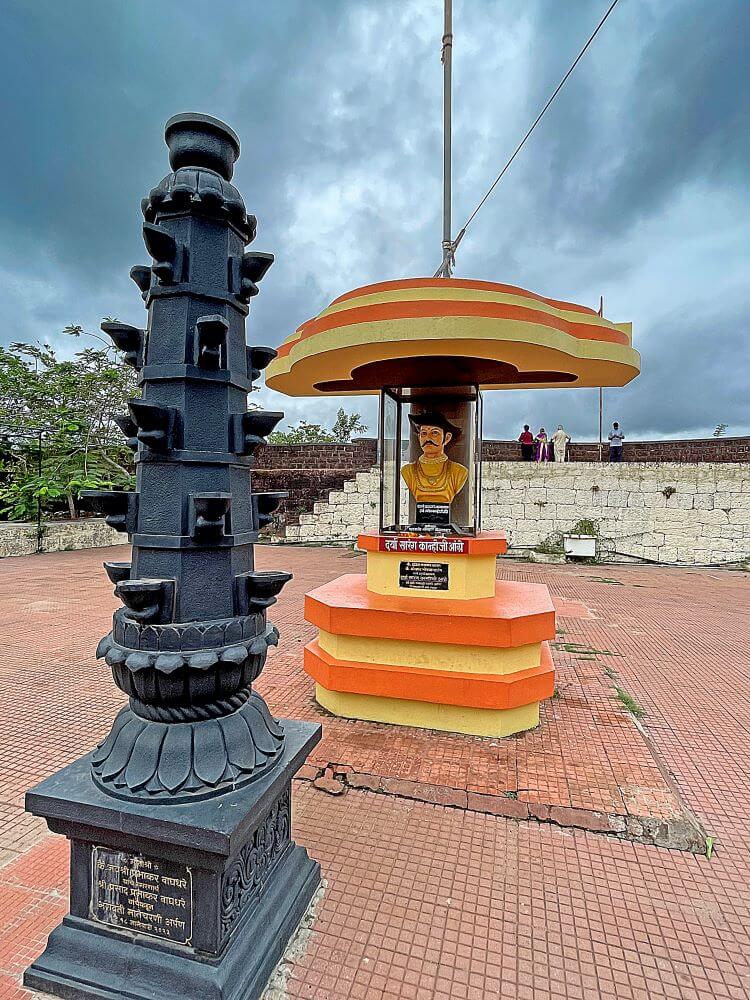
Near the Deepmala (lamp tower) in front of the main temple stands a bust of Kanhoji Angre, the commander of the Maratha navy. The temple’s structure comprises two assembly halls (sabhamandaps) and the sanctum sanctorum. The first sabhamandap is of the ardhamandap (half-hall) type, with stone benches along the sides for devotees to sit. The second sabhamandap is three feet higher. Above the intricately carved door at the entrance is an image of Chhatrapati Shivaji Maharaj. This sabhamandap has आठ stone pillars adorned with attractive colours. To the left in the sabhamandap is Shri Dev Chawhata. The practice of offering sacrifices has traditionally been observed at this Chawhata. In the sabhamandap in front of the sanctum sanctorum is a metal idol of a tiger, the vehicle of the Devi.
Within the temple complex are temples dedicated to Ganapati, Khandoba, Vetal, and Holdev. At the foothills of the fort is also the Bhageshwar Temple, built by Bhagoji Keer. Within this sea-girt fort, to the left of the temple, there is also a freshwater well. The fort’s entry time is from seven in the morning to seven in the evening. Devotees can visit the temple for darshan during these hours. Around seven in the evening, three whistles are blown, after which the fort’s entrance is closed.
This sacred temple stands as a testament to deep spiritual devotion, ancient architectural grandeur, and rich local cultural traditions.
The sanctum sanctorum houses the divine idol consecrated according to ancient Vedic traditions, surrounded by serene courtyards and traditional temple architecture.
Navratri, Maha Shivratri, Annual Temple Jatra & Deepotsav
Compare and book flights, secure top-rated local hotels near the temple, hire reliable guides, and rent cars instantly.
Extend your pilgrimage by visiting other highly sacred temples located nearby.


Add ₹999 more to unlock FREE SHIPPING!
Your sacred cart is currently empty.
Shop Photo FramesFill in your delivery details below to place your order.
Add comment