
Add ₹999 more to unlock FREE SHIPPING!
Your sacred cart is currently empty.
Shop Photo FramesThe Patit Pavan Temple in Ratnagiri city is renowned across the state and the entire nation as a symbol of social harmony and a national pilgrimage site. During an era when Shudras and the untouchables were forbidden from even approaching temples, this temple granted every section of society the right to enter the sanctum sanctorum and perform worship of the deities with their own hands. The temple was established in 1931 under the inspiration of Swatantryaveer Savarkar. Furthermore, between 1931 and 1937, Savarkar endeavored to unite all sections of society through processions, fairs, various cultural programs, and lectures.
Vinayak Damodar, also known as Swatantryaveer Savarkar, was interned by the British government in Ratnagiri from the year 1924 to 1937. During this period, a condition imposed by the British government was that he would not participate in politics. Throughout this time, he dedicated himself entirely to the struggle against untouchability. Bhagojisheth Keer, a prosperous businessman from the Bahujan community here, had joined Savarkar in his struggle. Bhagojisheth was a devotee of Lord Shiva; however, because he belonged to the Bahujan community, he was forbidden from entering the temple. Therefore, so that he could perform worship himself, he had built the Bhageshwar Temple as a private Shiva temple. Upon learning this, Savarkar told Bhagojisheth that because you are wealthy, you were able to build an independent temple; but the Dalits here are destitute, they have no God, no temple, and no access to divine worship. To remove the injustice against them, you should build an independent temple for the entire society.
Bhagojisheth immediately accepted the suggestion made by Swatantryaveer Savarkar. In the year 1931, he purchased 20 gunthas of land in the Varachi Aali area of Ratnagiri and, at an expense of 1.5 lakh rupees, constructed this temple covering an area of 20,000 square feet. Savarkar suggested that the consecration of the idols in the temple should be performed by a person from the Shudra community—specifically Bhagojisheth Keer—following Vedic rites (rituals performed by chanting mantras from the Vedas). For this purpose, scholars were invited from Kashi; however, at the last moment, the scholars from Kashi attempted to create an obstruction by claiming that a Shudra did not have the right to Vedic rites, and that the ceremony should instead be performed according to Puranic rites (rituals performed by chanting mantras from the Puranas). Savarkar did not accept this. Ultimately, on 22 February 1931, the idols of Lakshmi and Narayana were consecrated in this temple by Bhagojisheth Keer and his wife, following Vedic rites performed by Ganesh Shastri Modak, a scholar of Vedic scriptures from the Masurkar Maharaj Ashram. On this occasion, people of all castes and religions, along with women, participated in a community feast. This ceremony took place one year after the Kalaram Temple Satyagraha in Nashik. Hindu Savarkar named the temple Patit Pavan to signify that devotees of any caste or sub-caste within the religion have the right to enter the sanctum sanctorum and worship the idols of Lakshmi and Narayan.
During that era, Hindu society was shackled by the seven malefic customs of untouchability, prohibition of inter-dining, prohibition of inter-marriage, prohibition of reconversion, prohibition of crossing the seas, prohibition of certain professions, and prohibition of Vedic rites. During the period of political imprisonment maliciously imposed by the British government, Swatantryaveer Savarkar, along with his associates in Ratnagiri, launched a powerful strike against these seven prohibitions that were detrimental to the unity of Hindu society, through this very Patit Pavan Mandir, and by breaking the chains of these evil customs, he liberated Hindu society. While the temple was being built, Savarkar began celebrating Ganeshotsav in the temple premises. He changed the name of this festival to ‘Akhil Hindu Ganeshotsav’. This initiative was aimed at the eradication of the evil of untouchability, Hindu It was organized with the vision of fostering harmony among all sections of the faith and rebuilding a unified Hindu society.
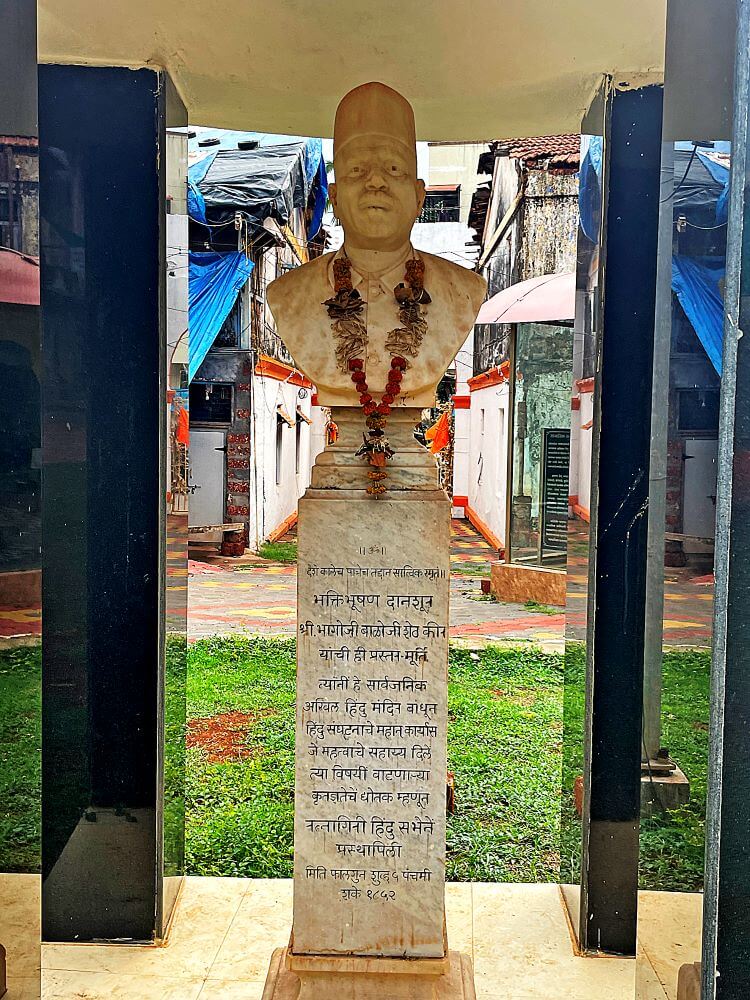
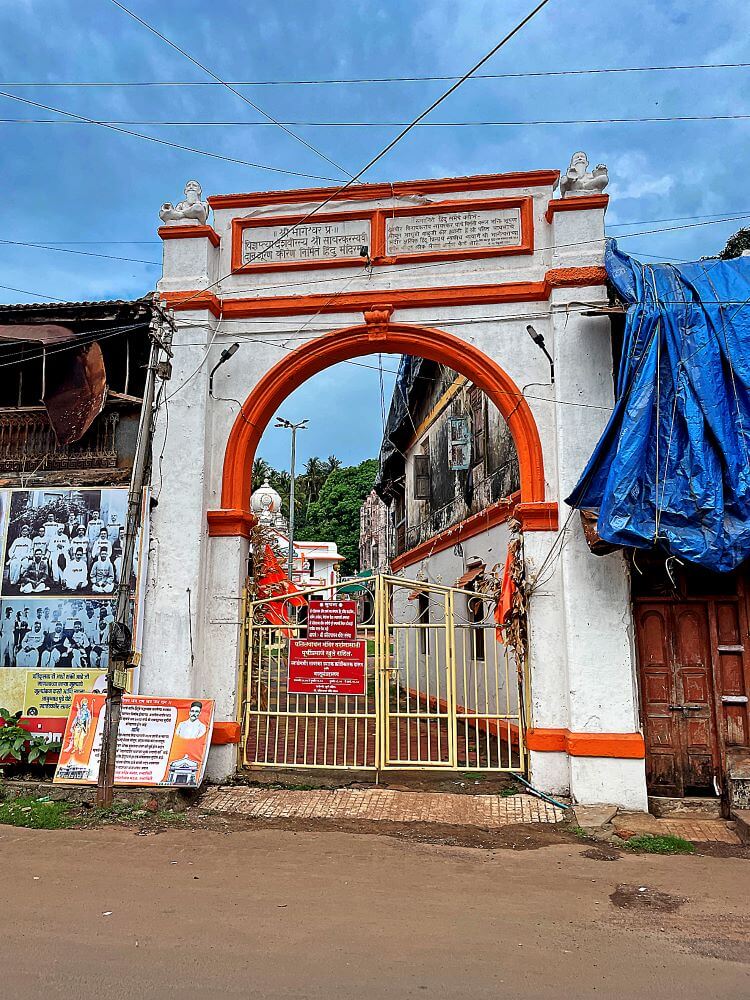
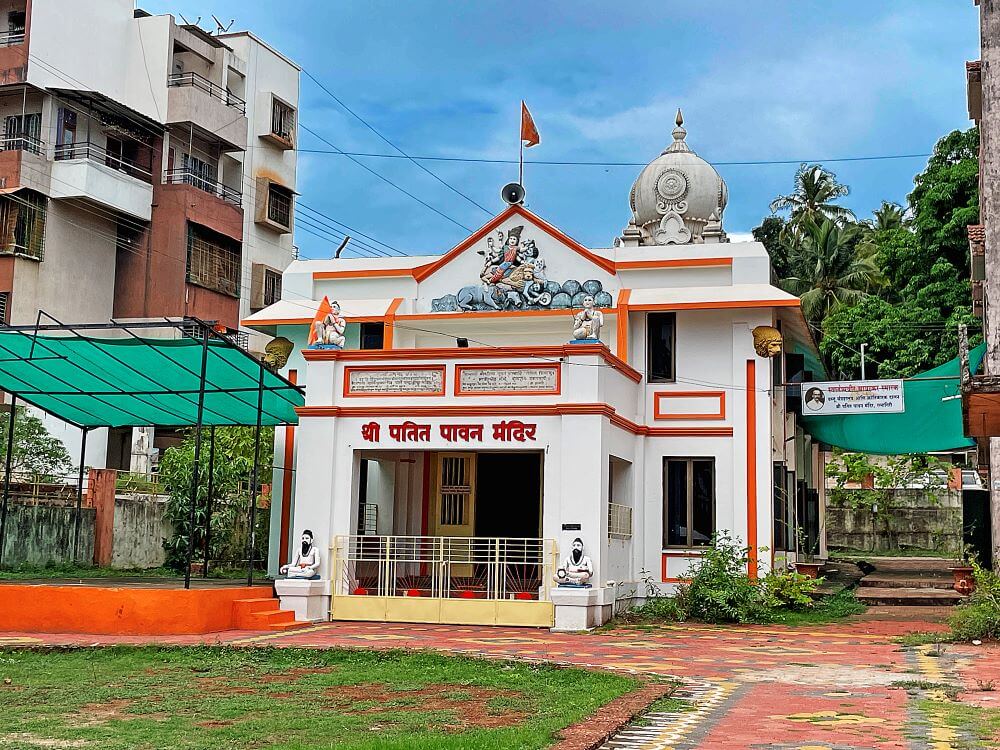
This temple is situated in the central part of Ratnagiri city, spanning an area of approximately २०,००० square feet. On the upper side of the main entrance arch of the temple, which is located along the road, the following is inscribed: ‘On behalf of the Ratnagiri Hindu Sabha, at the request of Deshveer Vinayakrao Savarkar, Bhaktibhushan Shri Bhagoji Baloji Keer has built this Shri Patit Pavan Temple for the entire Hindu community at his own expense, by the grace of Shri Bhageshwar, and dedicated it to public service. – Date २४ February १९३१’. A statue of Bhagoji Keer, carved in white marble, has been erected on the lawn between the arch and the main temple.
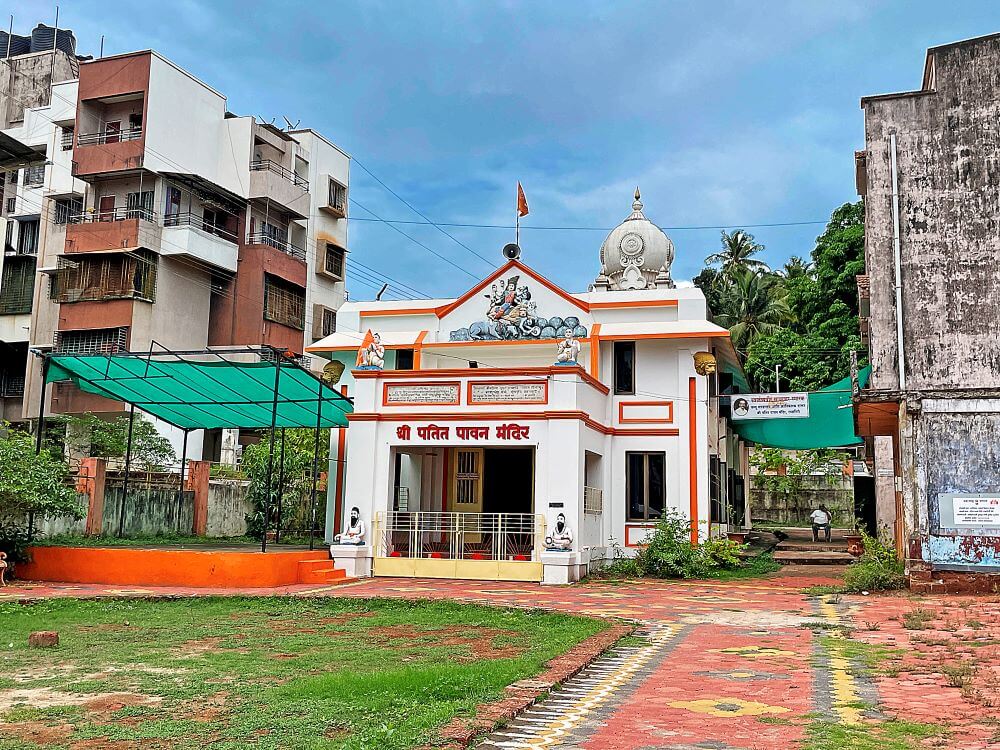
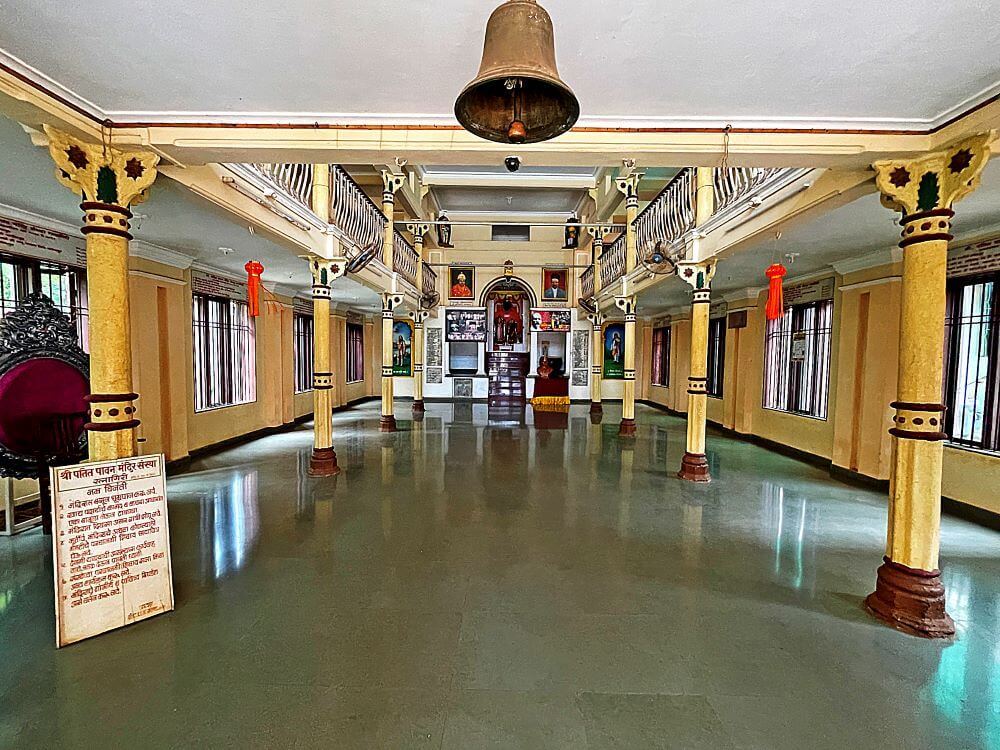
The temple architecture comprises the Darshan Mandap, Sabha Mandap, Ardha Mandap, and Garbhagriha. On both outer sides of the Darshan Mandap, there are sculptures of sages performing penance, while above, there is a relief mural of the eight-armed Mahishasuramardini mounted on a lion. The Sabha Mandap here is two-storied and features intricate woodwork throughout. On the upper floor, seating arrangements have been made for devotees, especially women, to view the programs held in the temple during festivals and celebrations. Images of Saint Gadge Maharaj and Samarth Ramdas Swami are placed in the Ardha Mandap, while an image of Swatantryaveer Savarkar is installed on the wall of the Garbhagriha.
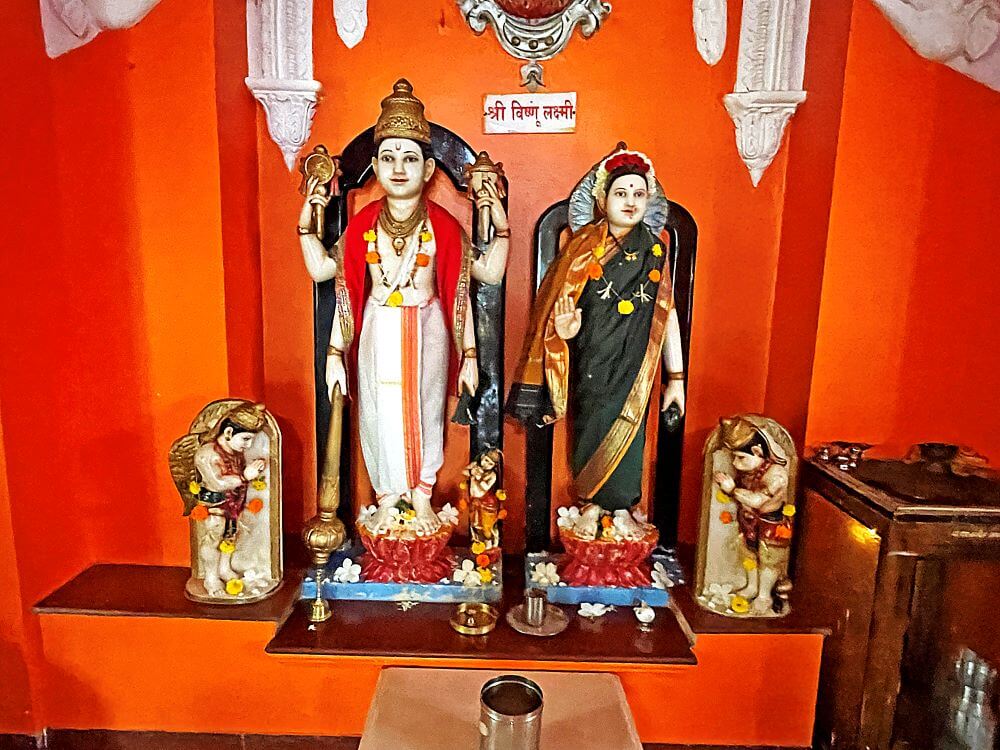
In the sanctum sanctorum, situated slightly elevated from the main assembly hall, stand the four-foot-tall idols of Lakshmi-Narayan. Lord Vishnu holds a mace, a discus, a conch, and a lotus in His hands, while Goddess Lakshmi holds a boon-bestowing gesture in her right hand and a lotus in her left. Both deities are standing upon lotuses. Near the feet of Lord Vishnu is an idol of Garuda, and near the feet of Goddess Lakshmi is an idol of Hanuman. Above the idols of Lakshmi-Narayan, an image of Bharat Mata is carved into the wall. Above the sanctum sanctorum rises the spire, which features distinctive sculptures of the Sun God mounted on seven horses, Lord Ganapati, and Lord Shankar. Every year, the temple hosts various festivals: the death anniversary of Bhagojisheth Keer on 24 February, the death anniversary of Swatantryaveer Savarkar on 26 February, Savarkar Jayanti on 28 May, Shri Krishna Jayanti on Shravan Krishna Ashtami (Gokulashtami), the Navratri festival from Ashwin Shuddha Pratipada to Dashami, and the Akhil Hindu Ganeshotsav for seven days starting from Magh Shuddha Chaturthi.
For the renovation of this temple, many eminent personalities such as Bharat Ratna Lata Mangeshkar, Shivshahir Babasaheb Purandare, Asha Bhosle, and National Kirtankar Govindswami Afale have made donations. On the right side of the temple is the Swatantryaveer Savarkar Memorial, a revolutionary gallery, and a museum. This museum can be visited from 10 in the morning to 1 in the afternoon and from 1 in the afternoon to 5 in the evening.
This sacred temple stands as a testament to deep spiritual devotion, ancient architectural grandeur, and rich local cultural traditions.
The sanctum sanctorum houses the divine idol consecrated according to ancient Vedic traditions, surrounded by serene courtyards and traditional temple architecture.
Navratri, Maha Shivratri, Annual Temple Jatra & Deepotsav
Compare and book flights, secure top-rated local hotels near the temple, hire reliable guides, and rent cars instantly.
Extend your pilgrimage by visiting other highly sacred temples located nearby.


Add ₹999 more to unlock FREE SHIPPING!
Your sacred cart is currently empty.
Shop Photo FramesFill in your delivery details below to place your order.
Add comment