
Add ₹999 more to unlock FREE SHIPPING!
Your sacred cart is currently empty.
Shop Photo FramesUran, renowned today for the Jawaharlal Nehru Port Trust, is a village situated on Karanja Island. In earlier times, this island was surrounded by water on all four sides. There were several other villages on the island, and Uran served as their central hub. Historians state that its original name was likely ‘Urun’ or ‘Urane’. It derived the name Uran from Goddess Uranavati of Chanje village. At the fort atop Dronagiri Hill here, the sacred temple of Dronagiri Aai is famous. The villagers hold immense faith in this Goddess, who swiftly answers the prayers of her devotees. She is also reverently known as the Goddess of the Seven Hamlets.
Dronagiri was also known as Karanja Hill. It was formerly a fort. This island was under the control of King Someshwardev of the Shilahara dynasty of North Konkan. Mention of this is found in the stone inscriptions discovered at Panje and Ranwad in the surrounding area. After the Yadavas of Devagiri defeated the Shilaharas, the fort came under their control. The Yadavas ruled over it until the fourteenth century. Thereafter, In 1422 AD, Portuguese warriors Lores and Luis captured this region. In 1530, the Portuguese renovated this fort and built a church here. Even today, the ruins of this church bear witness to the Portuguese rule in the region. During the Maratha period, this fort was under the control of Sekhoji Sankpal and his successors. In this area, apart from the ancient caves of Dronagiri, ancient inscriptions have been discovered at Ranwad, Chanje, and Mora. According to scholars, the caves of Dronagiri might have served as a custom house or toll station for tax collection. Additionally, sacred shrines dedicated to Manibhadra and Manimekhala, the presiding deities of the ocean, are also located here.
According to the legend associated with Goddess Dronagiri on this fort, during the war between Shri Ram and Ravana, when Lord Lakshmana fell unconscious upon being struck by an arrow, Lord Hanuman went to fetch life-saving herbs and lifted the entire Dronagiri Mountain. As Lord Hanuman was flying over Karanja Island with the mountain, a portion of it fell onto this island. That very portion came to be known as the Dronagiri Mountain, and from this, the presiding Goddess of Karanja also came to be affectionately revered as ‘Dronagiri Aai’. Began.
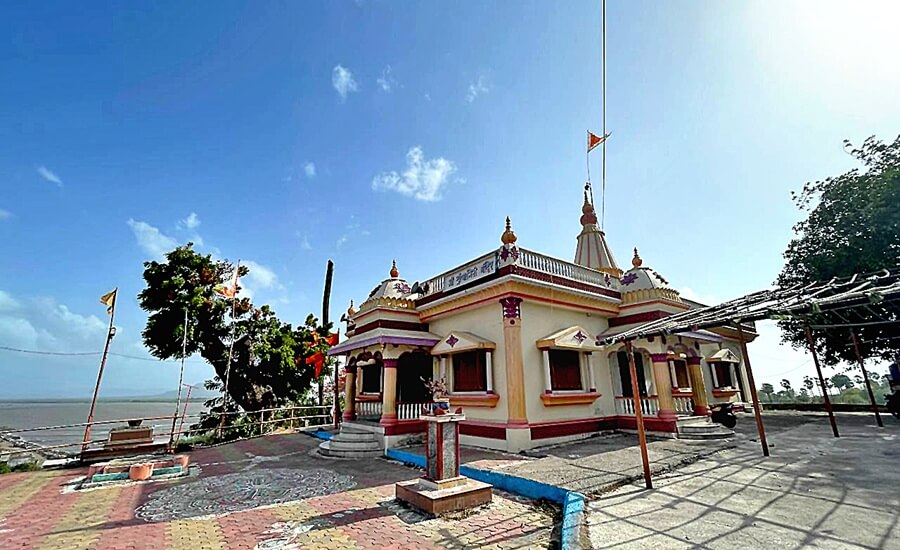
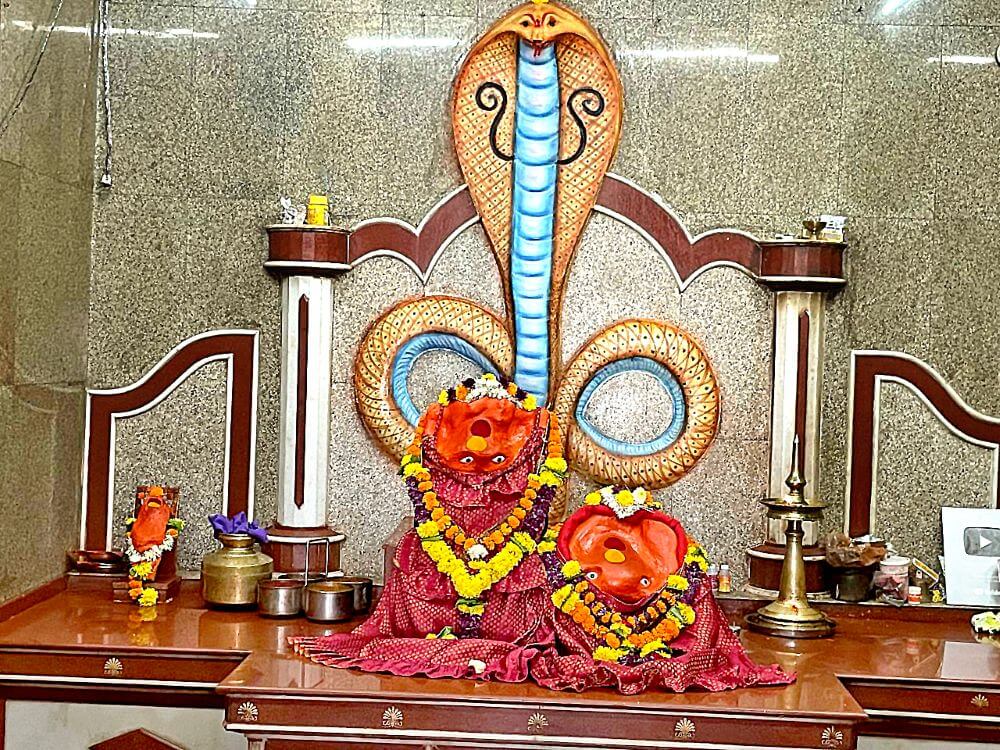
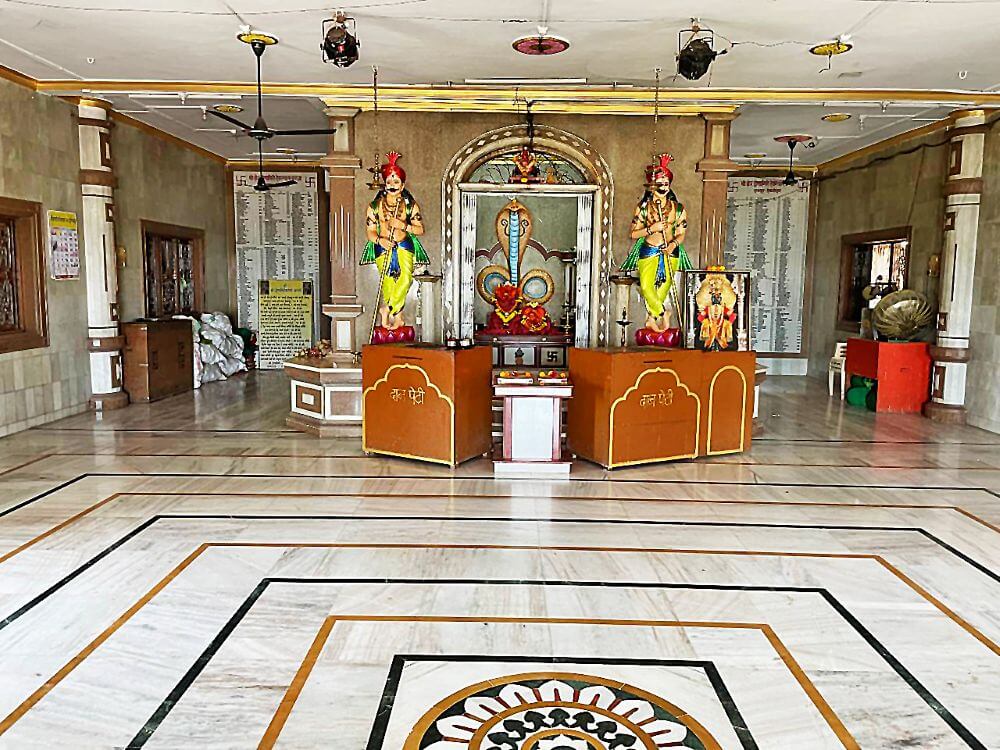
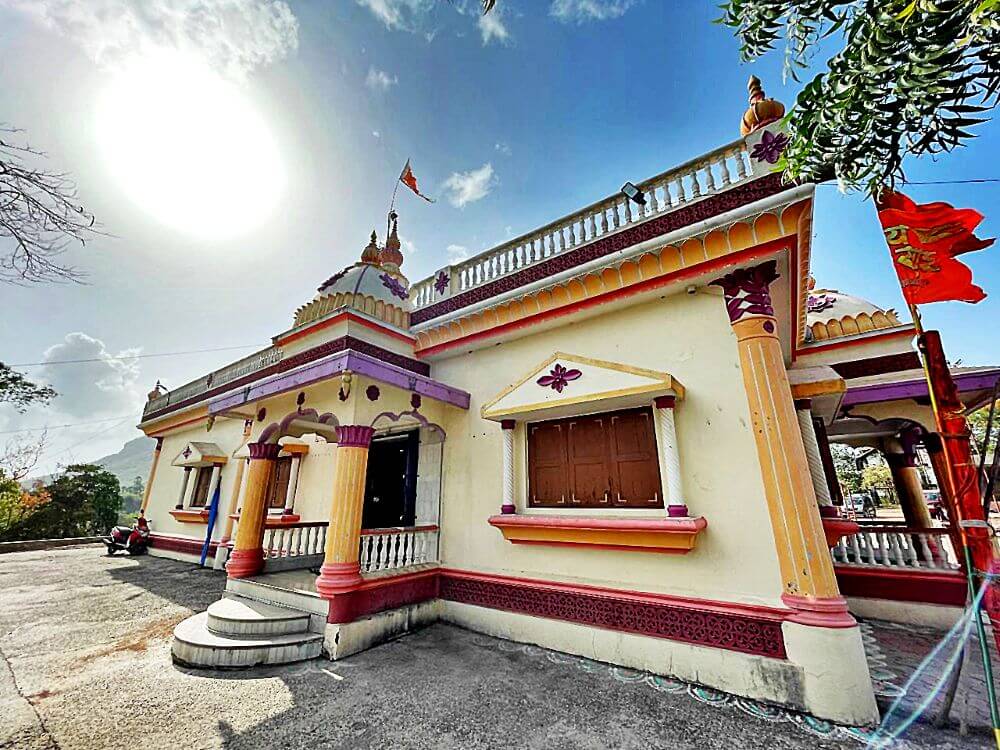
As one travels from Uran town towards Karanja village, dense foliage lines the left side of the path, while mountain ranges stretch along the right. Upon entering the village, a footway leading to the temple comes into view. A motorable uphill road reaching right up to the temple has also been constructed now. Since Karanja village is situated along the seashore, the temple premises offer a magnificent panoramic view of the vast ocean and hundreds of fishing boats anchored at the port. The temple attained its present form following renovations carried out in 2009. In front of the temple lies a large courtyard, paved with paver blocks, which enhances the beauty of the surroundings. The architectural design of the temple comprises three Mukhamandapas (entrance porches), a Sabhamandapa (assembly hall), and a Garbhagriha (sanctum sanctorum). Situated on an elevated plinth (Jagati) above ground level, steps from the Mukhamandapa lead into the Sabhamandapa. The spacious Sabhamandapa features pristine white marble flooring. Beyond the Sabhamandapa, leaving space for a Pradakshina Marga (circumambulatory path), lies the Garbhagriha. On the front wall of the entrance to the Garbhagriha, seated on a lotus There are standing idols of two Dwarapalas. On the Vajrapitha inside the Garbhagriha (sanctum sanctorum), there are idols of Goddess Dronagiri and Goddess Sheetaladevi. Behind the idols, a hooded Nagadevata (Serpent Deity) is painted on the wall. This Garbhagriha is also adorned with marble tiles. Along with the main dome atop the temple, there are three smaller domes over the Mukhamandapas. Beautiful carvings adorn all these domes as well as the pillars.
A grand festival is celebrated at this temple during Navratri. On the eighth day, thousands of devotees gather here to partake in the holy Bhandara. Following the Palkhi procession of Goddess Ekvira of Karla on Chaitra Saptami, the Palkhi of Dronagiri Aai is taken out the very next day on Chaitra Kalashtami. A grand Yatra (pilgrimage fair) is held here on this day. The Palkhi originating from here is first brought from the village to the temple. The sacred masks of the Goddess are placed inside it, and the procession then moves through the village amidst joyful music and celebrations, before returning to the temple. This Palkhi ceremony lasts for 20 to 25 hours. During this Beautiful tableaux are created alongside the Palkhi.
The local Agri and Koli communities have immense faith in this Goddess. Before setting out into the sea for fishing, fishermen offer prayers to Dronagiri Aai and only then launch their boats into the water. Every morning at 6:00 AM, Abhishek is performed on the Goddess. The Goddess’s Aarti takes place at 6:30 AM and 7:30 PM. Devotees can take Darshan of Dronagiri Aai every day from 6:00 AM to 8:00 PM. Since Bhajans are held every Tuesday evening, the temple doors remain open until 9:00 PM only on that day.
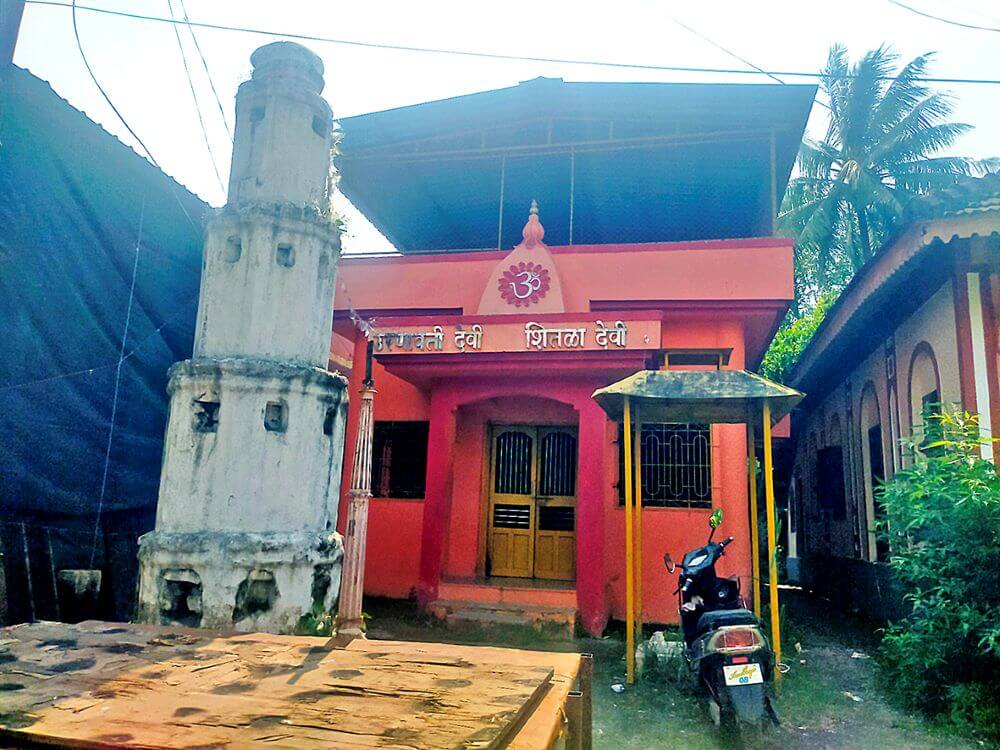
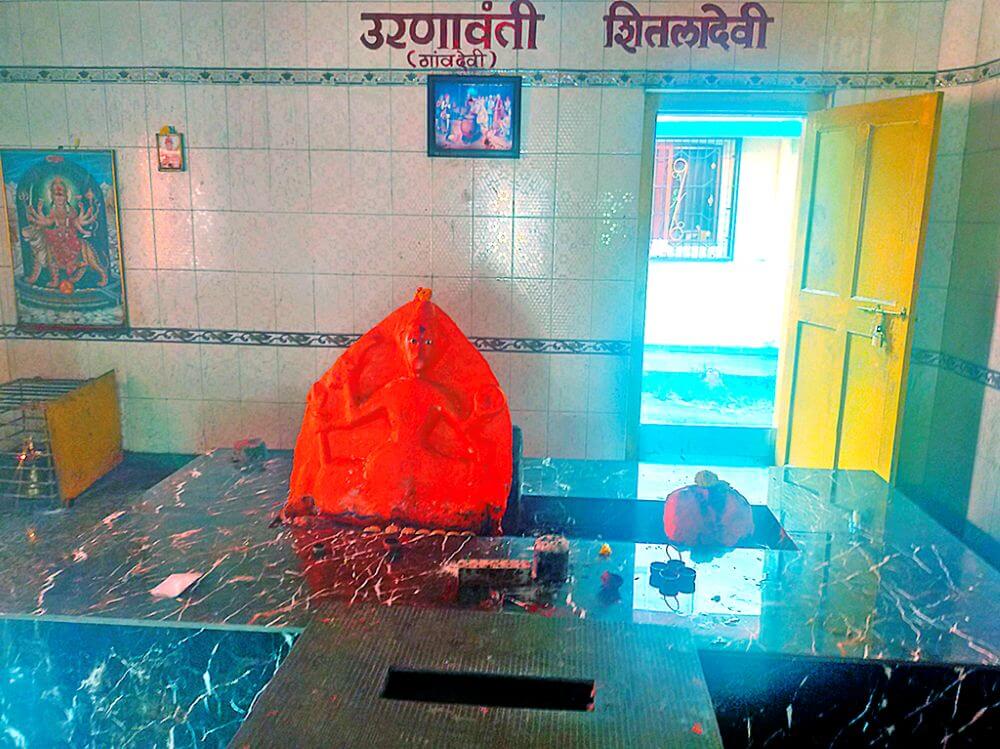
At a short distance from this temple, in the Deulwadi area, lies the sacred shrine of Goddess Uranavati. It is said that the city derived its name ‘Uran’ from this Goddess. In front of this temple stands a tall Deepmal. Featuring a spacious Sabhamandap and Garbhagriha, the temple houses the idols of Goddess Uranavati and Goddess Shitala. Surrounding this temple, in a row, are temples dedicated to the deities Mahadev, Vithoba, Balaji, and Dattaguru. This is why the locality came to be known as ‘Deulwadi’. The local devotees firmly believe that diseases and epidemics do not enter the Uran region due to the grace of this Goddess.
On the auspicious day of Hanuman Jayanti, along with Lord Hanuman’s palanquin, the palanquin (Palkhi) of Goddess Urnavati is also taken out in procession. On the occasion of Navratri, holy Hom and Yajna rituals are performed on the day of Ashtami (the eighth day of Navratri). There is a traditional practice of seeking divine assent (Kaul) by placing betel nuts on either side of the idol. Devotees place firm faith in her as a benevolent Goddess who fulfills prayers and vows. Sacred worship (Puja-Archa) and Aarti are performed every morning and evening at the temple.
This sacred temple stands as a testament to deep spiritual devotion, ancient architectural grandeur, and rich local cultural traditions.
The sanctum sanctorum houses the divine idol consecrated according to ancient Vedic traditions, surrounded by serene courtyards and traditional temple architecture.
Navratri, Maha Shivratri, Annual Temple Jatra & Deepotsav
Compare and book flights, secure top-rated local hotels near the temple, hire reliable guides, and rent cars instantly.
Extend your pilgrimage by visiting other highly sacred temples located nearby.


Add ₹999 more to unlock FREE SHIPPING!
Your sacred cart is currently empty.
Shop Photo FramesFill in your delivery details below to place your order.
Add comment