
Add ₹999 more to unlock FREE SHIPPING!
Your sacred cart is currently empty.
Shop Photo FramesSome scholars believe that the Bhakti movement in India began between 500 and 850 AD, with the Alvar Vaishnava saints of Tamil Nadu mentioning the path of devotion in their text, the ‘Alvar Prabandham’. Among the thousands of sadhus, sannyasis, and saints who propagated this path of devotion—which offers the grace of God in a simple, easy, and ritual-free manner—the name of Saint Gajanan Maharaj of Shegaon is held in high reverence. There are hundreds of large and small temples dedicated to Maharaj across India. One such famous temple is located at Soregaon near Solapur. Devotees believe that by seeking his blessings here, one receives the grace of Maharaj.
Although the construction of this temple was completed in 1995, the trustees state that the tradition of the Gajanan Maharaj Palkhi (palanquin procession) here is over fifty years old. The life of Saint Gajanan Maharaj is filled with miracles. Through these awe-inspiring miraculous events, Maharaj showed his devotees the path to attaining God. When Maharaj first appeared in Shegaon, Buldhana district, on Magh Vadya Saptami, February 23, 1887, he was approximately 30 years old. Outside the math of Devidas Paturkar in Shegaon, Gajanan Maharaj would eat grains of rice from discarded plates, silently conveying the message not to waste food. In this context, Das Ganu wrote, “Who is he, where does he come from, no one knows. Who can tell the whereabouts of the Brahman?”
Thereafter, Maharaj remained in Shegaon until the end of his life. He blessed thousands of devotees and finally attained Samadhi on Rishi Panchami, September 8, 1910. During Maharaj’s lifetime, Palkhis from various parts of Maharashtra would arrive in Shegaon. Today, the number of Palkhis arriving in Shegaon is in the thousands, and the Palkhi from Soregaon is among them.
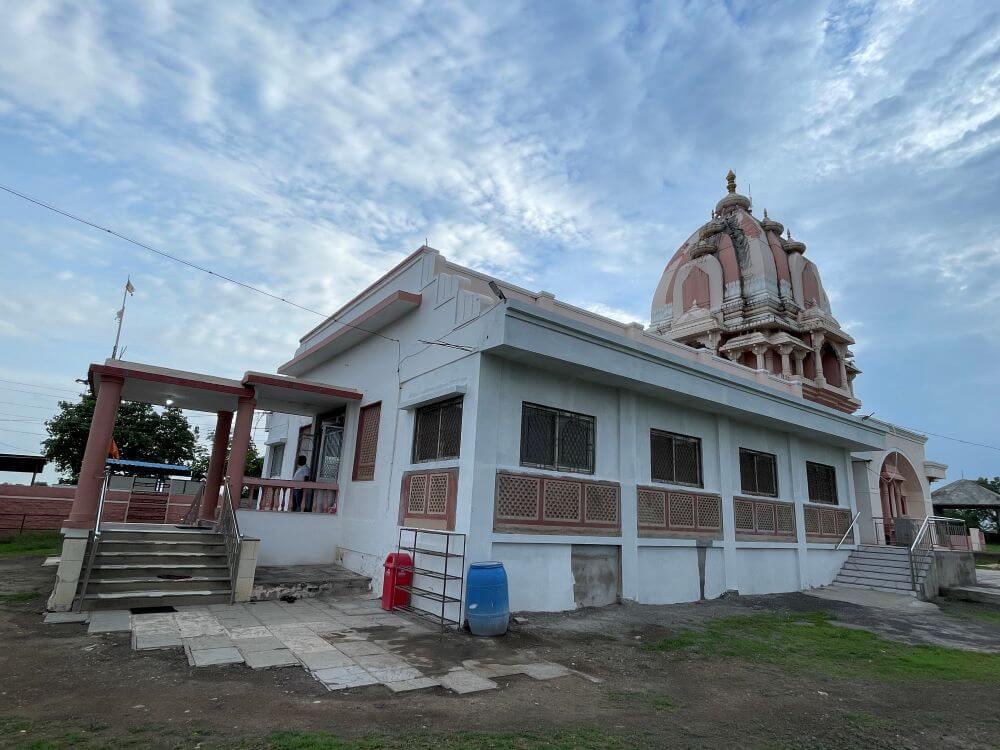
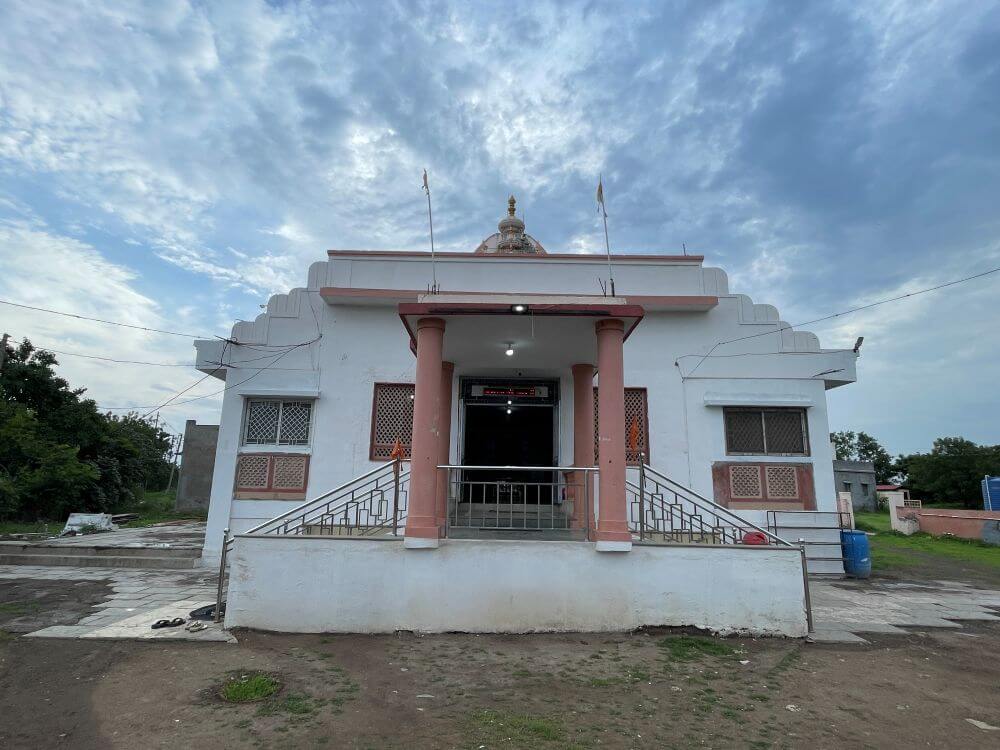
This temple stands on about two acres of land at the entrance of Soregaon. There is an entrance gate within the perimeter wall surrounding the temple. One enters the temple courtyard through this gate. On the path leading from the entrance to the temple, there are two structures on either side: one is a waiting hall, and the other is a kitchen for preparing the Maharaj’s Prasad. The temple structure consists of a Mukh-mandapa (front hall), Sabha-mandapa (main assembly hall), and Garbhagriha (sanctum sanctorum). The temple is elevated about four feet above the courtyard level. There are five steps each on the left and right sides of the Mukh-mandapa. The Mukh-mandapa has six circular pillars supporting the roof, with railings featuring small pillars on the left and right sides.
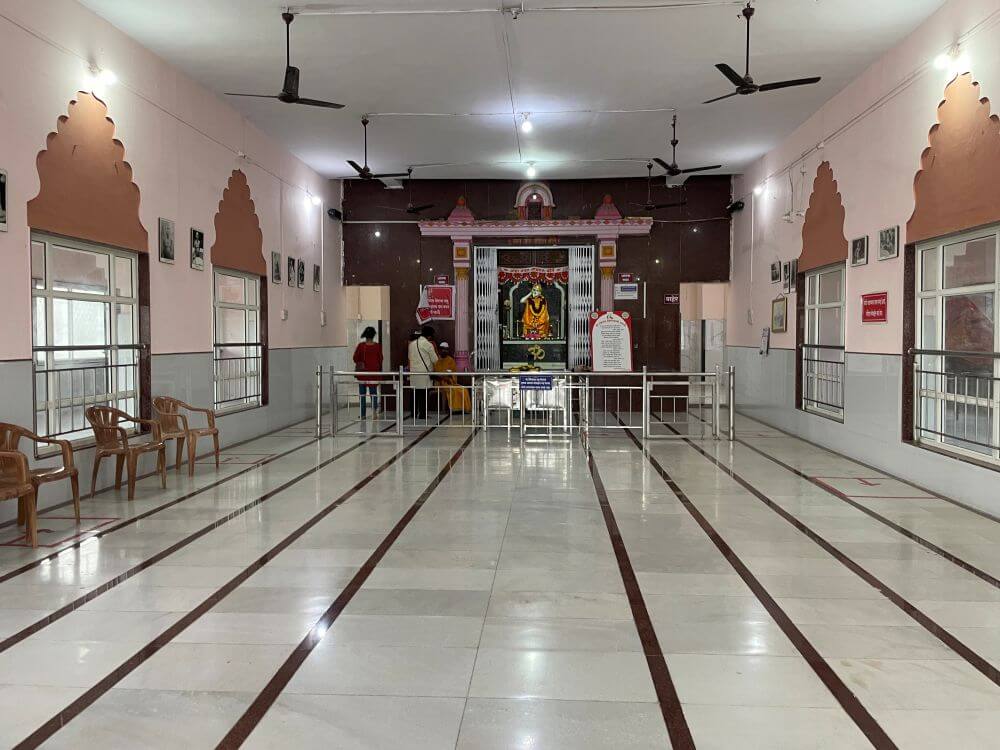
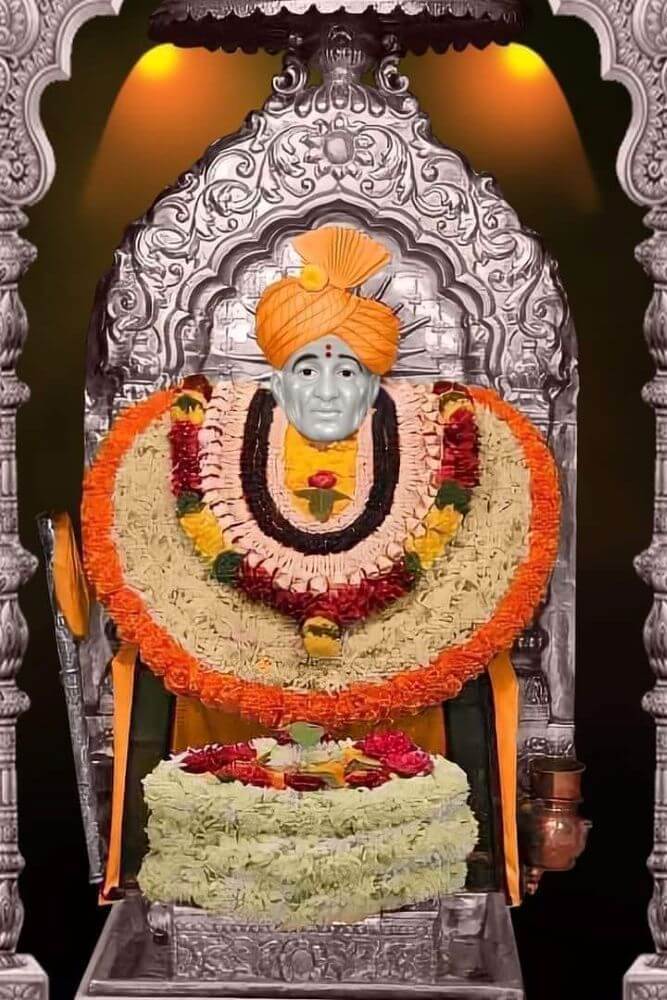
The entrance to the Sabha-mandapa is simple. The enclosed Sabha-mandapa has ventilators for light and air. Inside, stainless steel security railings have been installed to manage the queue for Darshan. Many pictures of Gajanan Maharaj are displayed on the walls of the Sabha-mandapa. In front of the entrance to the Garbhagriha, there is a table with the Maharaj’s Paduka (footprints), Charana Tirtha, and materials for Padya Puja (worship of the feet). During festivals, devotees are allowed Darshan from here. The Garbhagriha is four feet higher than the Sabha-mandapa, accessible by climbing five steps. On both sides of the steps, there is a four-foot-wide platform. The wooden entrance of the Garbhagriha features floral carvings on the door frames and ornate shutters. On both sides of the entrance are circular pillars, with a Devakoshthaka (niche) in the center above, housing an idol of Lord Ganesha. There are two small shikhars on the left and right sides of the projection. Inside the Garbhagriha, on a Vajrapitha (throne), is a beautiful marble idol of Gajanan Maharaj in a meditative state, smoking a chillum. The idol is about five feet tall, wearing an uparane (shawl) and a pheta (turban) on his head. A silver umbrella hangs from the ceiling. Beside it is a framed portrait of Gajanan Maharaj.
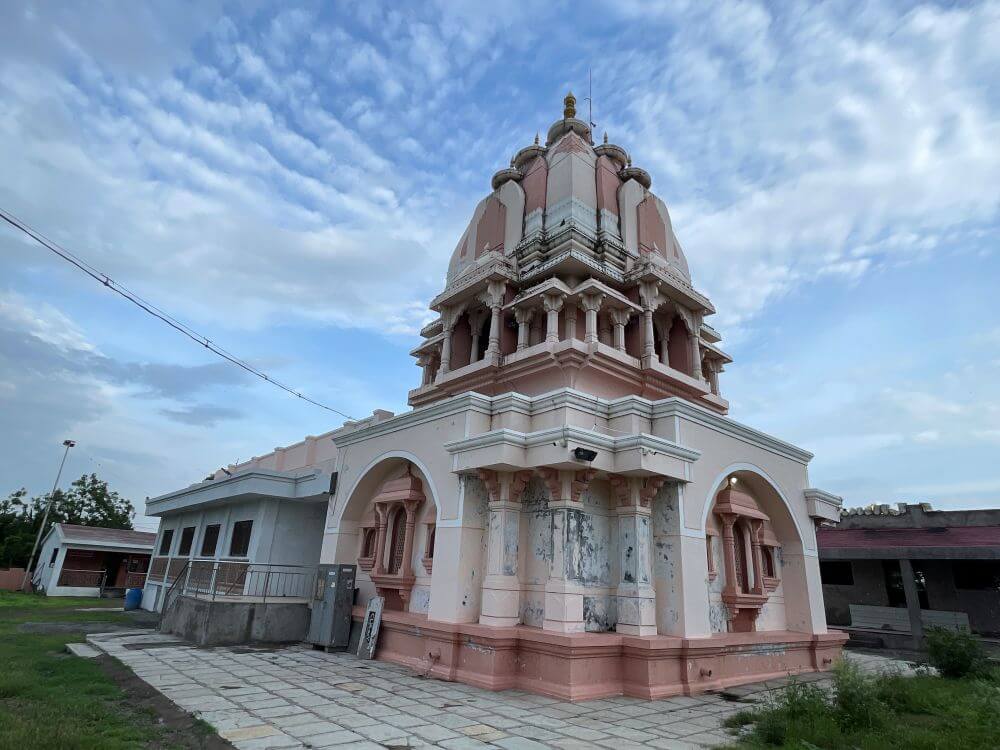
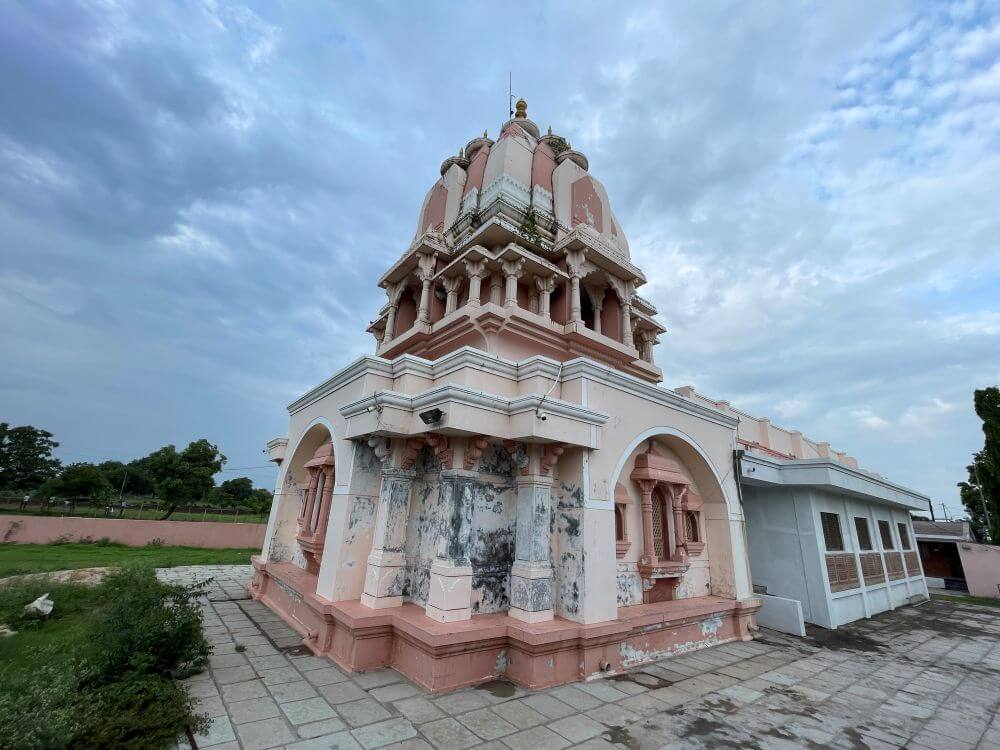
Above the roof of the Garbhagriha is a twenty-foot-high Shikhar (spire). The lower part of the Shikhar features pillar carvings, with Angi-shikhars on all four sides topped by Ardha-amalakas. At the pinnacle of the Shikhar is an Amalaka, topped by a Kalash and a flag. A paved circumambulation path (Pradakshina Marg) runs along the temple’s perimeter wall.
The Magh Vadya Saptami, the day of Gajanan Maharaj’s appearance, is celebrated here with great enthusiasm for three days. During this time, thirty to forty thousand devotees from across the district come for Darshan. Programs such as the recitation of the ‘Shri Gajanan Vijay’ granth, Bhajans, Kirtans, discourses, and Mahaprasad are organized. Other events held here include the observance of Rishi Panchami (the day of Maharaj’s Samadhi), Guru Purnima, Ram Navami, and a monthly day-long scripture recitation. The temple trust also provides healthcare assistance to the needy and educational financial aid to students.
This sacred temple stands as a testament to deep spiritual devotion, ancient architectural grandeur, and rich local cultural traditions.
The sanctum sanctorum houses the divine idol consecrated according to ancient Vedic traditions, surrounded by serene courtyards and traditional temple architecture.
Navratri, Maha Shivratri, Annual Temple Jatra & Deepotsav
Compare and book flights, secure top-rated local hotels near the temple, hire reliable guides, and rent cars instantly.
Extend your pilgrimage by visiting other highly sacred temples located nearby.


Add ₹999 more to unlock FREE SHIPPING!
Your sacred cart is currently empty.
Shop Photo FramesFill in your delivery details below to place your order.
Add comment