
Add ₹999 more to unlock FREE SHIPPING!
Your sacred cart is currently empty.
Shop Photo FramesThe ancient Gangeshwar Mahadev Temple in the village of Talere, located a short distance from Kharepatan on the Mumbai-Goa Highway, is the presiding deity (Gram-Daivat) of this region. It is considered one of the largest and most renowned temples in the Kankavli taluka. Devotees from 15 to 20 surrounding villages participate in the festivals held here. The annual festival celebrated on Tripurari Purnima in the month of Kartik is particularly famous. During this festival, there is a grand gathering of married women (daughters of the village who have moved to their husbands’ homes) who come to perform the ‘Oti’ ritual. The women of the region hold a deep faith that Gangeshwar protects their families.
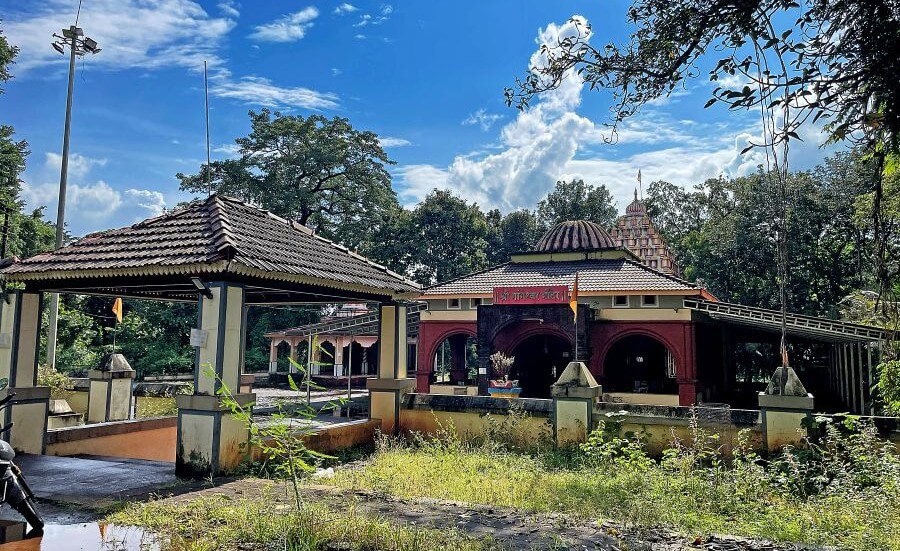
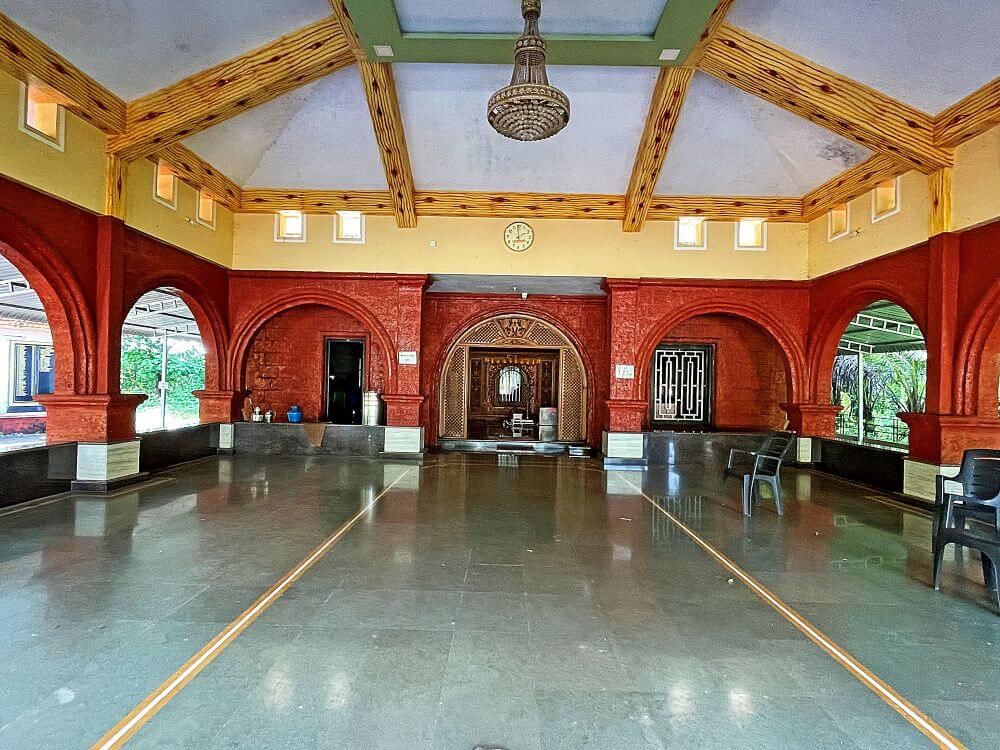
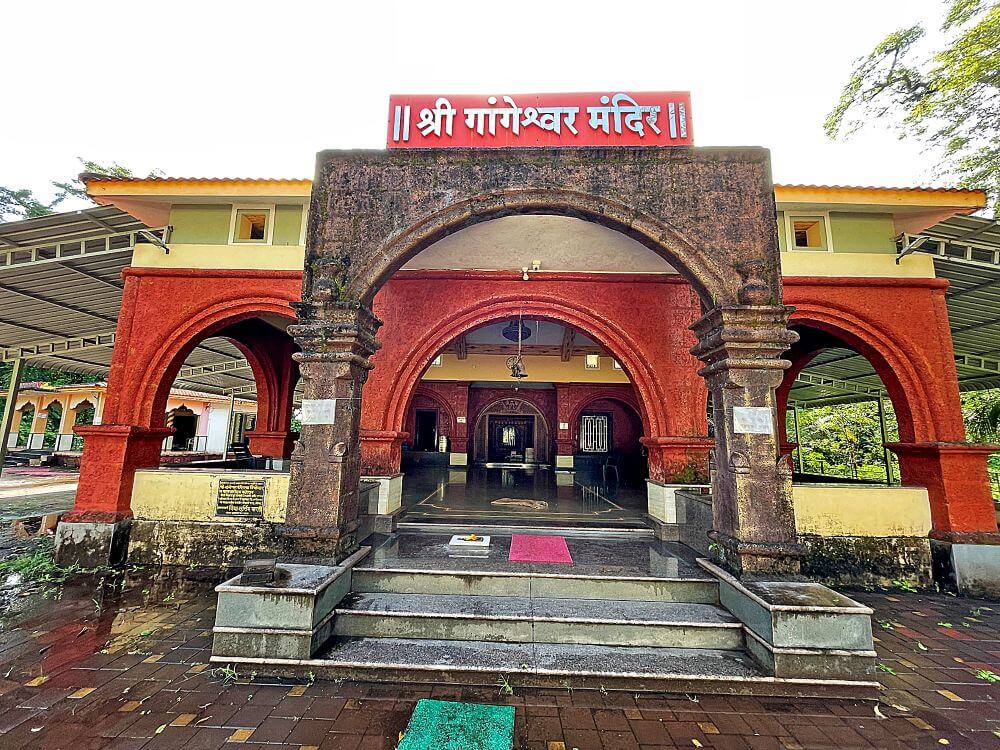
The Gangeshwar Mahadev Temple is located approximately two kilometers from the Talere Phata on the Mumbai-Goa Highway. The temple is situated in a spacious courtyard surrounded by boundary walls. One enters the temple premises by descending a few steps from the entrance gate located in these walls. The entrance gate features a four-pillared, tiled-roof structure. Upon passing through the gate, one finds a Homa-kund (sacrificial fire pit) and a Tulsi Vrindavan in front of the main temple. This two-storied, tiled-roof temple is designed with a Mukh-mandapa (front porch), Sabha-mandapa (main hall), Antarala (vestibule), and Garbhagriha (sanctum sanctorum). Although the temple is ancient, it attained its current form following renovations in 2018. There are three arches at the front of the temple, with the arch of the Mukh-mandapa positioned in front of the central arch. From here, one enters the Sabha-mandapa. The Mukh-mandapa and Sabha-mandapa are semi-open in design and include seating platforms for devotees.
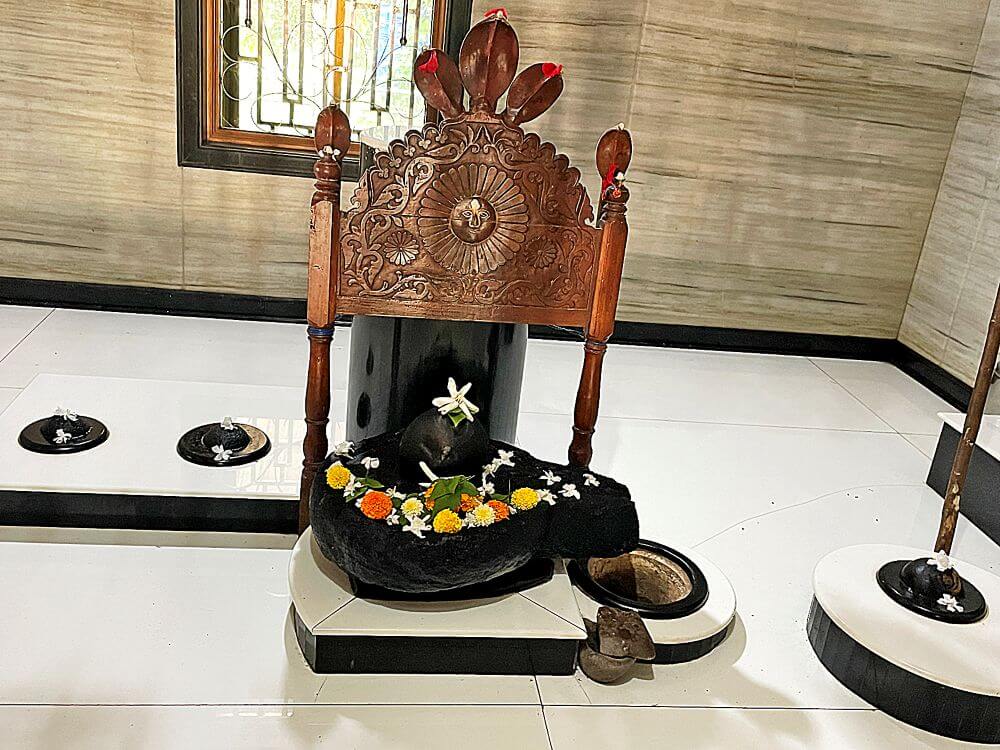
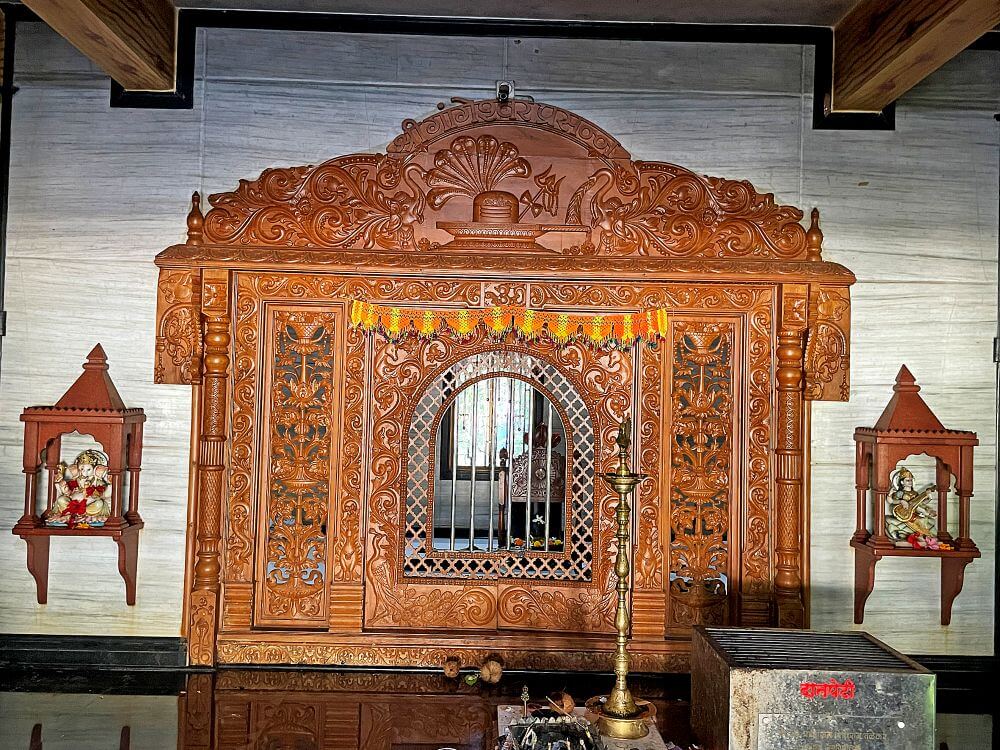
The Garbhagriha is located beyond the Antarala, with a circumambulation path (Pradakshina marg) around it. On the front wall of the Garbhagriha, within wooden niches, are the idols of Lord Ganesha on the right and Goddess Saraswati on the left. The entrance to the Garbhagriha is made of wood and features exquisite craftsmanship. A Shivalinga is carved onto the lintel of the door frame, with Shesha (the serpent) holding a canopy over it. On both sides, there are elephants (Gajaraj) fanning the deity with whisks (Chawris). A steel mesh has been installed on the small arched door of the Garbhagriha to allow devotees to view the Shivalinga from the Antarala. This mesh is surrounded by beautiful carvings, including peacocks on both sides. In the center of the Garbhagriha, there is a Sayoni Shivpindi (the standard form usually seen), and behind it is an Ayoni Shivpindi (a simple cylindrical mound). During festivals, a mask (Mukhavata) of the deity is placed on this Ayoni Shivalinga. The Sabha-mandapa is topped by a small dome-shaped spire, while the Garbhagriha features a tall, grand spire. This spire is adorned with replicas of smaller spires, topped with an Amalaka and a Kalash.
Regarding the etymology of the name Gangeshwar, it is said to be derived from ‘Ganga’ and ‘Ishwar’, meaning the Lord of the Ganga. The Ganga is intrinsically linked to Lord Shiva; when the river descended to Earth, Shiva held her waters in his matted locks to protect the Earth from her fierce flow. Since then, Shiva has been known as Gangadhar or Gangeshwar. It is believed that the name Gangeshwar evolved from this term to become the commonly used ‘Gangeshwar’.
Along with the grand annual festival on Tripurari Purnima, the ‘Harinaam Saptah’ held here from Margashirsha Shukla Ekadashi (Mokshada Ekadashi) is famous throughout the taluka. During this time, Bhajan troupes from 15 to 20 villages in the taluka perform devotional songs. Following this, the deity’s palanquin procession is taken out at midnight. Additionally, a Maha-Abhishek is performed on Mahashivratri. The thousands of devotees who arrive for darshan on this day give the entire area the atmosphere of a fair.
After Ashadhi Purnima and before the start of the Shravan month, a day is chosen to perform the ‘Desarudh’ ritual in Talere. On the day of Desarudh, every house in the village is cleaned with a broom, and the waste is discarded outside the village boundaries. The purpose is to cast away all the troubles and negativity of the household along with the waste. Simultaneously, a ritual to ward off the evil eye (Drisht) is performed for every home. This festival serves to banish all calamities facing the families beyond the village borders. During this time, all residents of the village are present at the temple.
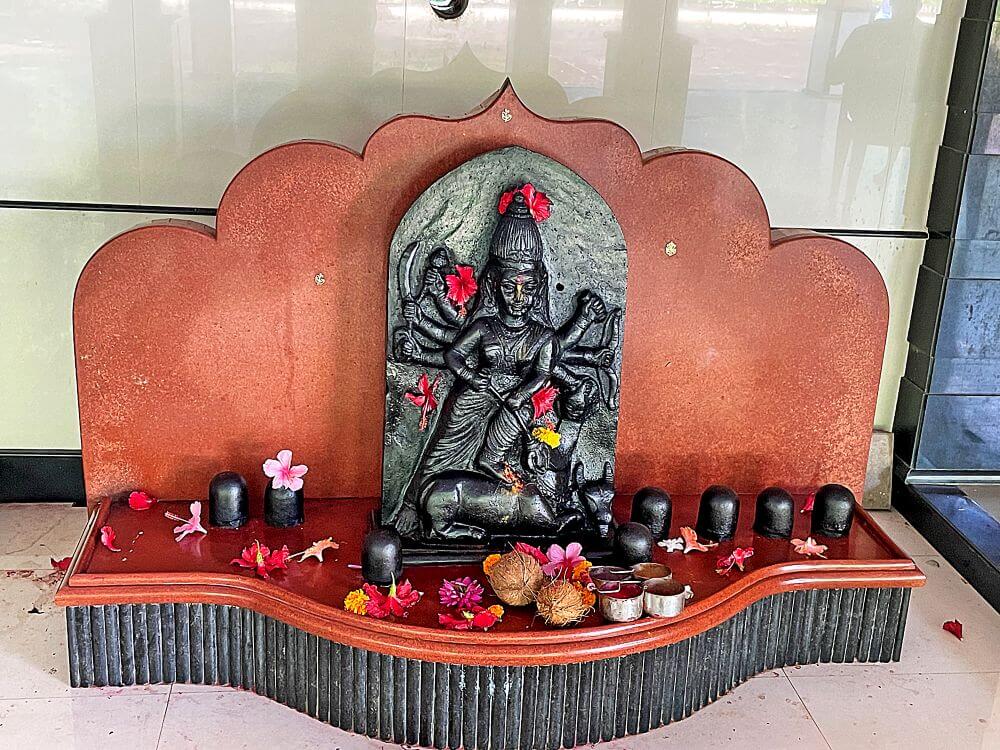
To the right of the Gangeshwar temple is the Kharjadevi Temple. The idol of Kharjadevi is situated in the center of the open Sabha-mandapa of this temple. Navratri is celebrated here on a grand scale. Over these nine nights, more than a thousand people participate in the Dandiya dance. This is considered one of the most prominent Garba venues in the taluka.
This sacred temple stands as a testament to deep spiritual devotion, ancient architectural grandeur, and rich local cultural traditions.
The sanctum sanctorum houses the divine idol consecrated according to ancient Vedic traditions, surrounded by serene courtyards and traditional temple architecture.
Navratri, Maha Shivratri, Annual Temple Jatra & Deepotsav
Compare and book flights, secure top-rated local hotels near the temple, hire reliable guides, and rent cars instantly.
Extend your pilgrimage by visiting other highly sacred temples located nearby.


Add ₹999 more to unlock FREE SHIPPING!
Your sacred cart is currently empty.
Shop Photo FramesFill in your delivery details below to place your order.
Add comment