
Add ₹999 more to unlock FREE SHIPPING!
Your sacred cart is currently empty.
Shop Photo FramesThe beautiful temple of Mother Kalambadevi, a Goddess who rushes to answer the calls of her devotees and fulfills their vows, is situated in Vargaon. Vargaon, which has received national awards such as ‘Nirmal Gram’ and ‘Environmentally Balanced Prosperous Village’ from the President of India, is located two kilometers from Talere on the Mumbai-Goa highway. Kalambadevi is the village deity of this village, which is spread across eleven ‘wadas’ (hamlets). Festivals such as Navaratri, Tripurari Purnima, and Shimga are celebrated here with great enthusiasm. On these days, the Goddess’s palanquin is carried around every house in the village.
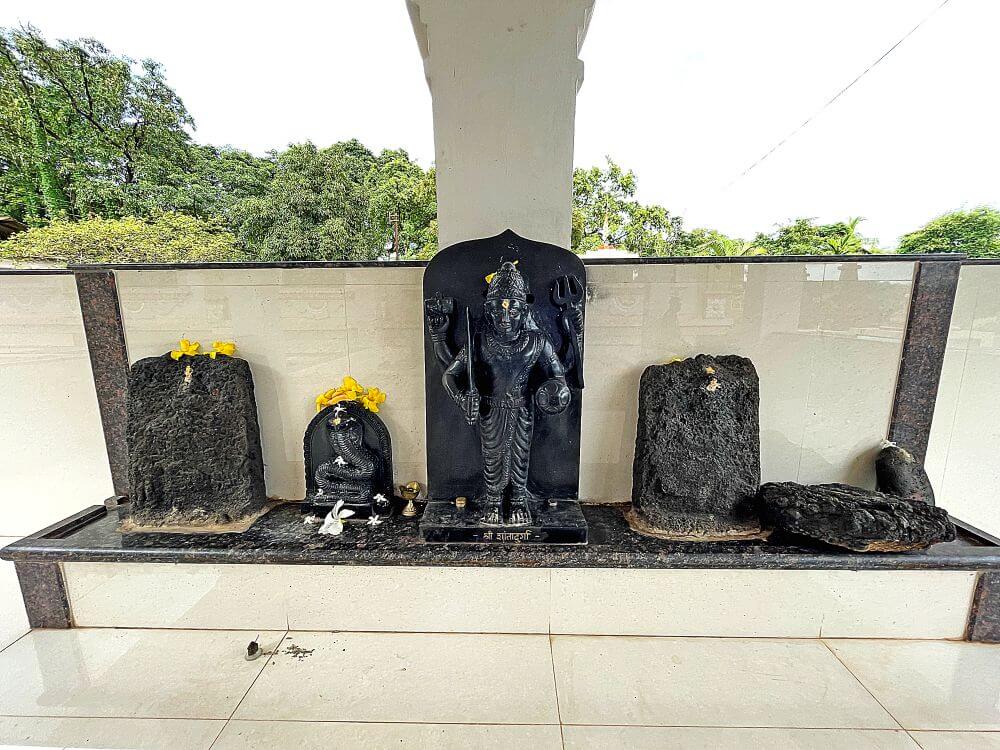
There are Kalambadevi temples in many villages across the Konkan region. Sarkhel Kanhojiraje Angre had immense faith in Kalambadevi. Kalambadevi, the family deity of the Angre dynasty, is also the village deity of Alibaug. Kalambadevi is considered a form of Adi Shakti Durga. The Puranas describe two forms of Durga: the fierce (Raudra) and the gentle (Saumya). In her Chandi form, she is found with four, eight, ten, or eighteen arms. Her hands are depicted holding weapons such as the discus (chakra), noose (pasha), sword (khadga), trident (shula), and shield (khetaka/gada). The idol of Kalambadevi in Vargaon is in the form of Asur-mardini Durga. The nine forms of Durga (Navadurga) also reside here.
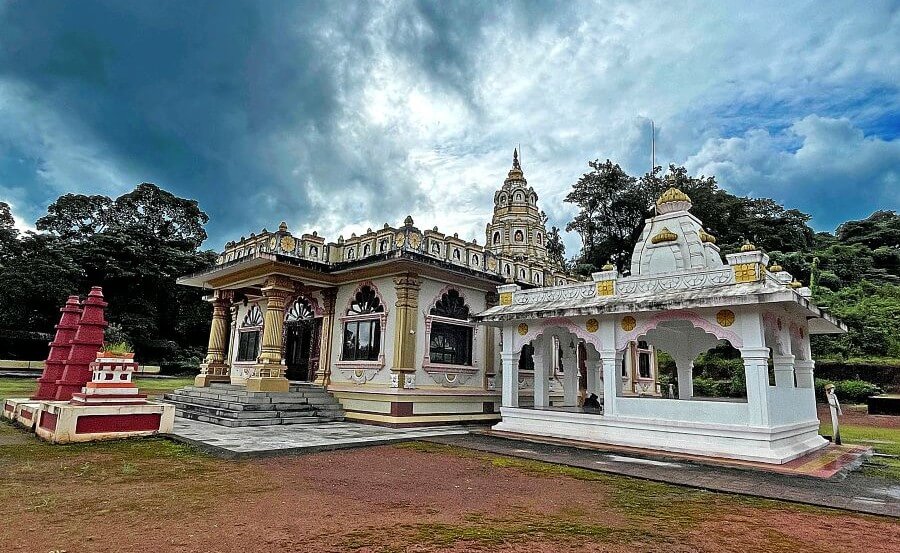
The temple complex features a perimeter wall built of laterite stone, a spacious courtyard inside, the temples of Kalambadevi and Mahadev, and a large parking area outside the wall. There are eight steps to enter the courtyard of this elevated temple. Entry is through an arched gateway in the perimeter wall. A beautiful garden has been developed here, featuring many flowering and ornamental plants. Upon entering, one first sees the white-colored Mahadev temple, followed by the spacious Kalambadevi temple behind it.
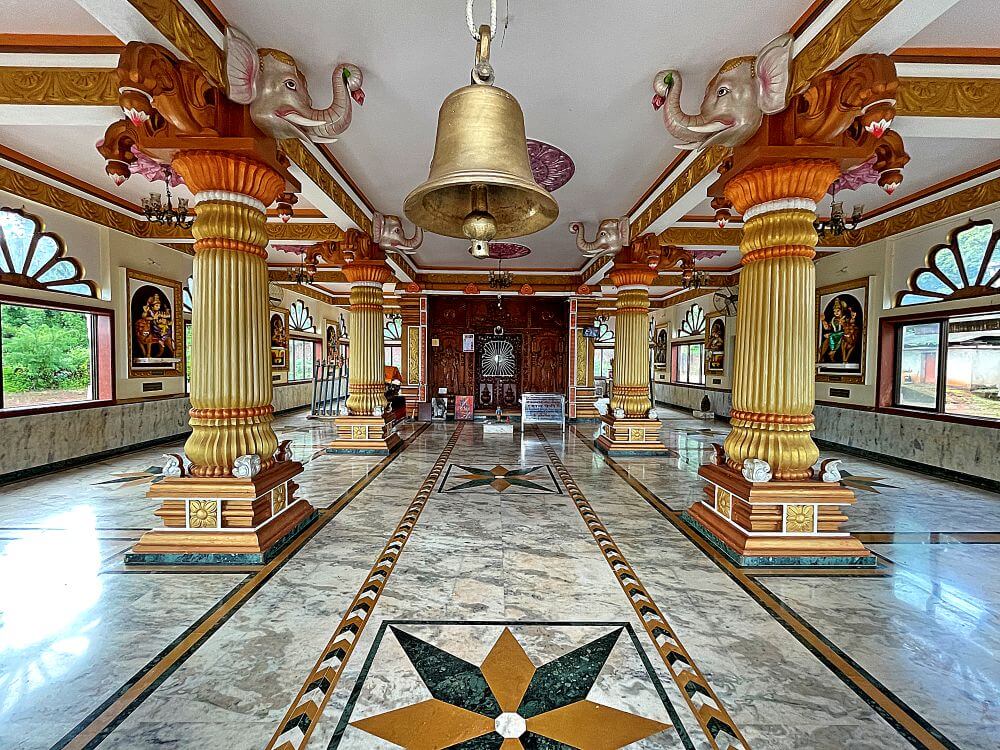
The temple consists of a Darshan Mandap (viewing hall), Sabha Mandap (assembly hall), Garbhagriha (sanctum sanctorum), and a tall shikhara (spire) above it. There are three platforms in front of the temple. Two of these platforms hold stone lamp pillars (deepstambhas), while one side platform holds a small Tulsi Vrindavan. One enters the Darshan Mandap by climbing eight steps from these platforms. This Darshan Mandap has steps on all three sides and is supported by two thick, circular pillars. The lower part of these pillars is square, while the capital resembles an unfurled flower, topped by a square ‘palagai’. In the Chola architectural tradition, the palagai is larger and thinner than the pillar itself, a feature visible in all the pillars here. Instead of the traditional brackets (tarangahasta) that support the roof, elephant heads are carved onto these pillars.
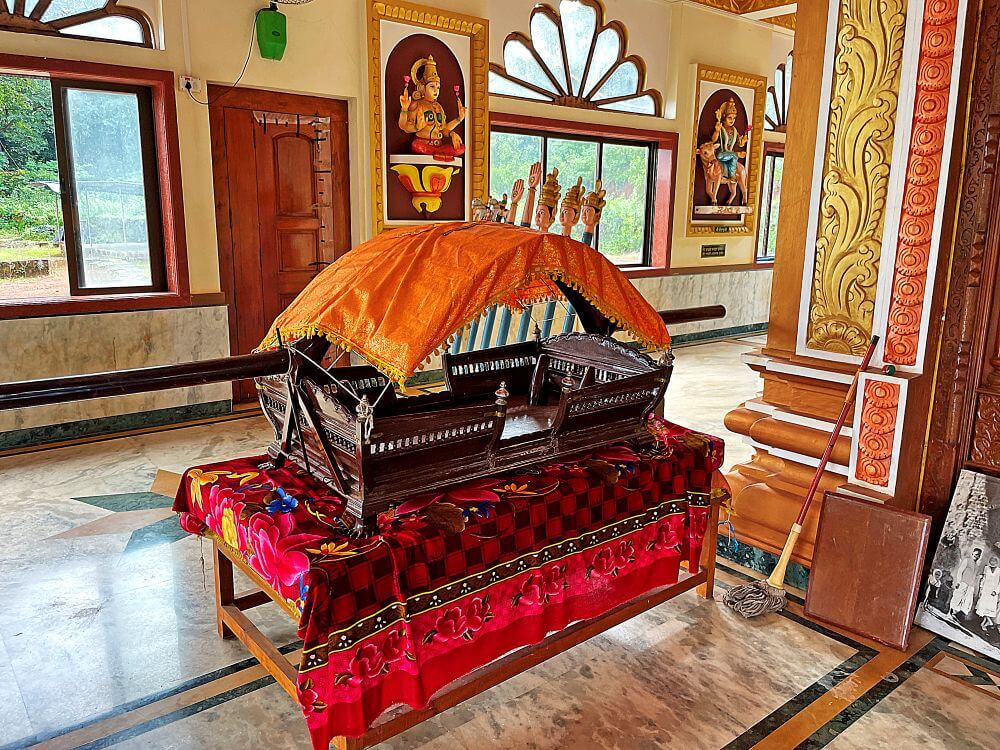
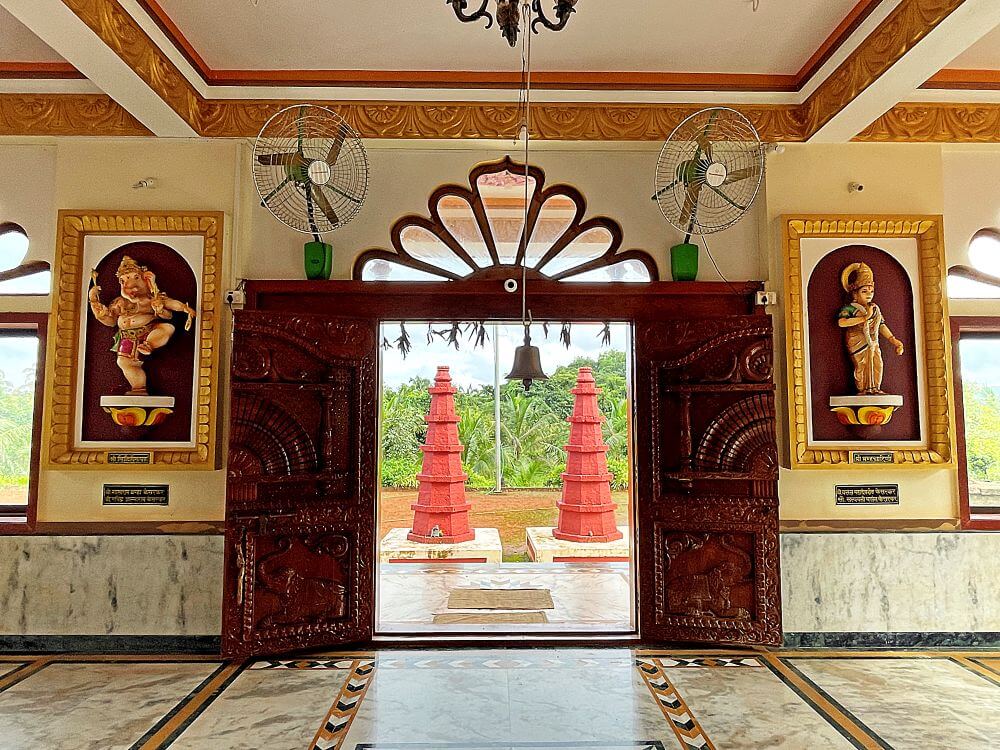
The main entrance of the temple is made of wood. On its wide frame, relief images of attendants holding flower garlands are carved on both sides. The entire frame of the temple is beautifully carved. Through this entrance, one enters the marble-floored Sabha Mandap. The first things to catch the eye are the four inner pillars and the elephant heads holding lotus flowers in their trunks. These pillars are similar to those in the Darshan Mandap. Although the Sabha Mandap is enclosed, the large windows on its walls create an impression of openness. The pillars are located a few feet away from these walls. The ceiling of the Sabha Mandap is flat, and along its edges, there are small niches housing various deities and sages.
On all four walls, there are sculptures of Siddhivinayak, Lakshmi, Saraswati, and the nine forms of Durga: Shri Shailaputri seated on Nandi, Shri Brahmacharini holding a kamandalu and rosary, the ten-armed Shri Chandraghanta, Shri Kushmanda riding a tiger, the fair-complexioned Shri Skandamata, Shri Katyayani riding a lion, the dark-complexioned, three-eyed Shri Kalaratri riding a donkey, the fair-complexioned Shri Mahagauri, and the wish-granting Shri Siddhidatri. In the Sabha Mandap, near the sanctum, the Goddess’s wooden, intricately carved palanquin is kept.
To the north of the Sabha Mandap is the circumambulation path (pradakshina marg), and the sanctum is in the center. In front of the sanctum’s entrance, where a tortoise (kurma) idol is usually placed, there is a small platform featuring a doll-like idol of a girl worshipping the Goddess. The sanctum entrance features intricate wooden carvings. Above the door frame, there is a carving of Sheshashayi Vishnu flanked by sun images. On both sides of the entrance, relief sculptures of Goddesses holding lotuses are carved. The entrance has a steel mesh in the center, and below it, two auspicious kalashas are carved on the doors.
Inside, on a marble-like pedestal (vajrapitha), the ancient, black stone idol of Kalambadevi is enshrined. This four-armed idol, depicting the Goddess with an asura beneath her feet, is small in stature. The relief sculptures are carved into the same stone as the idol. To the right of the Goddess are the idols of the folk deities Gavanadevi and Vitthaladevi, and to the left are Gangodev and Ganesh. Local deities are also present on the lower level of the pedestal. The main temple’s sanctum is topped by a tapering shikhara, which features niches on all sides containing various divine idols.
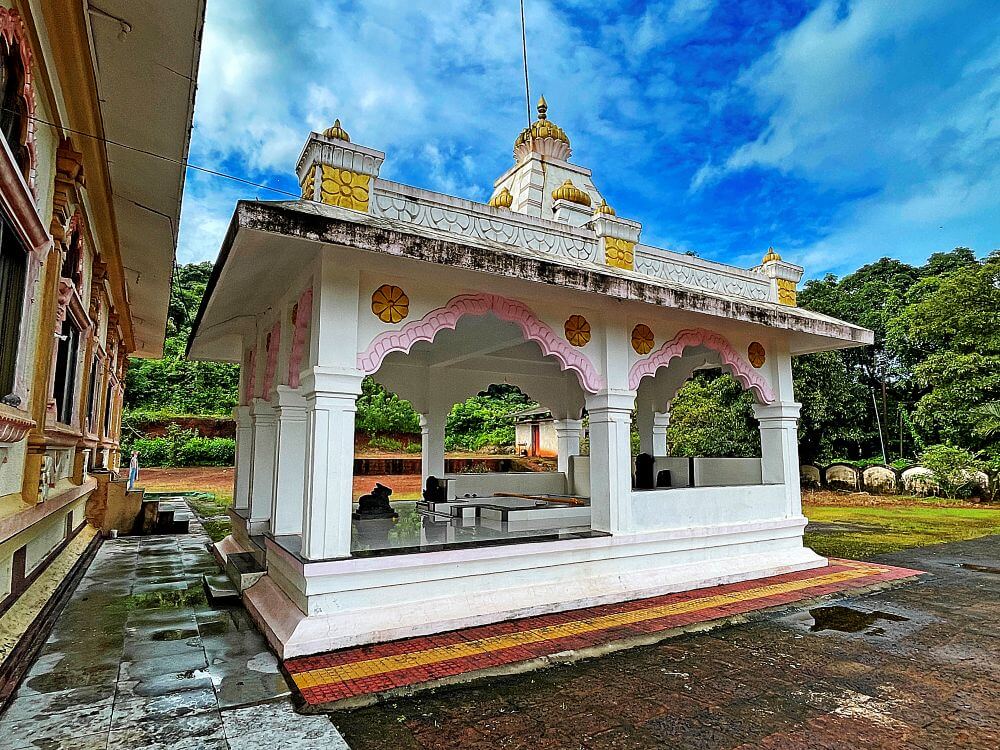
Adjacent to the Kalambadevi temple, on the eastern side, is the pristine white Mahadev temple. This temple, which has an open Sabha Mandap and an open sanctum, houses a black marble Shiva Linga. It is in the ‘Patal-linga’ form, meaning it is situated at a level lower than the floor of the Sabha Mandap. Outside the sanctum, there is a Nandi and an idol of Ganesh carved in black stone. On a platform near the wall behind the Shiva Linga, there is an idol of Parvati.
The anniversary of this grand and beautiful Kalambadevi temple is celebrated every year on February 20th. A large fair (yatra) is held on this day, and the Goddess’s palanquin procession takes place. Additionally, a major festival is celebrated during the nine days of Navaratri, in which all 11 wadas of Vargaon participate.
This sacred temple stands as a testament to deep spiritual devotion, ancient architectural grandeur, and rich local cultural traditions.
The sanctum sanctorum houses the divine idol consecrated according to ancient Vedic traditions, surrounded by serene courtyards and traditional temple architecture.
Navratri, Maha Shivratri, Annual Temple Jatra & Deepotsav
Compare and book flights, secure top-rated local hotels near the temple, hire reliable guides, and rent cars instantly.
Extend your pilgrimage by visiting other highly sacred temples located nearby.


Add ₹999 more to unlock FREE SHIPPING!
Your sacred cart is currently empty.
Shop Photo FramesFill in your delivery details below to place your order.
Add comment