
Add ₹999 more to unlock FREE SHIPPING!
Your sacred cart is currently empty.
Shop Photo FramesSaint Tukaram Maharaj once said, “The trees and vines are our kith and kin.” In Hinduism, trees like the Audumbar are revered as divine. In the village of Sangeli, this devotion goes a step further, as the trunk of a tree is worshipped within the temple itself as the deity Girijanath. The village of Sangeli in Sawantwadi taluka is famous for this tradition, which has been practiced for approximately 350 years. Every year, a new idol in the form of a jackfruit tree trunk is re-consecrated in the sanctum sanctorum. During this process, the entire sanctum is dismantled; the old idol is removed, and a new one is installed in its place. The temple’s architecture has been designed specifically to facilitate this unique ritual.
Devotees believe that Girijanath of Sangeli-Sanamtemb is a protector of women, especially those who return to their maternal homes. ‘Girija’ is another name for Parvati, meaning ‘born of the mountain,’ and the ‘Nath’ (Lord) of Girija is Shankar (Shiva). Although the name suggests a Shaivite temple, Girijanath is originally a folk deity. Here, the village deity is affectionately worshipped as ‘Giroba.’ While most temples house idols carved from stone or wood, the deity Giroba is installed here in the form of a jackfruit tree trunk. This annual re-consecration ceremony is famously known as the ‘Giroba Utsav.’ Because the deity is considered ‘Jagrut’ (awakened) and known to grant the wishes of devotees, thousands of pilgrims flock to the Giroba festival.
The tradition of re-consecrating the idol dates back to the era of Chhatrapati Shivaji Maharaj. The ceremony begins every year on Mahashivratri, when a large jackfruit tree in the vicinity is selected. The temple officials (Mankaris) seek the deity’s consent, a process known here as ‘Shesh Lavne.’ Once the divine consent is received, the tree is designated as the new Giroba. The tree is then worshipped with prayers, and Bhajans and Kirtans are performed until the Giroba Utsav. The festival is celebrated on the day before Holi. On that day, amidst the beating of drums and cymbals, the selected jackfruit tree is felled and shaped into a smooth pillar. It is then brought to the temple in a grand procession. The roof of the sanctum is removed to facilitate the removal of the old Giroba. Once the old and new deities are brought together, the new one is installed in the sanctum following specific rituals. After the trunk is brought into the temple, seven feet of it is kept inside and seven feet outside. The old deity removed from the sanctum is placed in a spot outside the temple called ‘Khutyacha Chala.’ Legend has it that there are always only twenty-one old deities in this spot; the twenty-second one is never seen, as it is believed by the villagers that the deity disappears and travels to Kashi.
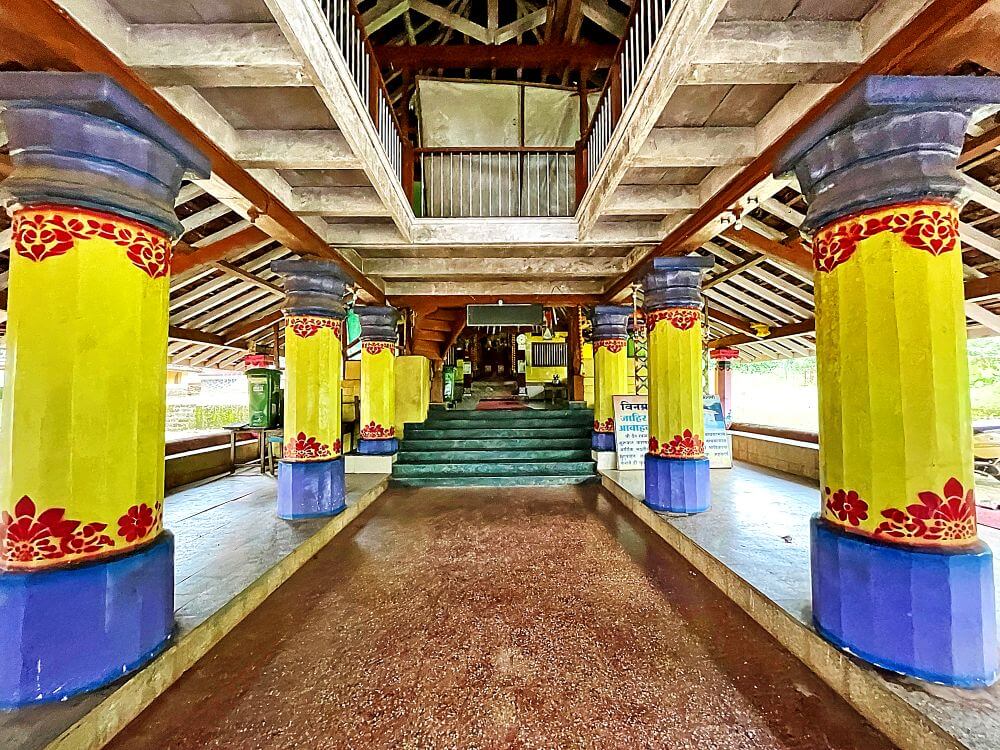
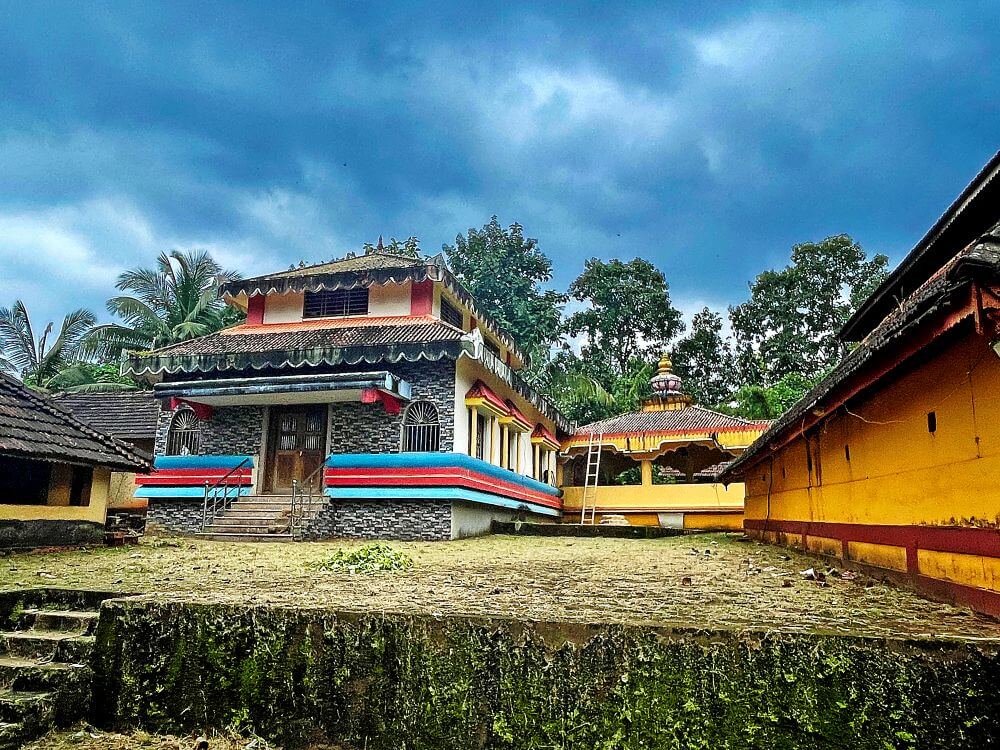
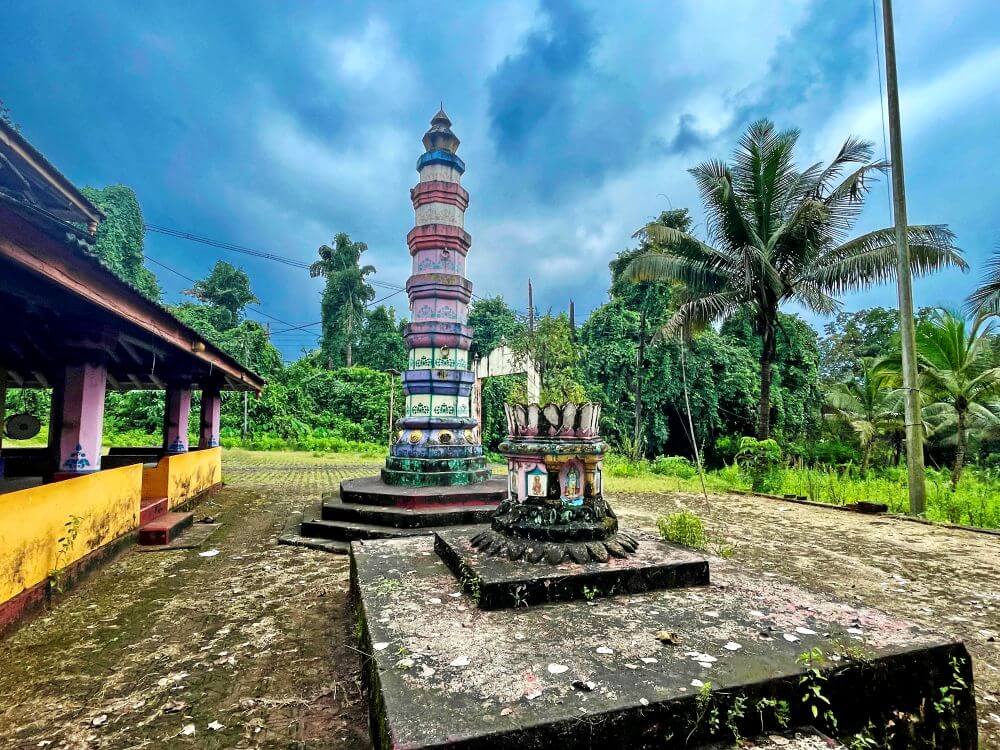
The temple of Giroba is said to be extremely ancient. The current structure of the temple follows the Konkani architectural style. It stands on a high plinth within a spacious courtyard in a nature-rich setting. The temple structure consists of a Sabha Mandap (main hall), an Upa-Sabha Mandap (secondary hall), an Antaral (vestibule), and the sanctum sanctorum topped by a Shikhara (spire). In front of the temple stands an eight-tiered lamp pillar (Deepstambha) and a Tulsi Vrindavan nearby. The Sabha Mandap is two-storied and semi-open, supported by 12 pillars on the outside, featuring ‘Kakshasanas’ (stone benches). A short distance inward from these benches are four wide, circular stone pillars on each side. The area between them is slightly recessed, leading into the secondary hall, which also features stone benches. Four steps lead up from there into the Antaral.
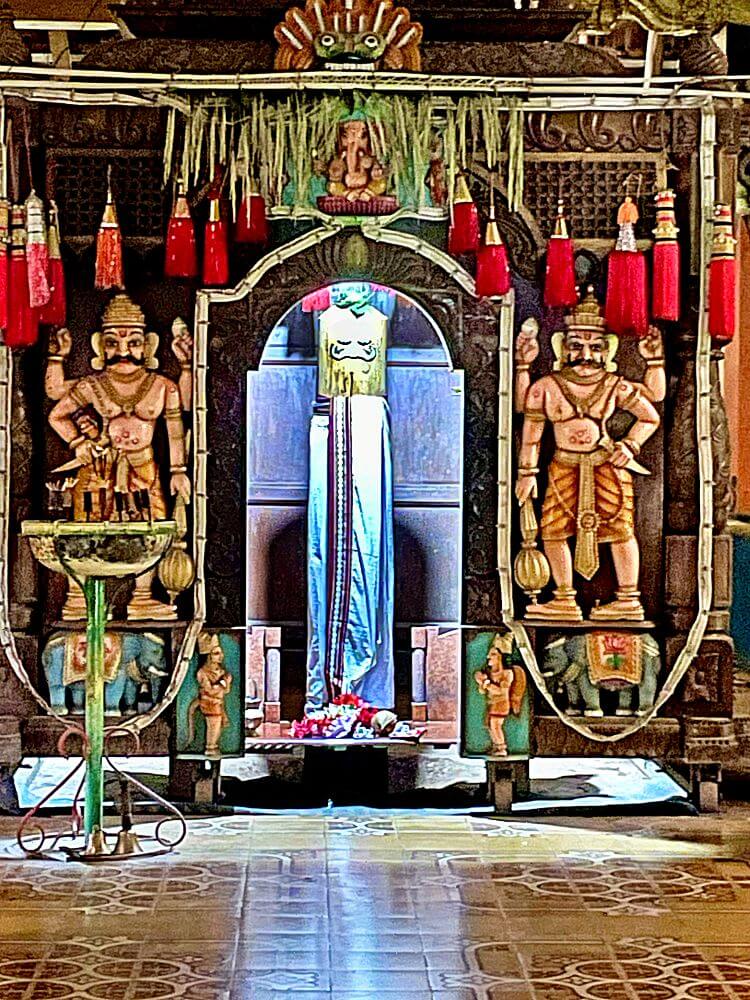
The entrance to the Antaral is wide and made of wood. The door frames are painted and carved with floral motifs, along with figures of Garuda and Hanuman in a posture of salutation. At the base of the door frame are Vaishnava gatekeepers. The Antaral features wide stone pillars on both sides, topped with ‘Ghatapallava’ (vase and foliage) motifs. In the center of the Antaral lies the sanctum, which resembles a large shrine. The outer wall of the sanctum is carved with large figures of the gatekeepers Jaya and Vijaya. The entrance is arched, and at the bottom of the door are small stone carvings of Garuda and Hanuman. A carved image of Lord Ganesha is placed at the lintel of the doorway. Inside the sanctum, the tree-form idol of Giroba is placed in a specially constructed enclosure on the floor. A smooth, tall jackfruit tree pillar, shaped like a Shiva Linga, is installed there. The upper part is adorned with eyes and a mustache, and a Tripundra mark is applied to the forehead. The lower part is draped in a dhoti.
The Giroba festival is celebrated with great enthusiasm and fervor. During this time, the temple and the surrounding hamlets are illuminated with decorative lights, and the entire area is adorned with flags. Many women who have married and moved away from the village return to their maternal home for this festival. On the evening of the festival, at 4:00 PM, the temple officials, accompanied by the temple banner and musical instruments, proceed to the selected jackfruit tree. Amidst loud cheers, the tree is marked for felling. The festival idol of Giroba is then brought to the temple in a grand procession, attended by thousands of devotees.
This sacred temple stands as a testament to deep spiritual devotion, ancient architectural grandeur, and rich local cultural traditions.
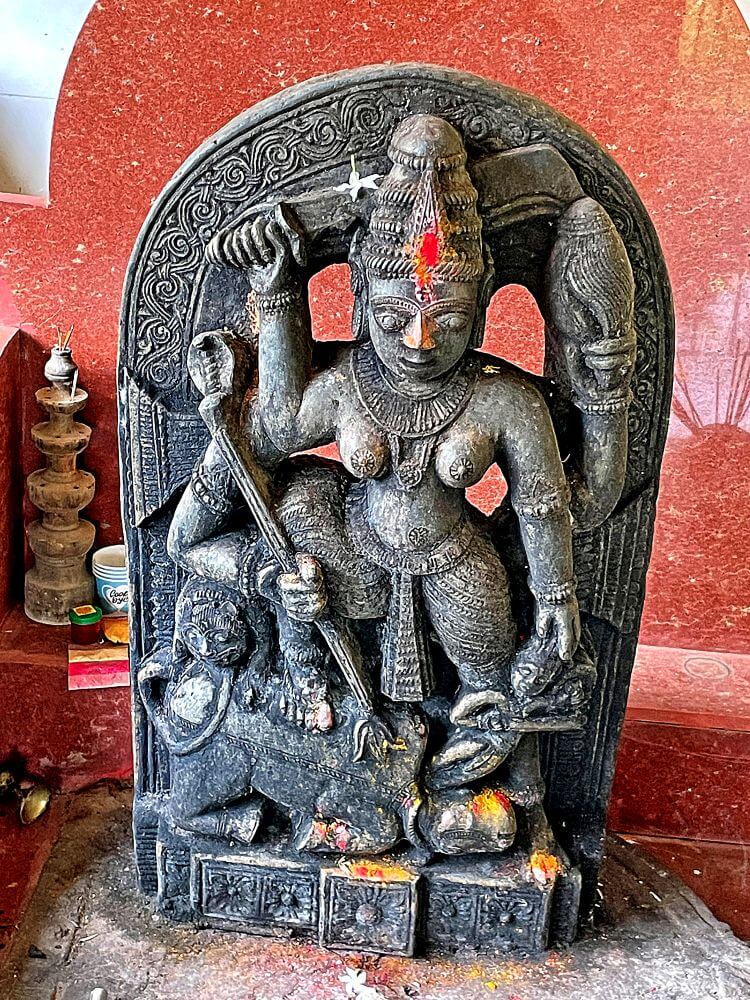
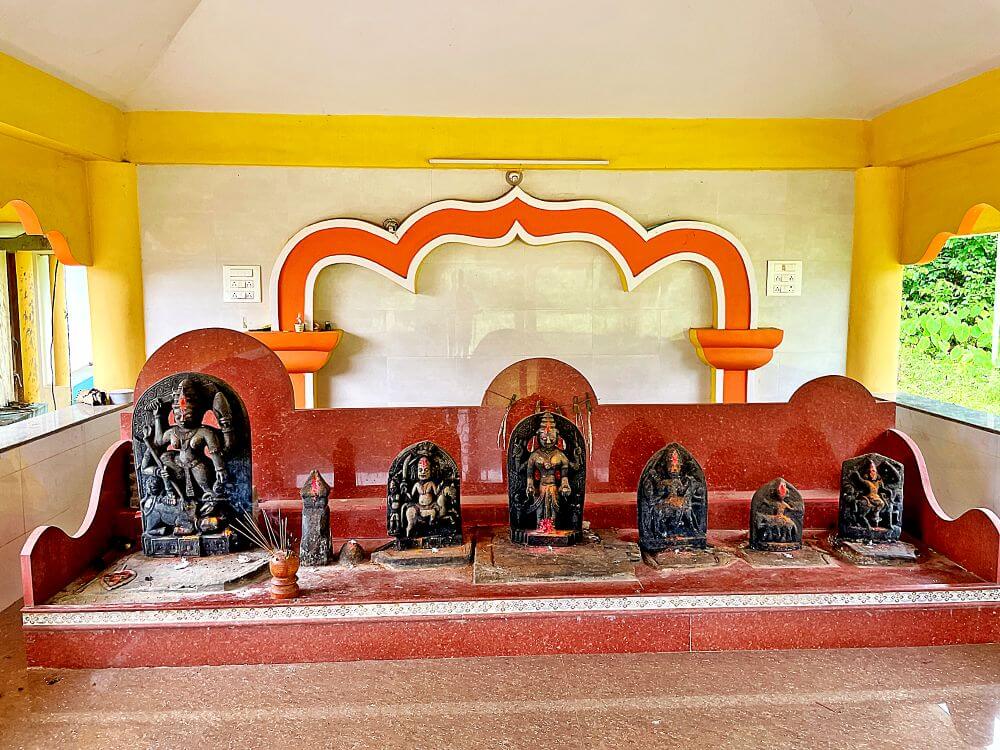
The sanctum sanctorum houses the divine idol consecrated according to ancient Vedic traditions, surrounded by serene courtyards and traditional temple architecture.
Navratri, Maha Shivratri, Annual Temple Jatra & Deepotsav
Compare and book flights, secure top-rated local hotels near the temple, hire reliable guides, and rent cars instantly.
Extend your pilgrimage by visiting other highly sacred temples located nearby.


Add ₹999 more to unlock FREE SHIPPING!
Your sacred cart is currently empty.
Shop Photo FramesFill in your delivery details below to place your order.
Add comment