
Add ₹999 more to unlock FREE SHIPPING!
Your sacred cart is currently empty.
Shop Photo FramesIt is traditionally believed that the Godavari is originally none other than the sacred Ganga herself. According to Puranic legend, the sage Gautam Rishi brought the Ganga to Trimbakeshwar in Maharashtra to atone for the sin of Go-hatya (the killing of a cow). That sacred stream became revered as the Godavari. Popular faith maintains that this Godavari flows in a Gupta (hidden or secret) form at two specific locations in the country. One such site is nestled within the Panna range of the Vindhya Mountains near Chitrakoot in Madhya Pradesh, while the second is situated at Sarsad in the Jhagadia Taluka. This hallowed Tirtha (holy water site) lies upon the sacred path of the Narmada Parikrama. Here, alongside the shrines of Gupta Godavari and Trimbakeshwar Mahadev, stands the temple of Siddheshwar Mahadev.
The local legend surrounding Gupt Godavari Tirth is closely connected with King Siddharaj Jaysinh (AD 1094–1143). Siddharaj Jaysinh was a Chalukya emperor, the son of King Karansinh of Anhilwad Patan, who had founded the city of Karnavati (present-day Ahmedabad). According to the sacred tale told here, at one time King Siddharaj Jaysinh developed leprosy all over his body. He tried many remedies and sought the counsel of numerous sages and holy men, yet nothing proved effective. Eventually, a Mahatma (great soul) advised him, “Proceed with your family to the holy precinct of Trimbakeshwar near Nashik. Your malady shall be cured if you bathe in the waters of the Godavari river.” Following this counsel, the King set forth for Trimbakeshwar accompanied by his queen, ministers and a grand retinue of elephants and horses. However, his health faltered at Sarsad. He thus instructed the Queen, “Go forth to Trimbakeshwar, bathe in the Godavari and pray for my well-being. Should I survive until your return, I shall accompany you home.” In accordance with his wish, the queen proceeded to Trimbakeshwar. Meanwhile, the king remained here, deeply meditating upon and worshipping the Godavari with devout faith.
Pleased by his devotion, the Godavari appeared to him in a divine vision one night and blessed him, saying, “I dwell secretly here. If you bathe in my waters for seven days, your disease will be completely cured.” The next morning, the king narrated this vision to his ministers, who immediately began searching for the sacred waters. They discovered a small stream trickling through the surrounding shrubs and bushes. The king then bathed in this stream and after seven days of ritual bathing, his leprosy disappeared entirely.
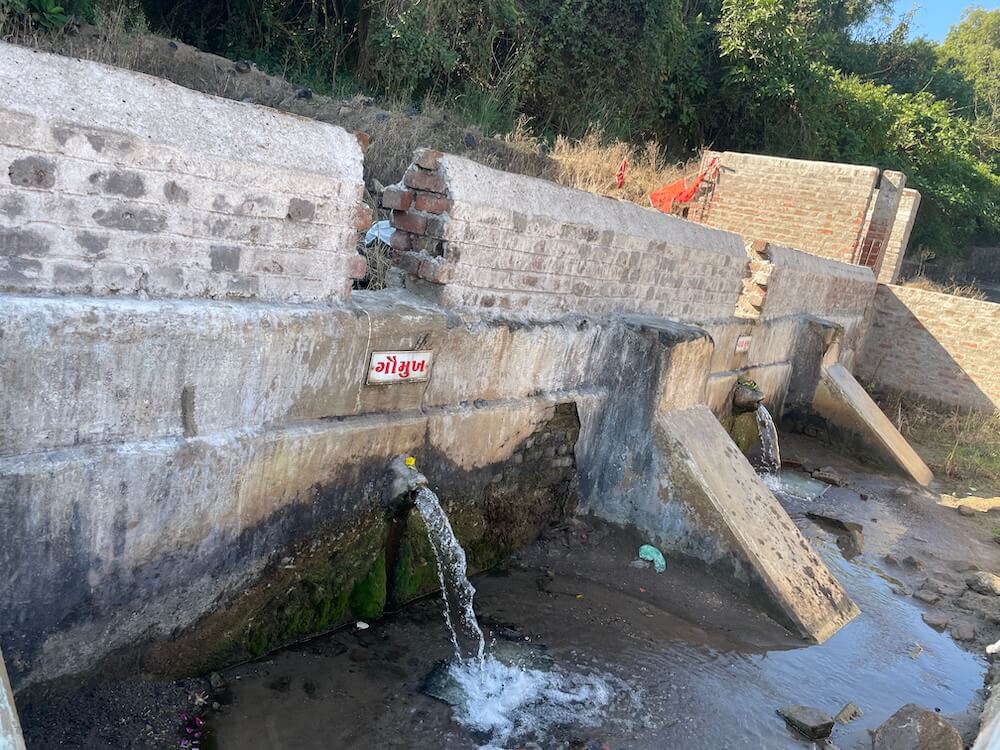
Despite the cure, a lingering doubt remained in the King’s mind as to whether these waters were truly those of the Godavari. To dispel his uncertainty, the River Goddess performed a miracle. While the Queen was bathing in the Godavari at Trimbakeshwar, her golden Karnakundal (earring) slipped into the water. Carried by the current, the jewel travelled to this very spot in Sarsad and fell into the King’s hands. Recognising the ornament, the King proclaimed the stream to be the essence of Mother Godavari and declared that the site would henceforth be known as the Gupta Godavari Dham. At the source where the water emerged, he installed a Gomukh (cow’s mouth spout) and a Vyaghramukh (tiger’s mouth spout). It is said that the king also built the Trimbakeshwar Mahadev Temple at this sacred site. Near it, he consecrated another Shivling, which came to be known as Siddheshwar Mahadev in his honour.
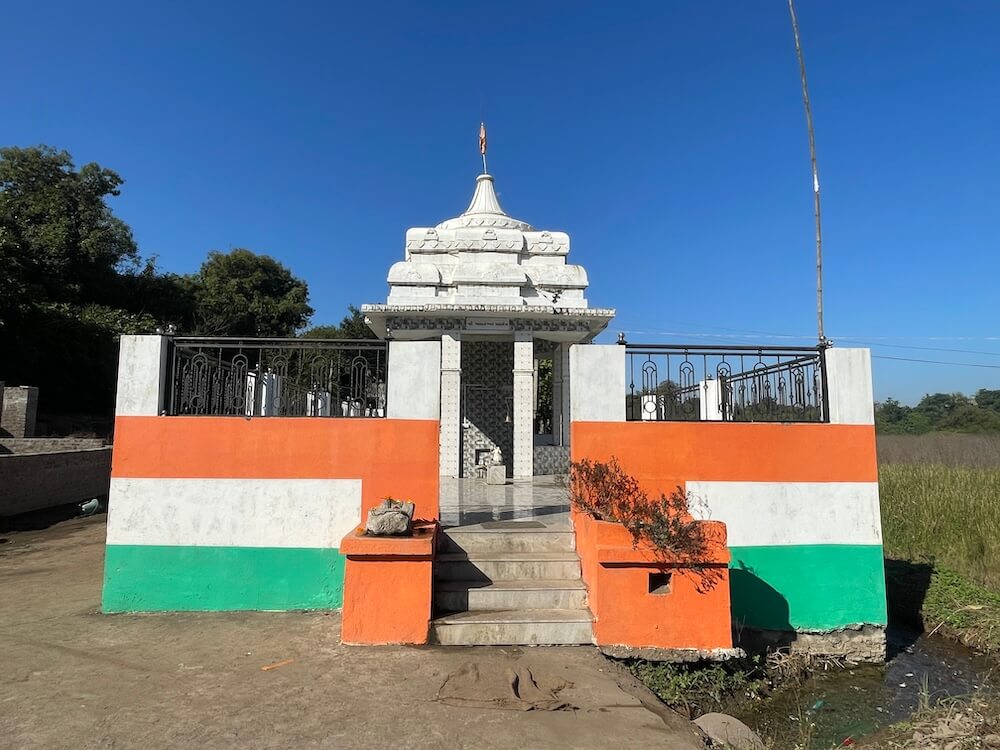
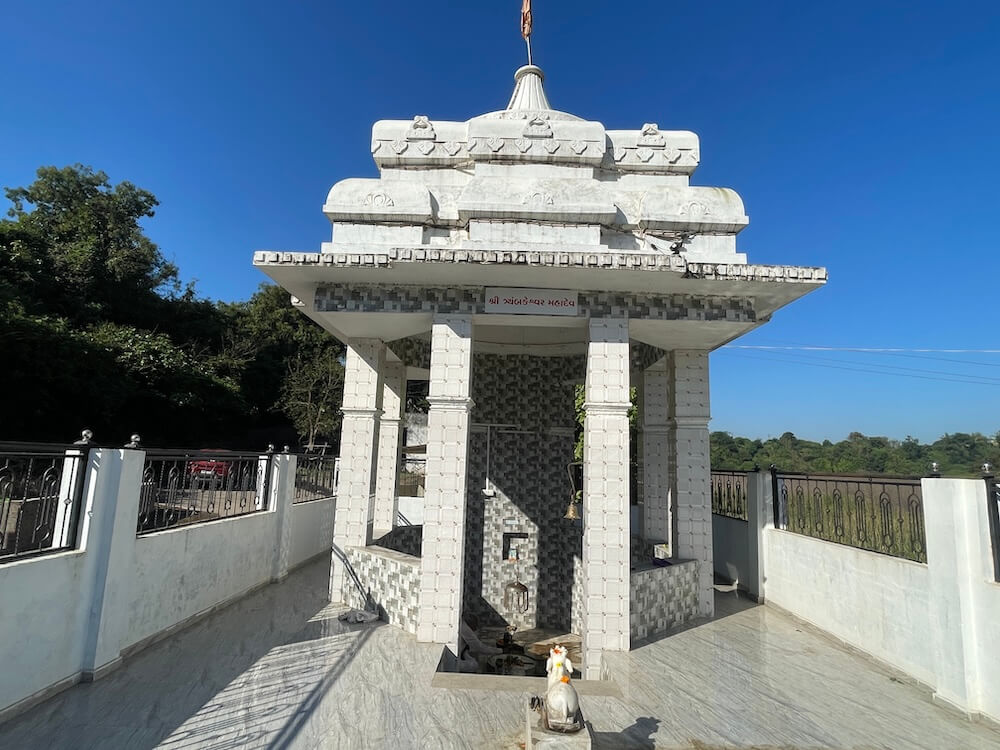
Sarsad is a small village about 20 kilometres from Jhagadia. A little distance from the village, at the foot of a small hillock, lies this Gupt Godavari Tirth, with the Trimbakeshwar Mahadev Temple standing nearby. The modest temple, built in modern style, rests on a raised plinth. Four steps lead into the courtyard enclosed by a parapet on all sides. Upon a small platform ahead stands a marble idol of Nandi, with a tortoise before it. The sanctum is semi-open; its pillars and lower parapets are lined with tiles. The sanctum itself lies slightly lower than the outer courtyard. As at Trimbakeshwar, three Shivlings symbolising Brahma, Vishnu and Mahesh are installed within, sheltered beneath a serpent’s hood. Beside them stands another Shivling, all crowned with small silver canopies. Above the sanctum rises a shikhara influenced by the southern Gopuram style, its upper portion shaped like an inverted chalice, crowned with amalak and kalash. To the right of the temple, at the foot of the hill, are two small Kundas (tanks). Affixed to the hillside wall are the stone Gomukh and Vyaghramukh, from which flows the water believed by devotees to be the hidden Godavari. The primary shrine of Godavari Mata is located nearby.
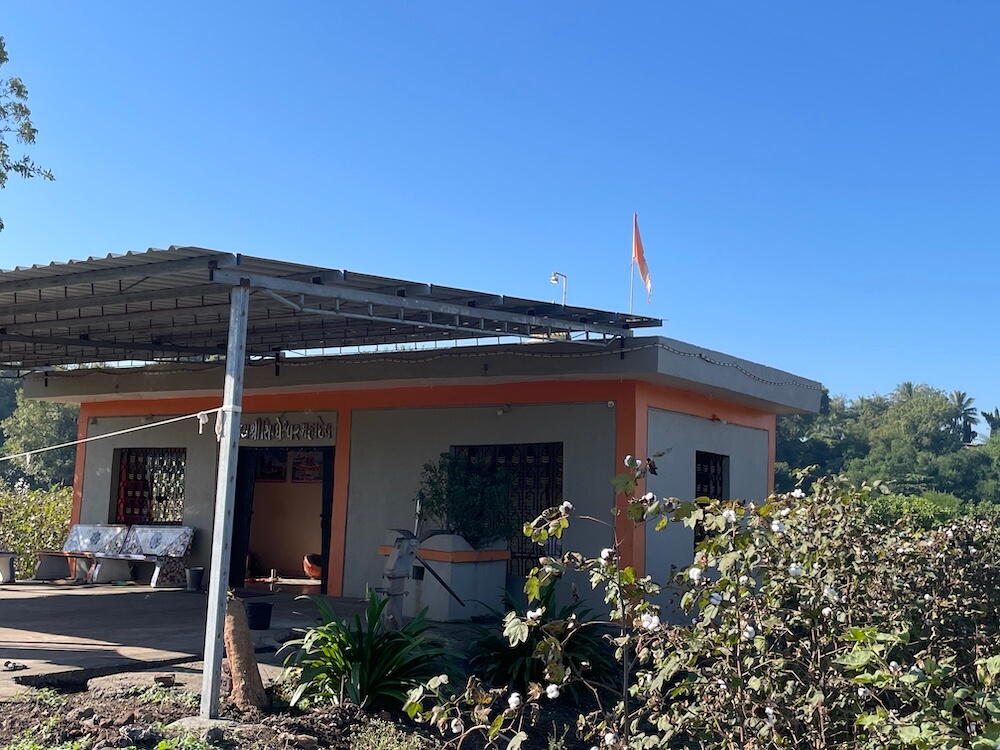
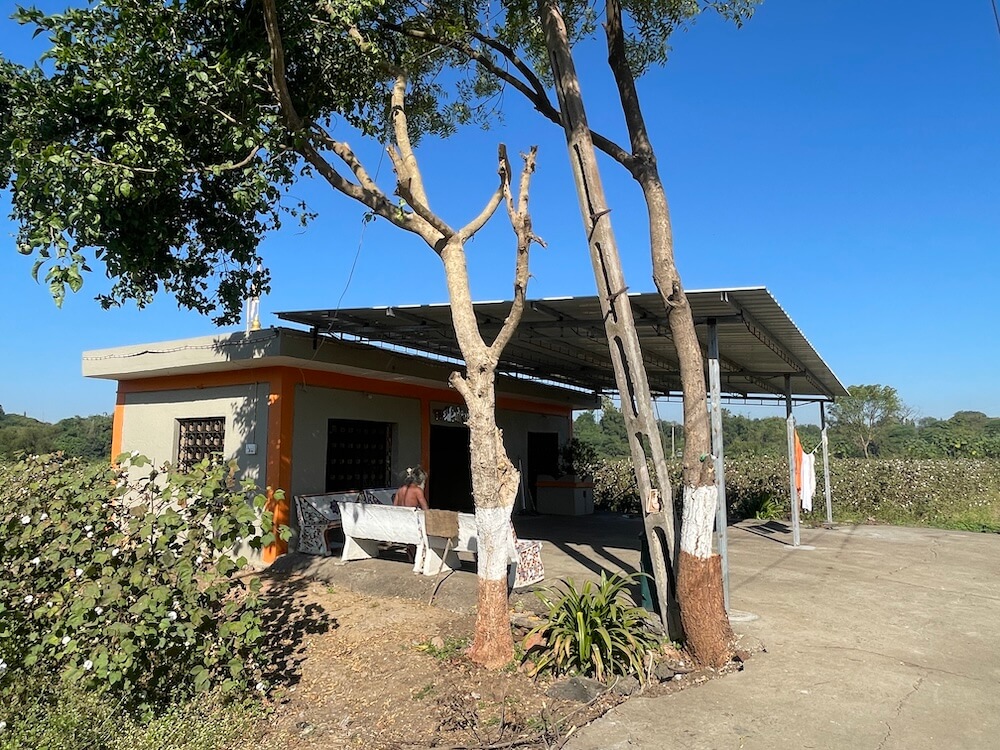
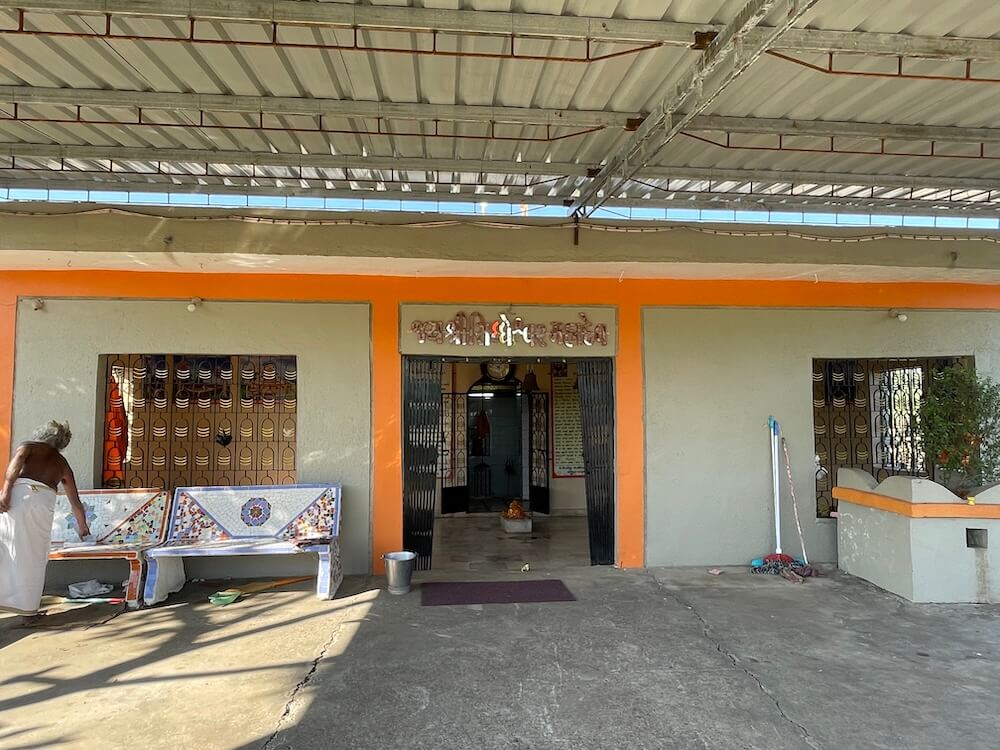
Some distance away, within the fields, stands the temple of Siddheshwar Mahadev, renovated in recent years. A large sheet-covered canopy stands before it. Architecturally, the temple consists of Sabha mandap (assembly hall), an Antarala (vestibule) and a Garbhagriha, constructed in a modern style. A domed shikhara crowns the sanctum. On the walls of the sabha mandap are displayed images of the twelve Jyotirlingas. Within the sabhamandap, before the sanctum, Nandi is enshrined upon a raised platform, with a tortoise in front. In the antaral are the idols of Ganapati and Hanuman. A few steps descend into the sanctum, where upon the ground rests the Shivling of Siddheshwar Mahadev, enclosed by a small marble railing. A serpent spreads its hood protectively above the Shivling. Nearby is another small Shivling and in the shrine behind stands the idol of Parvati.
Within one of the temple rooms accommodation and meals are arranged for parikramavasis (pilgrims undertaking the Narmada circumambulation). For many years, the priest Vikramsinh has lovingly served these pilgrims and is remembered for having undertaken the renovation of the Trimbakeshwar Temple.
This sacred temple stands as a testament to deep spiritual devotion, ancient architectural grandeur, and rich local cultural traditions.
The sanctum sanctorum houses the divine idol consecrated according to ancient Vedic traditions, surrounded by serene courtyards and traditional temple architecture.
Navratri, Maha Shivratri, Annual Temple Jatra & Deepotsav
Compare and book flights, secure top-rated local hotels near the temple, hire reliable guides, and rent cars instantly.
Extend your pilgrimage by visiting other highly sacred temples located nearby.


Add ₹999 more to unlock FREE SHIPPING!
Your sacred cart is currently empty.
Shop Photo FramesFill in your delivery details below to place your order.
Add comment