
Add ₹999 more to unlock FREE SHIPPING!
Your sacred cart is currently empty.
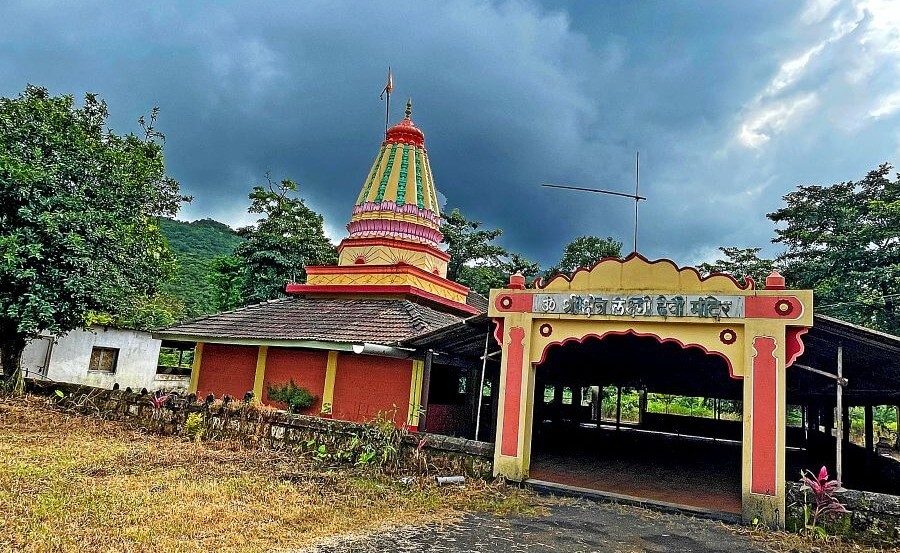
Shop Photo FramesLocated in the village of Jambhavade, seven kilometers from Tiravade on the Pachal-Vaibhavwadi road, the Lakshmi Temple is renowned as the presiding village deity (Gramadaivat) of the surrounding five villages (Panchakroshi). Mahalakshmi is a form of Adi Shakti (the Primal Energy). The sacred text ‘Durga Saptashati’ states that Mahalakshmi, possessing the three gunas (attributes), supreme and all-pervading, is the primal cause of the universe. Mahalakshmi is also considered to be a form of Durga. Mahishasuramardini Chandi has been regarded as Mahalakshmi, and since the shrine of Mahalakshmi in Kolhapur is a Shakti Peetha, the Goddess residing there is also in the form of Durga. The Lakshmi Temple at Jambhavade is likewise a shrine dedicated to this Durga form of Goddess Mahalakshmi.
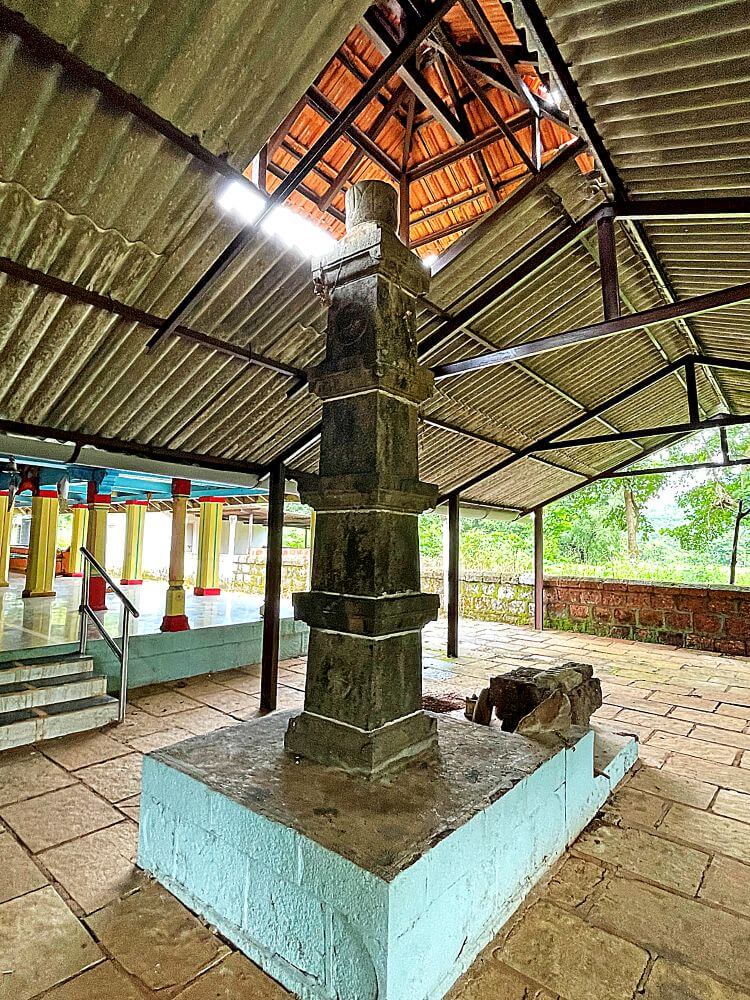
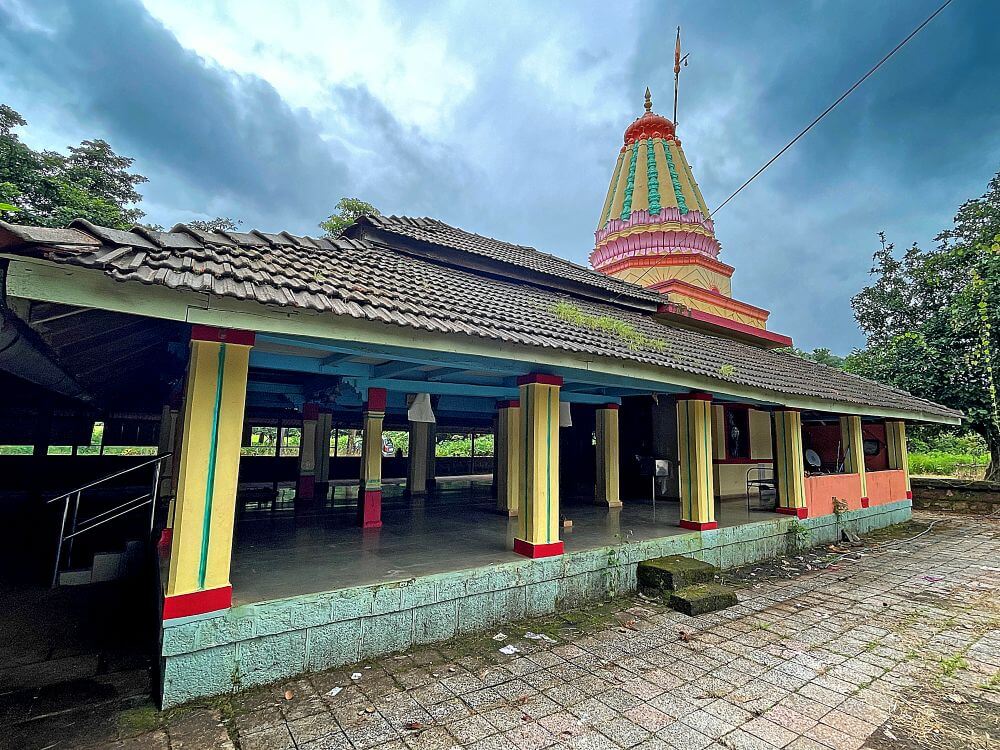
This shrine of the Goddess in Jambhavade is spiritually potent (jagrut), and devotees firmly believe that Goddess Lakshmi responds to the earnest calls of her devotees and fulfills their vows. Situated about five hundred meters from the village, right alongside the road, is the tall, arched gateway of this temple. The temple is enclosed on all sides by a boundary wall built of laterite (jambha) stone. The compound wall has entrance gateways on the eastern and western sides. Entering through the arch of the main western gateway leads directly into the temple courtyard. In this paved courtyard, a spacious shed with a tin roof has been erected for the convenience of devotees and for celebrating religious festivals such as Harinaam Saptaha and Navaratrotsava. Near the eastern gateway of the temple stands a newly built, four-tiered, square Deepstambh (lamp tower). Near the base of this pillar are some ancient idols and stone padukas (footprints).
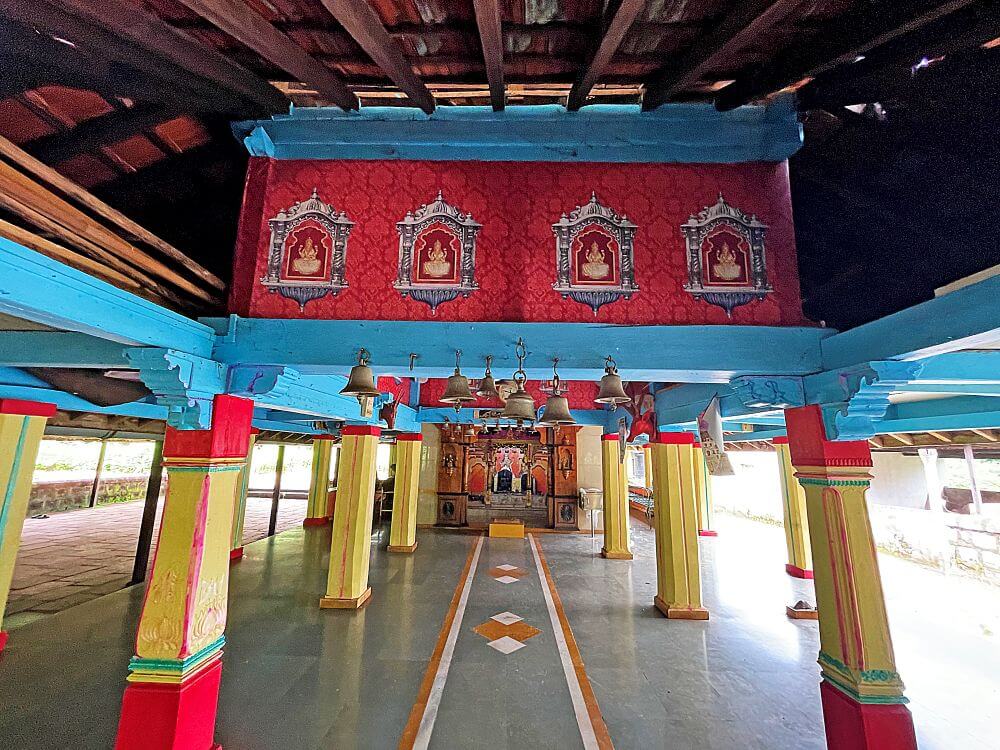
Facing east, this temple is built on a raised platform (jagati) about two and a half to three feet high. Like many other temples in the Konkan region, this temple features a tiled roof (kaularu), is double-storied, and has a four-sloped roof structure. The temple layout comprises an assembly hall (sabhamandap), a sanctum sanctorum (garbhagriha), and a circumambulation path (pradakshina marg) around the sanctum. Ascending three steps from the front of the lamp tower leads into the open assembly hall. The assembly hall has a total of twenty wooden pillars, combining both outer and inner rows. Some of the pillars feature carved ornamentation. The shape of the pillars is square. Just like the ancient Hemadpanti temple pillars, which have additional curved corbels (taranghastas) at the top of the pillars to support the beams, similar taranghastas are present here. Numerous bells are suspended from the beams in the center of the assembly hall. According to local residents, these bells are tied here by devotees after the fulfillment of their vows.
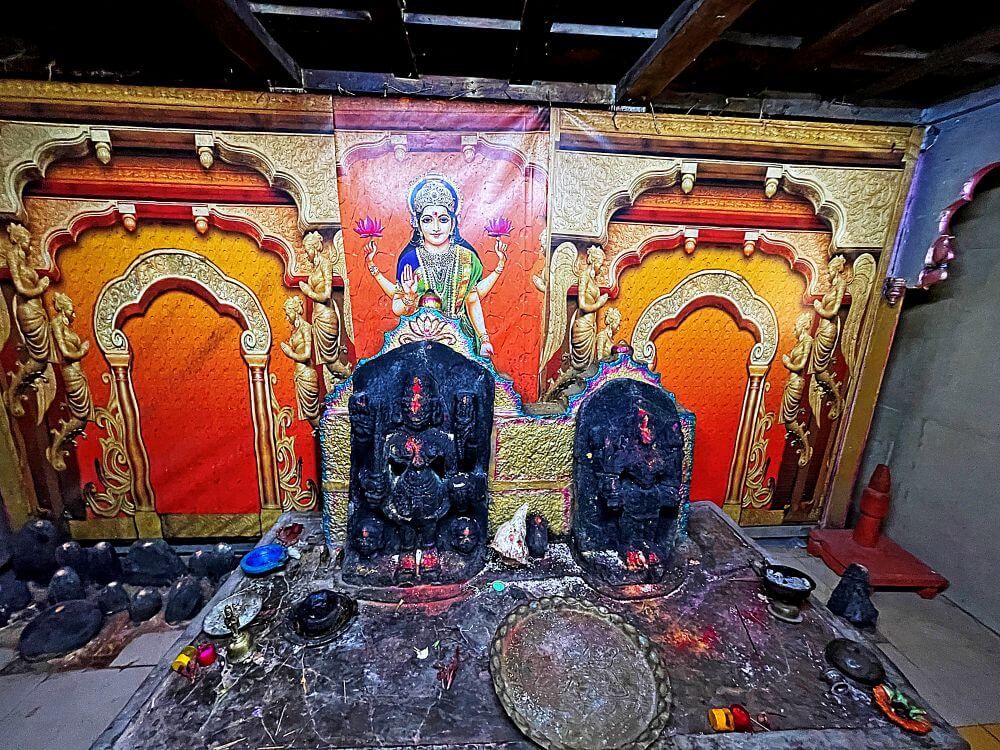
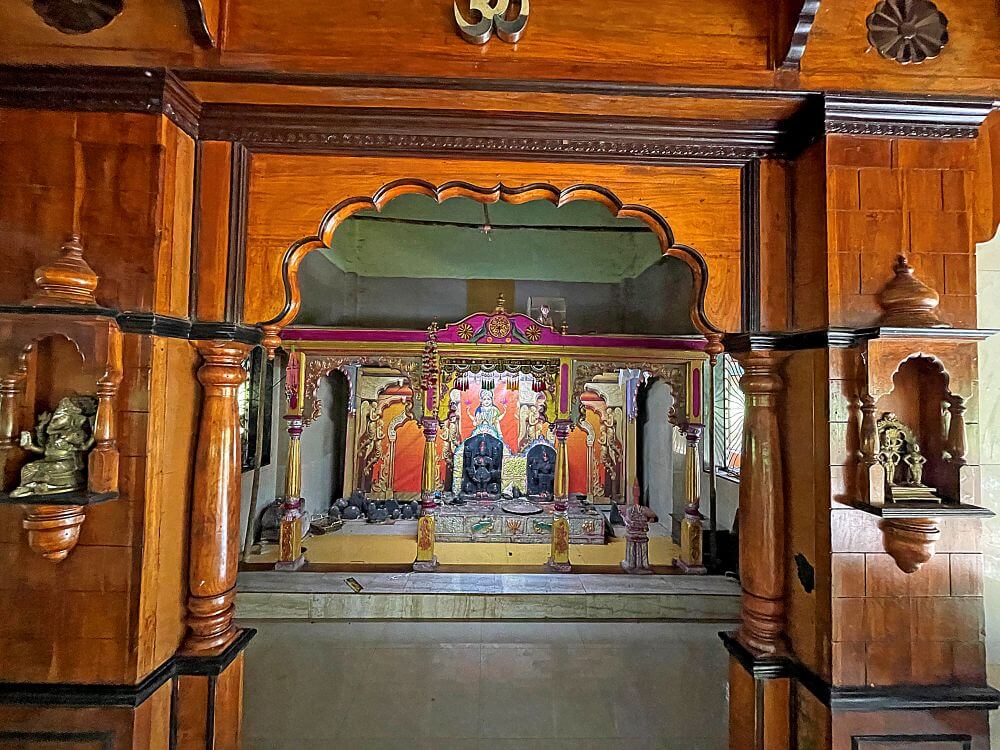
On the walls above the beams in the assembly hall, there are depictions of Lakshmi. However, this Goddess is not in her Durga form; rather, she is four-armed (chaturbhuja) and seated on a lotus. Two deer heads (mrigashira) face each other on the beam above the central pillars of the hall. The entrance to the sanctum sanctorum features a carved wooden arched gateway. To the left of the entrance, in a small alcove, are brass idols of Ganpati, and to the right, Vitthal-Rukmini. The lintel (lalatbimba) of the sanctum bears the sacred symbol ‘Om’, flanked by floral designs. Within the sanctum sanctorum, on a beautifully adorned Vajrapitha (throne), stand two stone idols of Goddess Lakshmi. One of these is an idol of the four-armed Goddess. She holds a sword (khadga) in one of her hands, and two severed human heads lie at her feet. Notably, behind these idols, an image of Vishnu’s consort Lakshmi is painted on the wall. Carved on the Vajrapitha are figures of a peacock, a lotus, and other motifs. On the left side inside the sanctum sanctorum, seventeen smooth stones of various sizes—round as well as cylindrical—are arranged. These are also worshipped here daily. According to the local villagers, these represent local folk deities.
A tall shikhara (spire) surmounts the sanctum sanctorum of the temple. The shape of the shikhara resembles a pot-and-foliage motif (ghatapallava) at the lower end. Above this, circular pillars and pot-shaped structures (ghatakara) with unfolding lotus petals at the base, fitted one upon another in the recessed portions between them, create a unique architectural design for the shikhara. Atop this shikhara sits a large amalaka, crowned by a golden pinnacle (kalash). Along the lower edge of the amalaka, numerous smaller replicas of the same amalaka are attached.
Festivals such as Navaratrotsava and Tripurari Pournima are celebrated in this temple. Programs like kirtans and discourses are periodically organized in the spacious shed of the temple. A short distance in front of the eastern entrance of the temple lies the Holi-cha-mand, which is the platform where the palanquin is kept. Here, the ritual of Holika Dahan is performed during the Shimga festival.
This sacred temple stands as a testament to deep spiritual devotion, ancient architectural grandeur, and rich local cultural traditions.
The sanctum sanctorum houses the divine idol consecrated according to ancient Vedic traditions, surrounded by serene courtyards and traditional temple architecture.
Navratri, Maha Shivratri, Annual Temple Jatra & Deepotsav
Compare and book flights, secure top-rated local hotels near the temple, hire reliable guides, and rent cars instantly.
Extend your pilgrimage by visiting other highly sacred temples located nearby.


Add ₹999 more to unlock FREE SHIPPING!
Your sacred cart is currently empty.
Shop Photo FramesFill in your delivery details below to place your order.
Add comment