
Add ₹999 more to unlock FREE SHIPPING!
Your sacred cart is currently empty.
Shop Photo FramesOriginating around the eighth to twelfth centuries, the Shaivite Nath Sampradaya brought about a social revolution by rejecting the caste system. To spread their divine philosophy, the Navnaths and their disciples established temples and mathas across India. Since then, the noble work of social and spiritual awakening has continued unabated. One such sanctified place of Nathpanthi Sadguru Gagangiri Maharaj is located at Gagangad in Gaganbawda taluka. Even today, thousands of followers arrive here to seek the grace and blessings of Gagangiri Maharaj. It is a deep-seated faith that Gagangiri Maharaj resides here in His divine subtle form, continually dispelled the distress of His devotees.
Gagangiri Maharaj’s original name was Shripad Ganpatrao Patankar. He was born on the auspicious day of Datta Jayanti in 1906 at Mandure in Patan taluka. The original surname of the Patankars was Salunkhe, tracing their lineage back to the ancient Chalukya dynasty. As their ancestor acquired the Jahagir (fiefdom) of Patan, they came to be known as Patankar. Over generations, this lineage branched into Shikkekari Wada Patan, Bibi, Ker, Wajegaon, Rampur, Divashi Budruk and Khurd, Sawantwadi, and the Satbhai Patankar branches. Gagangiri Maharaj belonged to the Satbhai branch. His parents
were devout followers of the Warkari Sampradaya. It is said that Maharaj renounced worldly home life in his early childhood. Embracing Sannyasa, he traversed the length and breadth of India, earning the supreme grace of many Nathpanthi Siddhas during his travels.
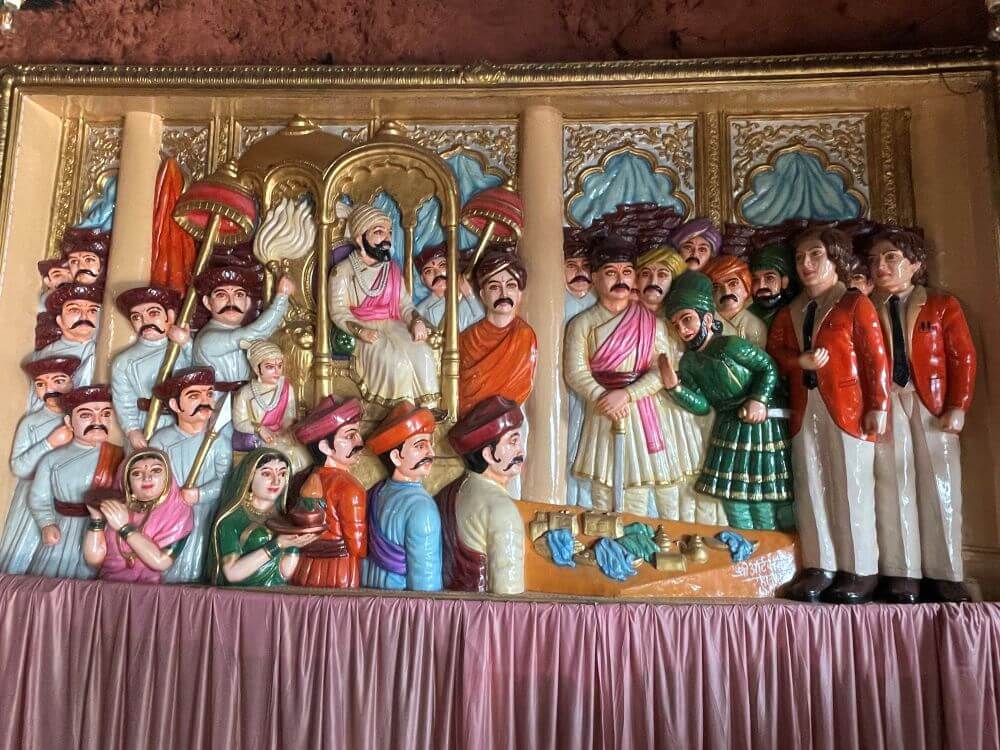
In due course, he returned to Maharashtra. For several years, he performed arduous penance in the deep forests of Dajipur. Later, he made his abode at Gagangad. Gagangad Fort was originally built in the twelfth-thirteenth century by King Bhoja II of the Shilahara dynasty. Chhatrapati Shivaji Maharaj liberated this fort from the rulers of Bijapur in 1660 AD. The fort finds a prominent mention in the historical list of forts recorded in the Sabhasad Bakhar. Later, Chhatrapati Rajaram Maharaj bestowed the Gagangad Fort and the Jahagir of Gaganbawda upon Hukumattpanha Ramchandra Pant Amatya. In 1844, artillery bombardment by the British caused significant damage to the fort. It was on this historic fort that Gagangiri Maharaj performed his intense austerities and blessed numerous disciples with spiritual initiation (Anugraha). Many eminent political leaders were also among his devoted followers.
Gagangiri Maharaj was a accomplished Hathayogi of the Nath Sampradaya and maintained close ties with the Dashanami Sampradaya. He was renowned for his extraordinary *Jala-Tapasya* (water penance); it is said that he would remain submerged at the bottom of rivers or deep pools in profound meditation for long periods. Abiding by the yogic precept that a renunciate should not linger too long in one place, he eventually moved from Gagangad to Khopoli in Raigad district. He established a grand ashram at Khopoli, which is revered as the Patalganga Teerthakshetra Yogashram. He also established ashrams at Manori Bet, Ambolgad, Dajipur, Nagarjuna Sagar, and other sacred spots. By consecrating idols of Lord Dattatreya at these centers, he guided millions toward the path of devotion (Bhakti Marga). He took Mahasamadhi (left his mortal body) at the Khopoli ashram on February 4, 2008.
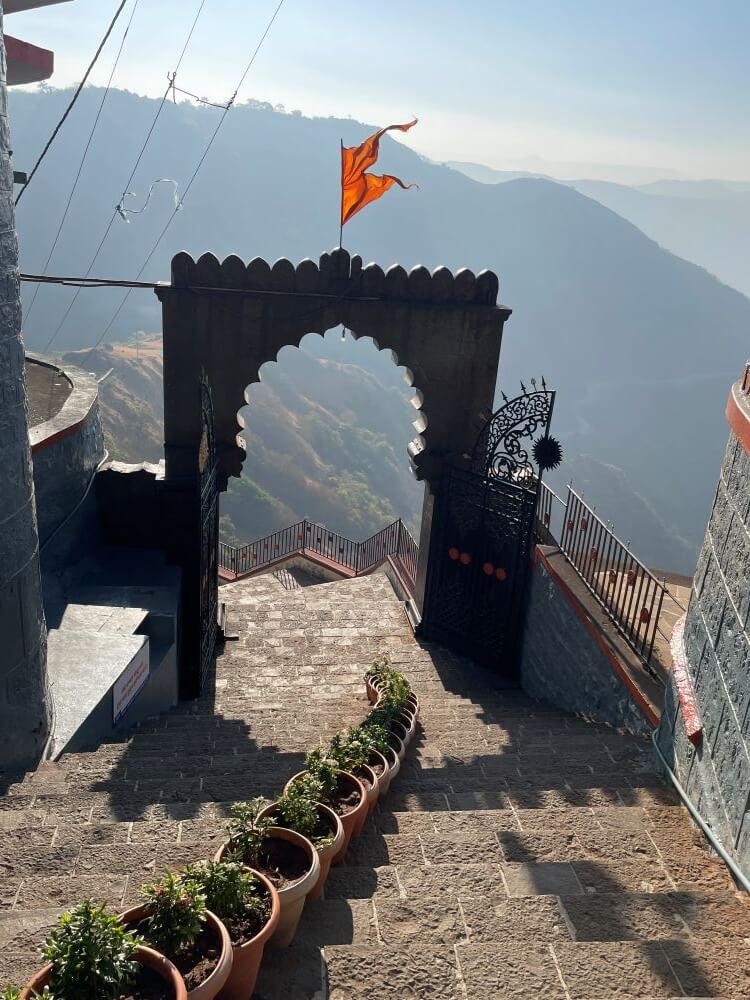
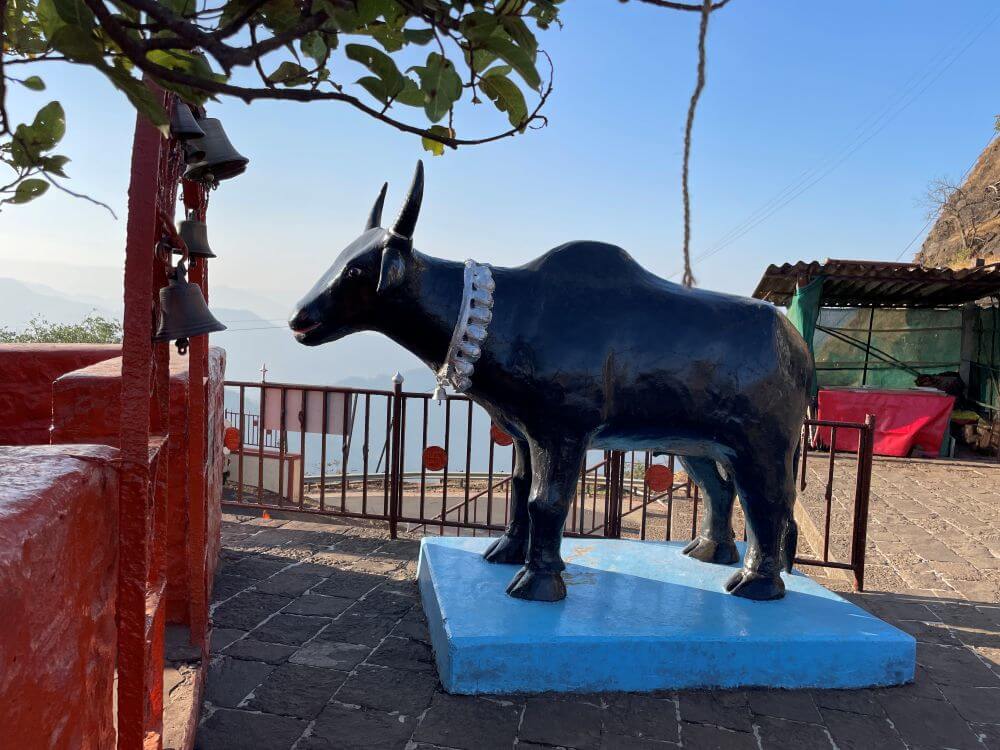
Today, Gagangad Fort in Gaganbawda taluka is renowned primarily due to the divine presence of the Gagangiri Maharaj Temple. From the parking area at the base of the fort, pilgrims climb approximately 200 steps to reach the top. Ascending the initial steps leads to the Mhasoba Temple, which features a large sculpture of a male buffalo. Moving further ahead, the intricately carved welcome archway of the Gagangiri Maharaj Temple comes into view. The square pillars supporting this arch are embellished with carved lotus flowers, Gajraj (royal elephant) motifs, and sculptures of Dwarpals (gatekeepers). Between the two pillars spans a beautifully cusped arch topped by an ornate balcony (sajja). The balcony features decorative parapets and miniature shikharas on both sides. In front of the temple lies the sacred space dedicated to the Navagrahas (nine planets).
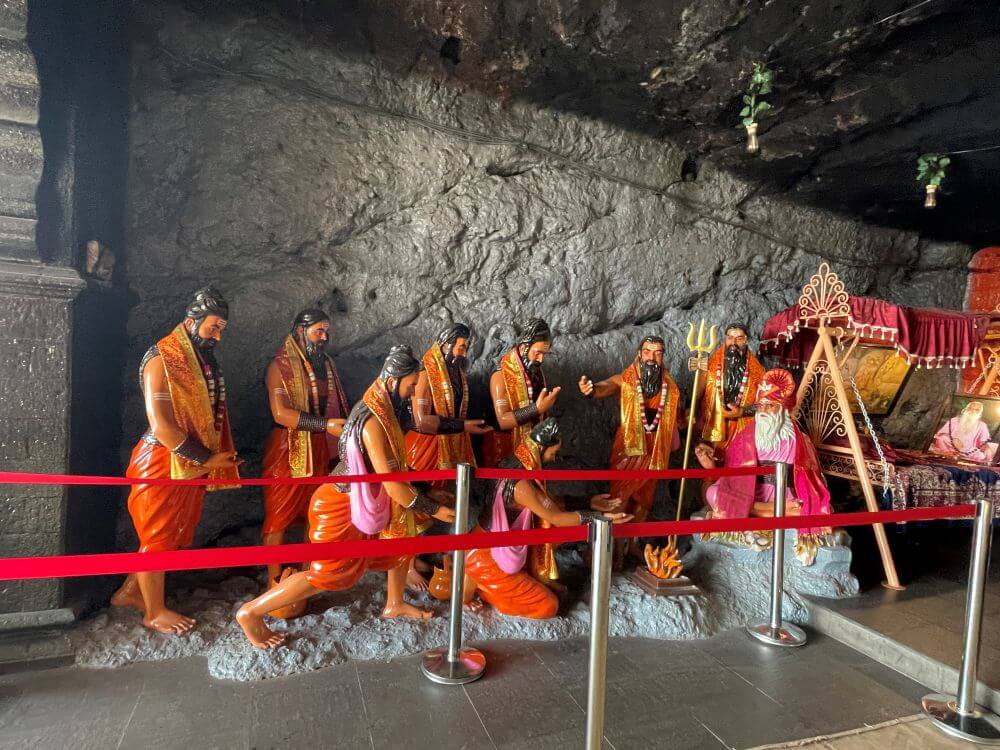
Climbing a few more steps toward the machi (plateau) of the fort brings one to a second archway of similar design, beyond which lies the main temple courtyard. In the courtyard, facing the temple, is an elevated platform featuring a two-tiered octagonal Deepmal (lamp tower). Adjacent to it stands a Tulsi Vrindavan, while relief idols of Lord Ganesha and Lord Hanuman are sculpted directly onto the neighboring rock face. Further ahead, in a pavilion supported by iron pillars and covered with an elephant-back shaped roof, stand sculptures of sword-bearing guardians, tigers, and other symbolic figures. From here, two steps lead up into the Sabhamandap (assembly hall), entered through an ornate arched doorway supported by carved square pillars. Inside the Sabhamandap are idols of the Nath Gurus and a sacred swing (zhopala) used by Gagangiri Maharaj. In the inner sanctum (Garbhagriha), seated on a sacred Vajrapitha, is the central deity Lord Dattatreya, with an idol of Gagangiri Maharaj placed behind Him. To the right of the central shrine are idols of Lord Ganesha and Lord Hanuman, while to the left stand Goddess Choundeshwari and Goddess Mahalaxmi.
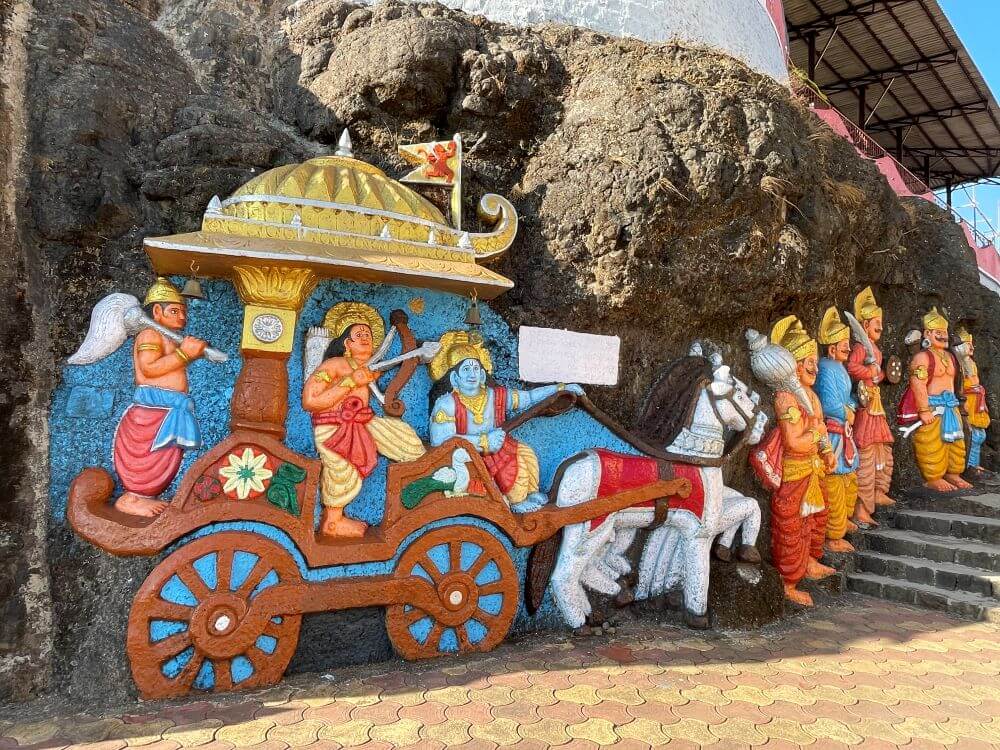
Leading up toward the Dhyan Mandir (meditation hall) situated slightly higher than the main shrine, the rock faces along the left side of the staircase display vibrant relief carvings depicting scenes such as King Nanda, Mother Yashoda milking a cow, the infant Krishna, Lord Krishna driving the chariot of Arjuna alongside the five Pandavas, Lord Vishnu reclining on Sheshnag, Sant Tukaram, and Lord Vitthal-Rakhumai.
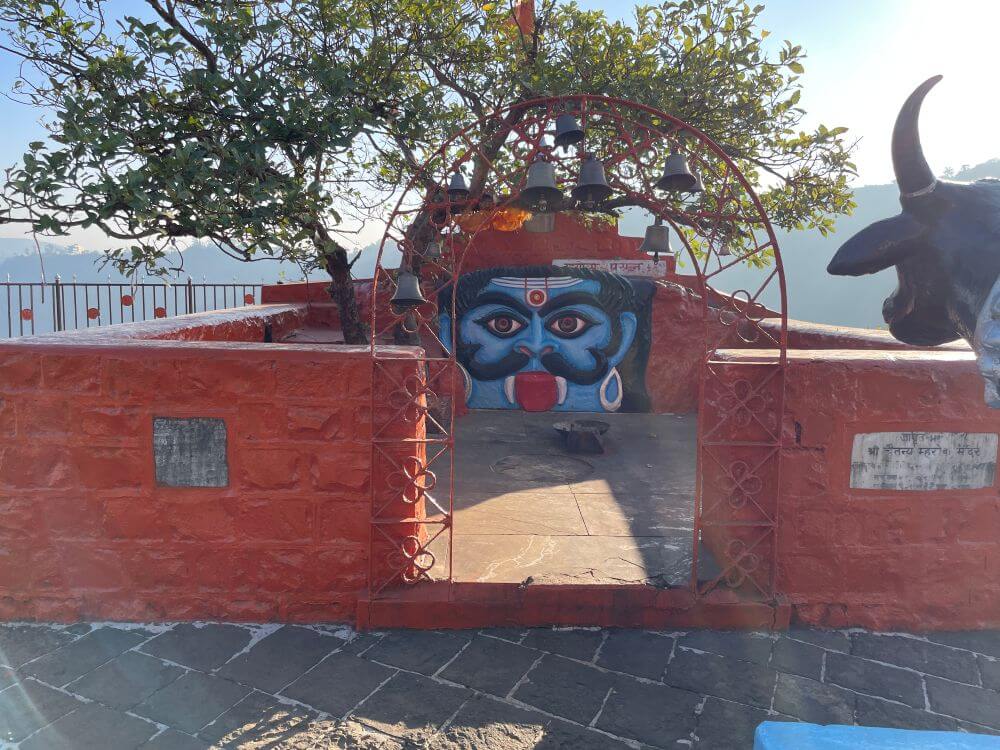
The Dhyan Mandir is enclosed by a protective stone wall, with statues of Dwarpals flanking the entrance. The Sabhamandap here is an enclosed hall thoughtfully designed with windows for natural light and air. Sculptures of guardians flank the doorway to the inner sanctum. Inside the Garbhagriha, an idol of Gagangiri Maharaj in a serene meditative posture rests upon a Vajrapitha. The roof of the temple is adorned with divine figures of Lord Shiva, Lord Ganesha, Goddess Parvati, Lord Vishnu, and revered Rishis. On the platform in front of the Dhyan Mandir stands an equestrian statue of Gagangiri Maharaj. Additionally, the fort premises house shrines dedicated to Lord Mahadev and the local deity Vithalai, as well as the Hazrat Ali Peer Dargah and ancient water kunds.
In the Annachhatra located within the temple complex, Mahaprasad is served daily to all visiting devotees. Clean accommodation facilities are also provided at the Bhakta Niwas for pilgrims staying overnight. Datta Jayanti, Guru Purnima, and Dasara are celebrated as the main annual festivals. On these sacred days, thousands of devotees and disciples of Gagangiri Maharaj gather to seek divine darshan. Special rituals including Datta Pujan, Guru Pujan, alongside devotional Bhajans, Kirtans, and spiritual discourses (Pravachans) are organized. Sacred Homa-Havan rituals are conducted at the temple on every Purnima (full moon), Amavasya (new moon), and major festival occasions.
This sacred temple stands as a testament to deep spiritual devotion, ancient architectural grandeur, and rich local cultural traditions.
The sanctum sanctorum houses the divine idol consecrated according to ancient Vedic traditions, surrounded by serene courtyards and traditional temple architecture.
Navratri, Maha Shivratri, Annual Temple Jatra & Deepotsav
Compare and book flights, secure top-rated local hotels near the temple, hire reliable guides, and rent cars instantly.
Extend your pilgrimage by visiting other highly sacred temples located nearby.


Add ₹999 more to unlock FREE SHIPPING!
Your sacred cart is currently empty.
Shop Photo FramesFill in your delivery details below to place your order.
Add comment