
Add ₹999 more to unlock FREE SHIPPING!
Your sacred cart is currently empty.
Shop Photo FramesMadhyameshwar means the Lord of the Center (Madhyama). Here, the word “Madhyam” is used for the midpoint on the imaginary central meridian of the world map. According to ancient belief, the Shiva Linga at the Madhyameshwar Temple in Vatsagulma (modern-day Washim) is the midpoint of the central meridian of the earth, stretching from Lanka to Mount Meru. This has been mentioned in texts such as ‘Vatsagulma Mahatmya’ and ‘Siddhantasekhara’. The Vatsagulma Mahatmya includes this temple among the one hundred and eight sacred pilgrimage sites of Washim. It is believed that there was a large temple here in ancient times. However, currently, a modern-day Madhyameshwar Temple stands at this site.
The ‘Aryabhatiya’, a treatise by the great mathematician Aryabhata—who lived in the region of Patna in modern-day Bihar between 476 CE and 550 CE—mentions the division of the earth into two hemispheres. Aryabhata conceptualized a line known as the Meru axis. The renowned mathematician Bhaskaracharya II (1114 CE), born in the twelfth century at Patan in Chalisgaon, is known for his mathematical treatise ‘Lilavati’. In the ‘Bhuparidhi Adhyaya’ of the ‘Siddhantashiromani’—the larger treatise of which ‘Lilavati’ is a part—Bhaskaracharya describes this line. He stated that the places situated on this line are Lanka, Ujjain, Puri, Kurukshetra, and Mount Meru. (Yallankoujjayininupopari Kurukshetraadaddeshaan Sprishata | Sutram Merugatam Budhairnidita Sa Madhyarekha Bhuvaaha !!) Here, Mount Meru is considered to be the northernmost point of the earth (the North Pole).
Among the names of the locations on the central meridian given in these ancient texts, the name of Vatsagulma is found in the text ‘Siddhantasekhara’. This text was written by Sripati, an Indian mathematician and astronomer who lived in Maharashtra in the eleventh century CE, prior to Bhaskaracharya. In it, along with places like Lanka, Kumarinagari (Kanyakumari), Kanchi, Mahishmati (Maheshwar, Madhya Pradesh), Sthaneshwara (Thanesar, Haryana), and Puri, he also mentioned unknown locations such as Panat, Sitashadasya, Pattashiva, and Shitagiri. In the same verse, he also included the city of Srivatsagulma among the locations on the central meridian. Later, the text ‘Vatsagulma Mahatmya’ added further information to this. This is a more recent text. In it, along with places like Shwetagiri and Paryali (likely Parli Vaijnath), Vatsagulma is recorded. (Lankapuritah Kil Devakanya Kanchi Tatha Shwetagiri Cha Paryalim | Yadvatsagulma Parikalpya Madhyam Tathojjayinyadikama Uttaradhakam !!)
In this very Vatsagulma Mahatmya, Madhyameshwar is mentioned as the place indicating the central meridian. That verse is as follows: ‘Taduttare-sti Rajendra Lingam Janamanoharam | Madhyameshwarasamjyam Cha Madhyarekha Pradarshakam ..’ This means: ‘O Rajendra, to the north (that is, to the north of the Chamunda Devi pilgrimage site) is a Shiva Linga that brings joy to people’s minds. The name of that Linga is Madhyameshwar, and it indicates the central meridian.’ A story regarding this is found in the Vatsagulma Mahatmya. To the north of the Madhyameshwar Temple is the Chamunda Devi Temple, while to the northeast is the Neelkantheshwar Temple. King Vasuki, having arrived there, insisted that Sage Vasistha provide detailed information about all these pilgrimage sites. Then Sage Vasistha stated that in ancient times, neither the sages nor the common people had any knowledge of planets, stars, constellations, or zodiac signs. Therefore, the sages expressed their desire to Lord Brahma to attain the knowledge of time. Lord Brahma advised them to study Vedanga Jyotisha so that it would help them gain all knowledge. Thereafter, Vedanga Jyotisha was studied. Through this, the sages created astrological texts such as Narada Samhita. This blessed them with the knowledge of sunrise and sunset, eclipses, and lifespan. At this very time, to acquire knowledge of longitude, they imagined a line from Sri Lanka to Mount Meru. Based on that, it became possible to understand geography and calculate planetary positions. This line passes through regions such as Lankapuri, Devakanya, Kanchi, Shwetagiri, Paryali, as well as Vatsagulma and Ujjain. Considering Vatsagulma as the midpoint of this line, the Linga of Madhyameshwar was established there.
History researcher Sachin Dixit presented a research paper titled ‘Madhyarekha and Madhyameshwar of Washim’ in 2018 at a conference organized by the ‘Centre for History, Archaeology, Epigraphy and Numismatics’ (CHAEN) and Sathaye College, Mumbai. According to that paper, the ancient temple of Madhyameshwar here was destroyed over the course of time. The Vatsagulma Mahatmya states that this temple is to the north of the Chandika Temple. However, fundamentally, the Chandika Temple is on the periphery of Washim city, and to its north are numerous temples of Lord Shiva. Therefore, it had become difficult to identify which one was precisely the Madhyameshwar Temple. Later, in the year 1961, excavations were carried out in the ‘Pandhariche Tekad’ area here. Some remains of an ancient temple were found there. Based on the style of sculpture, scholars estimated that these remains must belong to the eleventh-twelfth century. Considering this to be the site of the ancient Madhyameshwar Temple, a new temple was erected there.
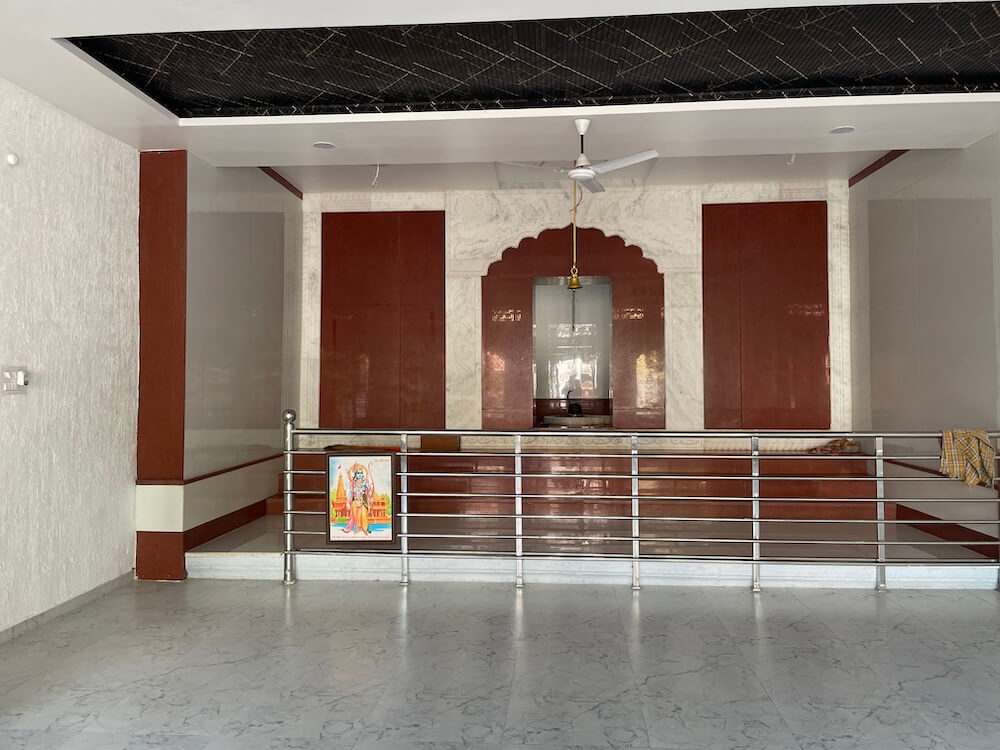
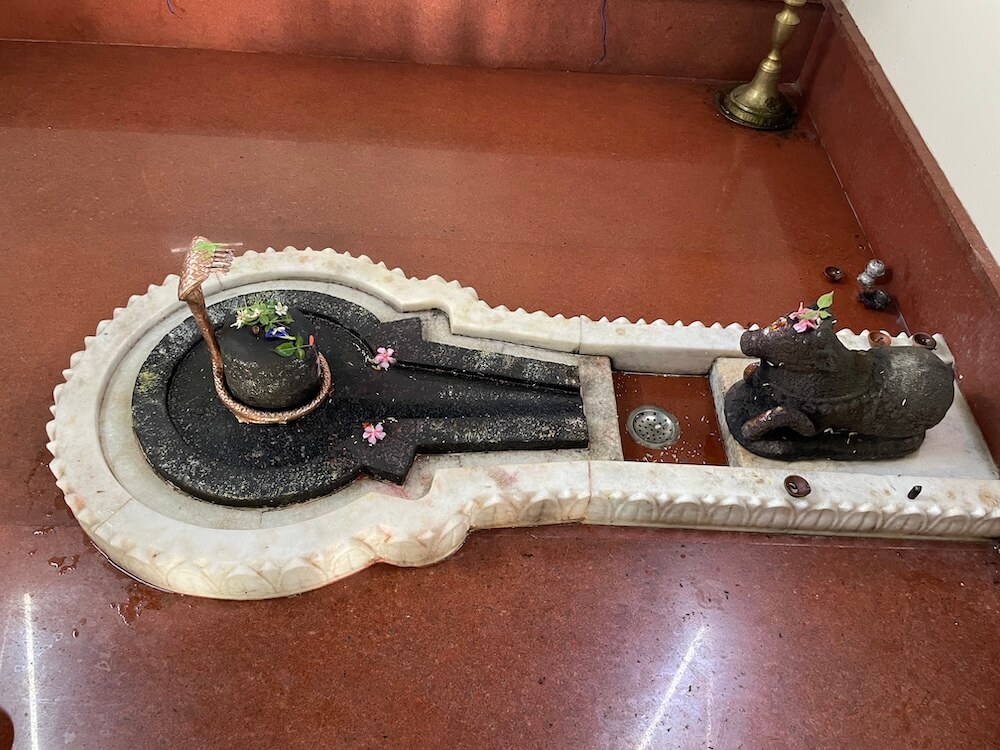
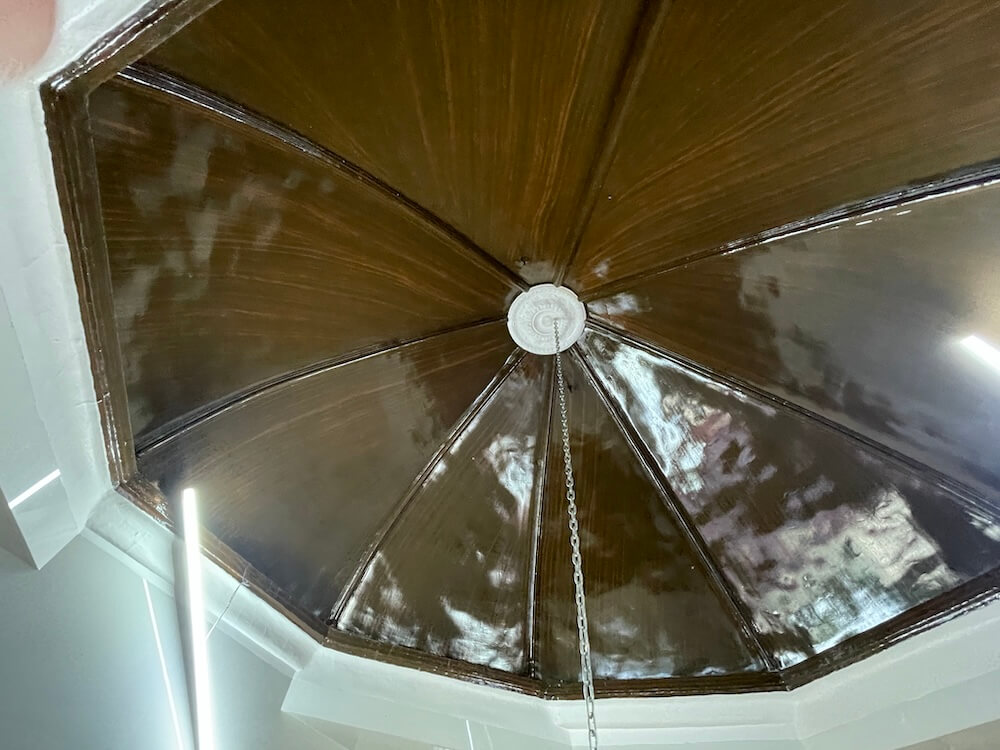
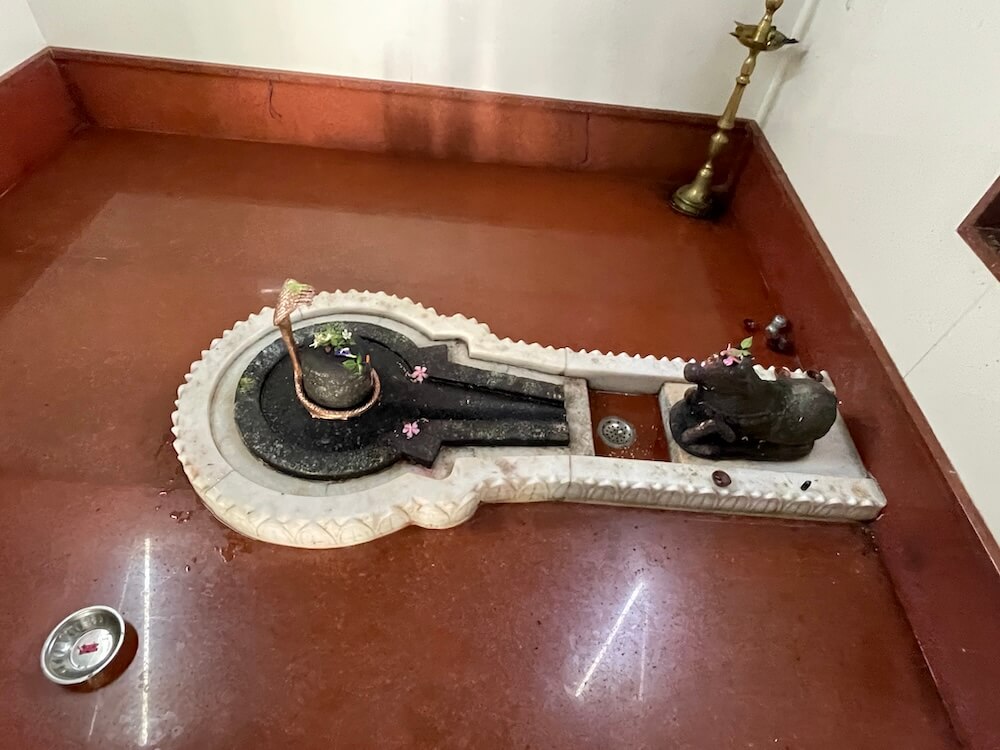
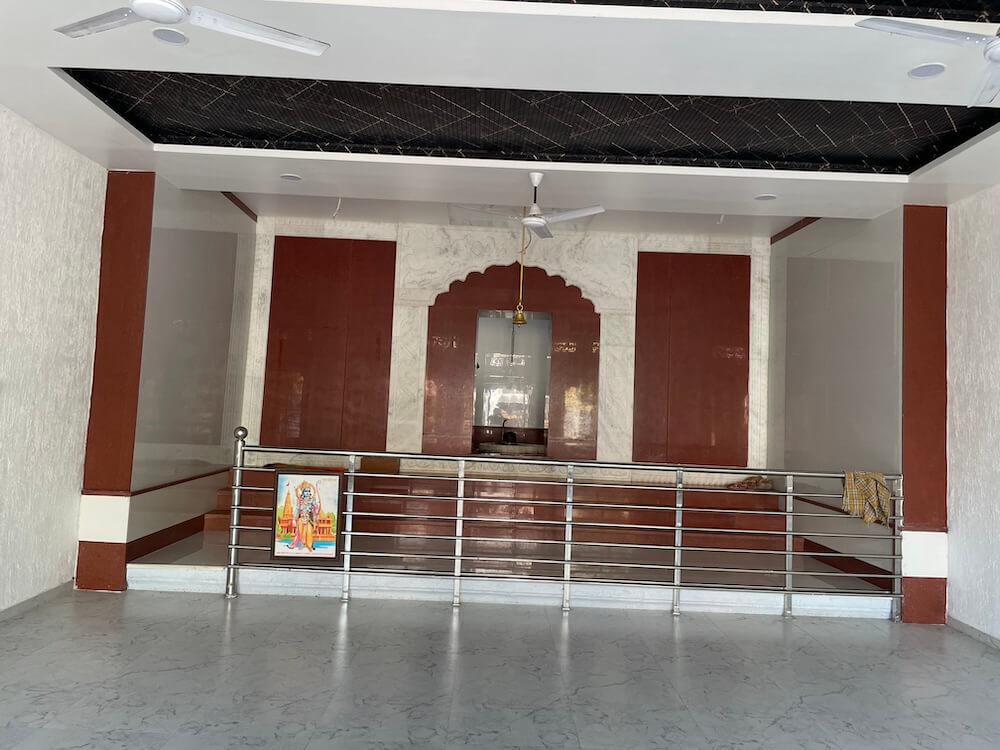
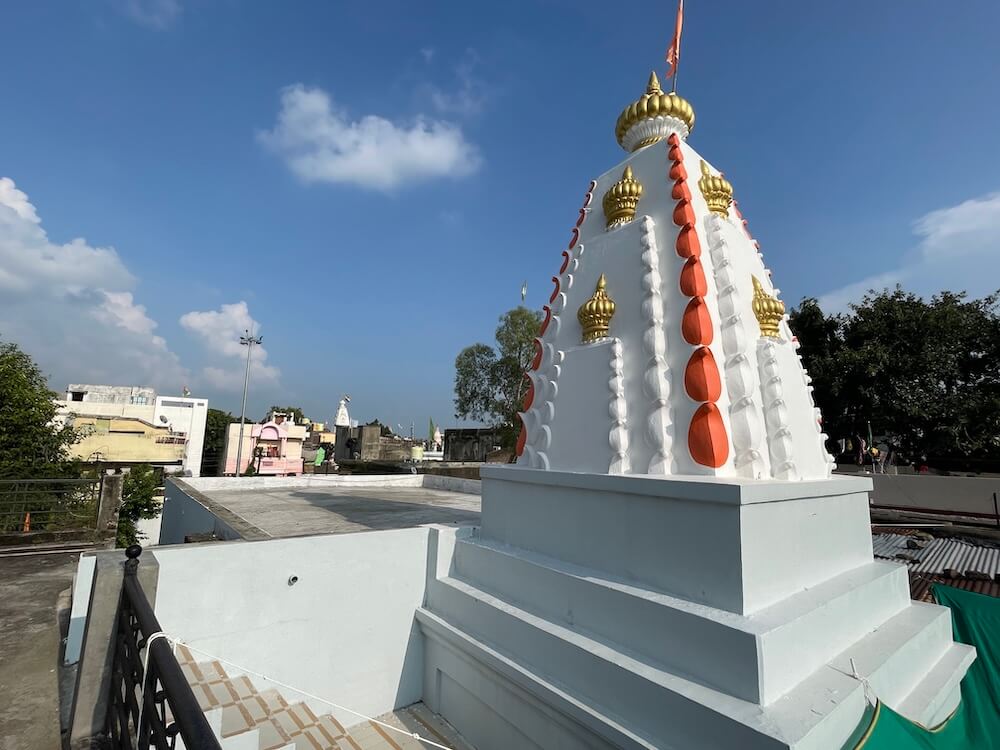
This temple is situated in the bustling heart of Washim. Shri Balasaheb Dhanagare and his associates came together to restore this temple. The temple consists of a large sabhamandapa (assembly hall) and a garbha griha (sanctum sanctorum). The sabhamandapa has a steel entrance fitted with a grill in the middle. On both sides of it are large glass windows. The floor of the sabhamandapa is laid with marble tiles. The walls of the garbha griha are also covered with marble tiles from both inside and outside. One enters the garbha griha through an arched doorway. Inside, in the center, the ancient Shiva Linga of Madhyameshwar is enshrined. A Shalunka (yoni pedestal) made of marble stone is fitted around the Linga. A brass serpent with a raised hood is placed over the Linga, while a small stone Nandi is seated in front. On 26 June 1961, the consecration (prana pratishtha) of the Shiva Linga was performed here by the Jagadguru Shankaracharya of the Karveer Peeth. On the exterior of the garbha griha, there is a square step-like structure at the lower level. Above it stands a shikhara that gives the impression of the Urushringi style. Atop it are a circular amalaka and a kalasha (finial). In the courtyard of this temple is a small shrine dedicated to Lord Hanuman.
Located in a densely populated area, this temple witnesses a rush of devotees every Monday. Devotees visit in large numbers on Shravani Mondays as well as Maha Shivaratri. Along with its religious significance, this temple is also important from an astronomical perspective, which is why many scholars eagerly visit this place to observe it.
This sacred temple stands as a testament to deep spiritual devotion, ancient architectural grandeur, and rich local cultural traditions.
The sanctum sanctorum houses the divine idol consecrated according to ancient Vedic traditions, surrounded by serene courtyards and traditional temple architecture.
Navratri, Maha Shivratri, Annual Temple Jatra & Deepotsav
Compare and book flights, secure top-rated local hotels near the temple, hire reliable guides, and rent cars instantly.
Extend your pilgrimage by visiting other highly sacred temples located nearby.


Add ₹999 more to unlock FREE SHIPPING!
Your sacred cart is currently empty.
Shop Photo FramesFill in your delivery details below to place your order.
Add comment