
Add ₹999 more to unlock FREE SHIPPING!
Your sacred cart is currently empty.
Shop Photo FramesSituated on the banks of the Arunavati River, Shirpur Taluka is renowned across Maharashtra for its excellent achievements in irrigation. The methodology of water conservation in this tribal-majority taluka is celebrated throughout Maharashtra as the ‘Shirpur Pattern’. Shirpur, which rose to prominence during the era of the Holkars, is today a taluka headquarters and a major market center. The ancient and famous Pataleshwar Mahadev Temple in this city is a place of deep faith for many devotees. It is the belief of the devotees that the Swayambhu (self-manifested) Pataleshwar Mahadev here grants their prayers.
The history of this site dates back to August 6, 1727, when the Peshwas granted Sardar Malharrao Holkar the revenue from 11 districts across Gujarat, Malwa, and Khandesh for his maintenance (Saranjam). Later, about 94 parganas in Khandesh came under the Holkars. Punyashlok Ahilyabai was the daughter-in-law of Malharrao Holkar. On March 24, 1754, Ahilyabai’s husband, Khanderao, died on the battlefield. Following the demise of Subhedar Malharrao Holkar (1766 AD), circumstances compelled Ahilyabai to take the administration of the Holkar state into her own hands. A valiant, just, benevolent, and pious ruler,
Ahilyabai performed many works for public welfare during her reign. She built roads, bridges, dharmashalas, ghats, lakes, wells, and temples in many places. The Pataleshwar Mahadev Temple in Shirpur was also built by her.
The political career of Punyashlok Ahilyabai spanned 29 years, from 1766 to 1795 AD. This temple in Shirpur was constructed during this period, which clarifies that the temple is over 230 years old. It is said regarding this temple that Ahilyadevi built many stepwells in the Shirpur area to provide drinking water. One of these, an English ‘L’ shaped well, is located in front of the current Pataleshwar Temple. A Swayambhu Shivling was discovered while excavating for this well. Since the Holkar family were followers of Shaivism, Ahilyabai had great devotion to Lord Shiva. She built a temple here and consecrated this Shivling. Because it was found underground, it came to be known as Pataleshwar.
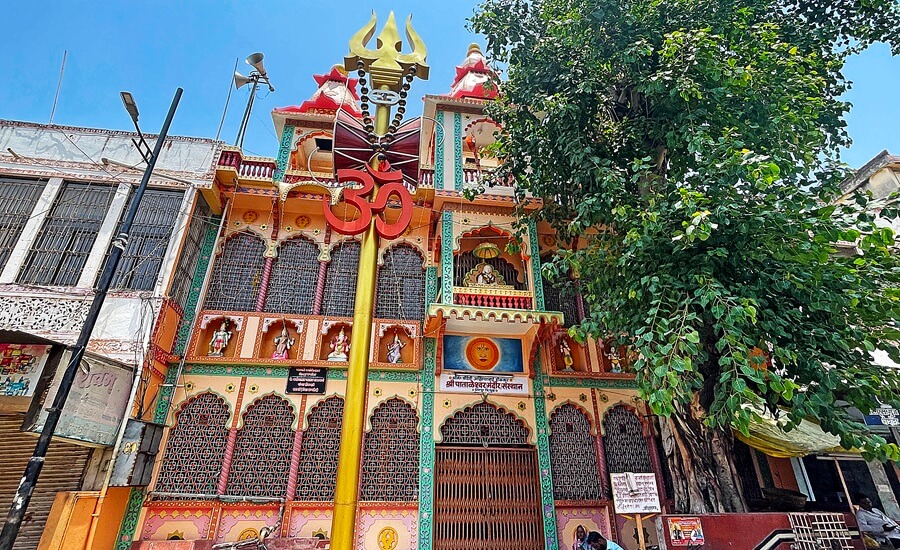
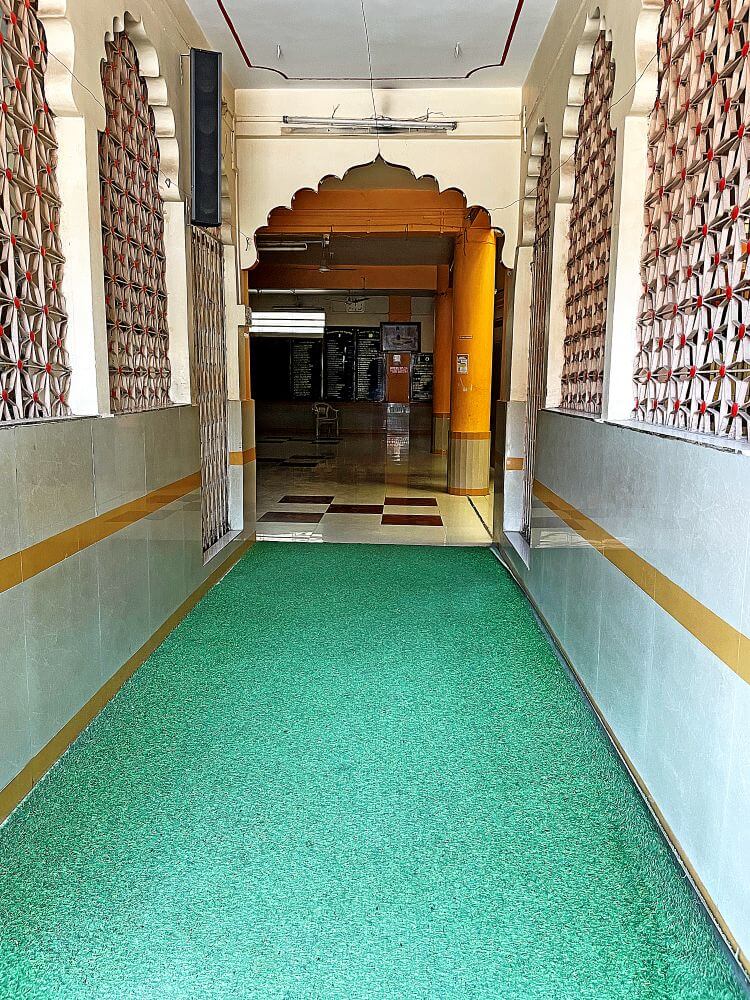
This temple is located in a bustling area in the heart of the city. The entrance to the assembly hall (sabhamandap), which is situated slightly higher than the road, features square pillars on both sides topped by an arched gateway. Above the arch is a second-story balcony and a palanquin (ambari) atop it. Inside the palanquin is a statue of Queen Ahilyabai Holkar seated on a throne. The niches on the facade of the upper floor of the assembly hall contain statues of various deities. The spacious assembly hall features circular pillars. This hall is enclosed and designed with windows for light and ventilation.
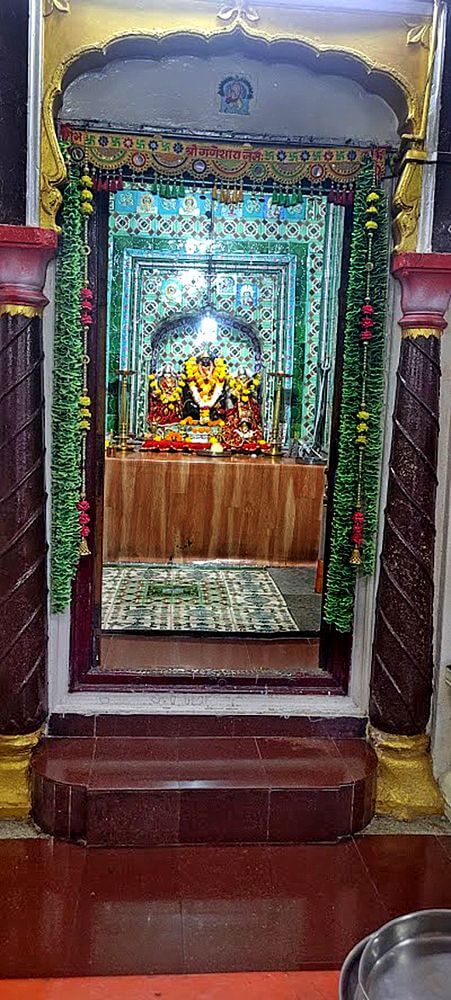
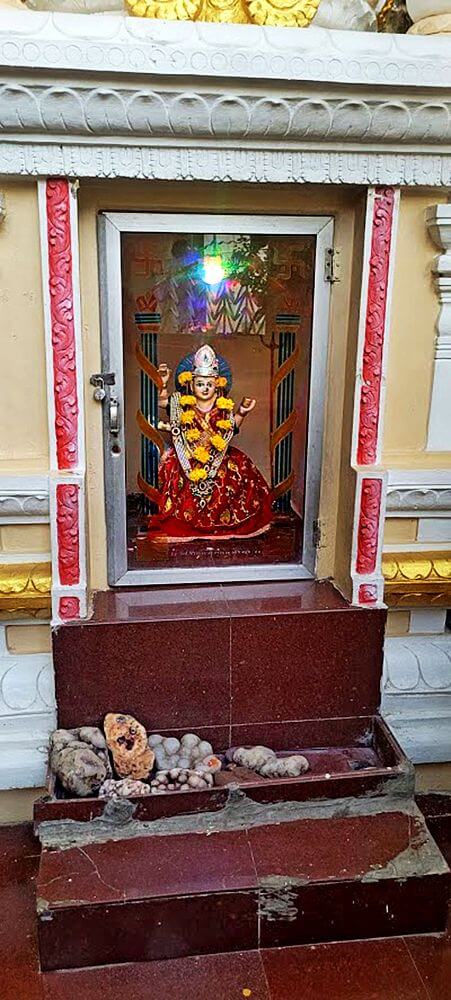
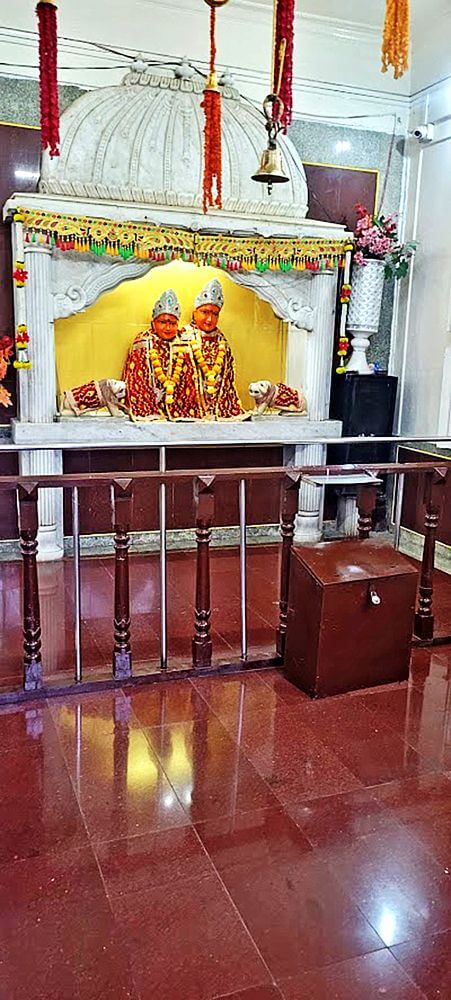
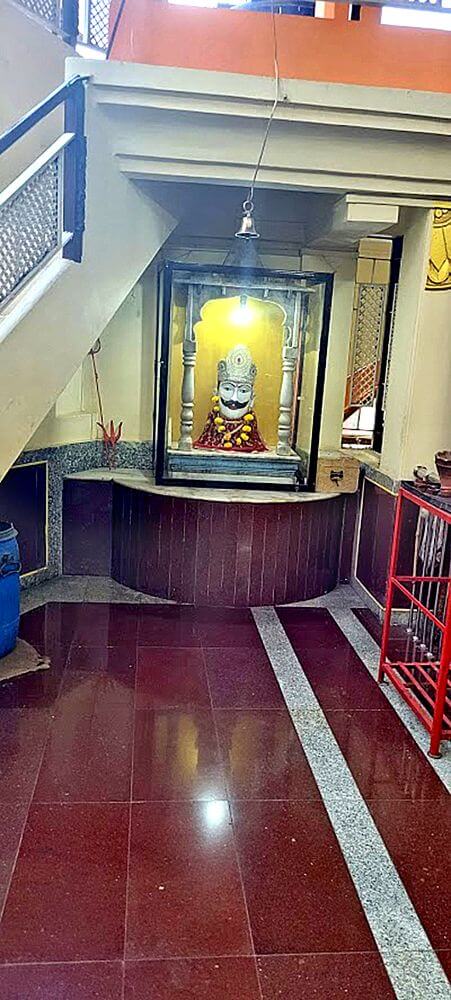
The assembly hall contains several shrines housing idols of Mahalakshmi, Durgadevi, Maruti, and Kartik Swami. The sub-sanctum containing Kartik Swami is opened for darshan only once a year on Kartik Purnima. Additionally, the niches in the assembly hall contain idols of various local deities. From the assembly hall, there are stairs leading down to the sanctum sanctorum (garbhagriha) in the basement. Because the entrance to the sanctum is narrow and low, one must bow to enter. In the center of the sanctum floor is the Swayambhu Shivling, covered by a brass serpent with a canopy. This Shivling is encased in silver plating. Beside the Linga is a marble statue of Nandi and a brass trident about 3 feet tall. In the alcove against the back wall of the sanctum are idols of Parvati, Ganpati, and Hanuman. The second floor of the temple houses a hall for cultural programs.
The roof of the temple is surrounded by a safety railing. On the roof, there are four pavilions (meghdambari), each with four pillars connected by arches. The pavilions are topped by tall, tapering hexagonal spires (shikhara). At the apex of the spires are replicas of lotus flowers, followed by an amalaka and a kalash.
Maha Shivratri is the main annual festival celebrated with great enthusiasm at the temple. Besides this, Hanuman Jayanti, Kartik Purnima, Sharadiya Navratri, the month of Shravan, Dussehra, Diwali, and all other festivals are celebrated with fervor. During all festivals, programs such as bhajans, kirtans, discourses, music, and Mahaprasad are organized at the temple. Thousands of devotees visit here for darshan and to fulfill their vows. There is a large crowd of devotees here every Monday, Saturday, on Purnima, and Amavasya.
The stepwells built by Punyashlok Ahilyadevi Holkar in the Shirpur area—at Karvand (Dhavlivihir), Chandpuri, Vikharan, and Shirpur—were used as the primary source of water in those days. Among them, the stepwell near the road close to Karvand, along with its tank and reservoir, is still in good condition. During the Holkar era, this well was painted white, which is why this place became known as Dhavlivihir. To reach the water in this unique 125-foot-deep well, one must descend 60 to 70 steps through five arches. The well at Vikharan has seven doors and 300 steps. This well is shaped like an English ‘U’. In front of this well, Ahilyadevi Holkar built a temple of Bhavani Mata and a bastion. It is said that a military route used to pass through here. This well was built to provide drinking water to soldiers as well as the citizens of the village.
This sacred temple stands as a testament to deep spiritual devotion, ancient architectural grandeur, and rich local cultural traditions.
The sanctum sanctorum houses the divine idol consecrated according to ancient Vedic traditions, surrounded by serene courtyards and traditional temple architecture.
Navratri, Maha Shivratri, Annual Temple Jatra & Deepotsav
Compare and book flights, secure top-rated local hotels near the temple, hire reliable guides, and rent cars instantly.
Extend your pilgrimage by visiting other highly sacred temples located nearby.


Add ₹999 more to unlock FREE SHIPPING!
Your sacred cart is currently empty.
Shop Photo FramesFill in your delivery details below to place your order.
Add comment