
Add ₹999 more to unlock FREE SHIPPING!
Your sacred cart is currently empty.
Shop Photo FramesSituated in the Buldhana district of Vidarbha, the town of Sindkhed Raja is a focal point of a significant era that heralded the rise of the Maratha Empire in the historical and cultural landscape of Maharashtra. This is the birthplace of Rajmata Jijau, the mother of Chhatrapati Shivaji Maharaj, the founder of Hindavi Swarajya. This land is a silent witness to many tumultuous events that turned the tide of Deccan politics. The most powerful and significant evidence of this historical legacy is the Samadhisthala of Raja Lakhujirao Jadhav located at Sindkhed Raja. This memorial is considered a living symbol of the self-respect and valor of the Maratha chieftains who stood tall amidst the unstable political conditions of the 17th century and the conflicts between the Nizamshahi and Mughal empires.
The Yadava Empire of Devgiri collapsed in the 13th century due to the invasion of Alauddin Khalji. Nevertheless, many branches of the Yadavas maintained their existence in various parts of Maharashtra. One such valiant branch was the Jadhav family of Sindkhed. During the 15th century, under the Bahmani rule, this pargana was held by a local Qazi, but around 1550, it came under the control of the Jadhav family, and since then, this place has been identified as ‘Sindkhed Raja’. Lakhujirao Jadhav’s father, Vithojirao, expanded this jagir. However, it was during the time of Lakhujirao that Sindkhed truly attained the grandeur of a capital. Through his valor, he had established himself as a highly influential chieftain in the Nizamshahi.
Rajmata Jijau’s father, Lakhujirao Jadhav, was a powerful chieftain and an influential personality of that era. He held a mansab of thousands of cavalry. His importance in Deccan politics was such that whether it was the Nizamshah or the Mughal Emperor Jahangir, everyone sought the support of Lakhujirao. Around 1621, he had obtained a high mansab of 5000 zat and 5000 swar from the Mughals. It was during this period that Lakhujirao’s daughter, Jijabai, was married to Shahajiraje Bhosale of Verul. This marriage was a union of the two most powerful Maratha families in the Deccan. However, later, due to the unfortunate incident of the ‘Khandagale’s elephant’, animosity arose between the Jadhavs and the Bhosales. The incident was that around 1621-22, in the military camp of the Nizamshahi, an elephant named ‘Raybagh’, belonging to a Nizamshahi chieftain named Dattajirao Khandagale, suddenly went berserk and started creating havoc in the camp. To control this elephant, Lakhujirao Jadhav’s son, Dattajirao Jadhav, rushed forward with his troop. At the same time, Shahajiraje Bhosale’s brother, Sharifji Bhosale, and other Bhosale members also arrived there for defense. However, a conflict of ego started between the two parties during the process of controlling the elephant. This minor dispute turned into a fierce battle, and swords were drawn in the open court. In this struggle, Lakhujirao’s son, Dattajirao Jadhav, was killed by the Bhosales. The murder of his son by the brothers of his own son-in-law (Shahajiraje) left Lakhujirao inconsolable. This single event created a permanent rift in the relationship between the two powerful families, the Jadhavs and the Bhosales. This conflict between Jijau’s maternal and marital homes became so extreme that it had far-reaching consequences on the politics of Maharashtra.
The event that marked the end of Lakhujirao’s life, and consequently a major era, is considered a tragic catastrophe in Maratha history. On 25 July 1629, the Nizamshah summoned Lakhujirao to the Devgiri Fort (Daulatabad) for some urgent consultations. Lakhujirao appeared in the court along with his sons Achaloji, Raghoji, and grandson Yashwantrao. However, this was a treacherous plot by the Sultan. As they were entering the court, they were suddenly attacked. In the middle of the court, before the eyes of the Sultan, this pillar of Maratha history and his heirs were brutally murdered. This massacre caused immense damage to the Jadhav family, and from it, the seeds of the end of the Nizamshahi and the creation of Swarajya were sown. Seeing the murder of his father-in-law, Shahajiraje permanently abandoned the Nizamshahi, and the anger that ignited in Jijau’s mind against foreign power eventually became the inspiration for Shivraya to establish Swarajya.
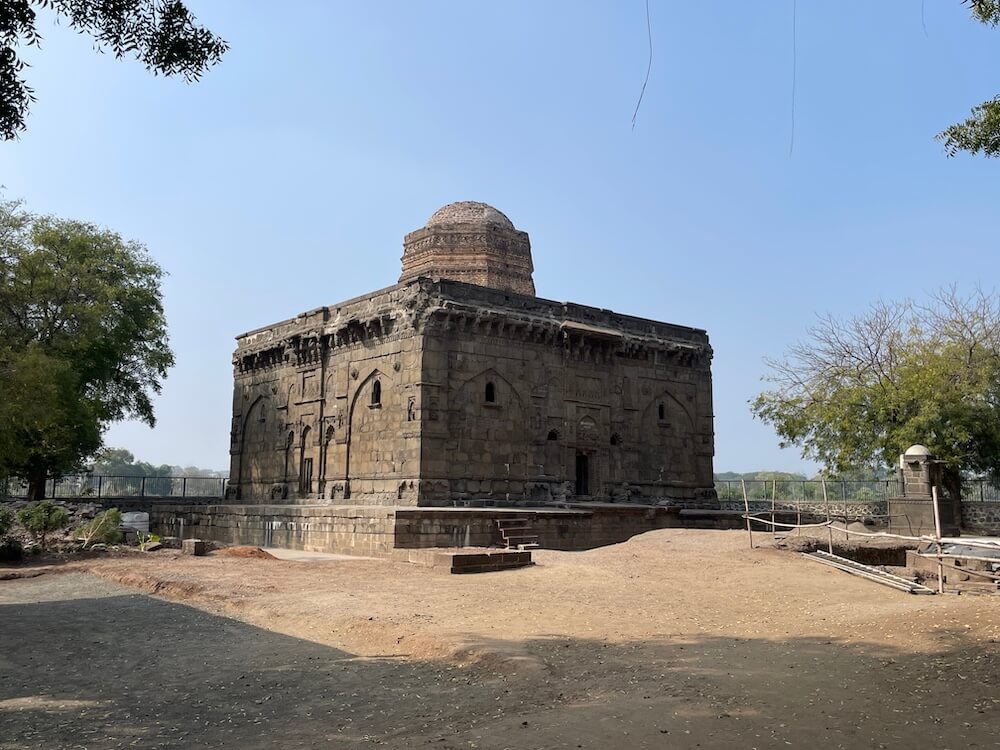
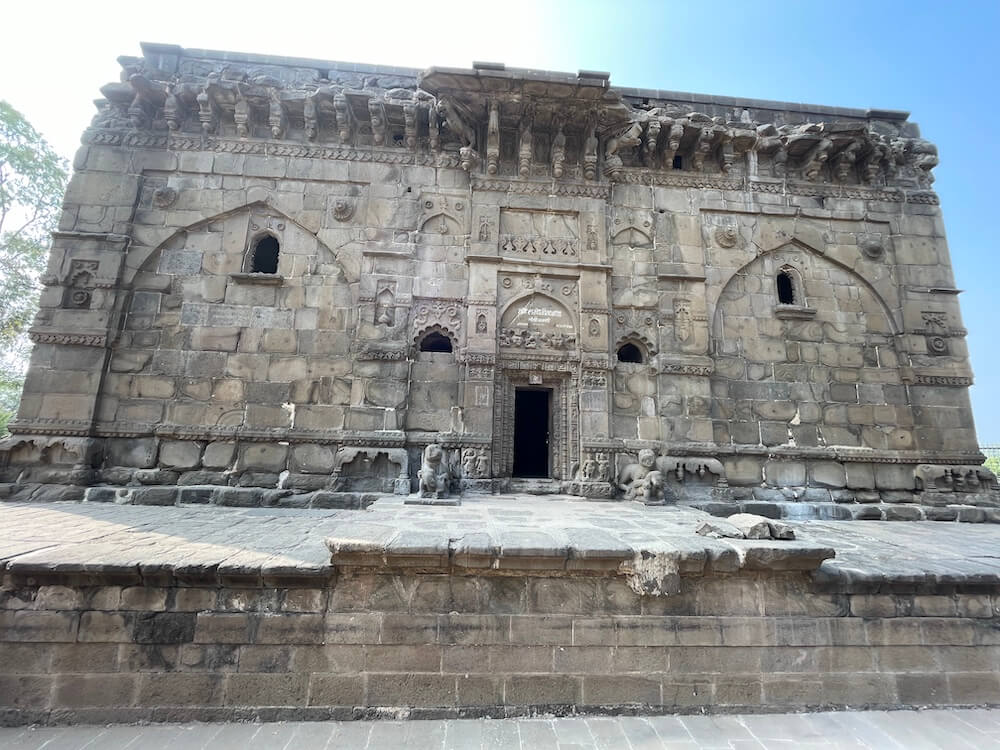
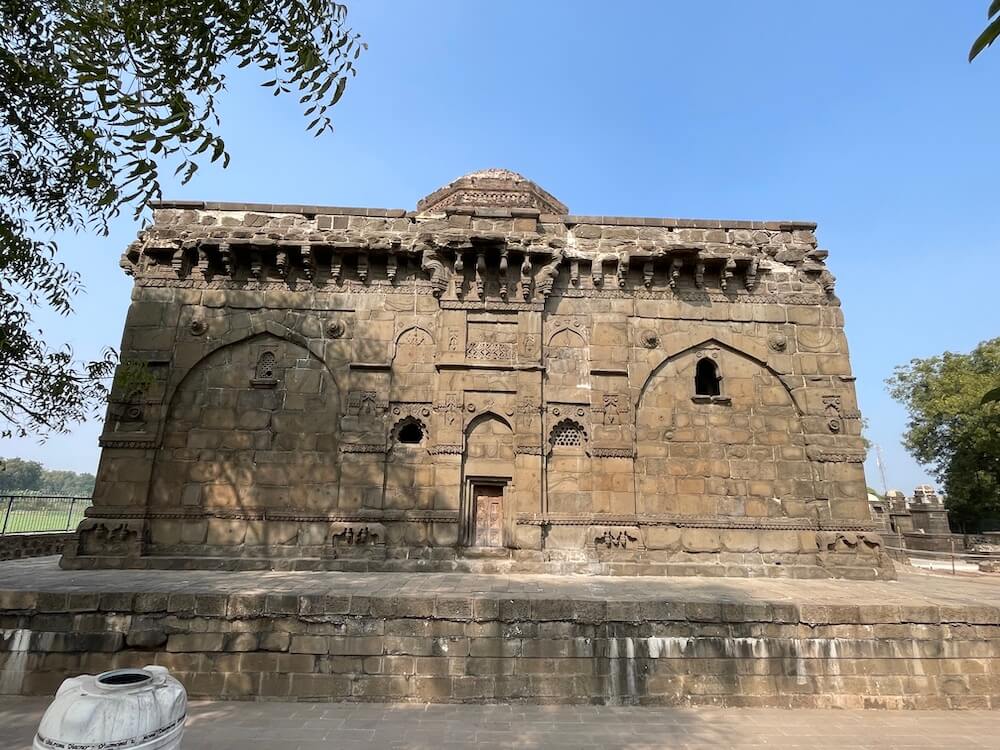
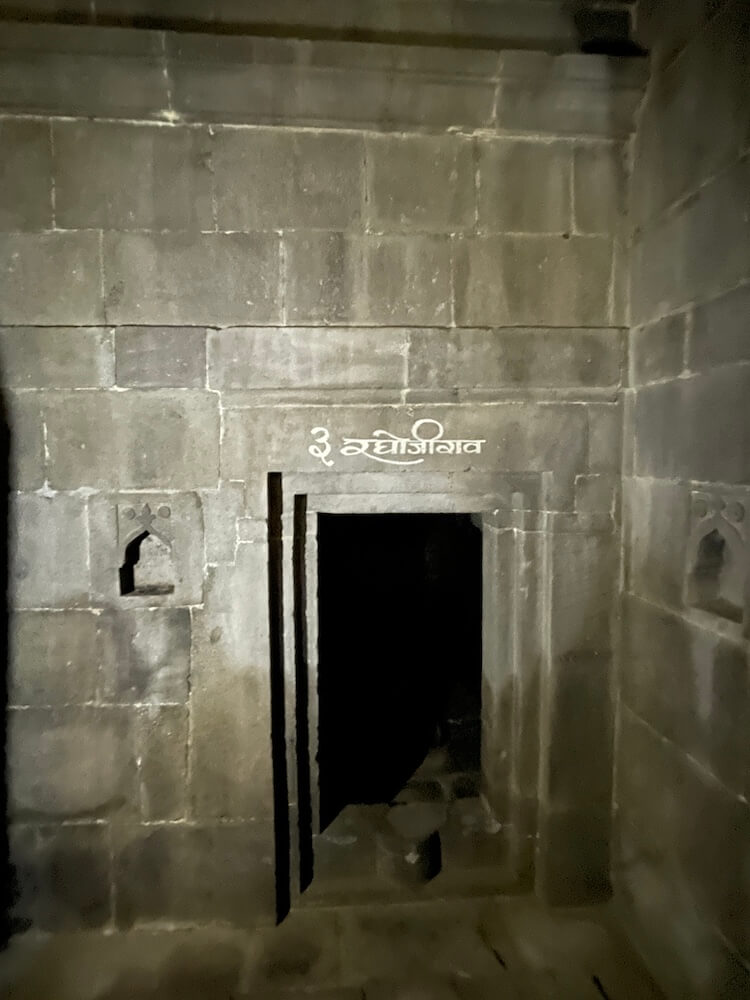
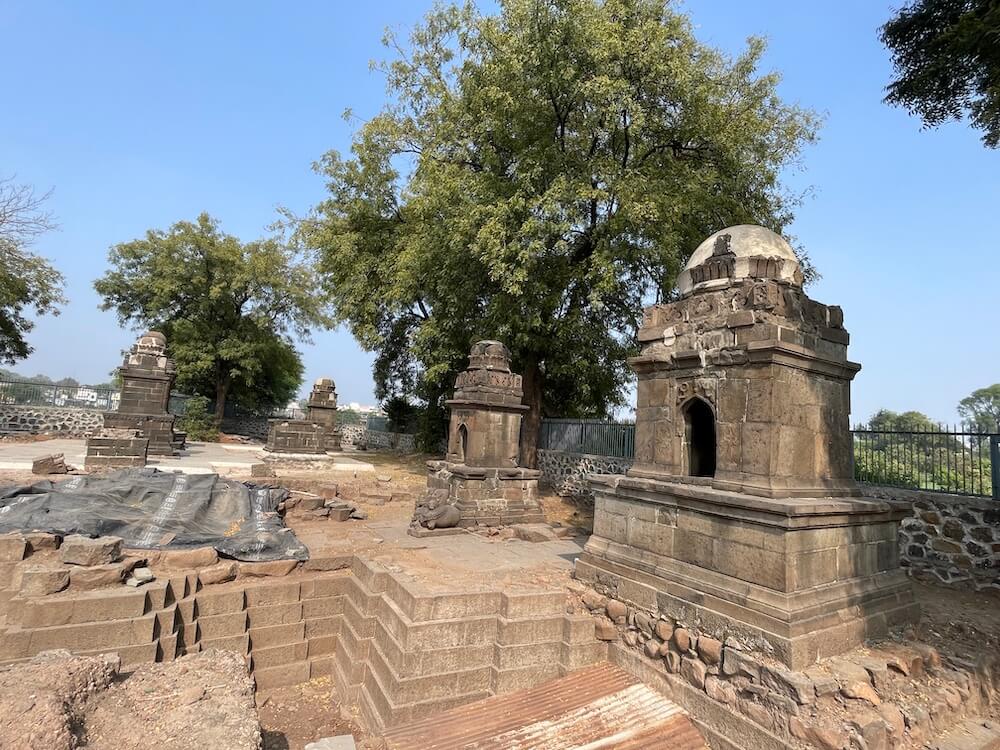
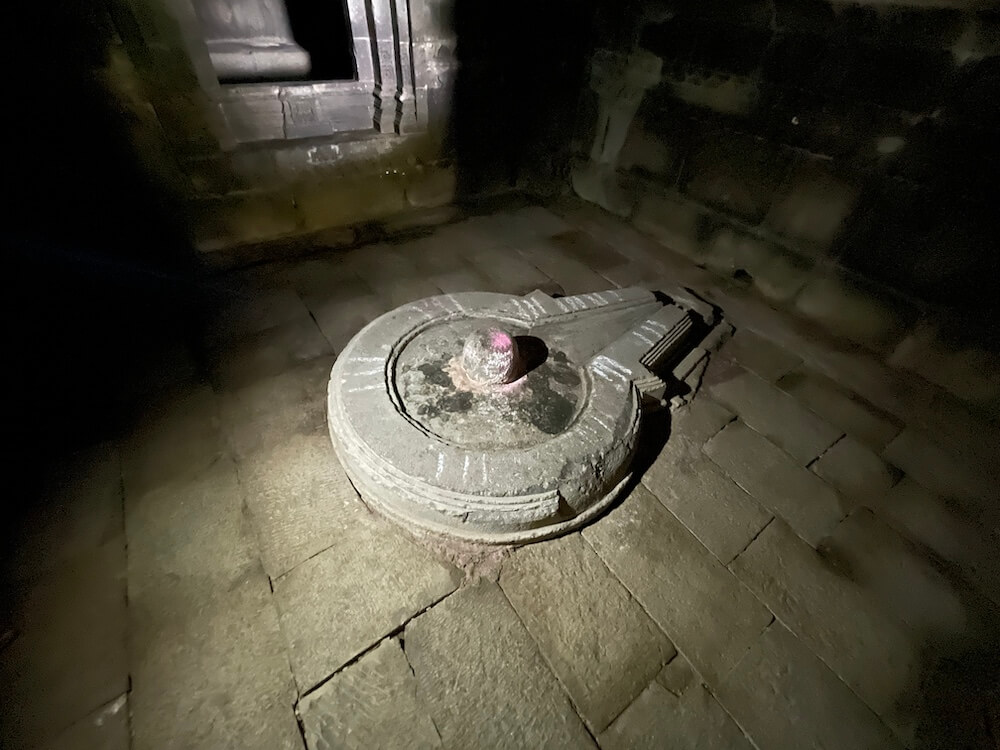
According to the descriptions in the book ‘Sindkhed Rajacha Itihas’ written by Dr. Shivratan Sheth and ‘Rajmata Jijauche Maher: Sindkhed Raja’ written by Sunil Koshti, after this sacrifice of Lakhujirao, his brother Raja Jagdevrao (Bhutji) Jadhav took over the administration of Sindkhed Raja. Raja Jagdevrao undertook the task of building a grand memorial for Lakhujirao at Sindkhed Raja. This structure is today considered an excellent example of ‘Indo-Islamic-Maratha’ architectural style. This square structure, measuring approximately 40 by 40 feet, is built on a high stone plinth. The dressed stone masonry of the Samadhi stands in good condition to this day. Its construction is done in black basalt stone, and the upper part is made of bricks and lime. The main entrance of the square Samadhi faces east, while there are two sub-entrances on the south and north sides. The dome of the memorial is built on 24 arches. Inscriptions of the genealogy of the Lakhujirao Jadhav family are carved at two places on the outer walls of the memorial. There is a staircase structure leading to the terrace on both sides of the main entrance. One of these paths is currently closed. On both sides of the entrance, there are eye-catching statues of lions (Sharabha) killing elephants. The greatest feature of this Samadhi is its magnificent dome. The presence of such a dome on the Samadhi of a Hindu chieftain reflects the syncretic culture of that era. From the outside, this structure appears like an Islamic tomb. In the center of this structure, a large Shivalinga has been installed for the peace of Lakhujirao’s soul. In this same building, there are a total of five Samadhis, including those of Lakhujirao, his sons, and his grandson. In front of this memorial are some other Samadhis of the Jadhav family and Sati stones.
This heritage of Sindkhed Raja is also connected to ancient times. This was realized through a discovery made in June २०२४. While excavation was underway in the premises of this Samadhi by the Archaeological Survey of India, an extremely rare ‘Sheshashayi’ idol of Lord Vishnu was found at a depth of about २.२५ meters. Experts estimate that this idol, made of soft Chlorite Schist stone, dates back to approximately the ११th century. This monolithic stone, measuring १.७० meters in length, reveals the serene form of Lord Vishnu. Goddess Lakshmi at the feet of Vishnu, the Dashavatara carved on the halo, and the scene of Samudra Manthan are carved so exquisitely that they bear witness to the advanced sculpture of that era. The Jadhav dynasty considers itself ‘Yaduvanshi’, meaning descendants of Vishnu. Therefore, it is claimed that a grand Vishnu temple must have existed here even before Lakhujirao, that is, ۵०० years ago.
Every year on January १२, the birth anniversary of Rajmata Jijau is celebrated. Although this birth anniversary ceremony takes place at Jijau Srushti here, there is a large crowd at the Samadhi site of Lakhujirao Jadhav and the palace on this day. At this time, thousands of Shiva devotees and Jijau devotees come here to pay their respects. Apart from this, a death anniversary program is organized every year on July २५ at his Samadhi site in memory of King Lakhujirao Jadhav. On this occasion, religious rituals, worship, and memories of Maratha history are revived. Dussehra has unique importance in the Maratha tradition. In Sindkhed Raja, the descendants of the Jadhav dynasty and local citizens gather to perform ‘Shastra Pujan’. As a symbol of the valor of King Lakhujirao Jadhav, a festival is celebrated in the traditional way at the Samadhi site and the surrounding area on this day. Also, since it is the maternal home of Chhatrapati Shivaji Maharaj, Shiv Jayanti is celebrated with great pomp in Sindkhed Raja. At that time, flower decorations, a Palkhi procession, and cultural programs are organized at the Samadhi site. This Samadhi site is open daily from ९ AM to ५ PM.
This sacred temple stands as a testament to deep spiritual devotion, ancient architectural grandeur, and rich local cultural traditions.
The sanctum sanctorum houses the divine idol consecrated according to ancient Vedic traditions, surrounded by serene courtyards and traditional temple architecture.
Navratri, Maha Shivratri, Annual Temple Jatra & Deepotsav
Compare and book flights, secure top-rated local hotels near the temple, hire reliable guides, and rent cars instantly.
Extend your pilgrimage by visiting other highly sacred temples located nearby.


Add ₹999 more to unlock FREE SHIPPING!
Your sacred cart is currently empty.
Shop Photo FramesFill in your delivery details below to place your order.
Add comment