
Add ₹999 more to unlock FREE SHIPPING!
Your sacred cart is currently empty.
Shop Photo FramesPalsod, Taluka Jalgaon, District Jalgaon
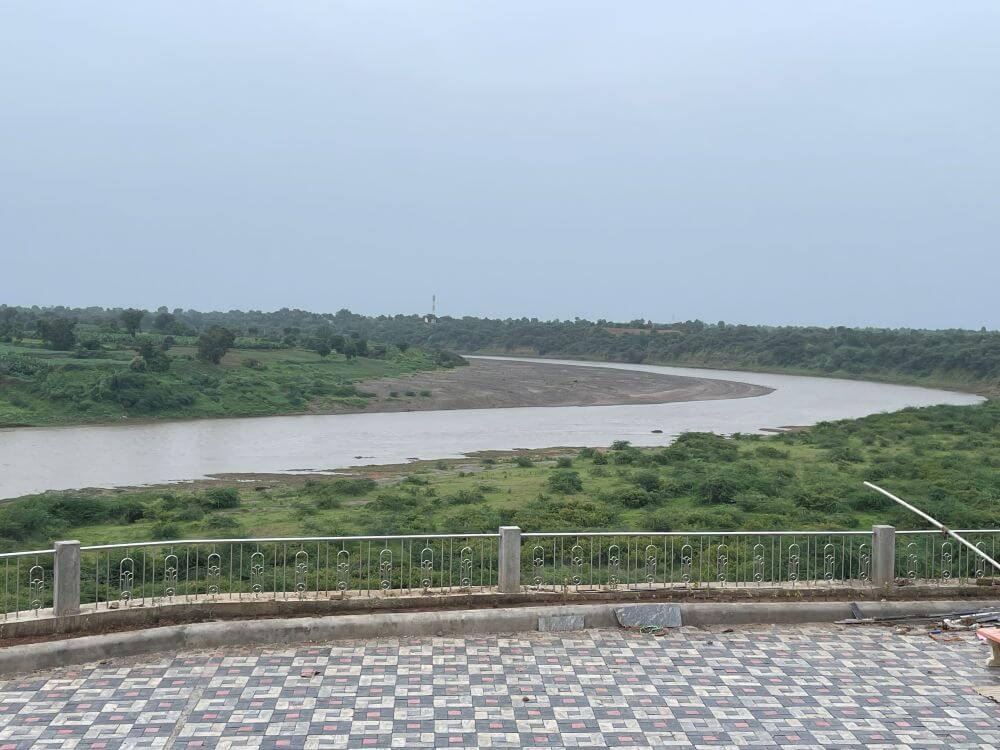
The Rameshwar Temple is situated at Palsod in Jalgaon Taluka, at the holy confluence of the three rivers: Tapi, Girna, and Anjani. It is believed that during their exile, Lord Shriram, Lakshman, and Sita resided here for a month. There are two Shiva Lingas in this temple, which were fashioned by Shriram and Lakshman from the river sand for their daily worship. Furthermore, Sage Vishwamitra is said to have performed the Gayatri Yajna at this very site. Consequently, this Rameshwar Temple, which has held significance since the Ramayana era, is considered one of the most important pilgrimage sites in the district.
Rameshwar is a name of Lord Shiva. The legend behind this name states that after Shriram slew Ravana, he incurred the sin of Brahmahatya (killing a Brahmin), as Ravana was a Brahmin. To cleanse himself of this sin, sages advised Shriram to install and worship a Shiva Linga. Sita then prepared a sand Linga on the seashore, which came to be known as Rameshwaram. The sages requested Shriram to explain the meaning of the name Rameshwar. At that time, Shriram stated, “Ramasya Ishvarah Sah Yah Rameshwarah,” meaning “He who is the Lord of Rama is Rameshwar.” Shiva-Shankar is my Lord; therefore, Rameshwar means Shankar.
The legend of the Rameshwar Temple at Palsod aligns with this mythological account. It is said that during the Ramayana era, this region was part of Dandakaranya, which stretched from the Vindhya Mountains to the Godavari. During their exile, Shriram, Lakshman, and Sita spent at least ten years in the forest. The area where the temple currently stands was once the hermitage of Sage Vishwamitra. During their exile, Shriram, Sita, and Lakshman stayed at this hermitage for a month. At that time, for their daily worship, Shriram and Lakshman brought sand from the river confluence and fashioned Shiva Lingas from it. Sage Vishwamitra consecrated both these sand-based Shiva Lingas here. Since then, there have been two Shiva Lingas in the sanctum sanctorum. Because Shriram installed these Shiva Lingas, this pilgrimage site is called Rameshwar. According to some scholars of religious texts, Shriram was in this very region when King Dasharatha passed away. Therefore, he performed the Dashkriya ritual and Pind-daan of King Dasharatha at this Triveni Sangam. However, there are differing opinions on this; some believe that during their exile, Shriram, along with Lakshman and Sita, went to Panchavati in Nashik on the banks of the Godavari, where he performed the funeral rites for King Dasharatha, and that place has been known as ‘Ramkund’ ever since.
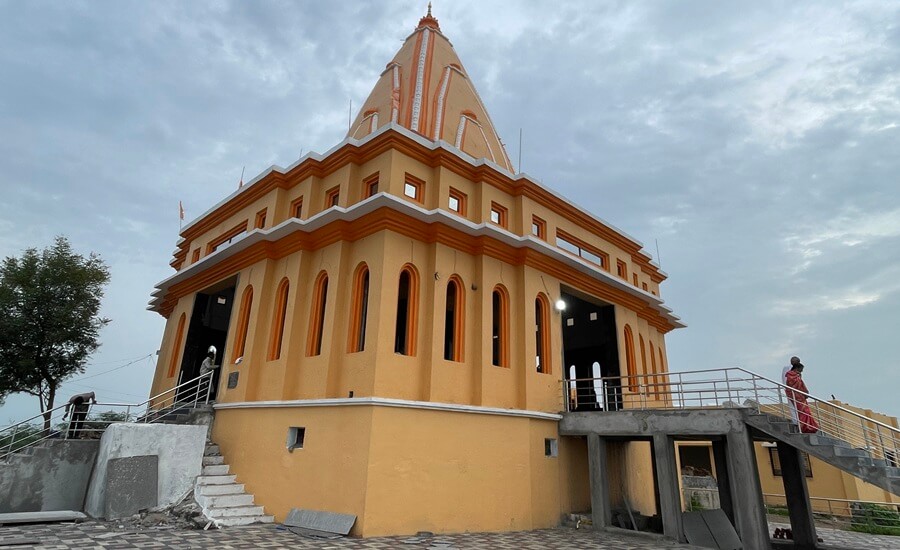
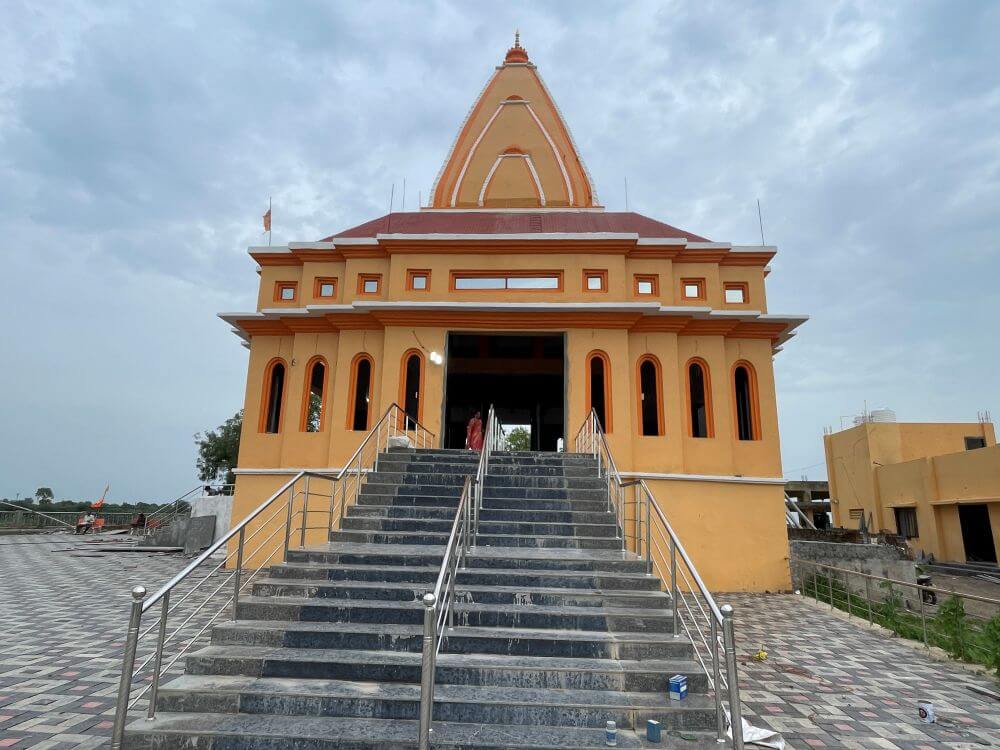
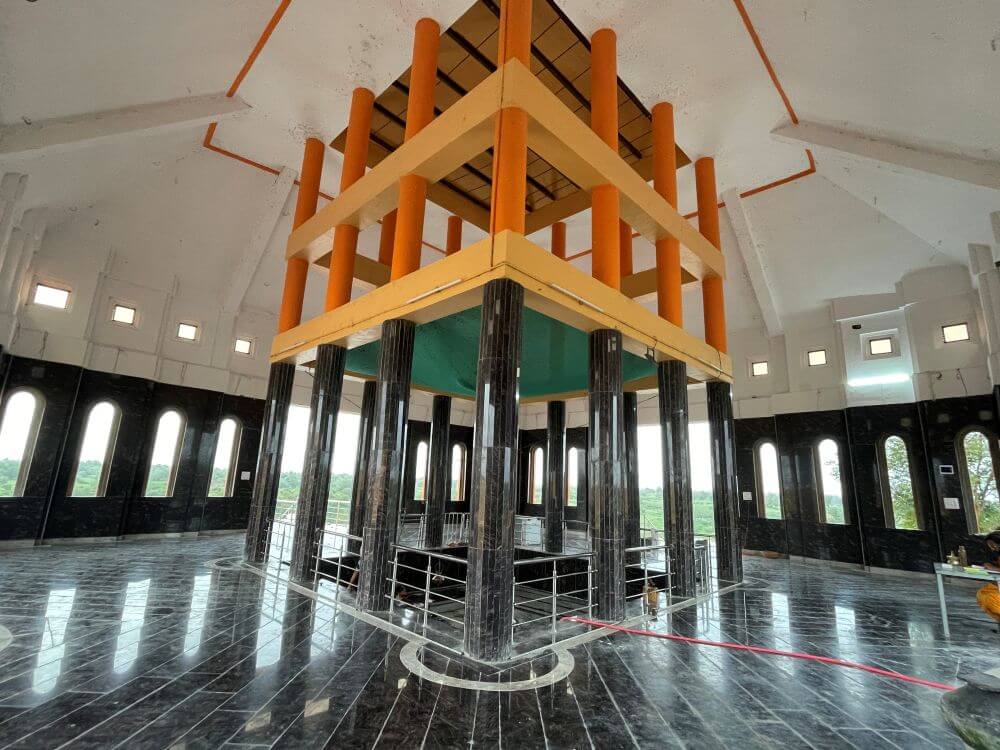
Although the temple acquired a modern appearance after a renovation some years ago, records indicate that it was renovated during the time of the pious Ahilyabai, between the years 1766 and 1795. The Rameshwar Temple is situated on a high earthen mound near the Triveni Sangam. After climbing a few steps from the parking area, one enters the temple courtyard. From this courtyard, located on the plateau of the hill, one can see a panoramic view of the surrounding area and the Triveni Sangam. The courtyard is surrounded by a boundary wall with safety railings, and the entire area is paved with paver blocks. From the courtyard, one climbs about 20 steps to enter the temple, which stands on a high plinth. This spacious temple features a unique design with a star-shaped assembly hall (Sabhamandap) and a sanctum sanctorum (Garbhagriha) in the center.
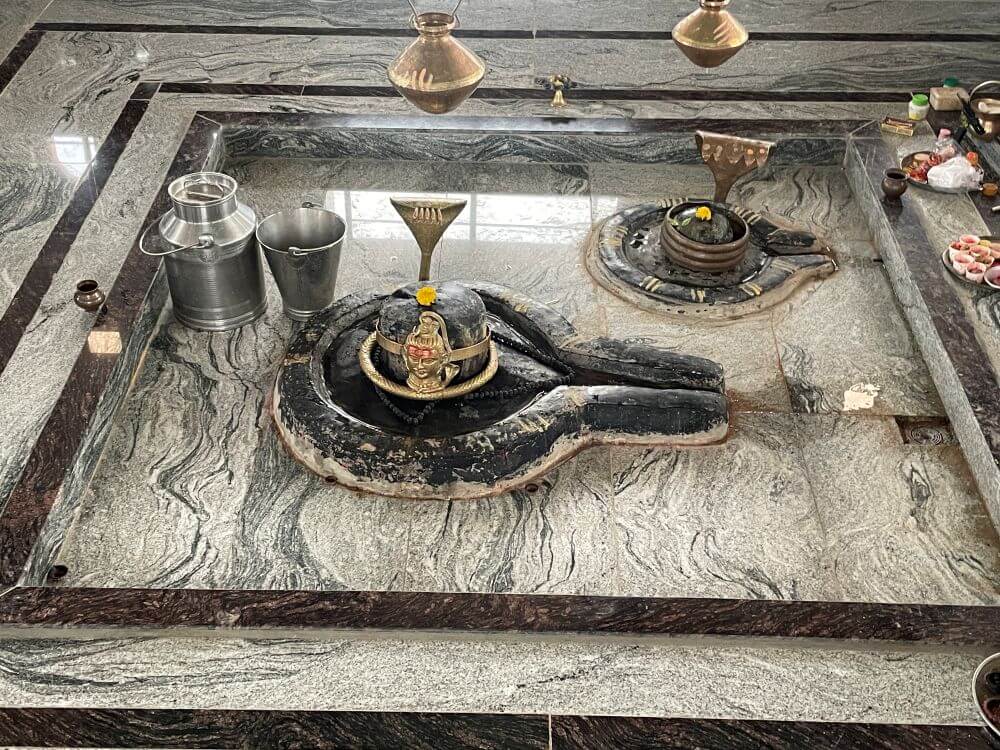
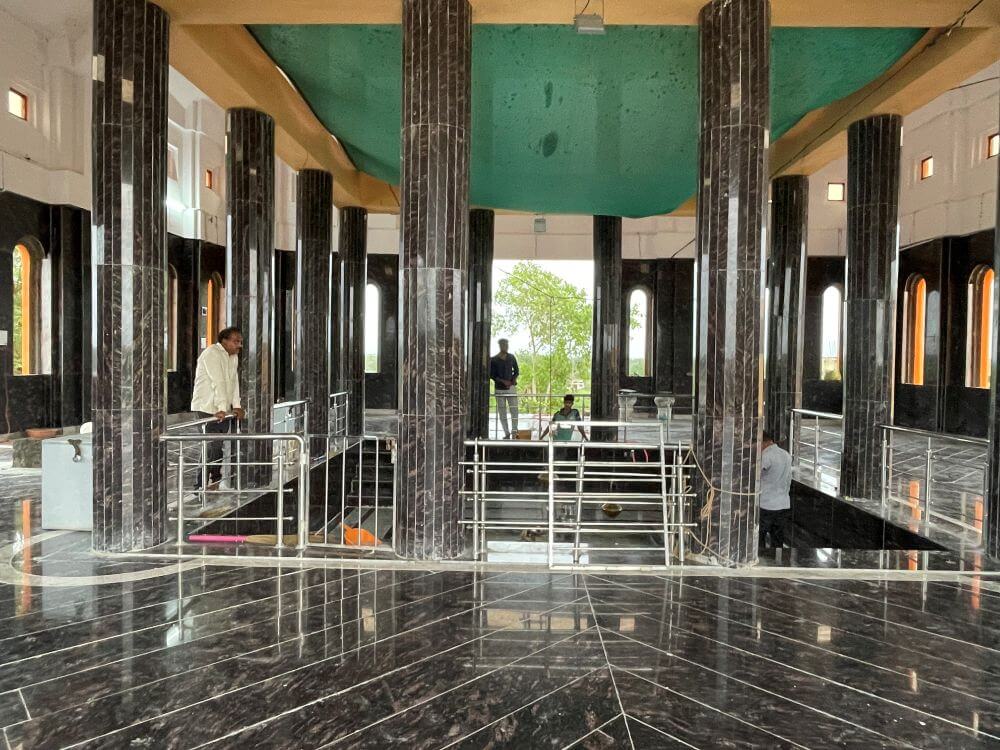
This enclosed assembly hall has many windows in its walls, allowing sufficient air and light to enter the elevated space. There is a marble statue of Nandi between the main entrance and the assembly hall. Circular pillars surround the deep-set sanctum sanctorum in the center, and these pillars support the weight of the temple spire (Shikhara). One descends four steps from the assembly hall to enter the central sanctum. In the center of the sanctum, on a square floor a few inches deep, are two Shiva Lingas—one large and one small. Both these Shiva Lingas are sheltered by a serpent hood, and water is offered (Jalabhishek) from a vessel above.
Regarding the two Shiva Lingas in the sanctum, the legend says that when Shriram and Lakshman were residing here, Shriram asked Lakshman to prepare a Shiva Linga. However, due to some reason, Lakshman was delayed, so Shriram prepared a Shiva Linga himself and began the worship. Just then, Lakshman arrived with his own Shiva Linga. To ensure Lakshman did not feel slighted, Shriram placed the Linga brought by him to the side and worshipped it as well. That is why there are two Shiva Lingas in this temple.
A grand festival is held here on Mahashivratri, during which thousands of devotees come to have the darshan of Rameshwar. Apart from this, there is also a large crowd of devotees during the month of Shravan.
The sanctum sanctorum houses the divine idol consecrated according to ancient Vedic traditions, surrounded by serene courtyards and traditional temple architecture.
Navratri, Maha Shivratri, Annual Temple Jatra & Deepotsav
Compare and book flights, secure top-rated local hotels near the temple, hire reliable guides, and rent cars instantly.
Extend your pilgrimage by visiting other highly sacred temples located nearby.


Add ₹999 more to unlock FREE SHIPPING!
Your sacred cart is currently empty.
Shop Photo FramesFill in your delivery details below to place your order.
Add comment