
Add ₹999 more to unlock FREE SHIPPING!
Your sacred cart is currently empty.
Shop Photo FramesNestled on the banks of the Tamraparni River, the natural beauty of the taluka town of Chandgad is truly captivating. Once a region of dense forests, the local culture and sacred sites here still maintain their unique identity today. Just as the rice cultivation and the crops of cashews and mangoes in this village mirror those of the Konkan region, the famous Rawalnath Temple here preserves the heritage of Konkani faith and worship traditions. Devotees believe that the Rawalnath deity here is a living presence who grants wishes. The procession of the ‘Aarti’ performed while balancing a lamp on the head is famous here.
According to the seventh volume of the ‘Bharatiya Sanskriti Kosha’ by Pandit Mahadevshastri Joshi, Rawalnath is one of the village deities of the Konkan. In this encyclopedia, he notes that “researchers have different concepts regarding Rawalnath. Some believe this name is a corrupted form of Revannath and that this deity belongs to the Nath sect. Some researchers derive this word from the name Rahul. Rahul was the son of Buddha. In ancient times, some people may have come to the Konkan bringing Rahulnath and his worship. Others believe Rawalnath might be a corrupted form of Ruru. Ruru is one of the eight Bhairavas. It is possible that the name was formed by adding ‘Rulu’ to Ruru and then appending the word ‘Nath’. Neutralizing snake venom is a characteristic of Rawalnath, which is also a characteristic of Bahiroba of the Desh region. Based on this, both these deities may belong to the Bhairava lineage.”
Like Bhairava, Malhari, Khandoba, and Jotiba, Rawalnath is considered a Shaivite deity. Rawalnath is a deity of fierce and warrior-like temperament, as well as Yaksha nature. As he is the guardian deity (Kshetrapal) of South Konkan, there is an idol of Rawalnath in every village there. In the Konkan, Rawalnath is also called Piso Ravlu. He is also a prominent deity in Goa. After the arrival of the Nath sect in Goa, they changed the original name of the deity from Ravlu to Rawalnath. There are many Rawalnath temples in the Kolhapur district, which is adjacent to the Konkan. One such temple is in Chandgad.
A legend about this village states that Rawalnath slew a demon named Chandrasur here. Hence, the village was named Chandgad. The samadhi of the unknown couple who founded the original temple still stands on a platform near the temple entrance. The first renovation of this temple took place in the seventeenth century in the year 1617. Records indicate that the temple was renovated for the second time a few years later, and for the third time in 1823. The temple’s board of trustees was established in 1892. The deity’s endowment (Inam lands) spans 135 acres across the villages of Hindgaon, Chandgad, and Konewadi. Similarly, 84 villages in the Latgaon, Here, and Kankumbi areas also fall under the deity’s endowment. For this reason, the Rawalnath here is called ’84 Chaubar’.
This grand temple is situated at a height from the road. One enters the temple courtyard after climbing 35 steps. After climbing the first ten steps, there is a five-tiered lamp tower (Deepmal) on a two-level platform to the side. The lower tier of this platform has a lamp niche. The upper tier features carvings of elephants and lotus flowers on all four corners. There is a replica of a lotus flower at the base of the lamp tower, which tapers as it rises. The lamp tower has independent arms for lighting lamps. Beyond this, one climbs 25 more steps to enter the temple courtyard. The temple is surrounded by a sturdy perimeter wall.
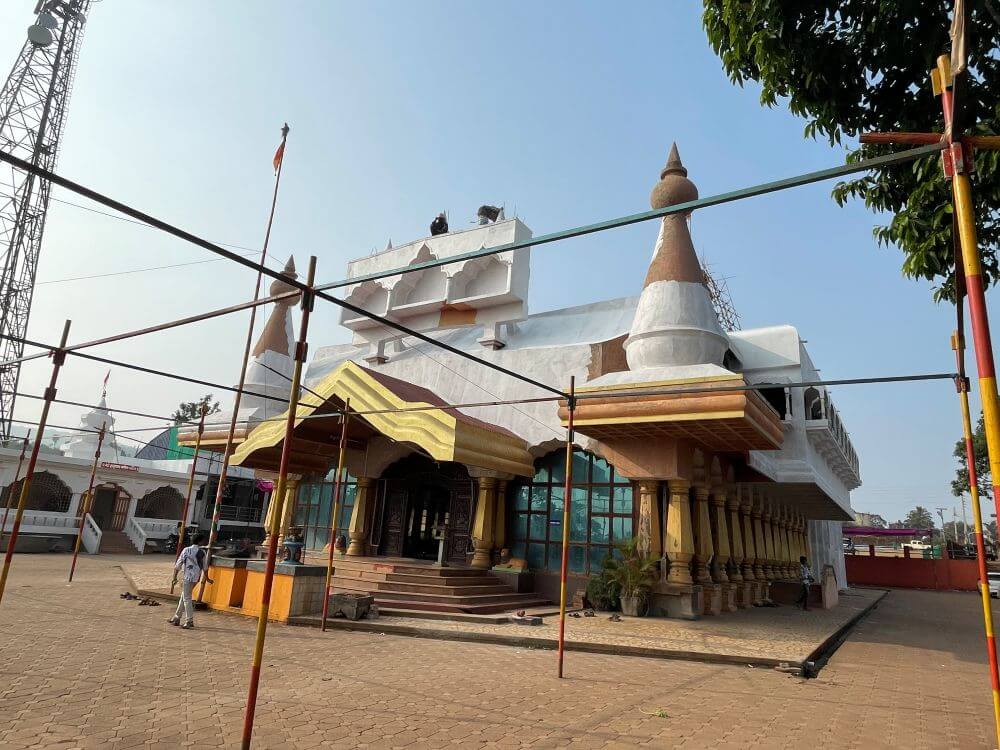
In front of the temple, on a platform, there is a Tulsi Vrindavan and a samadhi site nearby. The roof of the Darshan Mandap has three niches supported by two pillars, topped with three finials (Kalash). The sub-mandaps on both sides of the main entrance porch have tapering spires, with an Amalaka and Kalash on top. One must climb four steps to enter the main porch, which has two octagonal pillars. There are lion sculptures beside the pillars. The wooden entrance to the main hall (Sabhamandap) features exquisite carvings. The door frames are carved with foliage and floral vines, while the door panels feature auspicious pots (Mangal Kalash) in squares, surrounded by leaf and flower designs. The moon-shaped door lintel is carved with floral and leaf vines, and there is an idol of Ganesha on the central beam (Lalatbimba). Upon entering the Sabhamandap, one sees leather footwear hanging in front. There is a tradition of making vows of footwear to the Rawalnath deity.
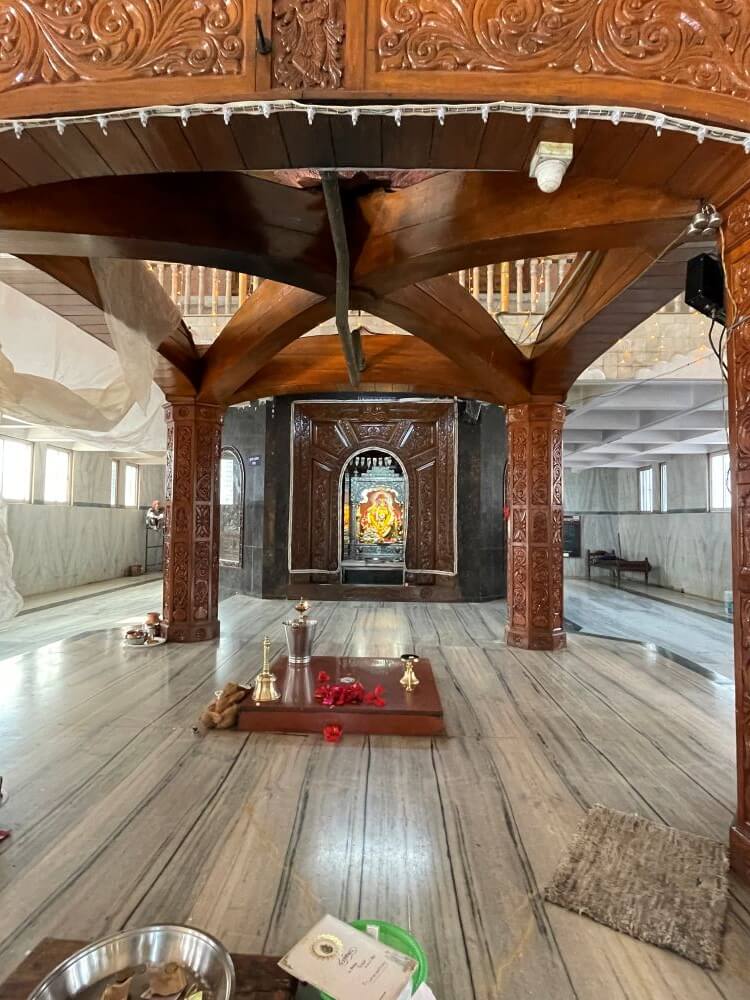
The enclosed, two-story Sabhamandap (Gudhamandap) has 12 ornate pillars on each side. The pillars are circular at the base, octagonal above, and taper as they rise. Circular rings on the pillars and the arched beams above support the upper gallery. The upper gallery, which surrounds the Sabhamandap on all four sides, has a safety railing. There are staircases with safety railings on both sides of the entrance to reach the upper gallery. The gallery on the second floor provides seating for devotees during programs.
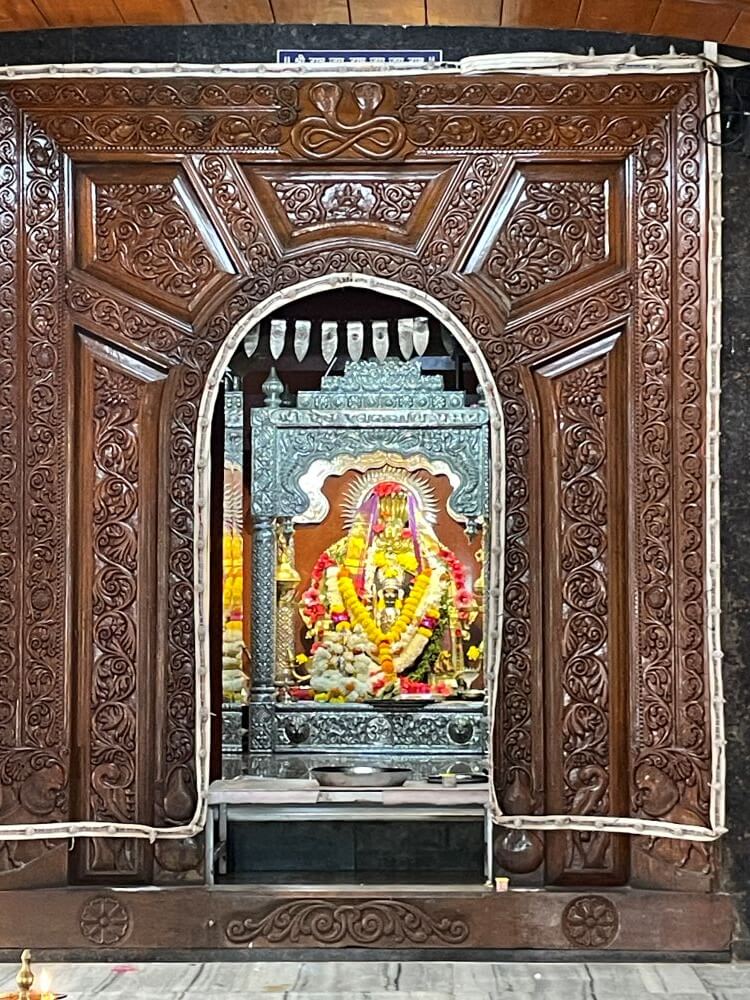
The floor of the Sabhamandap is covered with marble tiles. There are doors on both sides. In the Antaral (vestibule) in front of the sanctum sanctorum in the Sabhamandap, there is a two-foot-high platform with four hexagonal wooden pillars and moon-shaped beams above them. The wooden mandap here is decorated with floral carvings. Further ahead is the sanctum sanctorum (Garbhagriha). In the square-shaped sanctum, the four-armed idol of Rawalnath, carved from black stone, is housed in an ornate silver shrine. The deity holds a sword, trident, drum (Damaru), and a vessel of nectar in his hands. He wears a crown on his head and a sacred thread (Janve) around his neck. Behind the idol is a silver sun-halo. The sanctum is octagonal from the outside. On each of its walls are wooden carvings of deities including Ganesha, Lakshmi, Saraswati, Shankar, Shriram, Radha Krishna, and Shridatt. The deity’s silver palanquin, used during festivals, is kept in the circumambulation path (Pradakshina Marg) around the sanctum.
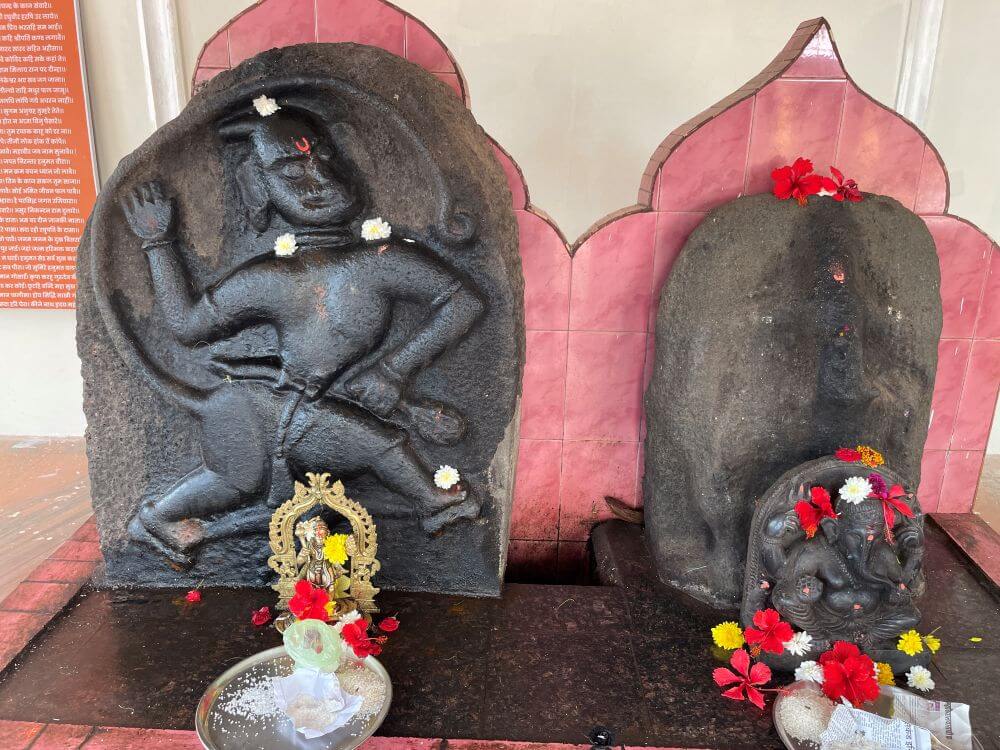
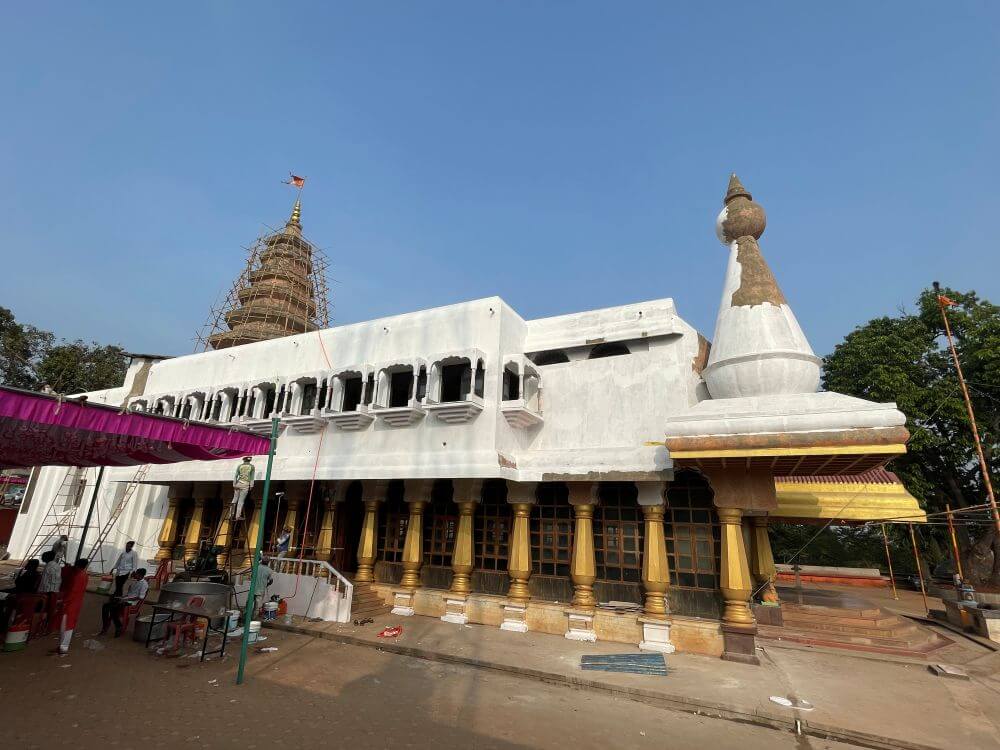
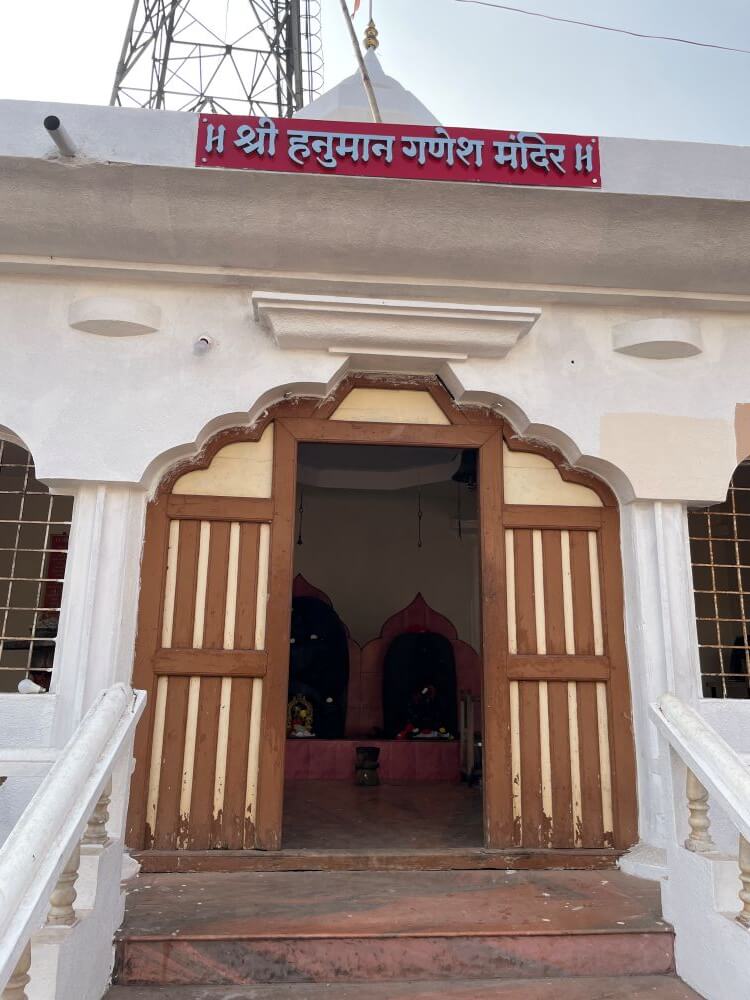
The exterior of the Rawalnath temple features ornate pillars and a structure of niches for the windows on the upper floor. The temple roof has a tall, eight-tiered octagonal spire, topped with an Amalaka and a Kalash. Apart from the main temple, the courtyard houses temples dedicated to Ganesha, Hanuman, Mahadev, Sateri Devi, Baravas, Bhaveshwari Devi, and others. The idols in all these temples are carved from black stone.
Annual festivals such as Chaitra Padwa, Ganesh Chaturthi, Navratri, Dussehra, and Holi are celebrated at the temple. A five-day fair is held from the first Tuesday to Sunday following Magh Purnima. On Tuesday, the women of the village offer sarees and coconuts to the Goddess at the Mahalaxmi Temple. At night, Gondhal is performed, followed by Mahaprasad. On Wednesday, village dignitaries perform rituals such as Chowk Bharne, Vide Mandne, and Aarti Bandhne. In the afternoon, the temple priest balances a plate of lit lamps on his head and performs a circumambulation of the village without touching the plate with his hands. The festival of the Aarti on the head is also celebrated on Diwali Padwa. During this time, there is a tradition of letting buffaloes run loose along the circumambulation route. Devotees prostrate themselves on the path of the circumambulation, and the priest completes the procession while balancing the Aarti on his head. Thousands of devotees from Karnataka, Goa, and Maharashtra come here to witness this festival, seek the blessings of the deity, and fulfill their vows.
This sacred temple stands as a testament to deep spiritual devotion, ancient architectural grandeur, and rich local cultural traditions.
The sanctum sanctorum houses the divine idol consecrated according to ancient Vedic traditions, surrounded by serene courtyards and traditional temple architecture.
Navratri, Maha Shivratri, Annual Temple Jatra & Deepotsav
Compare and book flights, secure top-rated local hotels near the temple, hire reliable guides, and rent cars instantly.
Extend your pilgrimage by visiting other highly sacred temples located nearby.


Add ₹999 more to unlock FREE SHIPPING!
Your sacred cart is currently empty.
Shop Photo FramesFill in your delivery details below to place your order.
Add comment