
Add ₹999 more to unlock FREE SHIPPING!
Your sacred cart is currently empty.
Shop Photo FramesIt is said that according to various traditions in the country, there are 51, 52, 64, or 108 Shakti Peethas of the primordial energy, Adishakti. According to local legends and the significance of the place, one of these 108 Shakti Peethas is situated on Rudra Gad within the Katepurna Sanctuary area. The Goddess, who has resided on this circular-shaped fort since ancient times, is famous as ‘Rudrayani Mata’. It is said that the Goddess received this name from the name of this Rudra Gad, which is located at the tail end of the Ajanta mountain range. Millions of devotees from every corner of Vidarbha come here to seek the blessings of this awakened Goddess.
In the Shakta tradition of Hinduism, Yogeshwari, Maheshwari, Vaishnavi, Brahmani, Kaumari, Aindri, Chamunda, and Varahi are considered the Ashtamatrikas (the eight mother goddesses). The reason why there are only eight Matrikas is given in the ‘Varaha Purana’. It states that these Matrikas represent eight human traits and vices. Accordingly, the Matrika Maheshwari represents the trait of anger. Her form is fierce, and she is also known by the name Rudrayani. There is a magnificent temple of Rudrayani in the Mhaipi area of Kathmandu, the capital of Nepal. There, she is known by the name Mhaipi Ajima. An important place of this same Rudrayani in Maharashtra is located at Chincholi Rudrayani in Barshi Takli. Like many folk deities, the Goddess Rudrayani resides here in the form of an uncarved stone (Tandala).
According to mythological legends, during their fourteen years of exile, Lord Shriram, along with Sita and Lakshmana, visited this place twice. At the foothills of this fort, there is a large lake named ‘Padmatalav’. The lotus flowers that bloom in this lake are known as ‘Chandravikas’. These lotuses bloom only in the moonlight. During the monsoon, this lake is filled with lotus flowers. In the summer, the water often dries up. It is said that Lord Ramachandra worshipped Goddess Rudrayani by offering white lotus flowers from this lake, and he also placed his sandals (Padukas) in this lake. This lake is shaped like the sole of a foot.
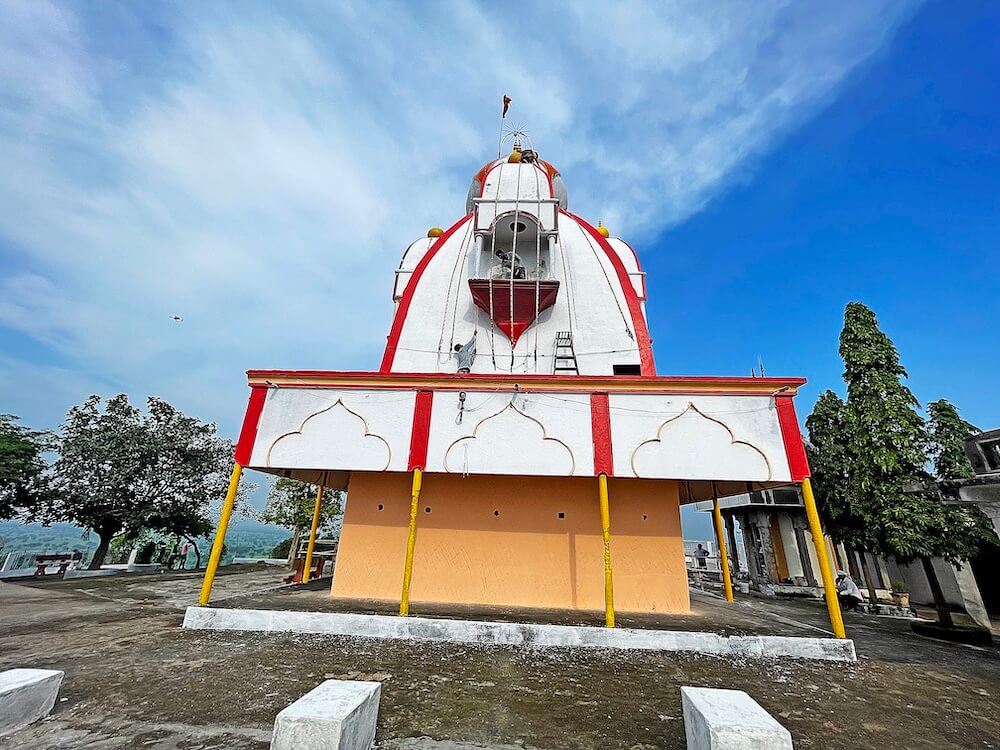
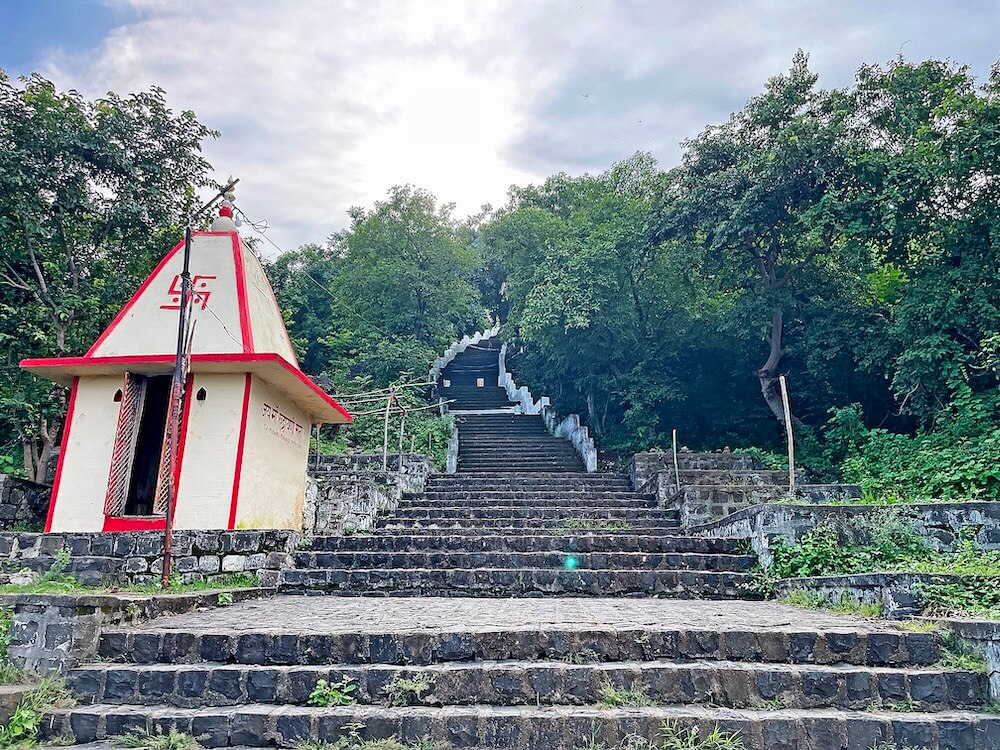
Shelgaon village is located on the Patur-Mahan road, about 7 kilometers from Patur. The fort can be seen from here. The village of Chincholi Rudrayani is about 8 kilometers from this point. The forest surrounding this fort is part of the Katepurna Sanctuary. At the foothills of the fort, there is a Nature Interpretation Center built by the Akola Forest Department. The ‘Padmatalav’ is located right near this center. One enters the temple courtyard by climbing 365 stone steps from the foothills of the fort. Although the journey up these steps is exhausting, the surroundings become serene once you reach the temple. Iron meshes have been installed for safety on the railings surrounding the temple courtyard on all four sides. A beautiful view of the sunrise and sunset can be seen from this courtyard. In the courtyard, in front of the temple, there is a small stone lamp pillar (Deepmal) and the Samadhi site of Raghunath Maharaj.
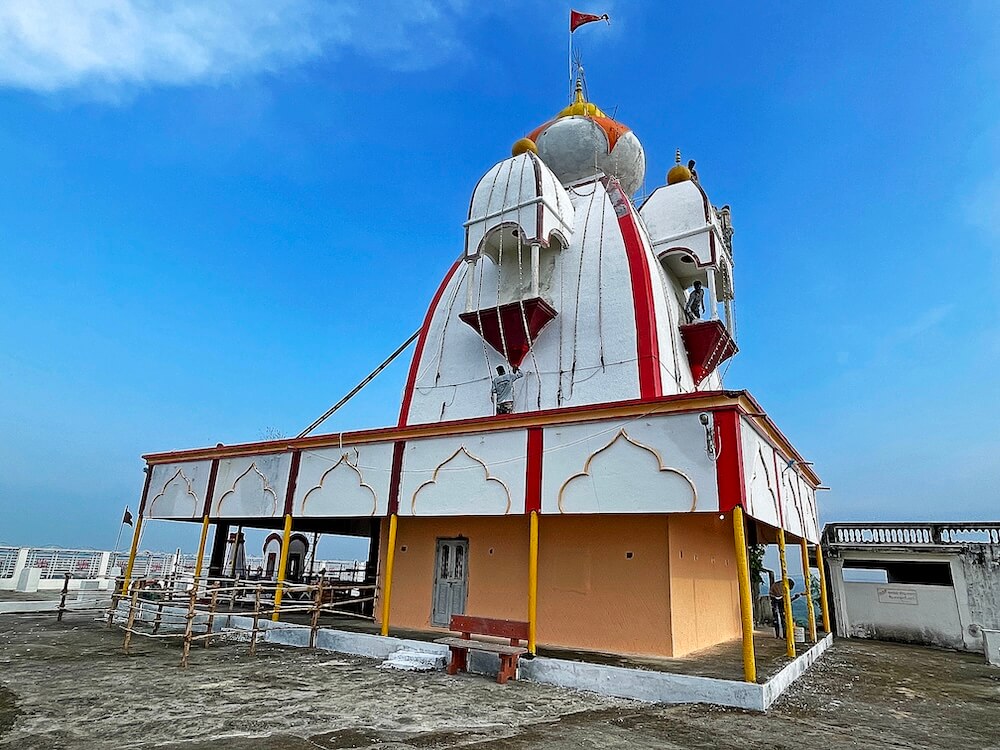
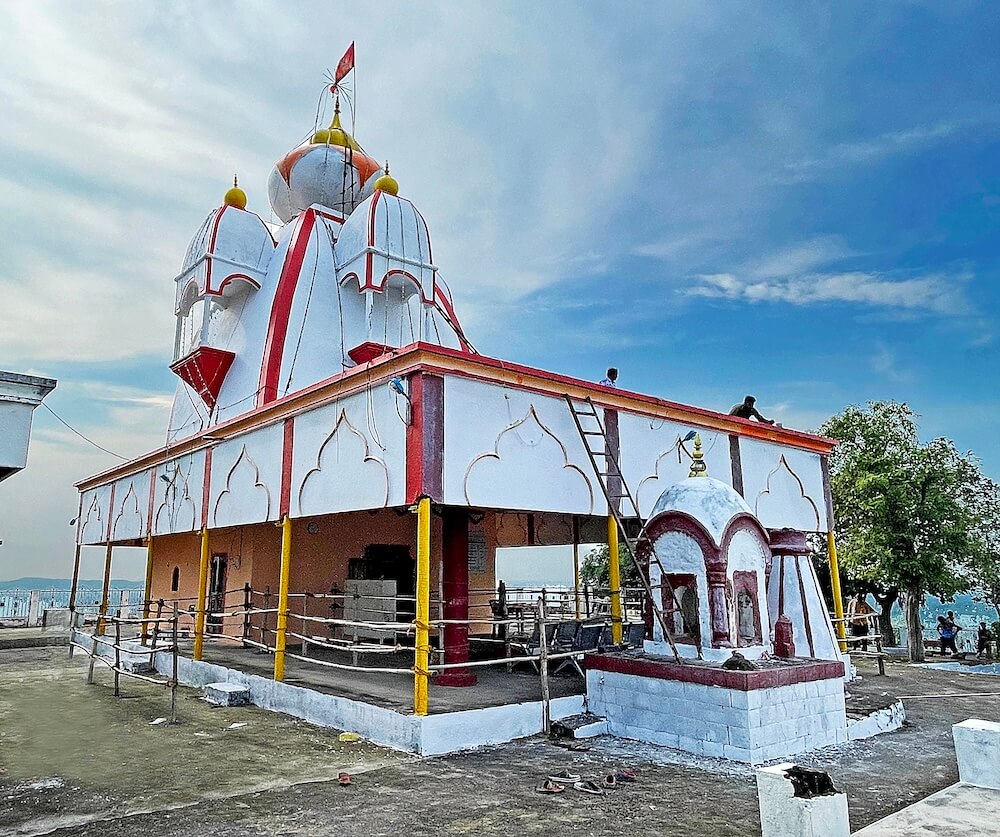
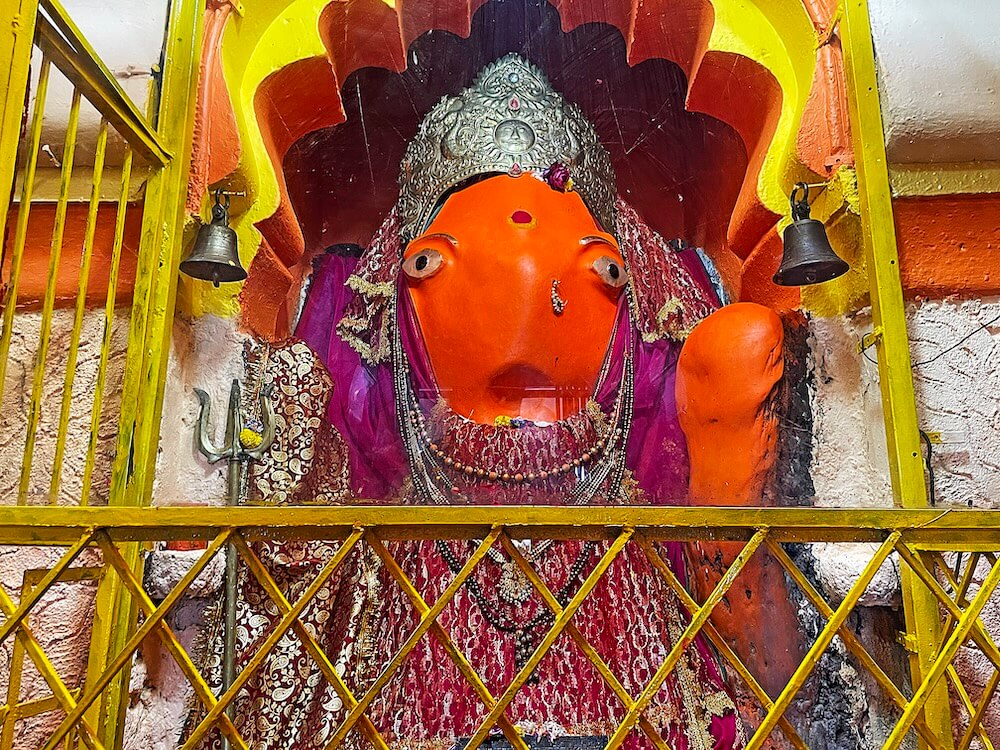
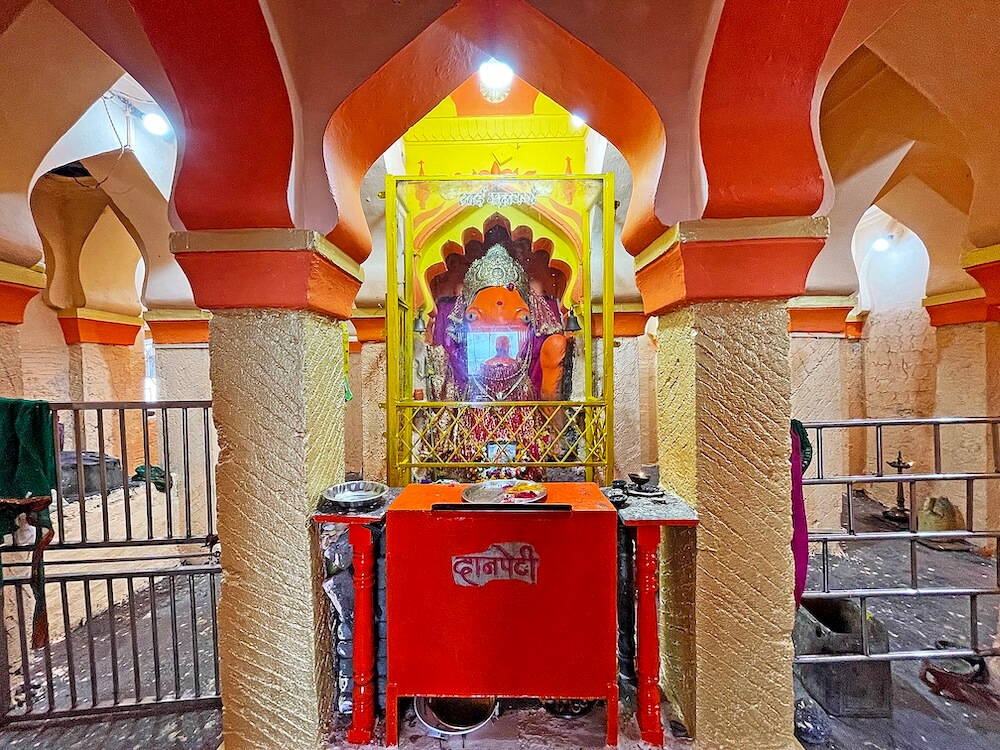
The temple structure consists of a main hall (Sabhamandap) and a sanctum sanctorum (Garbhagriha). There is a sacrificial fire pit (Yajnakund) in the center of the semi-open Sabhamandap. Beyond that, leaving space for the circumambulation path (Pradakshina Marg), is the sanctum sanctorum. On the stone pedestal (Vajrapitha) in the sanctum, there is the vermilion-anointed idol of the Goddess in the form of a stone (Tandala). There is an ornate crown on this large idol. To the left of the Goddess is a trident (Trishul), and in front of her are the sandals (Padukas). The spire (Shikhara) above the sanctum has replicas of the temple on all four sides. At the top of the spire is a dome-shaped Amalaka, topped with a pinnacle (Kalash). To the right of the temple is a small temple of Gajanan Maharaj of Shegaon. Here, there is a beautiful idol of him carved in marble stone.
Many festivals and celebrations, including Ram Navami and Sharadiya Navratri, are celebrated with great enthusiasm in this temple. On the day after Pola, the Baildwarka and Yatra festival of Goddess Rudrayani takes place on the fort. The Sharadiya Navratri festival is the main event here. During this festival, the temple premises take on the appearance of a pilgrimage site for all nine days. Attractive lighting is arranged on the temple for this occasion. Hundreds of devotees coming for the Goddess’s Darshan offer her a saree-blouse, Jogwa of flour and salt, and ritual offerings (Oti). Many shops selling various items, flowers, and offerings are set up at the foothills of the fort. Religious programs such as Aarti, Bhajan, and Kirtan are organized in the temple for all nine days.
This sacred temple stands as a testament to deep spiritual devotion, ancient architectural grandeur, and rich local cultural traditions.
The sanctum sanctorum houses the divine idol consecrated according to ancient Vedic traditions, surrounded by serene courtyards and traditional temple architecture.
Navratri, Maha Shivratri, Annual Temple Jatra & Deepotsav
Compare and book flights, secure top-rated local hotels near the temple, hire reliable guides, and rent cars instantly.
Extend your pilgrimage by visiting other highly sacred temples located nearby.


Add ₹999 more to unlock FREE SHIPPING!
Your sacred cart is currently empty.
Shop Photo FramesFill in your delivery details below to place your order.
Add comment