
Add ₹999 more to unlock FREE SHIPPING!
Your sacred cart is currently empty.
Shop Photo FramesThe ancient temple of Moreshwar Mahadev is situated in Sindkhed, a village famous for skilled artisans who craft wooden and stone objects. The Shivalinga in this ancient temple, built of black stone, is Swayambhu (self-manifested). It is said that the water flowing from beneath the Shivalinga in this temple, located on the banks of the Morna River, never dries up. However, this water level decreases if any calamity is about to befall the country or the village. Countless devotees from Vidarbha have deep faith in this awakened (Jagrut) Mahadev. The wedding ceremony of Shiva and Parvati, held during the fair in the month of Chaitra, is famous here.
The legend of the temple states that a few centuries ago, a Shiva devotee named Nimbaji Wagh lived here. Every year, he would travel to pay homage to Mahadev at Shikhar Shingnapur, known as ‘Dakshin Kailas’. Despite being exhausted due to old age, he never missed this daily pilgrimage. One day, while traveling there, he became extremely tired and stopped to rest at a place. That night, Mahadev appeared to him in a vision and said, “From now on, you do not need to come to Shikhar Shingnapur for my darshan. I myself will come to your village. Return home. Dig near the cremation ground on the eastern side of the village. You will find me there.” Following this, with the help of the villagers, he dug at that spot and discovered a Shivalinga and an idol of Nandi.
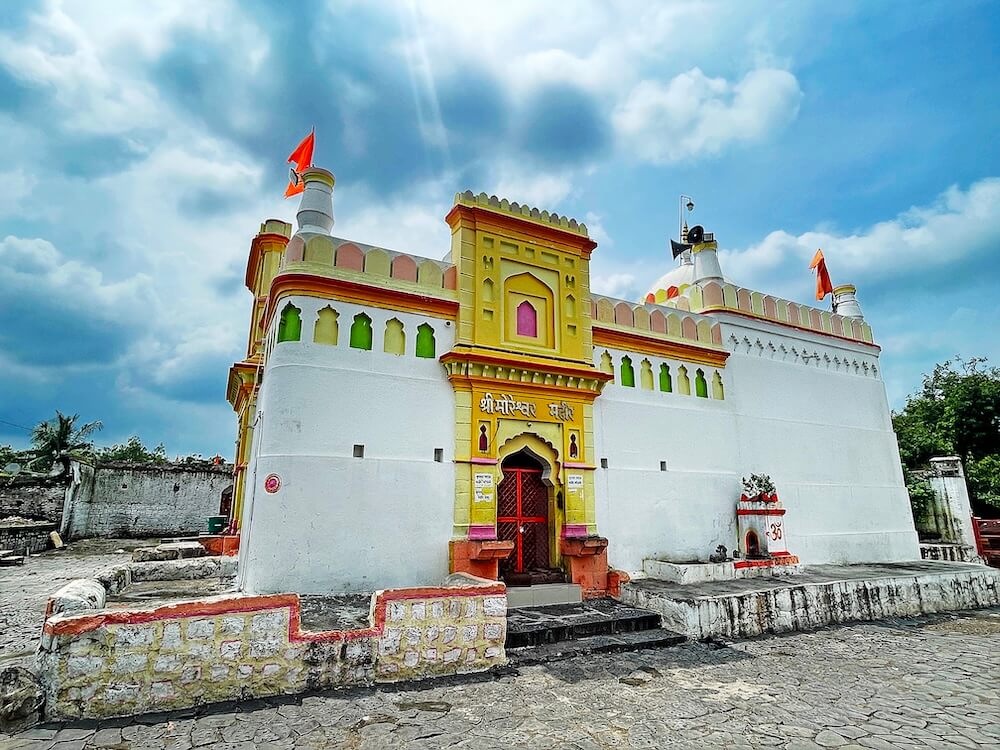
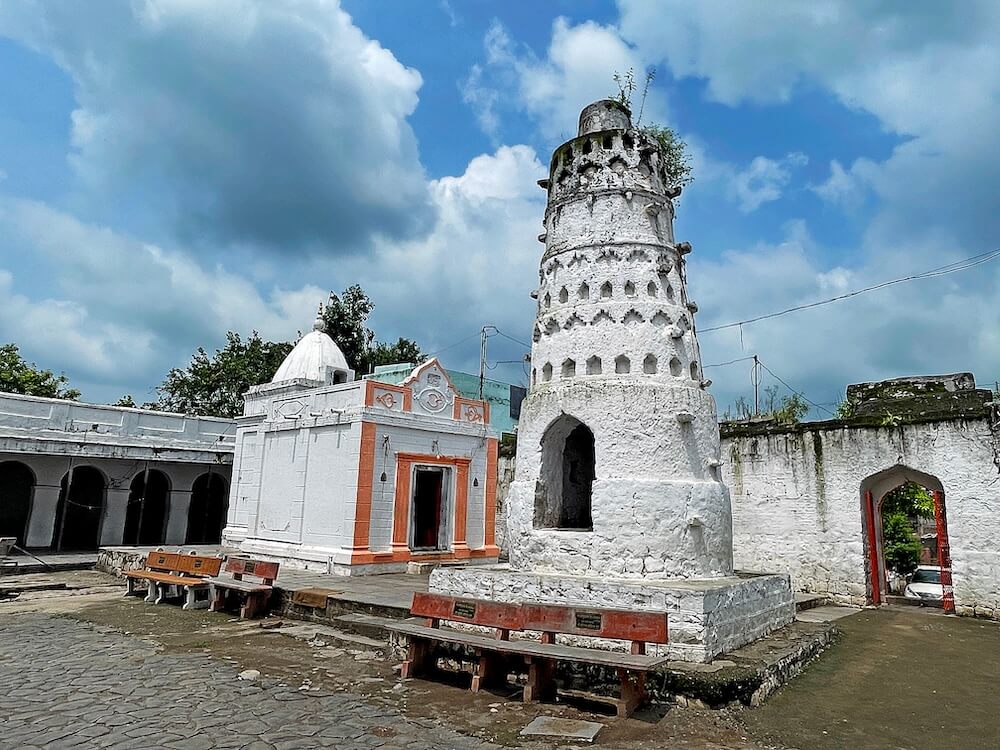
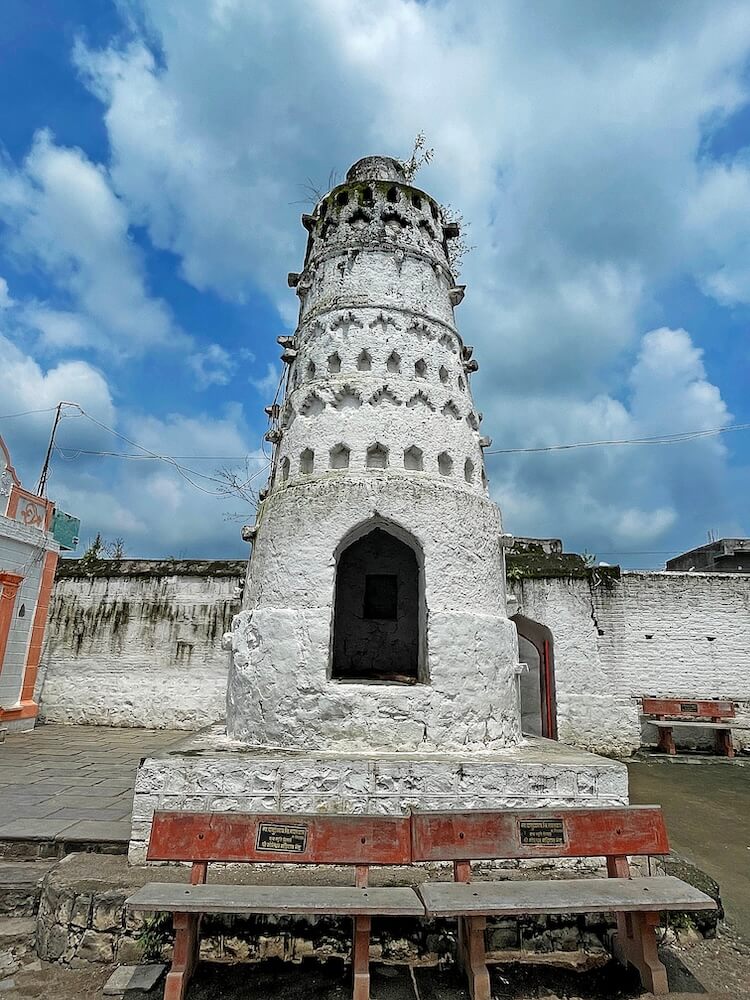
The exact history of when this temple was built has faded into the passage of time. This temple is constructed in the Hemadpanti style. Its unique feature is the significant influence of Mughal architecture on its exterior. The temple features minarets in the Mughal style. A legend regarding this is that during the invasion of Aurangzeb, a Mughal commander who arrived in the area sent his army to demolish the temple. At that time, the villagers opposed the demolition, telling them that the temple was miraculous. The commander then challenged the villagers to prove the greatness of Mahadev. A villager prayed to the stone Nandi in the temple, “We will feed you fodder. You eat it, and by morning, provide dung to show this army the existence of Shiva here.” Within a short time, the stone Nandi ate the fodder and also provided dung the next day. After this, the invaders were convinced of Mahadev’s greatness. It is said that when this matter reached Aurangzeb, he came here himself and erected two minarets on the back wall of the temple and placed crescents on them. To warn anyone against destroying this temple in the future, he planted a stone with the impression of his palm in the temple premises. Near a canteen in the temple complex, there is a stone planted by Aurangzeb as a mark. A palm print is carved on this stone, and some text in Urdu is inscribed below it. The legend regarding the name of Mahadev here is that many peacocks (Mor) used to visit the premises of this ancient temple in the past. From this, the name Moreshwar was given to this Mahadev. The significance of this temple is great, and it is said that Gajanan Maharaj, Tukdoji Maharaj, Gadge Baba, and others have visited and offered their prayers here. The government has granted this temple the status of a ‘C’ grade pilgrimage site.
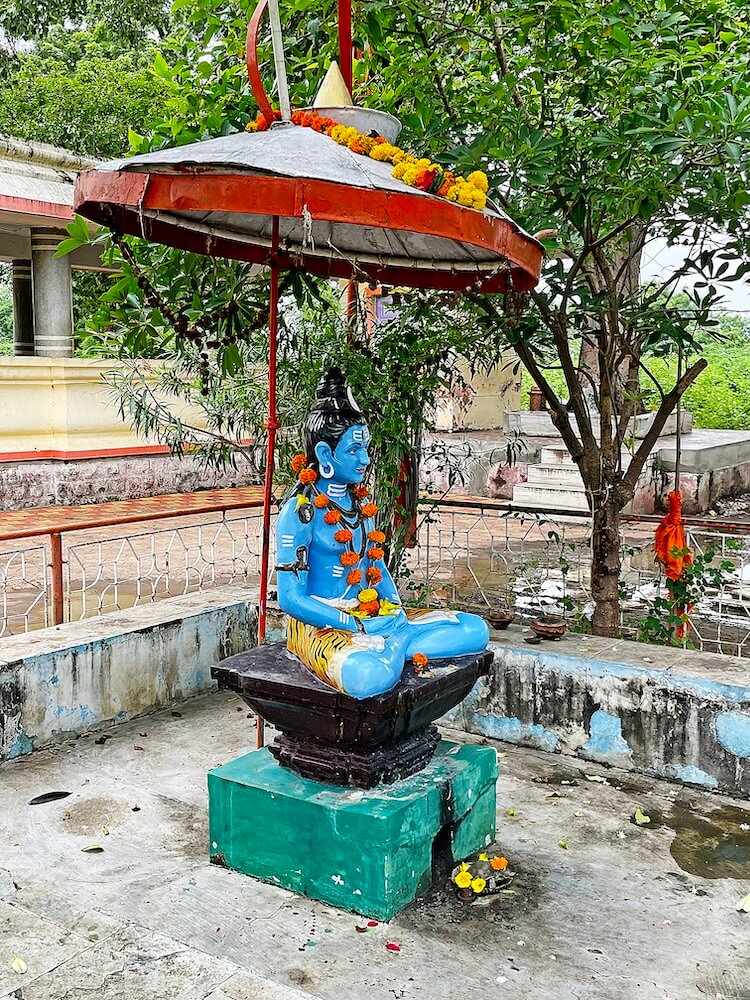
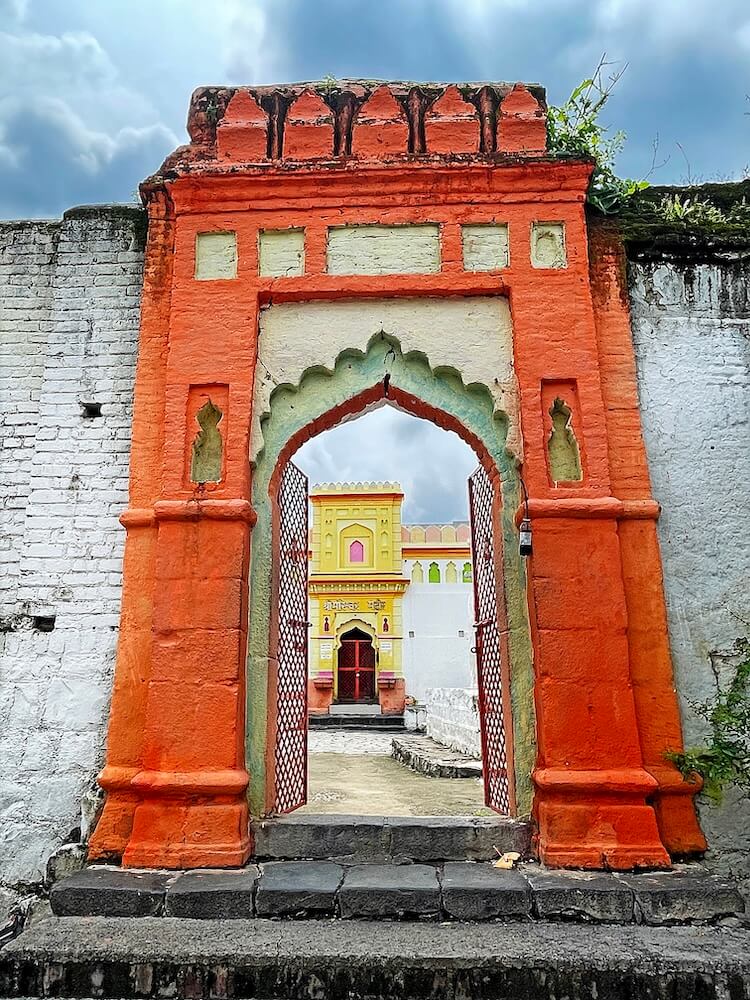
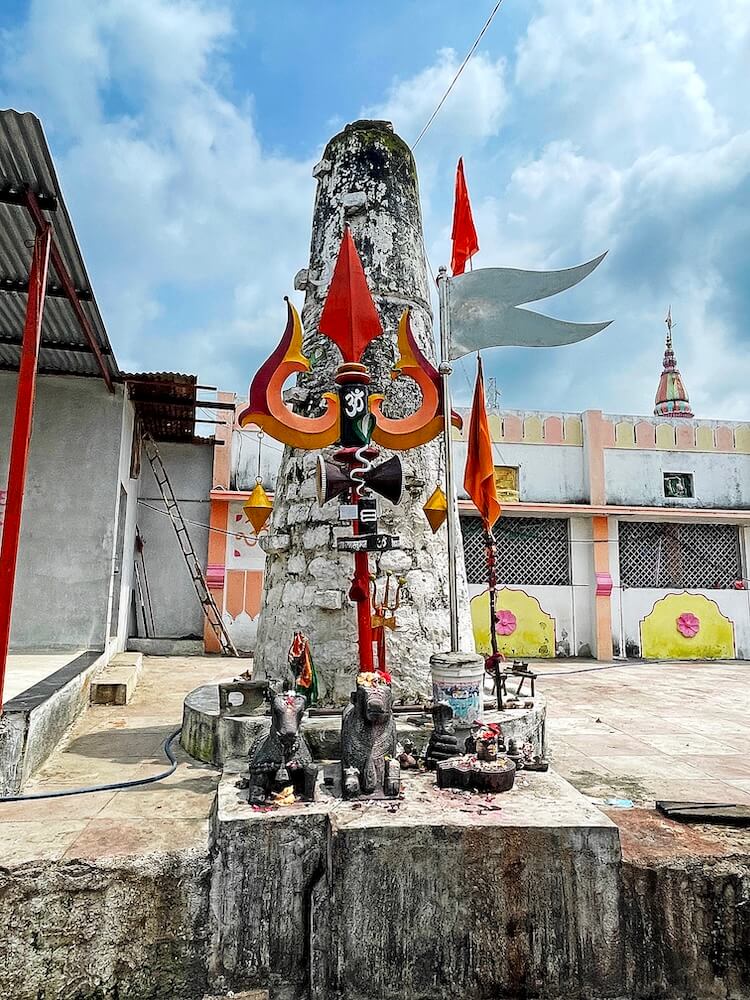
One enters the temple courtyard through a fortress-like gate in the surrounding wall. There are two large lamp pillars (Deepmalas) in this stone-paved courtyard. On a platform here, there is a large trident, two idols of Nandi, and a Pindi. The facade of this temple, built of black stone, looks somewhat like a mosque. There are minarets on all four sides of the temple roof. Above the sanctum sanctorum (Garbhagriha) is a dome-shaped spire with a two-tiered Amalaka and a finial (Kalash). There are also two minarets near the wall at the back of the temple. The crescents from these minarets have been kept inside the sanctum sanctorum. It is said that these minarets were erected by Aurangzeb.
On a stone near the entrance of this temple, built on a high plinth, many pits are visible. In the past, after their vows were fulfilled, many devotees would embed silver coins in these pits. Some of these coins can still be seen today. One enters the assembly hall (Sabhamandap) through an arched entrance. There are four stone pillars in the assembly hall. These pillars are connected to each other by arched gateways. There is a Shivalinga and an idol of Ganesha in the niches here. In the assembly hall, on a platform in front of the sanctum sanctorum, there are five idols of Nandi. Among them, the central Nandi idol is ancient. It is said that the other Nandi idols here were installed by devotees after their vows were fulfilled. These stone idols are covered with Panchadhatu (five-metal) plates.
The sanctum sanctorum is four to five feet deep from the assembly hall. One descends four steps to enter the sanctum. Coconuts offered as vows are tied at the entrance of this sanctum. In the sanctum, there is the Swayambhu Shivalinga of Moreshwar Mahadev in a large base (Shalunka). A serpent holds a canopy over it. A silver plate has been placed on this Shivalinga as well as on the base. In another nearby sanctum, there are two Shivalingas. In this temple complex, there is a Vitthal-Rukmini temple and nearby is the Samadhi temple of Nimbaji Wagh.
Many important festivals and celebrations throughout the year are celebrated here with great enthusiasm. Various religious programs are organized here on the day of Mahashivratri. On this day, the wedding of Shiva and Parvati is also discussed in the temple in the evening. A large fair is held here for five days from Chaitra Shuddha Ashtami to Dwadashi. During this fair, some devotees come here carrying a Kavad. This village is famous as a village of skilled artisans who craft wooden and stone objects. These artisans also display their goods for sale at this fair, including lamp pillars, Nandi, and decorative items.
On the first day of the fair, the Shiva-Parvati wedding ceremony takes place. On this day, masks of Shiva and Parvati are placed in a palanquin. Then, the wedding ceremony is performed according to rituals. After that, devotees shower flowers, dry dates, and pieces of coconut on the palanquin. In the procession that follows, many devotees dance with Mahadev’s staffs (Kathya). During this fair, devotees offer grains from their fields to Mahadev. This grain is used during the Mahabhandara (community feast) held at the temple. The importance of Nandi is great here; therefore, many farmers perform a circumambulation (Pradakshina) of the temple with their oxen.
This sacred temple stands as a testament to deep spiritual devotion, ancient architectural grandeur, and rich local cultural traditions.
The sanctum sanctorum houses the divine idol consecrated according to ancient Vedic traditions, surrounded by serene courtyards and traditional temple architecture.
Navratri, Maha Shivratri, Annual Temple Jatra & Deepotsav
Compare and book flights, secure top-rated local hotels near the temple, hire reliable guides, and rent cars instantly.
Extend your pilgrimage by visiting other highly sacred temples located nearby.


Add ₹999 more to unlock FREE SHIPPING!
Your sacred cart is currently empty.
Shop Photo FramesFill in your delivery details below to place your order.
Add comment