
Add ₹999 more to unlock FREE SHIPPING!
Your sacred cart is currently empty.
Shop Photo FramesThe Siddheshwar Mahadev Temple, situated on the banks of the Girija River in Pal, Phulambri Taluka, is considered the presiding deity of the entire district. Girija is not only the name of this river but also one of the names of Goddess Parvati. Devotees believe that Siddheshwar Mahadev resides here alongside her. Due to the deep-rooted faith that the Shivalinga in this ancient Hemadpanti-style temple is ‘Jagrut’ (awakened/living), countless devotees from the Chhatrapati Sambhajinagar district and the entire Marathwada region visit throughout the year for Darshan.
The legend associated with the temple states that many years ago, an ascetic named Siddhamay performed penance here. He served Lord Shiva in this temple for many years and cherished a desire to bring water from the Ganges in Kashi to perform Abhishekam on the Shivalinga. However, due to the great distance from Kashi, this was not possible for him. One day, while in a state of sleep, Lord Shiva appeared to him in a vision and said, “The Ganges has manifested in the dry well near the temple where you reside.” The next day, when he went to the well, he found it filled to the brim. Since then, this temple has been known by his name as the Siddheshwar Mahadev Temple.
According to Shaiva Agamas, the Sanskrit word ‘Siddheshwar’ refers to those 68 sites where a ‘Swayambhuvalinga’ (self-manifested Shivalinga) is installed. This Shivalinga is considered the most sacred because it is naturally formed and has existed since time immemorial. Therefore, even if it is damaged, there is no need for its renovation. Sound is considered the primary deity residing on the Siddheshwar Linga. There are many temples of Lord Shiva in the form of Siddheshwar across the country. The tallest Shivalinga is in the city of Hapoli in Arunachal Pradesh, which is known as the Siddheshwar Temple. In Marathwada, there are also Siddheshwar temples at Toka Kaygaon and Pishor. In mythological texts, Lord Shiva is called the ‘Siddhidata’ (bestower of spiritual attainments). There is a religious belief that performing regular worship of Shri Siddheshwar for six months grants one’s desired wishes, and those who have Darshan of Siddheshwar Mahadev on the Ashtami and Chaturdashi of the Krishna Paksha attain Shivloka.
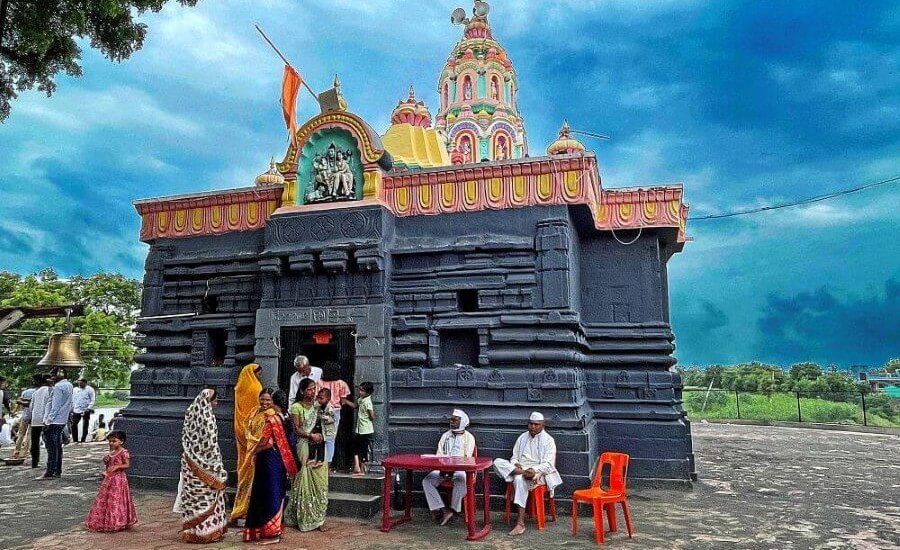
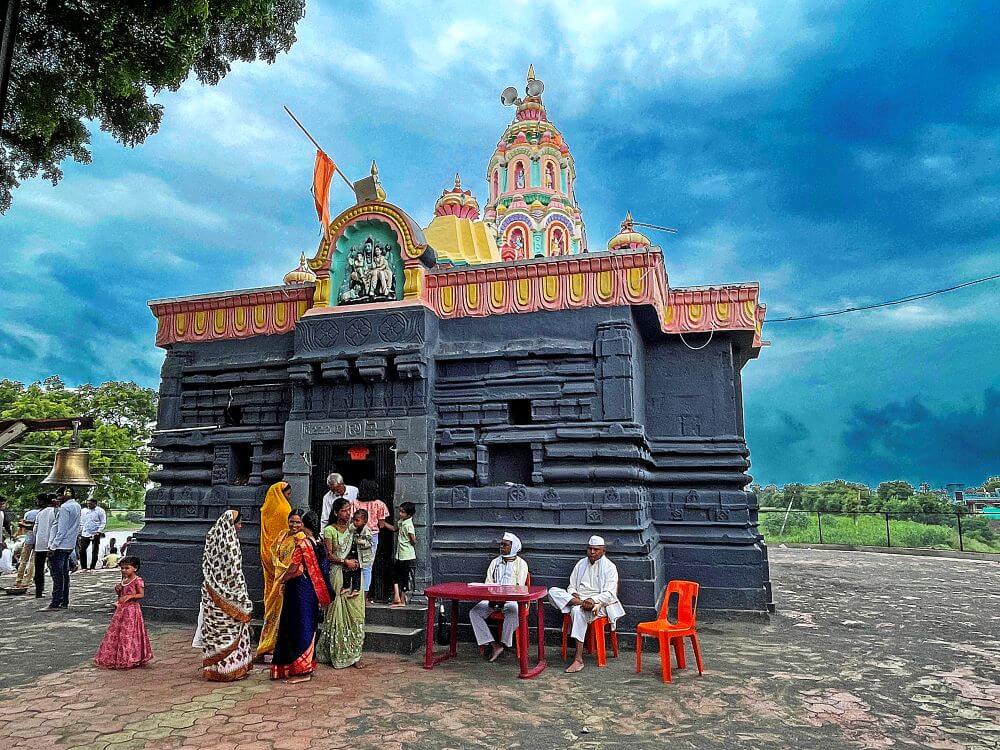
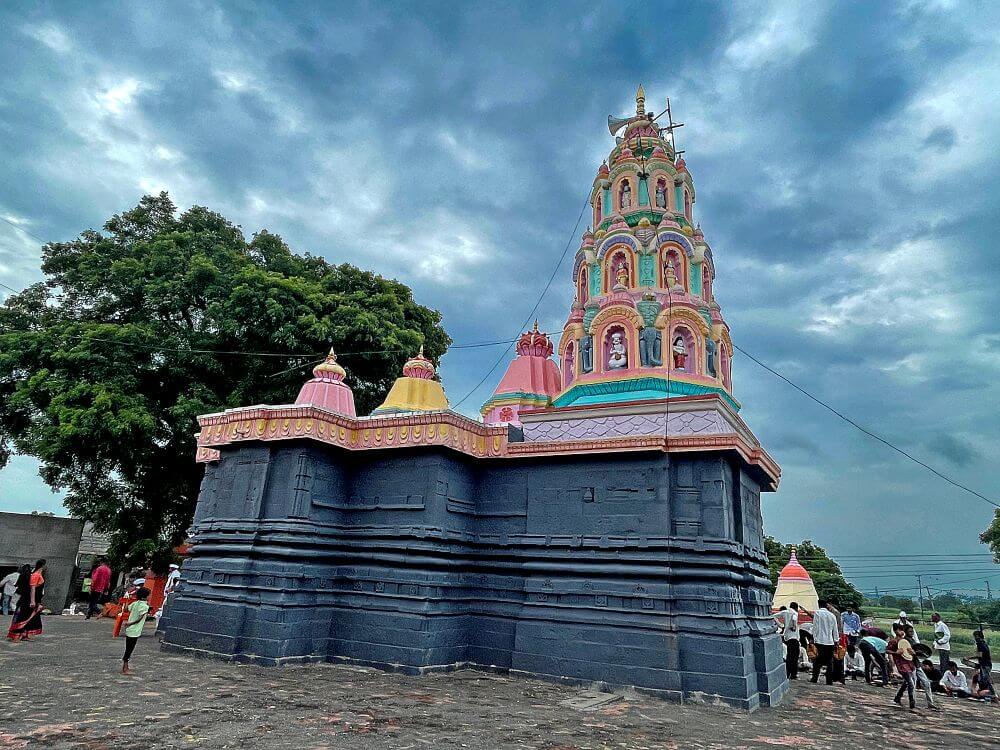
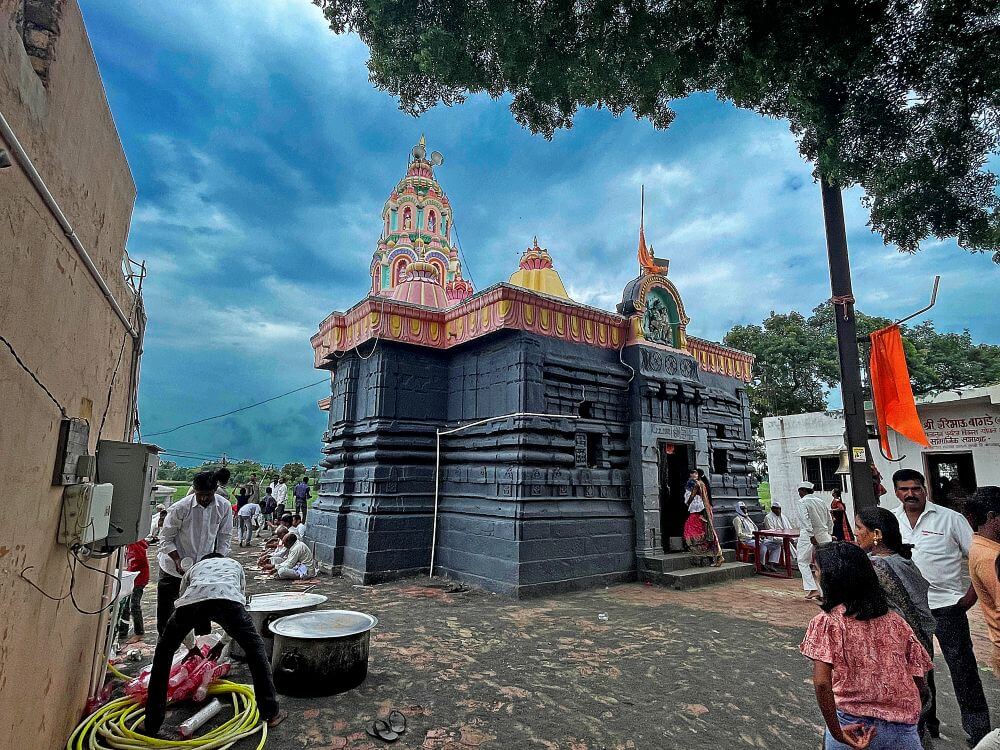
There are many trees in the premises of this Siddheshwar Mahadev Temple on the banks of the Girija River in Pal. The temple is built in the Hemadpanti architectural style and is smaller in size compared to other similar temples. The exact history of this temple is unknown. However, judging by the architectural style and especially the ‘Keechaka’ sculptures on the stone pillars, it is estimated to be from the post-Chalukya period.
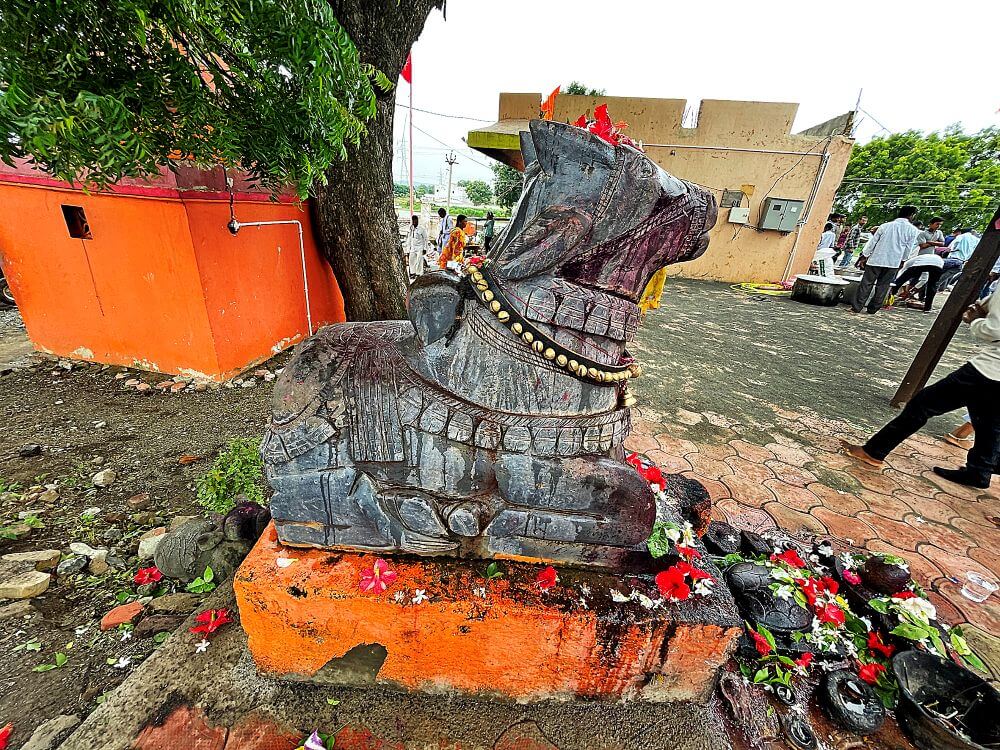
In front of the temple, on a platform, stands the statue of Nandi, the vehicle of Lord Shiva. This open-air statue is carved from a single monolithic stone. The carving on the statue is primarily geometric. This Nandi is unique due to its triangular horns, folded legs, and the necklace of square bells around its neck. A short distance ahead is the entrance to the temple’s Sabha Mandapa (assembly hall). Square and rectangular shapes have been primarily used in the construction of this entrance and the walls of the hall. The entrance has a frame of wide stone pillars. In the upper part of the frame, on the Lalatbimba, ‘Om’ is carved. Next to it are a horizontal Trishul and Damaru, and on the other side, the date of the temple’s renovation (२.२.२००२) is inscribed. The upper part of the entrance has a balcony-like structure, and above it, in a small semi-circular niche, is the Shivpanchayatan. The upper part of the Sabha Mandapa of this black stone temple, which looks like a parapet, as well as the temple spires, were painted during the renovation.
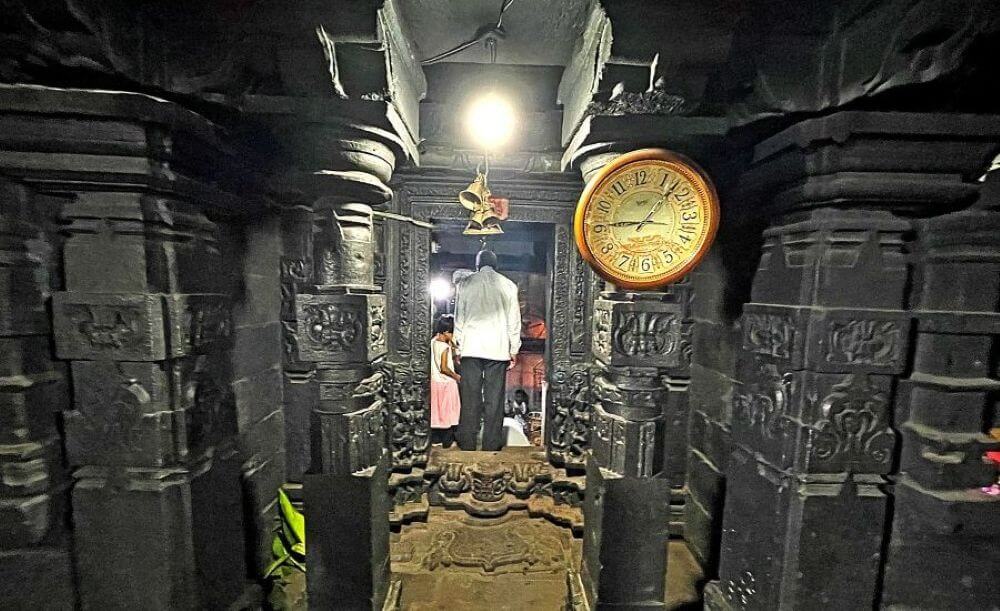
Entering through the doorway leads into the Sabha Mandapa. The hall has many stone pillars. At the bottom, they are square; the upper part towards the ceiling is circular, topped with a circular disc-like part called ‘Kani’, followed by a horizontal square plank-like stone part, and above that, where the pillar meets the stone beam, is the ‘Tarangahasta’. This is an additional part that supports the beam from below, and on these Tarangahastas, ‘Keechakas’ or Yaksha figures are carved. There are various sculptures on the doorframe of the sanctum sanctorum located in the temple’s Antarala.
Inside the hall, the space between the pillars is only wide enough for two people to pass at a time. Moving forward leads to the Antarala and then to the entrance of the Garbhagriha (sanctum sanctorum). This entrance is ‘Dvishakhiya’, meaning it has two doorframes. Both branches have similar carvings on the upper side, and there are images of ‘Sursundaris’ at the bottom. The door of the sanctum has a high threshold, known as ‘Mandarak’, on which ‘Kirtimukhas’ are carved. Inside the Garbhagriha, on the marble floor, there is a large brass Shivalinga in the center. On the mouth of the ‘Shalunka’ (yoni base) from where the water flows, two large conch-shaped carvings are present.
The high spire above this Garbhagriha resembles the Nagara style. It has niches built in four levels, containing statues of gods and goddesses. Below this spire, in front of the Antarala, there is also a smaller spire. Two smaller spires are located above the assembly hall. These spires are characterized by a large ‘Amalaka’ and a ‘Kalash’ on top. After coming out of the temple, one can see a ‘Barav’ (stepwell) in the premises. It is said that the Ganges manifested in this well. The temple courtyard is paved with paver blocks. Here, the Samadhis of Param Pujya Janakidasram Maharaj and Param Pujya Nirvandas Muni Maharaj, who merged into the infinite on २१ October २०११, are built side by side. There are also temples of Ganesha and Santoshi Mata in the courtyard.
Devotees flock to this ancient Siddheshwar Mahadev temple every Monday for Darshan. There is a grand festival here, especially on the Mondays of the Shravan month and on Mahashivratri. On Mahashivratri, the temple premises are decorated with electric lights. At this time, thousands of devotees gather here. Every Shravani Monday also takes on the form of a fair in the temple premises.
This sacred temple stands as a testament to deep spiritual devotion, ancient architectural grandeur, and rich local cultural traditions.
The sanctum sanctorum houses the divine idol consecrated according to ancient Vedic traditions, surrounded by serene courtyards and traditional temple architecture.
Navratri, Maha Shivratri, Annual Temple Jatra & Deepotsav
Compare and book flights, secure top-rated local hotels near the temple, hire reliable guides, and rent cars instantly.
Extend your pilgrimage by visiting other highly sacred temples located nearby.

Add ₹999 more to unlock FREE SHIPPING!
Your sacred cart is currently empty.
Shop Photo FramesFill in your delivery details below to place your order.
Add comment