
Add ₹999 more to unlock FREE SHIPPING!
Your sacred cart is currently empty.
Shop Photo FramesThe temple of Valinath Mahadev, regarded as a profound symbol of the synthesis between the Shaiva and Vaishnava sects of Hinduism, is situated in the ancient village of Sajod near Ankleshwar. Valinath Mahadev is the presiding deity of the Rabari community and many other Hindu communities across Gujarat. According to mythological lore, Valinath Mahadev represents the form of Lord Shiva wearing a Bali (earring) in his ear. This legend is inextricably linked with the Raas Leela (divine dance) of Shri Krishna. In the temple at Sajod, an idol of Shri Krishna is enshrined alongside the Shivaling of Valinath Mahadev.
The mythological legend regarding this particular form of Mahadev narrates that the Magadh Emperor Jarasandha was the father-in-law of Kansa. He attacked Shri Krishna’s Mathura eighteen times. Harassed by these repeated onslaughts, Shri Krishna departed for Dwarka with all the Yadavas. After establishing himself there, Shri Krishna would often wander through the regions surrounding Dwarka. On one such occasion, he entered a forest accompanied by the Gopis (cowherd maidens) and Gopas (cowherd boys) and commenced the Raas Leela. At that time, Mahadev was also residing there with his Shivaganas. Upon witnessing Shri Krishna’s Raas Leela, Mahadev felt a deep desire to participate. However, outsiders were strictly forbidden from joining the dance. Hence Mahadev assumed the form of a Gopi and entered the Raas Leela. Nevertheless, Shri Krishna recognised Mahadev even in that disguise.
Seeing Mahadev himself dancing in the Raas Leela, Shri Krishna prostrated before him and said, ‘O Mahadev, you are the God of Gods. Everyone worships you. It is a matter of immense fortune that you have come here. Who would dare forbid you from participating in the Raas Leela? Pray, bless us by appearing in your original divine form.’ Upon hearing Shri Krishna’s plea, Mahadev manifested in his true form. Subsequently, Shri Krishna consecrated an idol of Mahadev at that spot. Since Mahadev had worn a Bali in his ear while disguised as a Gopi, Krishna bestowed upon him the name Valinath. It is said that the original Valinath Mahadev temple established by Shri Krishna is located in Tarabh village near Mehsana in Gujarat. This temple is the largest shrine dedicated to Mahadev in Gujarat after Somnath. In February 2024, the Pran Pratishtha (consecration ceremony) of the restored Valinath Mahadev temple was performed by Prime Minister Narendra Modi. Furthermore, Mahadev is worshipped under the name Valinath at several other locations across Gujarat, one of which is situated at Sajod.
As per M. R. Majmudar’s book ‘Historical And Cultural Chronology Of Gujarat’ (1960), published by the Maharaja Sayajirao University of Baroda, the name Sajod is believed to have been ‘Saujnapadra’ in historical times. Bharuch (Bhrigukacch) was the capital of King Bhartrvaddha II of the Cahamana (Chauhan) dynasty, whose reign lasted from 738 to 756 AD. During this period, he donated several villages in the Akrureshwar (Ankleshwar) region to Brahmins of various Gotras (lineages). Saujnapadra was among the villages included in these grants. The official website of the Bharuch district mentions that Sajod was the site of the hermitage of Sage Chyavana. Mythological accounts state that Sage Chyavana, the creator of the medicinal formulation ‘Chyavanprash’, was the son of Sage Bhrigu, the founder of Bhrigukacch or Bharuch. Thus, the Valinath Mahadev temple is located at a site of great mythological and historical significance.
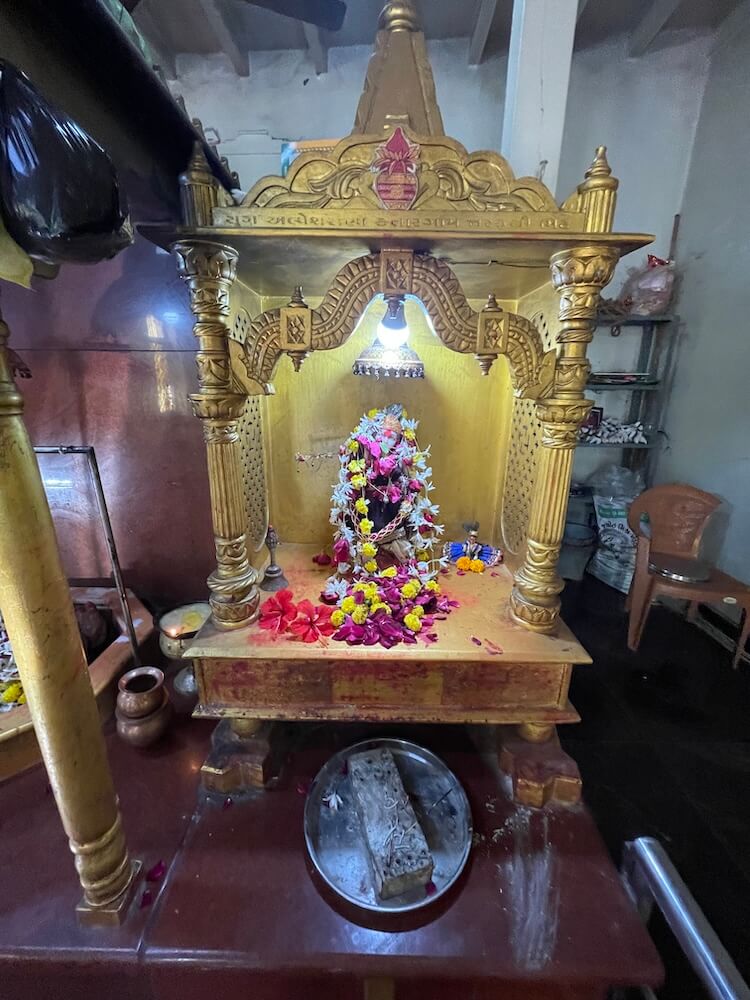
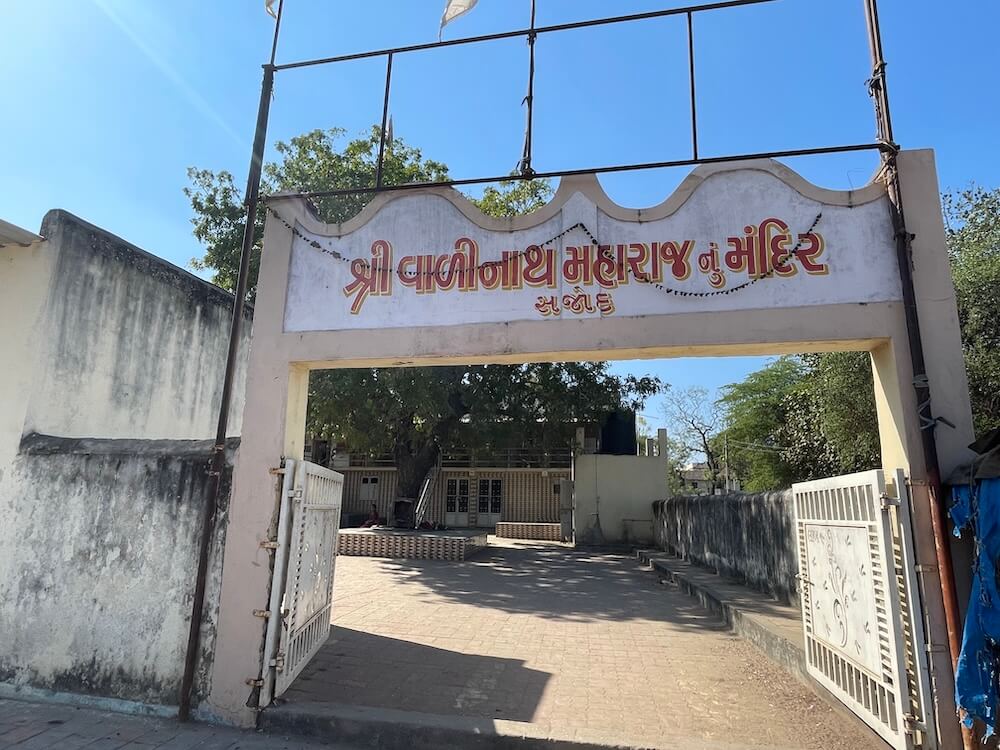
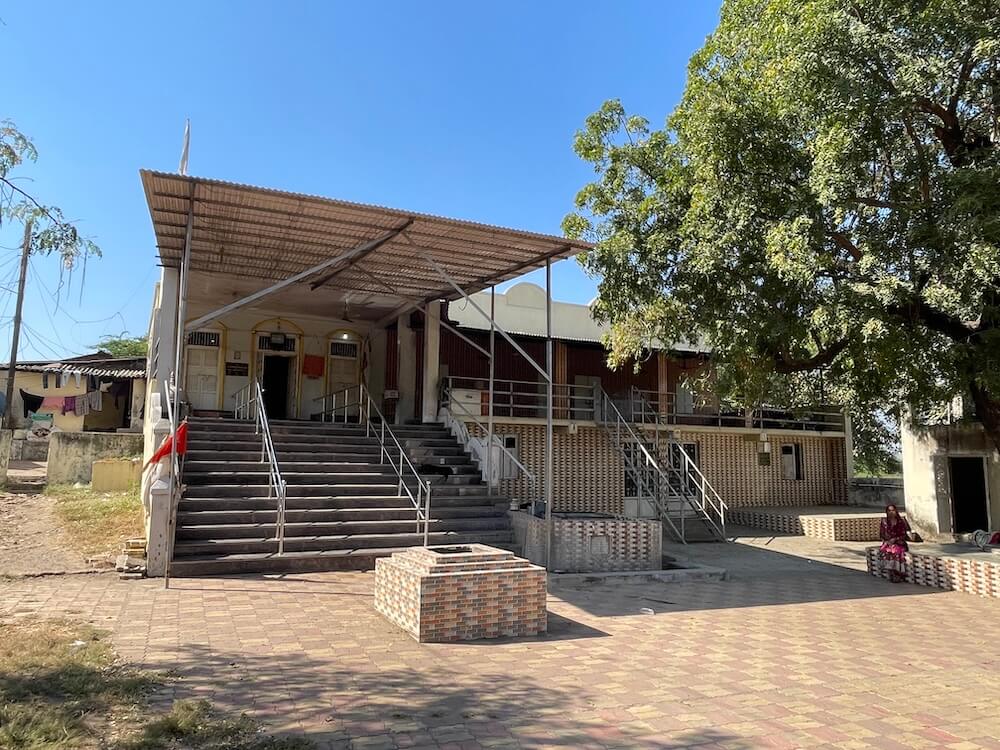
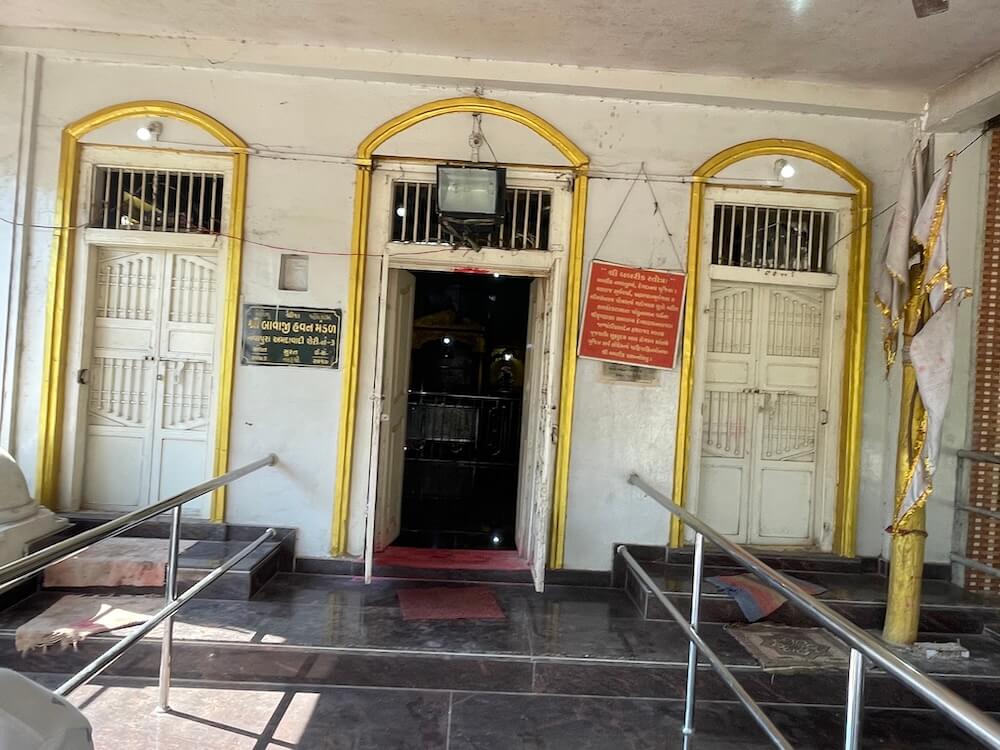
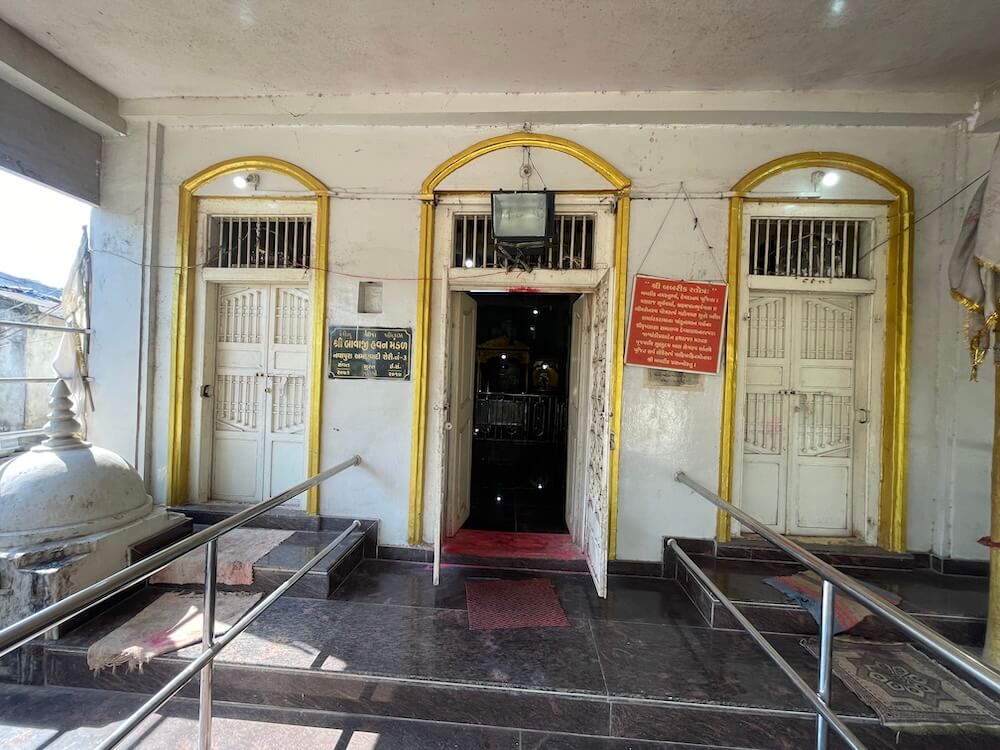
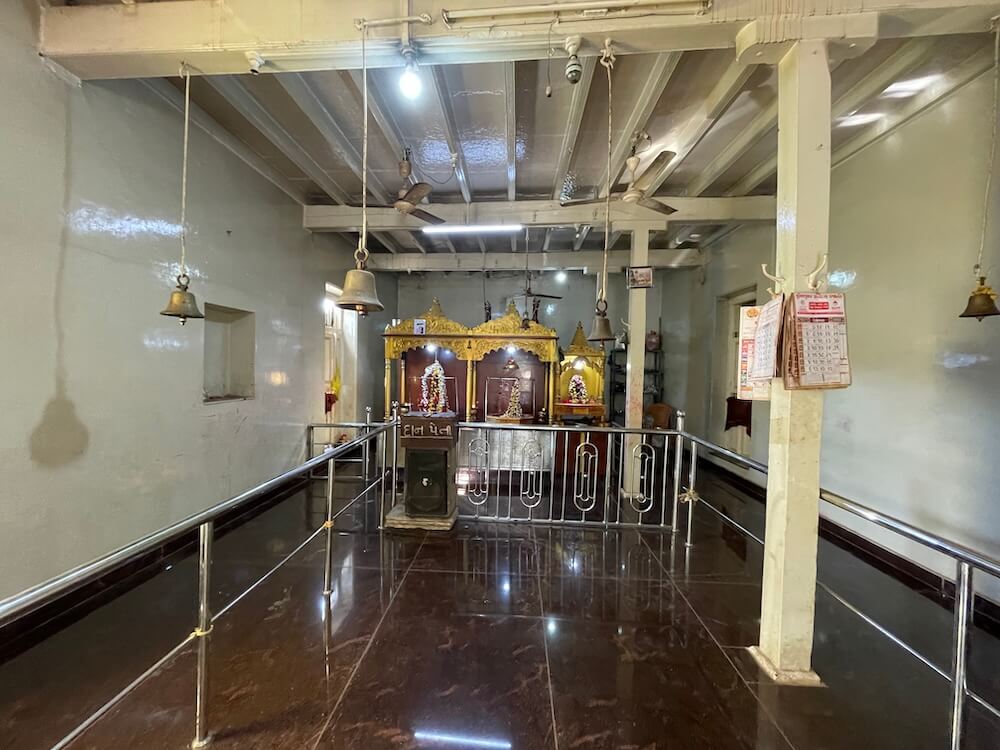
The temple is nestled within a spacious courtyard on one side of the village. Entrance to this courtyard is through an archway set into the compound wall. To the right of the courtyard stands an ancient neem tree, surrounded by a large stone platform. A short distance away lies a square Yagyakunda (sacrificial fire pit) finished with marble tiles. Directly ahead is the two-storey temple building, constructed in a modern architectural style. Thirteen wide steps lead up to the temple. They are covered by a corrugated metal shed to provide shade for devotees. The temple structure consists of a small Ovari (verandah), a Sabhamandapa (assembly hall) and a golden Makhar (ornamental frame) set upon a high pedestal. In a niche on the left of the temple’s verandah, stones representing village deities are placed. A wooden flagstaff stands to the right. Within the marble-floored assembly hall, a passage for Darshan (sacred viewing) runs along the walls. At the front, two large ornamental frames on a high marble pedestal house two Shivpinds. These icons are surrounded by an octagonal railing similar to a Shalunka (pedestal), which is encased in brass. The Pind in the right frame holds a large stone Shivalinga, while the one on the left contains Lingas in the form of rounded stones. Both icons are sheltered by brass canopies. Beside these ornamental frames is a golden shrine where a marble idol of Shri Krishna, beautifully adorned with garments, ornaments and flower garlands, is consecrated.
Adjacent to the temple are the management offices and other chambers, while a large hall has been constructed on the lower floor. Ritual worship of Valinath Mahadev and Shri Krishna is performed daily in this temple. Along with various other festivals, Mahashivratri and Krishna Janmashtami are celebrated here with great enthusiasm.
This sacred temple stands as a testament to deep spiritual devotion, ancient architectural grandeur, and rich local cultural traditions.
The sanctum sanctorum houses the divine idol consecrated according to ancient Vedic traditions, surrounded by serene courtyards and traditional temple architecture.
Navratri, Maha Shivratri, Annual Temple Jatra & Deepotsav
Compare and book flights, secure top-rated local hotels near the temple, hire reliable guides, and rent cars instantly.
Extend your pilgrimage by visiting other highly sacred temples located nearby.


Add ₹999 more to unlock FREE SHIPPING!
Your sacred cart is currently empty.
Shop Photo FramesFill in your delivery details below to place your order.
Add comment