
Add ₹999 more to unlock FREE SHIPPING!
Your sacred cart is currently empty.
Shop Photo Frames“The slave dwells on the mountain. He flows across seven seas.
A hundred winds howl. The fortress, the fortress trembles.”
An ancient and famous temple situated near Pachgani village on the Mahal-Mira mountain in Pen Taluka seems to be a literal manifestation of this description from the poem by Ba. B. Borkar. A road leads to Pachgani from the Chavdi Naka area in Pen city. Passing through Borgaon, Virani, Dhangarmal, and Asani, one realizes upon reaching Pachgani that not only the name of this village but also its nature shares a kinship with that (famous) Pachgani near Mahabaleshwar.
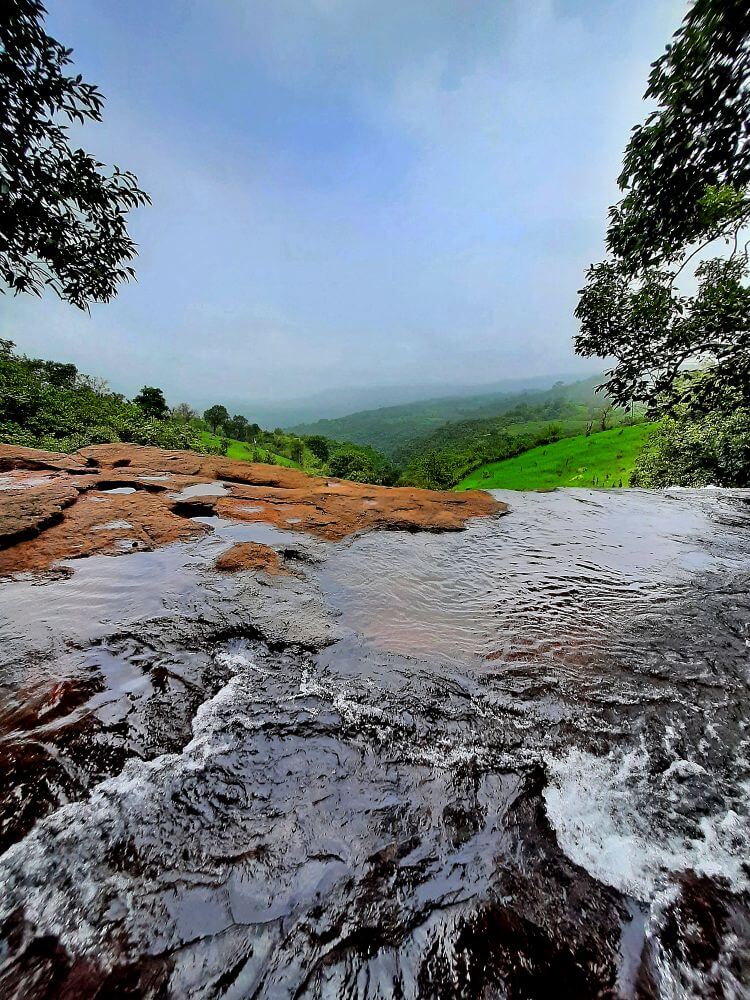
Many devotees and tourists visit this temple, which is located in a remote area adorned with natural beauty. There is a perennial spring in the temple premises. Its flow comes from a Gomukh (cow-faced spout). There is also a waterfall flowing nearby. It is said that this temple was renovated during the time of Chhatrapati Shivaji Maharaj. Shivshahir Babasaheb Purandare has also mentioned this place in some of his books. Looking at the sanctum sanctorum built of laterite stone in the Hemadpanti architectural style, the ancient idols, and the hero stones (Veergal) here, it is estimated that this temple dates back about one thousand years. However, no official evidence is available regarding this.
Upon reaching Pachgani village from Pen, Chavdi Naka, via the winding mountain road covered with dense forests through Borgaon, Virani, Dhangarmal, and Asani, one realizes that we have reached a significant altitude above sea level. There is an unpaved road from near Pachgani village to reach the Vyaghreshwar Temple. One can go directly to the temple via this small road that offers a glimpse of dense greenery. While it is possible to reach the temple by private vehicle in the summer, one must walk during the monsoon.
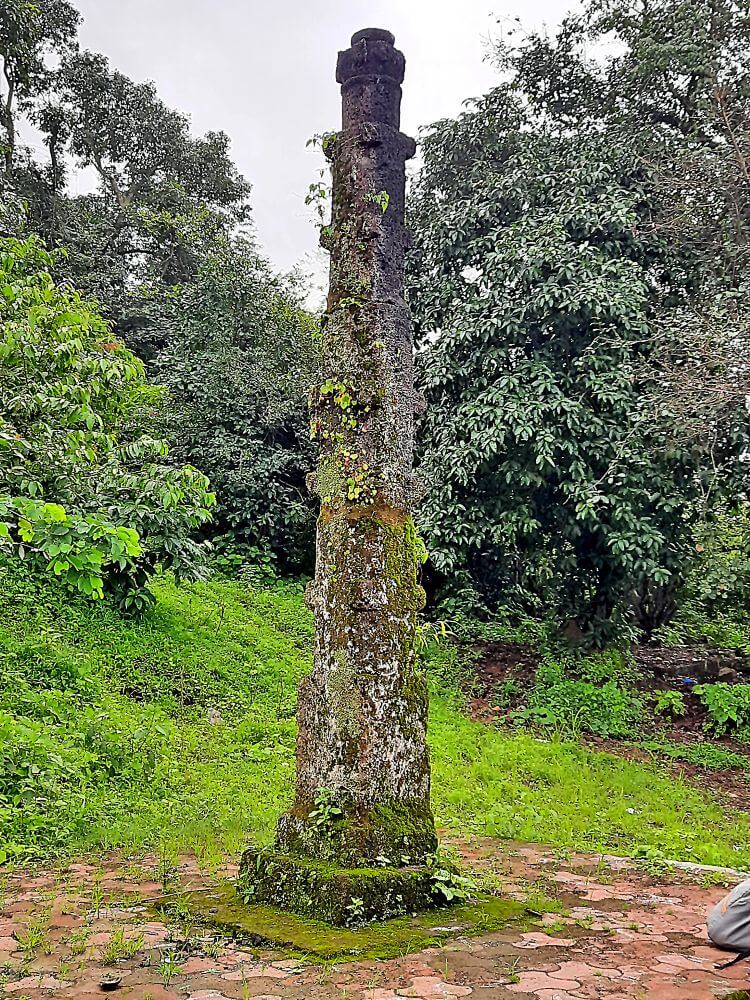
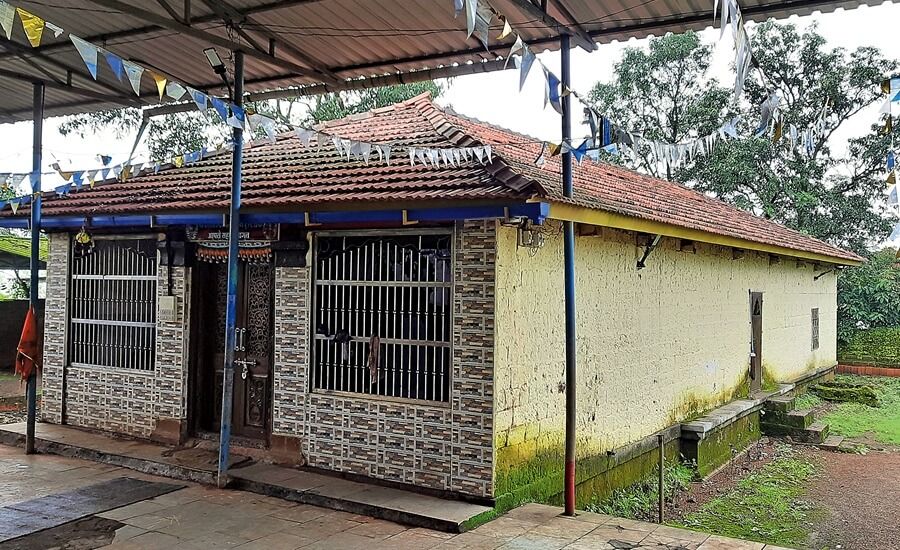
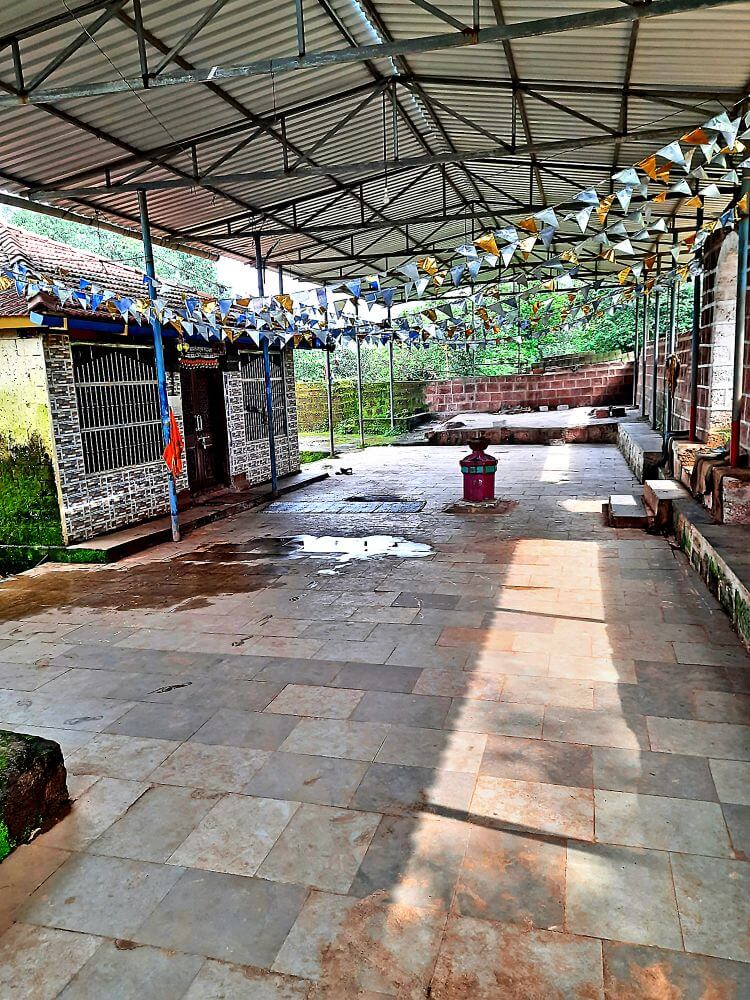
On the left side of this temple, which is situated on the mountain top, is the Gomukh Kund. Here, there is an inexhaustible source of flowing water falling from the Gomukh. It is customary to purify oneself with the water from this pond before going for Darshan. The water from the pond is used for drinking and for the deity’s Abhishekam. There are steps built of dressed stone from the pond to the temple. There is an ancient lamp pillar (Deepastambha) near the entrance outside the temple’s boundary wall. Entering through the gateway in the fortification, one descends a few steps into the temple courtyard. In this paved courtyard, there is a Tulsi Vrindavan in front of the temple. The courtyard has a cement sheet roof supported by iron pillars. On the platform to the left in front of the temple, there are hero stones, some ancient idols, stone footprints (Paduka), and inscriptions .
The temple structure consists of a Sabha Mandap (assembly hall), Antaral (vestibule), and Garbhagriha (sanctum sanctorum). The Sabha Mandap of the temple has a wooden entrance. The door frames are carved with leaf and floral creepers. The enclosed Sabha Mandap (Gudhamandap) has windows for light and ventilation. In the center of the Sabha Mandap, there is a hexagonal wooden canopy (Makhar). This canopy has six circular ornate pillars connected by arched designs. The pillars have a pinnacle and a finial. In the center of the canopy, there are vermilion-smeared pillar-lingas and stones of other deities. In front of the canopy, on a platform, is a monolithic Nandi idol. The bells and tassels carved on the Nandi’s neck are distinctive. Between the front legs of the Nandi is an idol of a meditating sage.
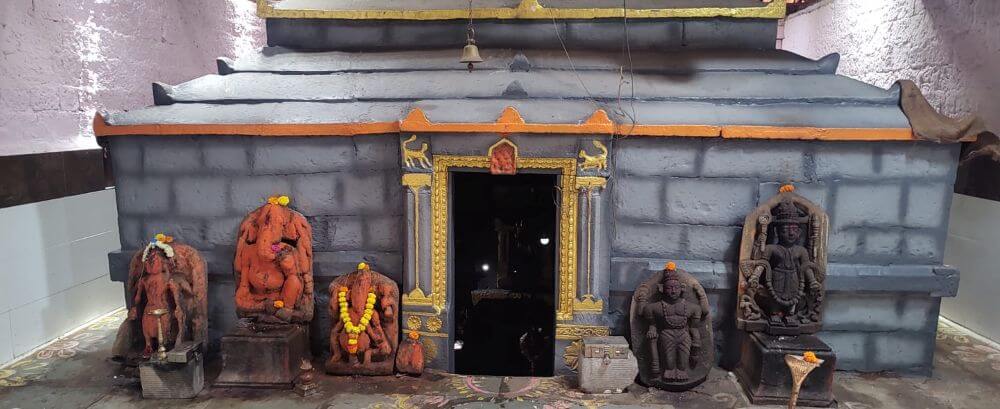
Further ahead is the entrance to the Antaral. In the Antaral, there are two ornate square pillars. The stone pillar bases are somewhat wide, and at the top of the pillars are brackets and beams above them. A tiled roof is supported on the wooden structure over the beams. Brass bells are hung from the beams. In the Antaral, there are ancient sculptures attached to the front wall of the sanctum sanctorum. To the right of the sanctum entrance are two idols of Ganesha and one idol of Gauri-Har. To the left is a four-armed Bhairav and a Vishnu idol, and in front of them is a Shiva Linga.
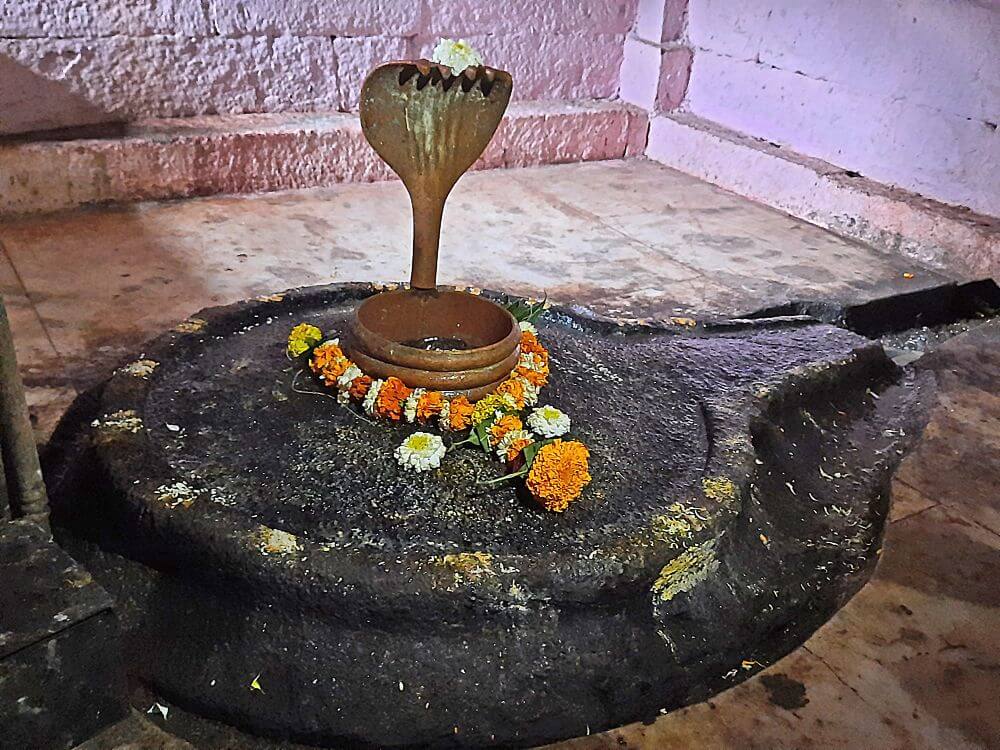
On the door frames of the sanctum sanctorum, which has stone construction in the Hemadpanti architectural style, there are lotus flower carvings at the bottom and vine carvings at the top. There are vertical edge carvings on the pillar branches and an idol of Ganesha on the lintel. The structure of the spire (Shikhara) on the roof of the sanctum sanctorum, which is under the tiled roof of the Antaral, is pyramid-shaped. One has to descend four steps into the sanctum sanctorum, which is deeper than the Antaral. All the walls of the sanctum are smeared with vermilion. In the center of the floor in the sanctum is a self-manifested (Swayambhu) Shiva Linga with a copper cobra holding a canopy over it. During festivals, a silver mask is placed on this Linga. There is a narrow door in the back wall of the sanctum. It is customary to exit through this door after Darshan. In the temple courtyard, along the boundary wall, there is a semi-open hall. It is used for the rest and dining arrangements of the devotees who come here.
Mahashivratri is the main annual pilgrimage festival celebrated here with great enthusiasm. On that occasion, programs like Laghurudra, Maha-Abhishekam, Bhajans, Kirtans, music, and Mahaprasad are organized in the temple. Devotees from Raigad as well as Mumbai and Pune come here for Darshan and to fulfill their vows. During this fair, shops selling various items are set up, giving the area the appearance of a marketplace. Lakhs of rupees are transacted through the buying and selling of various goods during the pilgrimage festival of this temple located on the mountain top and in a remote area. Annual festivals like Navratri and Holi are also celebrated here.
The number of devotees coming to the temple on Shravani Mondays, Pradosh, Purnima, and Amavasya is large. Tourists visiting the nearby Vyaghreshwar waterfall also make it a point to visit this temple for Darshan. As the Mahal-Mira mountain and Kas Mal area are special attractions for tourists, there is constant activity in the temple area.
This sacred temple stands as a testament to deep spiritual devotion, ancient architectural grandeur, and rich local cultural traditions.
The sanctum sanctorum houses the divine idol consecrated according to ancient Vedic traditions, surrounded by serene courtyards and traditional temple architecture.
Navratri, Maha Shivratri, Annual Temple Jatra & Deepotsav
Compare and book flights, secure top-rated local hotels near the temple, hire reliable guides, and rent cars instantly.
Extend your pilgrimage by visiting other highly sacred temples located nearby.


Add ₹999 more to unlock FREE SHIPPING!
Your sacred cart is currently empty.
Shop Photo FramesFill in your delivery details below to place your order.
Add comment